

Exciting events ahead
Join the celebration with Xandre
Kurama Fire Festival (Kurama-no-Himatsuri): Experience Kyoto's Ancient Mountain Fire Ritual aCultural Travelers, Adventure Travelers, Photographers, History Enthusiasts, Spiritual Tourism Visitors, International Visitors, Experienced Japan Travelers, Documentary & Travel Content Creators, Couples seeking unique experiencesnd One of Japan's Most Powerful Festivals
Deep within the forested mountains north of Kyoto lies the peaceful village of Kurama, home to one of Japan's most visually spectacular and spiritually significant festivals—the Kurama Fire Festival. Held every year on October 22, the festival dates back more than 1,000 years and originated as a sacred ritual connected to Yuki Shrine. The event commemorates the transfer of the shrine's protective deity from Kyoto's imperial palace area to Kurama during the Heian period, symbolizing protection, purification, and spiritual renewal. As evening arrives, the quiet mountain village transforms into a dramatic scene illuminated by hundreds of flames. Local residents carry massive pine torches (taimatsu), some weighing more than 100 kilograms, through the narrow streets while chanting traditional calls of "Sairei, sairei!" The powerful sound of voices, crackling flames, drums, and ceremonial movements creates an atmosphere unlike any other festival in Japan.
Where does it come from?
-One of Japan's most dramatic fire festivals -Over 1,000 years of history and tradition -Massive burning pine torches carried through village streets -Traditional Shinto ceremonies at Yuki Shrine -Local residents wearing historical festival clothing -Powerful chanting and drum performances -Authentic mountain village atmosphere -Nighttime photography opportunities -Rare opportunity to experience living Japanese folklore -Traditional portable shrine procession -Unique cultural experience unavailable anywhere else
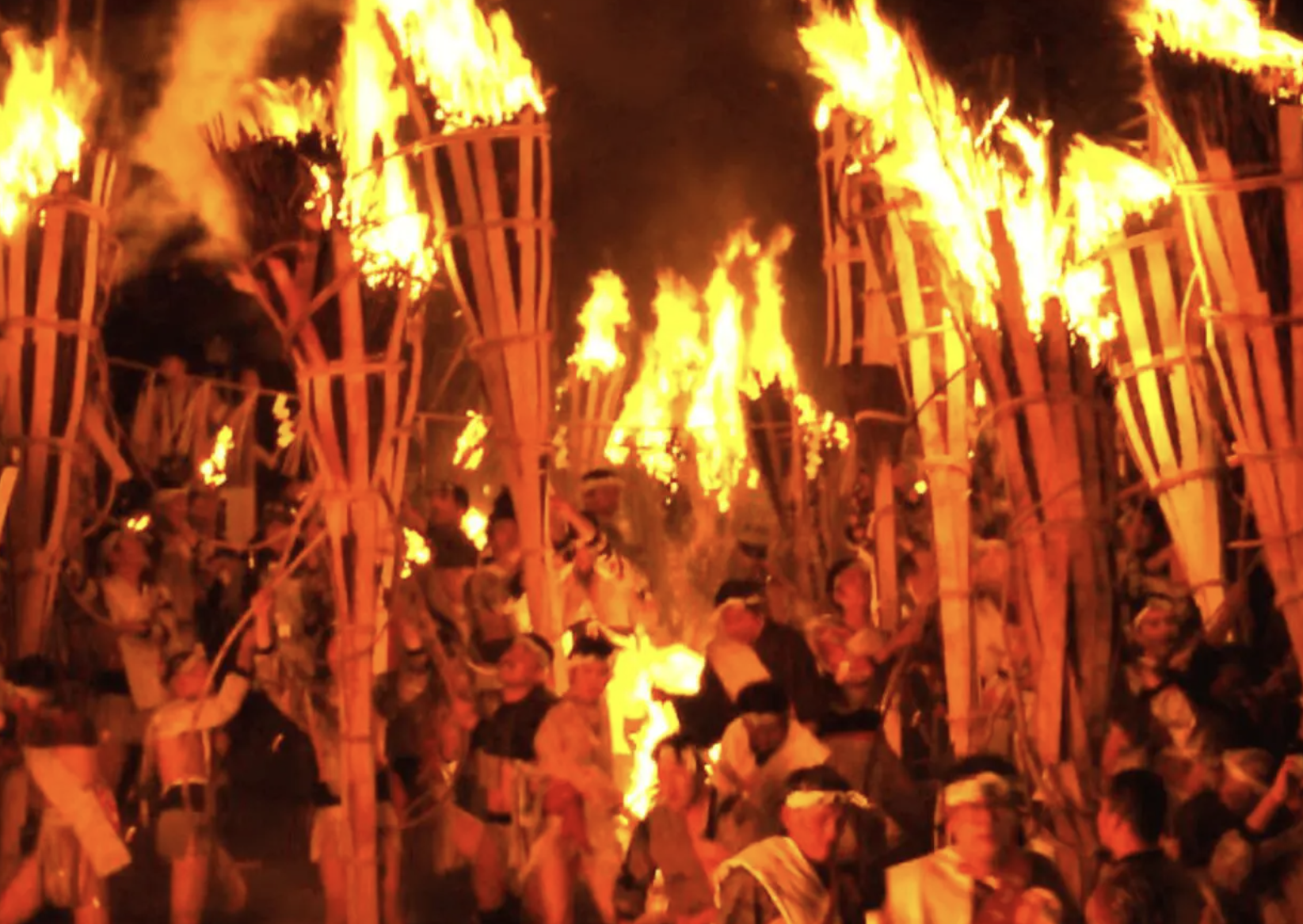
Yuki Shrine, located within the sacred mountain village of Kurama, has protected and maintained the traditions of the Kurama Fire Festival for centuries. The shrine is dedicated to preserving the spiritual heritage of the region and maintaining the connection between local residents, Shinto beliefs, and ancestral customs. Each year, generations of Kurama families participate in preparing the festival, creating torches, maintaining ceremonial objects, and passing traditional knowledge to younger generations.