

Description
Xandre Store Exclusive - A Signature Work Connecting Yomitan's Wood-Fired Yachimun Tradition with Okinawan Dining Culture
- Artist: Kyōshi Matsuda (松田 共司) — Co-founder of Yomitanzan-Yaki Kita-Gama
- Studio / Kiln Tradition: Yomitanzan-Yaki Kita-Gama (読谷山焼 北窯)
- Origin: Yachimun no Sato, Yomitan Village, Okinawa Prefecture, Japan
- Category: Okinawan Yachimun Ceramic / Fine Art Bowl / Traditional Rice & Tea Vessel
- Form: Makai (マカイ)
- Craft Tradition: やちむん / 登り窯 — Okinawan Yachimun / Wood-Fired Climbing Kiln
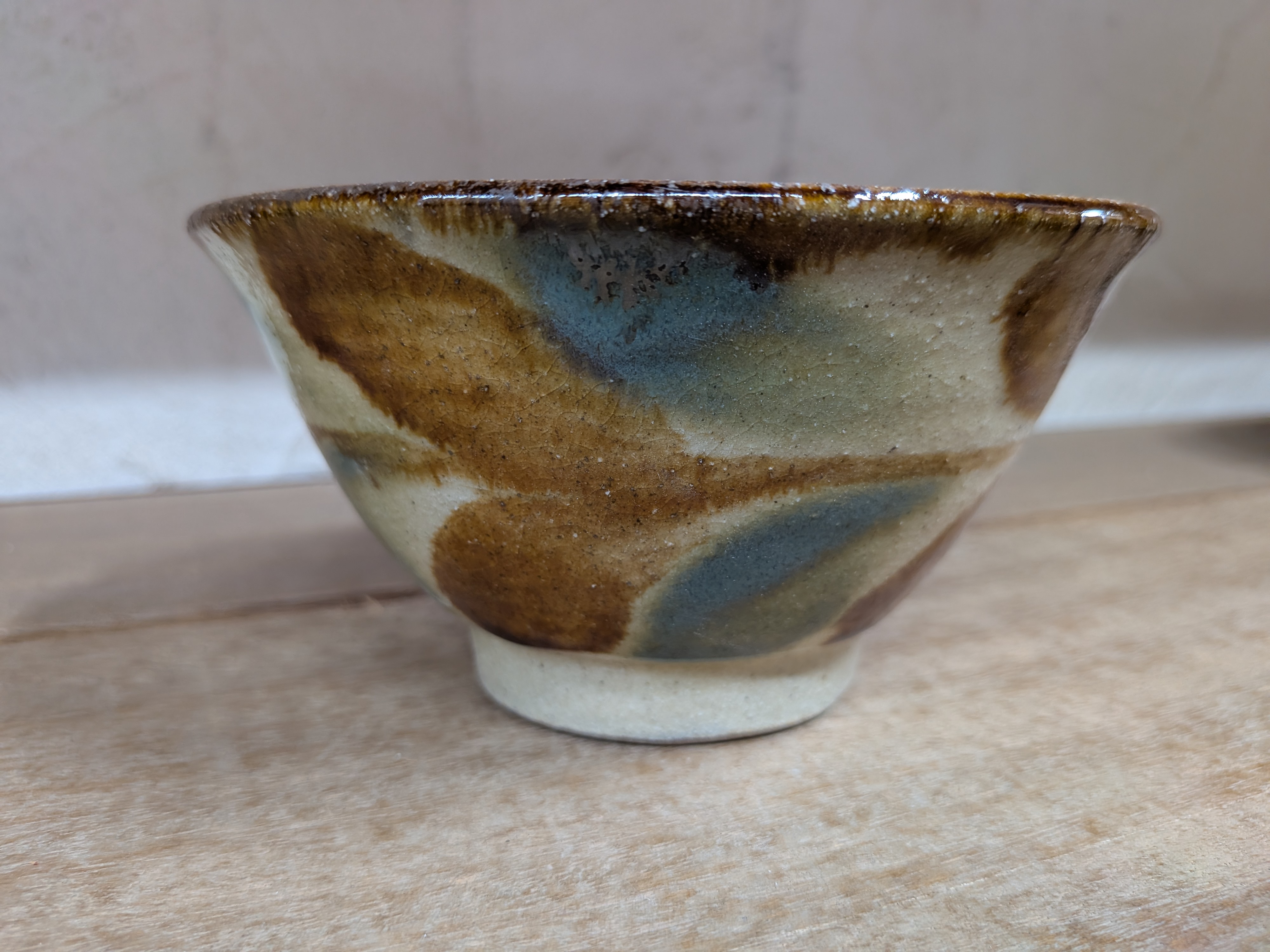
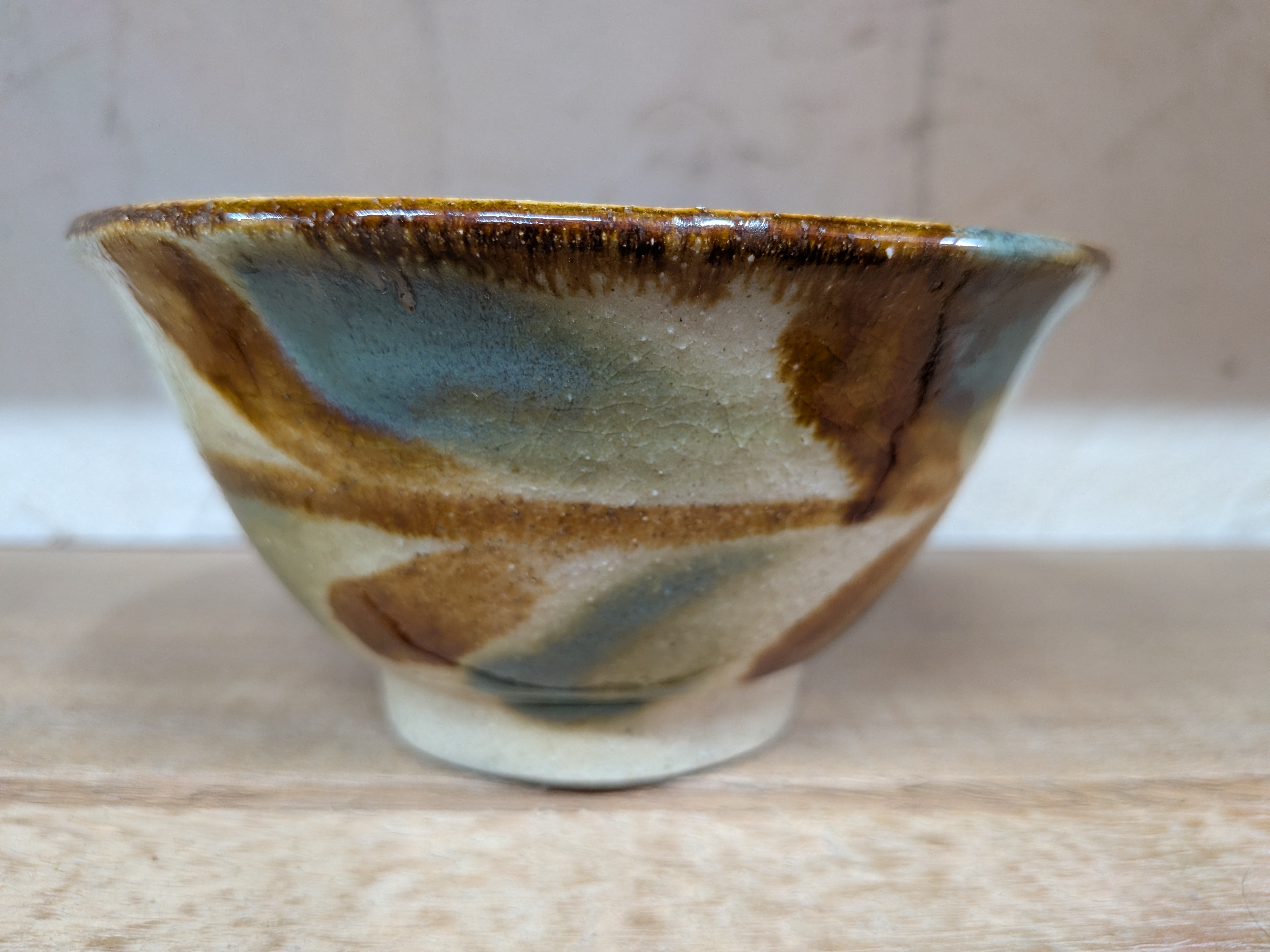
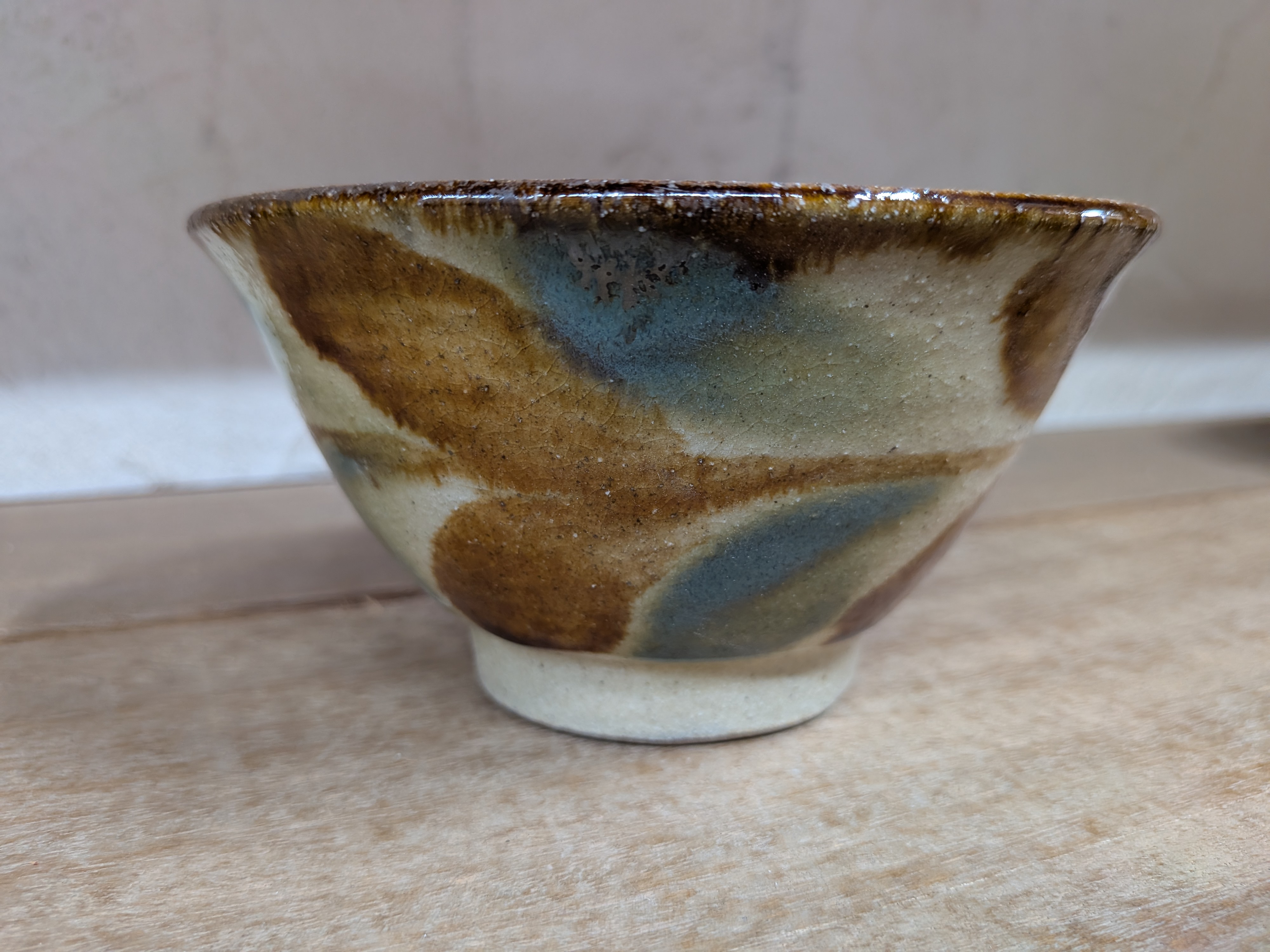
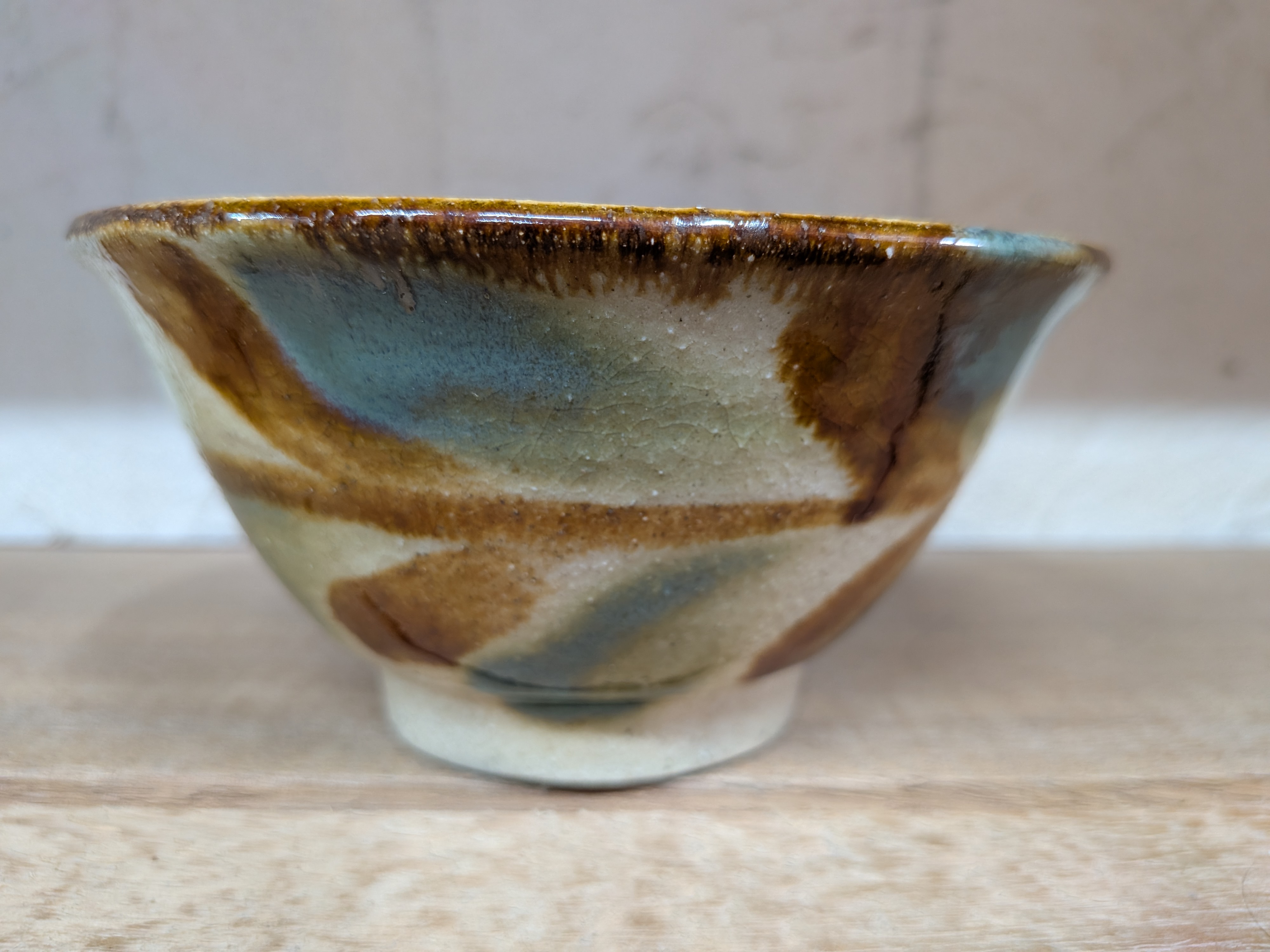
This expressive Yachimun Makai bowl by Kyōshi Matsuda (松田 共司) brings together the practical character of traditional Okinawan tableware with the spontaneous surface expression of wood-fired studio pottery. The broad, gently flared form is finished with a warm cream-colored slip ground and animated by freehand applications of amber-brown Ame-yu and cobalt-blue Gosu. The contrasting colors create an energetic splash pattern while allowing the underlying clay and kiln atmosphere to remain visible through the composition.
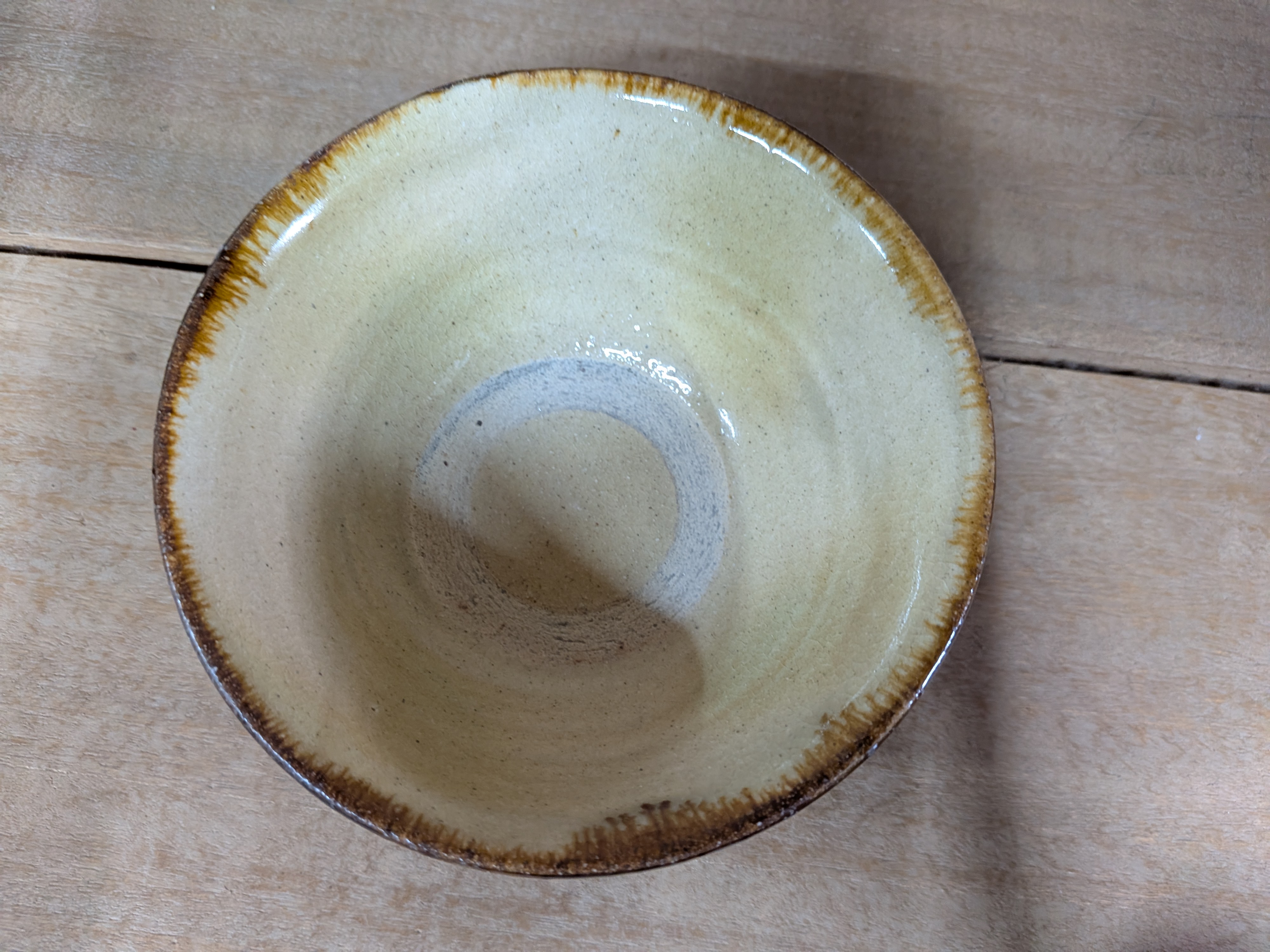
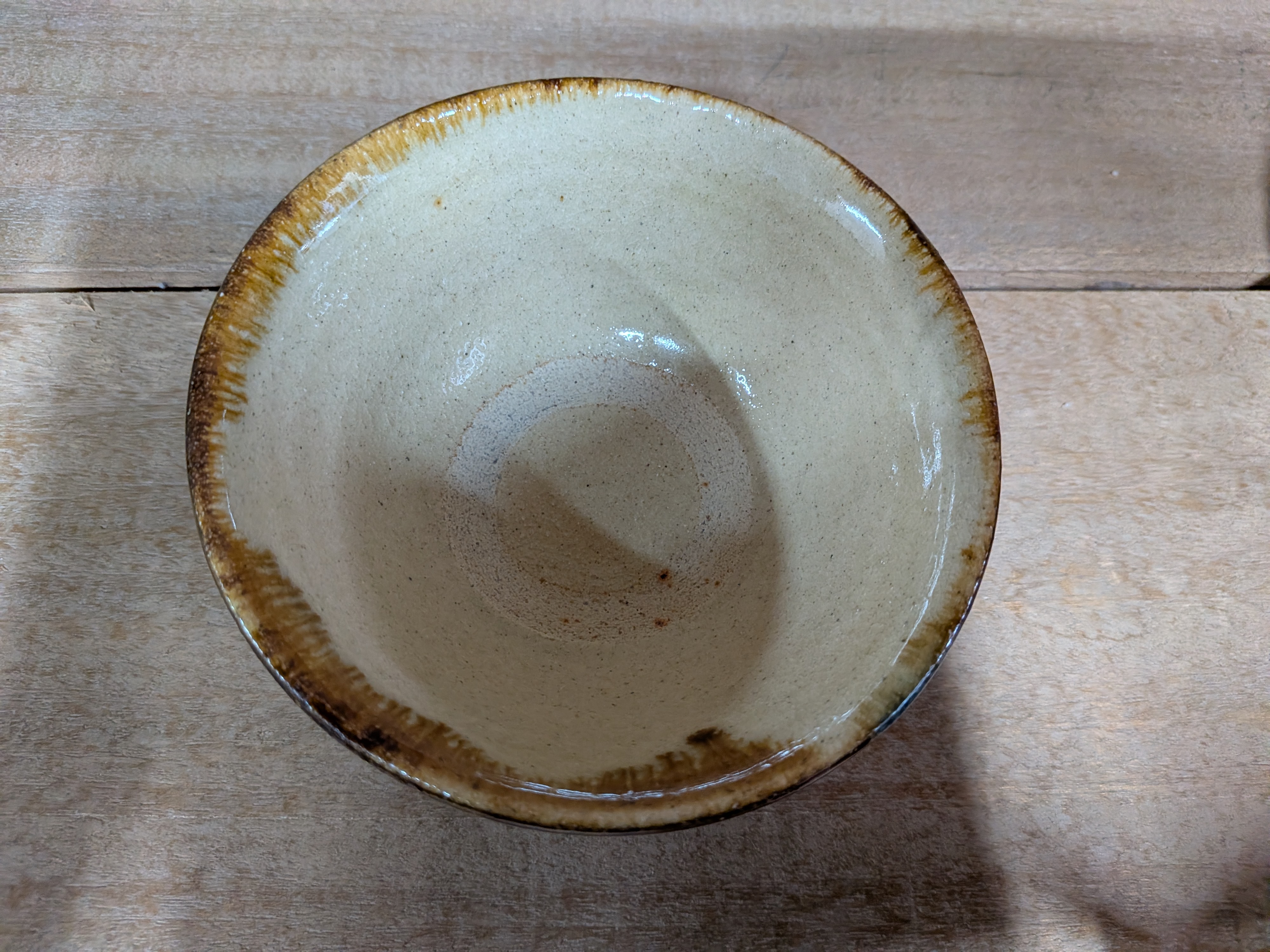
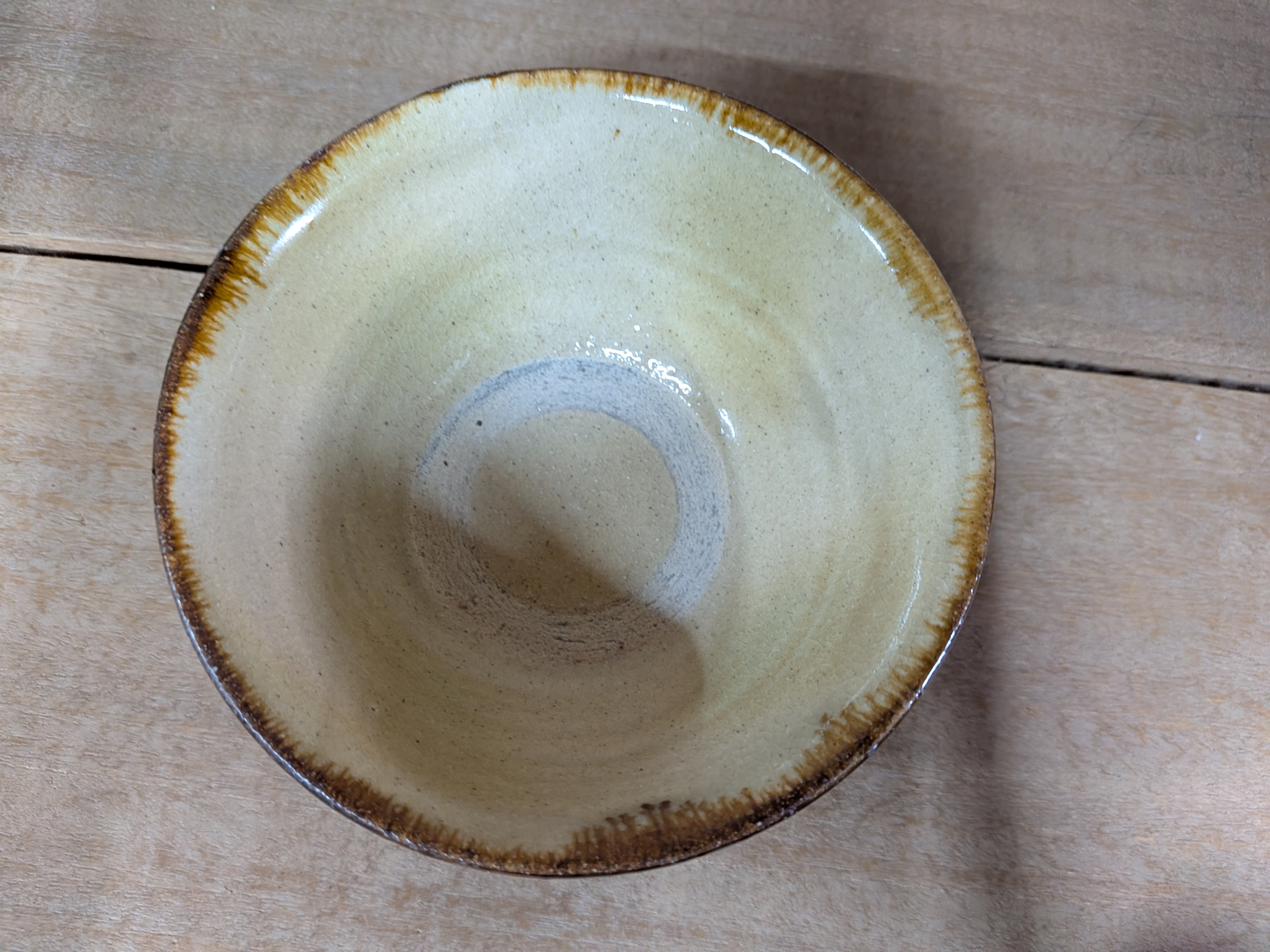
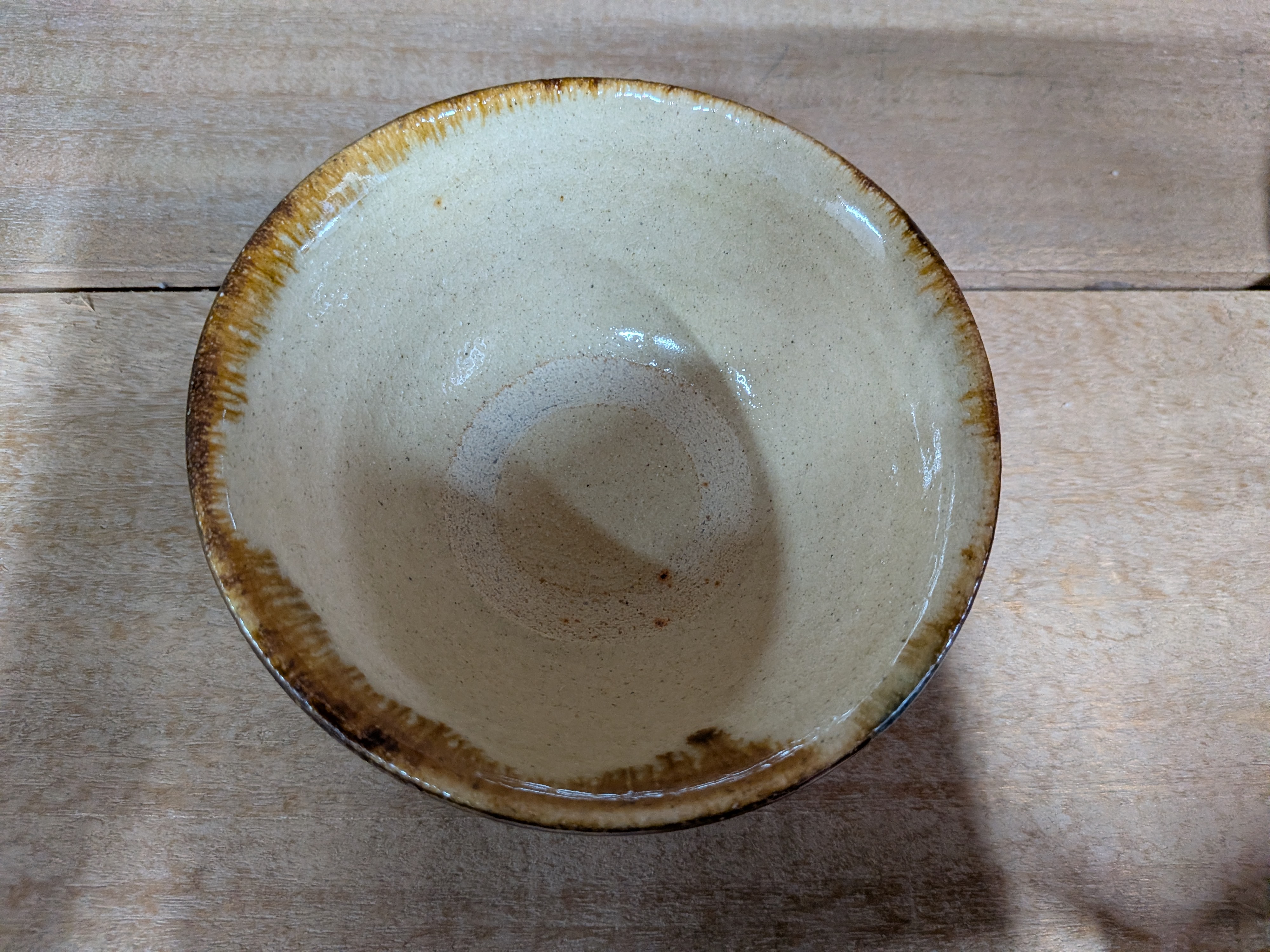
The bowl's substantial foot, generous rim, and softly rounded interior make it naturally suited to everyday Japanese dining, from rice and soup to side dishes and tea. At the same time, the irregular glaze movement and individual firing character give the vessel the visual presence expected of a collectible piece of contemporary Yachimun. Sourced within the Kita-Gama/Yomitan ceramic tradition, this bowl offers a direct connection to the continuing culture of Okinawan folk pottery and the distinctive wood-fired aesthetic of Yachimun no Sato.
Kyōshi Matsuda & Yomitanzan-Yaki Kita-Gama
Kyōshi Matsuda (松田 共司) is a co-founder of Yomitanzan-Yaki Kita-Gama (北窯) in Yomitan Village. Kita-Gama was established in 1992 by Kyōshi Matsuda, his twin brother Yoneshi Matsuda, and fellow ceramic artists. The studio is associated with Yomitan's continuing Yachimun tradition and its large wood-fired climbing kiln (noborigama). The pottery produced within this tradition emphasizes functional forms, expressive decoration, natural material character, and the visual effects created through wood firing. Matsuda's work reflects the enduring spirit of Okinawan Mingei-where useful household objects are given individual character through form, decoration, materials, and the hands of the maker. Rather than separating function from artistry, the Yachimun tradition allows an everyday bowl to become an object of lasting aesthetic value.
The Makai Form
The Makai (マカイ) is one of the recognizable forms of Okinawan everyday pottery. Its practical proportions make it suitable for a wide range of dining uses while providing a broad surface for Yachimun decoration.
Broad Flared Profile: The walls open gently toward the rim, creating a comfortable form for rice, soup, side dishes, or other servings.
Substantial Foot: The raised foot provides stability while giving the bowl its characteristic visual proportion.
Generous Rim: The broad rim creates an inviting presentation surface and emphasizes the movement of the exterior decoration.
Functional Mingei Character: The Makai demonstrates one of the defining principles of folk craft: an object can be both beautiful and useful.
The Janome Stacking Ring
Where present on the individual vessel, the Janome (蛇の目)—literally “snake's eye”—refers to the circular unglazed area traditionally found on the base or interior foot area of certain Japanese ceramics. In wood-fired pottery, such unglazed areas can have a practical relationship to kiln stacking and firing. Their appearance also contributes to the distinctive visual language of traditional Japanese ceramics. For this reason, the Janome should be appreciated primarily as a functional and stylistic ceramic feature, rather than as independent proof of authenticity or age.
Sansai-Inspired Splash Decoration
The bowl's most immediate visual character comes from the interaction of three elements: light slip, amber glaze, and cobalt decoration.
Warm Cream Ground: The light slip provides a quiet foundation that allows the darker colors to remain visually prominent.
Amber Ame-yu: The warm amber-brown glaze introduces an earthy quality associated with the natural palette of Okinawan ceramics.
Cobalt Gosu: Deep blue brushwork provides a strong counterpoint to the warmer earth tones.
Wood-Fired Variation: The final surface develops through the interaction of clay, glaze, kiln atmosphere, placement, and firing. Small variations in tone, pooling, edge coloration, and surface texture are therefore part of the individual identity of the vessel.
Premium Collector Highlights
- Kyōshi Matsuda (松田 共司) — Co-founder of Yomitanzan-Yaki Kita-Gama
- Kita-Gama Heritage — associated with Yomitan's important Yachimun ceramic tradition
- Traditional Makai Form — functional Okinawan bowl designed for everyday dining
- Sansai-Inspired Decoration — expressive amber and cobalt brushwork over a light slip ground
- Hand-Thrown Construction — individually formed ceramic vessel
- Wood-Fired Character — natural tonal variation associated with climbing-kiln firing
- Janome Feature — traditional unglazed ceramic detail where present
- Functional Fine Craft — suitable for rice, soup, side dishes, or tea
- Individual Kiln Character — natural variation makes each handmade vessel visually distinct
Curator's Note
The beauty of this Makai lies in its balance. The simple, functional silhouette provides a calm foundation for the energetic movement of amber and cobalt glaze, while the wood-fired surface introduces subtle variation that rewards closer inspection. It is an example of the enduring Yachimun principle that an everyday object can carry both practical purpose and artistic character.
Dimensions & Physical Specifications
The following measurements are currently estimated studio proportions. For the final Xandre Store listing, actual measurements taken from the individual vessel are preferable.
| Attribute | Details |
| Artist | Kyōshi Matsuda (松田 共司) |
| Studio / Kiln | Yomitanzan-Yaki Kita-Gama (読谷山焼 北窯) |
| Origin | Yomitan Village, Okinawa, Japan |
| Category | Okinawan Yachimun / Fine Art Tableware |
| Form | Traditional Makai Rice & Tea Bowl |
| Decoration | Sansai-inspired amber and cobalt splash pattern |
| Clay | Okinawan ceramic stoneware clay |
| Slip | Light cream/white slip |
| Glazes | Amber Ame-yu and cobalt Gosu |
| Technique | Hand-thrown construction / wood-fired climbing kiln |
| Color Palette | Cream, amber-brown, cobalt blue, natural earth tones |
| Height | Approx. 7–8.2 cm |
| Maximum Rim Diameter | Approx. 12.5–14 cm |
| Base / Foot Diameter | Approx. 5–5.8 cm |
| Weight | Approx. 250–340 g |
| Capacity | Suitable for individual rice, soup, side-dish, or tea service |
| Condition | New / unused studio condition, if confirmed |
| Quantity | One individual handcrafted vessel |
Provenance & Collector Presentation
The bowl is associated with the Yomitanzan-Yaki Kita-Gama tradition in Yomitan Village, Okinawa. If the individual vessel carries a maker's or studio mark, that mark can be photographed and presented as an identifying feature of the work. It is preferable to describe such a mark as an artist/studio identifying mark unless separate authentication documentation is available. The natural variations associated with hand-forming, glaze application, and wood firing should not be interpreted as manufacturing imperfections. Minor differences in color, glaze pooling, surface texture, and firing response are inherent to traditionally produced Yachimun.
Care Instructions
- Hand wash gently with warm water and mild soap.
- Use a soft sponge or cloth rather than abrasive cleaning materials.
- Avoid harsh chemical detergents.
- Do not place in a dishwasher unless the studio specifically confirms dishwasher suitability.
- Avoid microwave and oven use unless the maker specifically confirms that the piece is suitable.
- Avoid sudden temperature changes or thermal shock.
- Do not leave the bowl submerged in water for extended periods.
- Dry completely before long-term storage.
- Store in a stable environment away from extreme temperature and humidity changes.
Shipping & International Orders
Domestic Japan: Carefully packed and shipped using insured delivery where available.
International: International delivery can be arranged using protective collector-grade packaging and appropriate courier service. International customers are responsible for applicable customs duties, import taxes, VAT/GST, brokerage charges, and other destination-country fees.
Xandre Store
Connecting global collectors with the heritage, craftsmanship, and stories behind Japan's finest studio ceramics.
Description
Xandre Store Exclusive - A Signature Work Connecting Yomitan's Wood-Fired Yachimun Tradition with Okinawan Dining Culture
- Artist: Kyōshi Matsuda (松田 共司) — Co-founder of Yomitanzan-Yaki Kita-Gama
- Studio / Kiln Tradition: Yomitanzan-Yaki Kita-Gama (読谷山焼 北窯)
- Origin: Yachimun no Sato, Yomitan Village, Okinawa Prefecture, Japan
- Category: Okinawan Yachimun Ceramic / Fine Art Bowl / Traditional Rice & Tea Vessel
- Form: Makai (マカイ)
- Craft Tradition: やちむん / 登り窯 — Okinawan Yachimun / Wood-Fired Climbing Kiln
This expressive Yachimun Makai bowl by Kyōshi Matsuda (松田 共司) brings together the practical character of traditional Okinawan tableware with the spontaneous surface expression of wood-fired studio pottery. The broad, gently flared form is finished with a warm cream-colored slip ground and animated by freehand applications of amber-brown Ame-yu and cobalt-blue Gosu. The contrasting colors create an energetic splash pattern while allowing the underlying clay and kiln atmosphere to remain visible through the composition.
The bowl's substantial foot, generous rim, and softly rounded interior make it naturally suited to everyday Japanese dining, from rice and soup to side dishes and tea. At the same time, the irregular glaze movement and individual firing character give the vessel the visual presence expected of a collectible piece of contemporary Yachimun. Sourced within the Kita-Gama/Yomitan ceramic tradition, this bowl offers a direct connection to the continuing culture of Okinawan folk pottery and the distinctive wood-fired aesthetic of Yachimun no Sato.
Kyōshi Matsuda & Yomitanzan-Yaki Kita-Gama
Kyōshi Matsuda (松田 共司) is a co-founder of Yomitanzan-Yaki Kita-Gama (北窯) in Yomitan Village. Kita-Gama was established in 1992 by Kyōshi Matsuda, his twin brother Yoneshi Matsuda, and fellow ceramic artists. The studio is associated with Yomitan's continuing Yachimun tradition and its large wood-fired climbing kiln (noborigama). The pottery produced within this tradition emphasizes functional forms, expressive decoration, natural material character, and the visual effects created through wood firing. Matsuda's work reflects the enduring spirit of Okinawan Mingei-where useful household objects are given individual character through form, decoration, materials, and the hands of the maker. Rather than separating function from artistry, the Yachimun tradition allows an everyday bowl to become an object of lasting aesthetic value.
The Makai Form
The Makai (マカイ) is one of the recognizable forms of Okinawan everyday pottery. Its practical proportions make it suitable for a wide range of dining uses while providing a broad surface for Yachimun decoration.
Broad Flared Profile: The walls open gently toward the rim, creating a comfortable form for rice, soup, side dishes, or other servings.
Substantial Foot: The raised foot provides stability while giving the bowl its characteristic visual proportion.
Generous Rim: The broad rim creates an inviting presentation surface and emphasizes the movement of the exterior decoration.
Functional Mingei Character: The Makai demonstrates one of the defining principles of folk craft: an object can be both beautiful and useful.
The Janome Stacking Ring
Where present on the individual vessel, the Janome (蛇の目)—literally “snake's eye”—refers to the circular unglazed area traditionally found on the base or interior foot area of certain Japanese ceramics. In wood-fired pottery, such unglazed areas can have a practical relationship to kiln stacking and firing. Their appearance also contributes to the distinctive visual language of traditional Japanese ceramics. For this reason, the Janome should be appreciated primarily as a functional and stylistic ceramic feature, rather than as independent proof of authenticity or age.
Sansai-Inspired Splash Decoration
The bowl's most immediate visual character comes from the interaction of three elements: light slip, amber glaze, and cobalt decoration.
Warm Cream Ground: The light slip provides a quiet foundation that allows the darker colors to remain visually prominent.
Amber Ame-yu: The warm amber-brown glaze introduces an earthy quality associated with the natural palette of Okinawan ceramics.
Cobalt Gosu: Deep blue brushwork provides a strong counterpoint to the warmer earth tones.
Wood-Fired Variation: The final surface develops through the interaction of clay, glaze, kiln atmosphere, placement, and firing. Small variations in tone, pooling, edge coloration, and surface texture are therefore part of the individual identity of the vessel.
Premium Collector Highlights
- Kyōshi Matsuda (松田 共司) — Co-founder of Yomitanzan-Yaki Kita-Gama
- Kita-Gama Heritage — associated with Yomitan's important Yachimun ceramic tradition
- Traditional Makai Form — functional Okinawan bowl designed for everyday dining
- Sansai-Inspired Decoration — expressive amber and cobalt brushwork over a light slip ground
- Hand-Thrown Construction — individually formed ceramic vessel
- Wood-Fired Character — natural tonal variation associated with climbing-kiln firing
- Janome Feature — traditional unglazed ceramic detail where present
- Functional Fine Craft — suitable for rice, soup, side dishes, or tea
- Individual Kiln Character — natural variation makes each handmade vessel visually distinct
Curator's Note
The beauty of this Makai lies in its balance. The simple, functional silhouette provides a calm foundation for the energetic movement of amber and cobalt glaze, while the wood-fired surface introduces subtle variation that rewards closer inspection. It is an example of the enduring Yachimun principle that an everyday object can carry both practical purpose and artistic character.
Dimensions & Physical Specifications
The following measurements are currently estimated studio proportions. For the final Xandre Store listing, actual measurements taken from the individual vessel are preferable.
| Attribute | Details |
| Artist | Kyōshi Matsuda (松田 共司) |
| Studio / Kiln | Yomitanzan-Yaki Kita-Gama (読谷山焼 北窯) |
| Origin | Yomitan Village, Okinawa, Japan |
| Category | Okinawan Yachimun / Fine Art Tableware |
| Form | Traditional Makai Rice & Tea Bowl |
| Decoration | Sansai-inspired amber and cobalt splash pattern |
| Clay | Okinawan ceramic stoneware clay |
| Slip | Light cream/white slip |
| Glazes | Amber Ame-yu and cobalt Gosu |
| Technique | Hand-thrown construction / wood-fired climbing kiln |
| Color Palette | Cream, amber-brown, cobalt blue, natural earth tones |
| Height | Approx. 7–8.2 cm |
| Maximum Rim Diameter | Approx. 12.5–14 cm |
| Base / Foot Diameter | Approx. 5–5.8 cm |
| Weight | Approx. 250–340 g |
| Capacity | Suitable for individual rice, soup, side-dish, or tea service |
| Condition | New / unused studio condition, if confirmed |
| Quantity | One individual handcrafted vessel |
Provenance & Collector Presentation
The bowl is associated with the Yomitanzan-Yaki Kita-Gama tradition in Yomitan Village, Okinawa. If the individual vessel carries a maker's or studio mark, that mark can be photographed and presented as an identifying feature of the work. It is preferable to describe such a mark as an artist/studio identifying mark unless separate authentication documentation is available. The natural variations associated with hand-forming, glaze application, and wood firing should not be interpreted as manufacturing imperfections. Minor differences in color, glaze pooling, surface texture, and firing response are inherent to traditionally produced Yachimun.
Care Instructions
- Hand wash gently with warm water and mild soap.
- Use a soft sponge or cloth rather than abrasive cleaning materials.
- Avoid harsh chemical detergents.
- Do not place in a dishwasher unless the studio specifically confirms dishwasher suitability.
- Avoid microwave and oven use unless the maker specifically confirms that the piece is suitable.
- Avoid sudden temperature changes or thermal shock.
- Do not leave the bowl submerged in water for extended periods.
- Dry completely before long-term storage.
- Store in a stable environment away from extreme temperature and humidity changes.
Shipping & International Orders
Domestic Japan: Carefully packed and shipped using insured delivery where available.
International: International delivery can be arranged using protective collector-grade packaging and appropriate courier service. International customers are responsible for applicable customs duties, import taxes, VAT/GST, brokerage charges, and other destination-country fees.
Xandre Store
Connecting global collectors with the heritage, craftsmanship, and stories behind Japan's finest studio ceramics.
Previously viewed products
No recently viewed products.