

Description
Xandre Store Exclusive - A Signature Work Connecting Yomitan’s Wood-Fired Yachimun Tradition with Contemporary Tea Culture
- Artist: Kyōshi Matsuda (松田 共司)
- Studio / Kiln Tradition: Yomitanzan-Yaki Kita-Gama (読谷山焼 北窯)
- Origin: Yachimun no Sato, Yomitan Village, Okinawa, Japan
- Category: Okinawan Yachimun Ceramic / Fine Art Teaware / Handcrafted Teapot
- Craft Tradition: やちむん / 登り窯 — Okinawan Yachimun / Wood-Fired Climbing Kiln
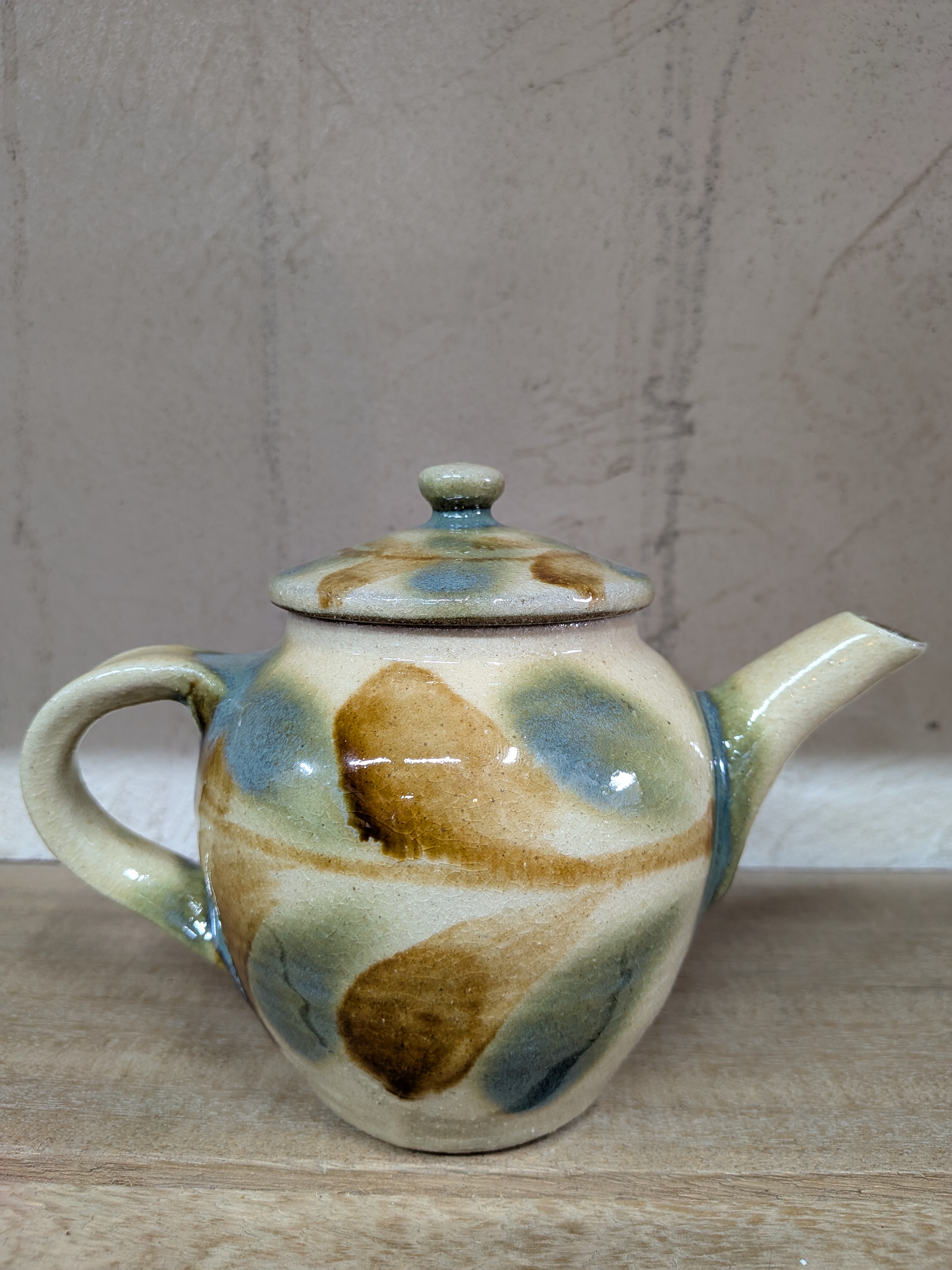
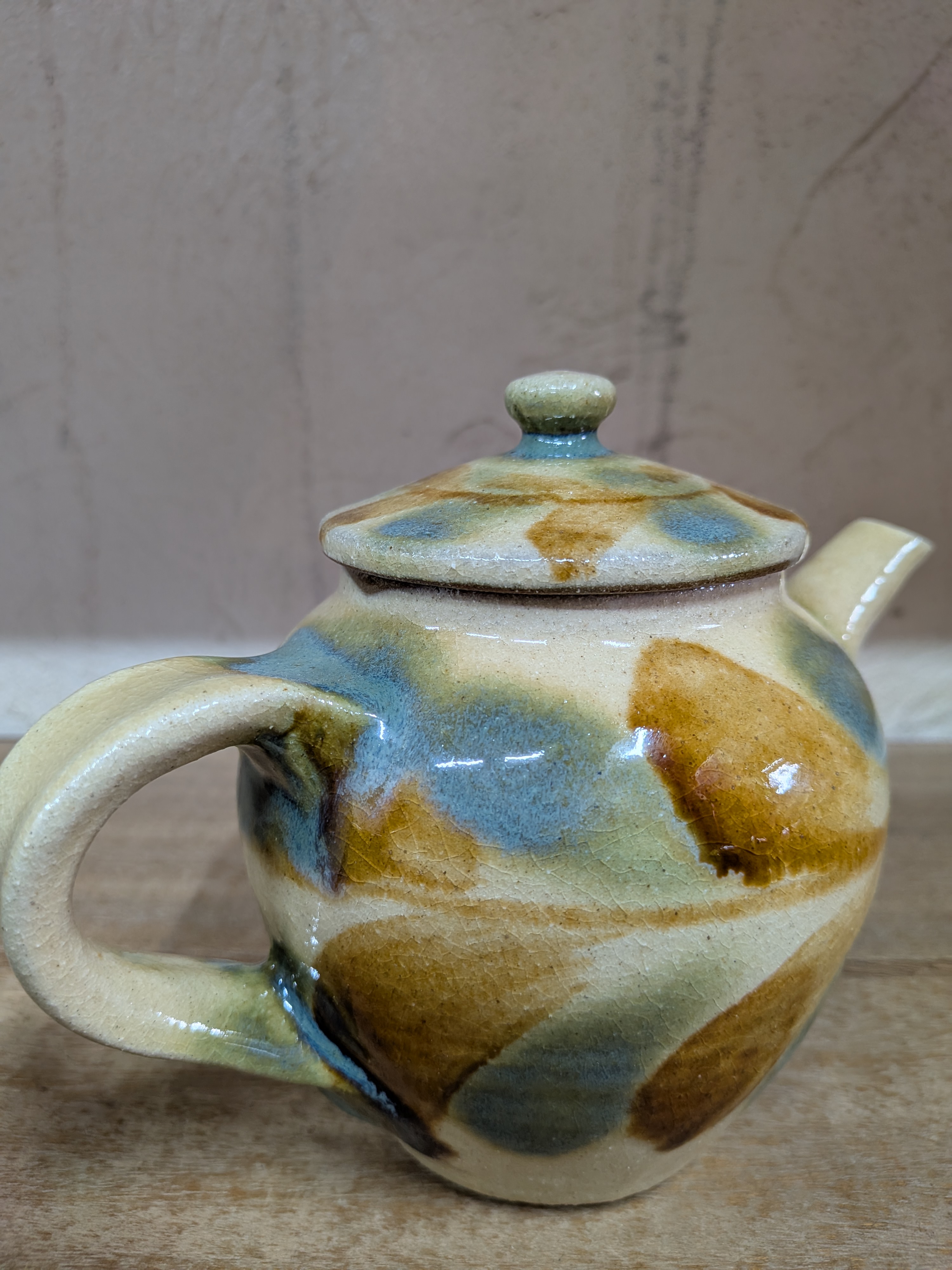
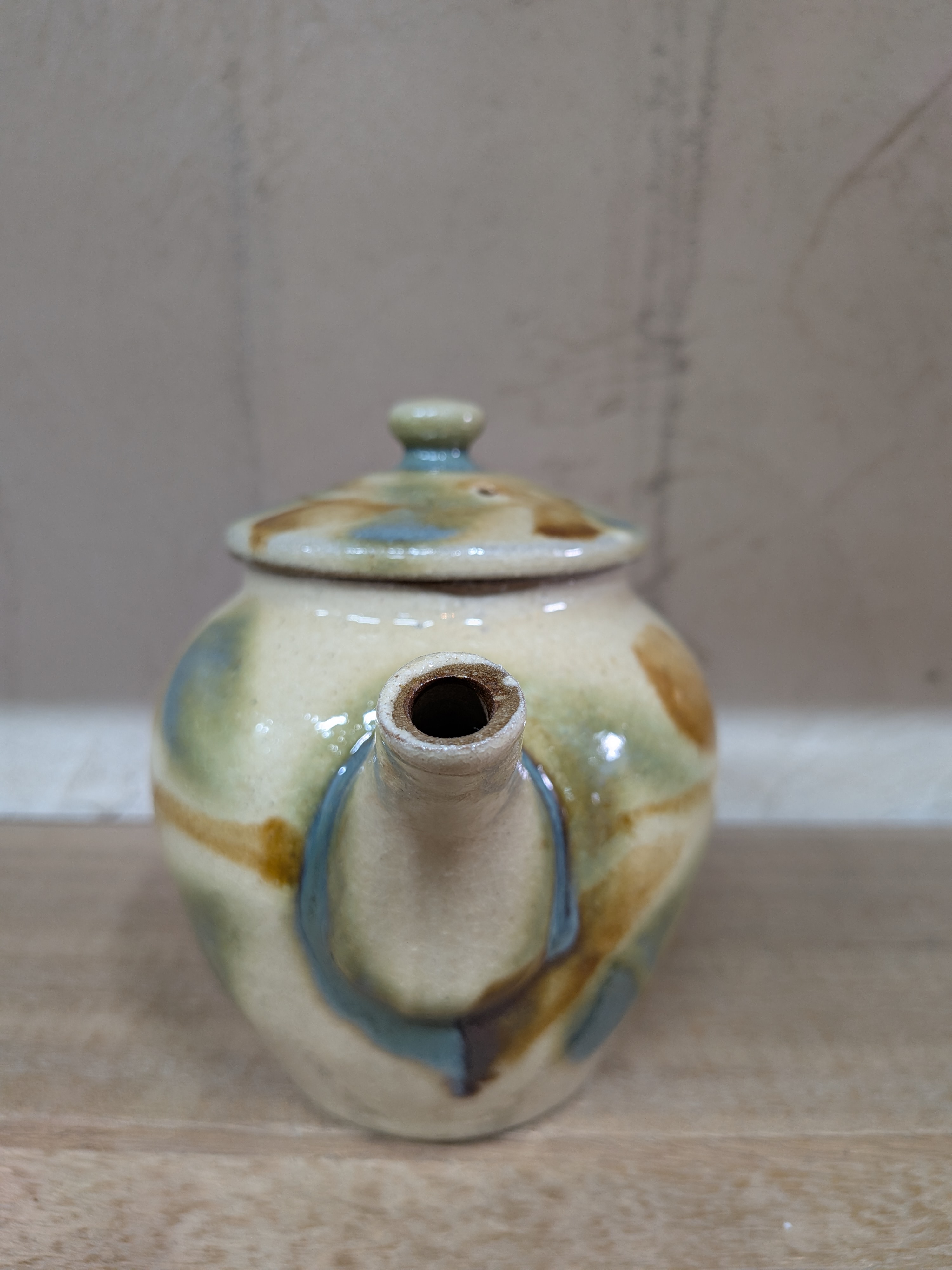
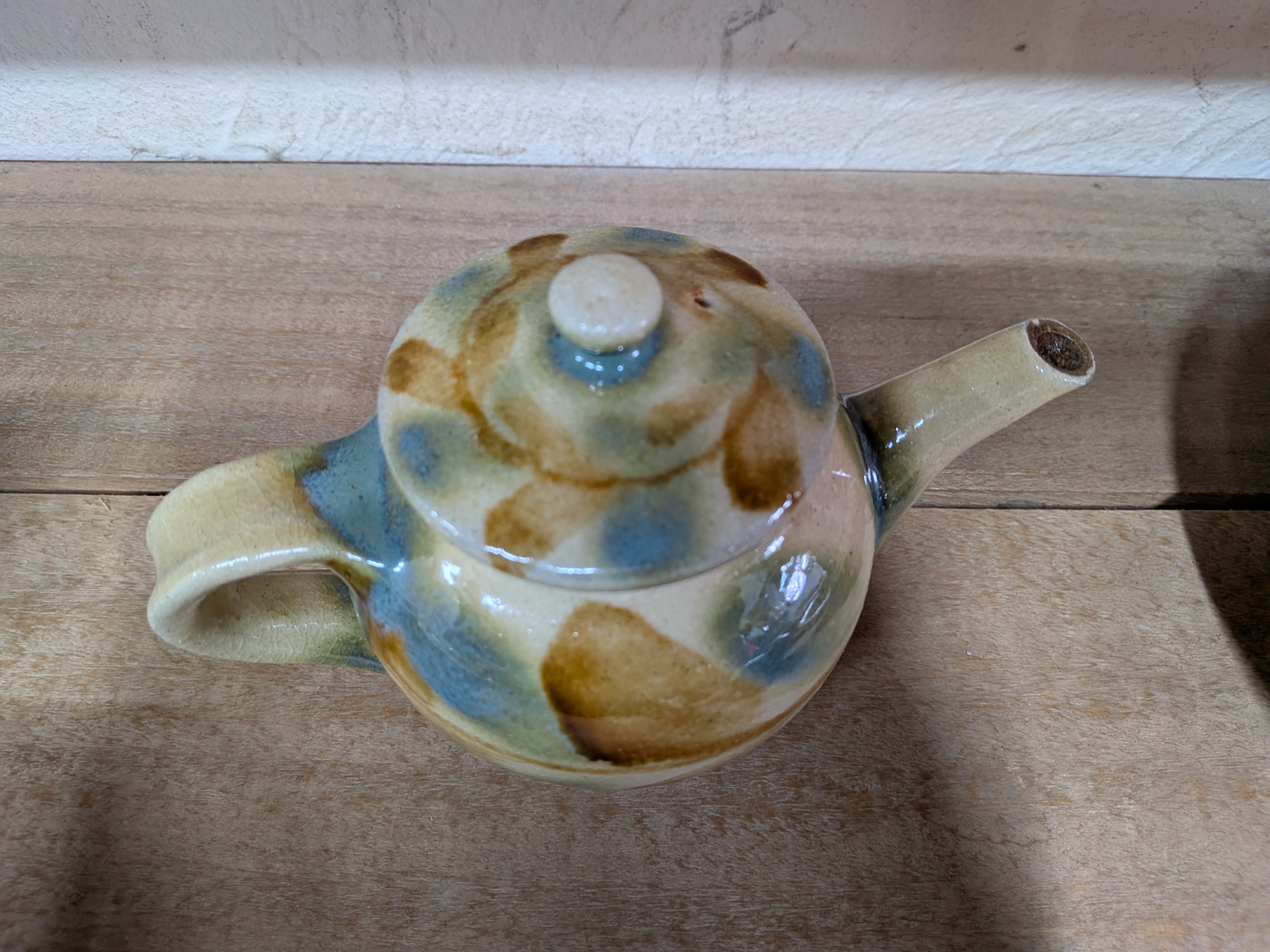
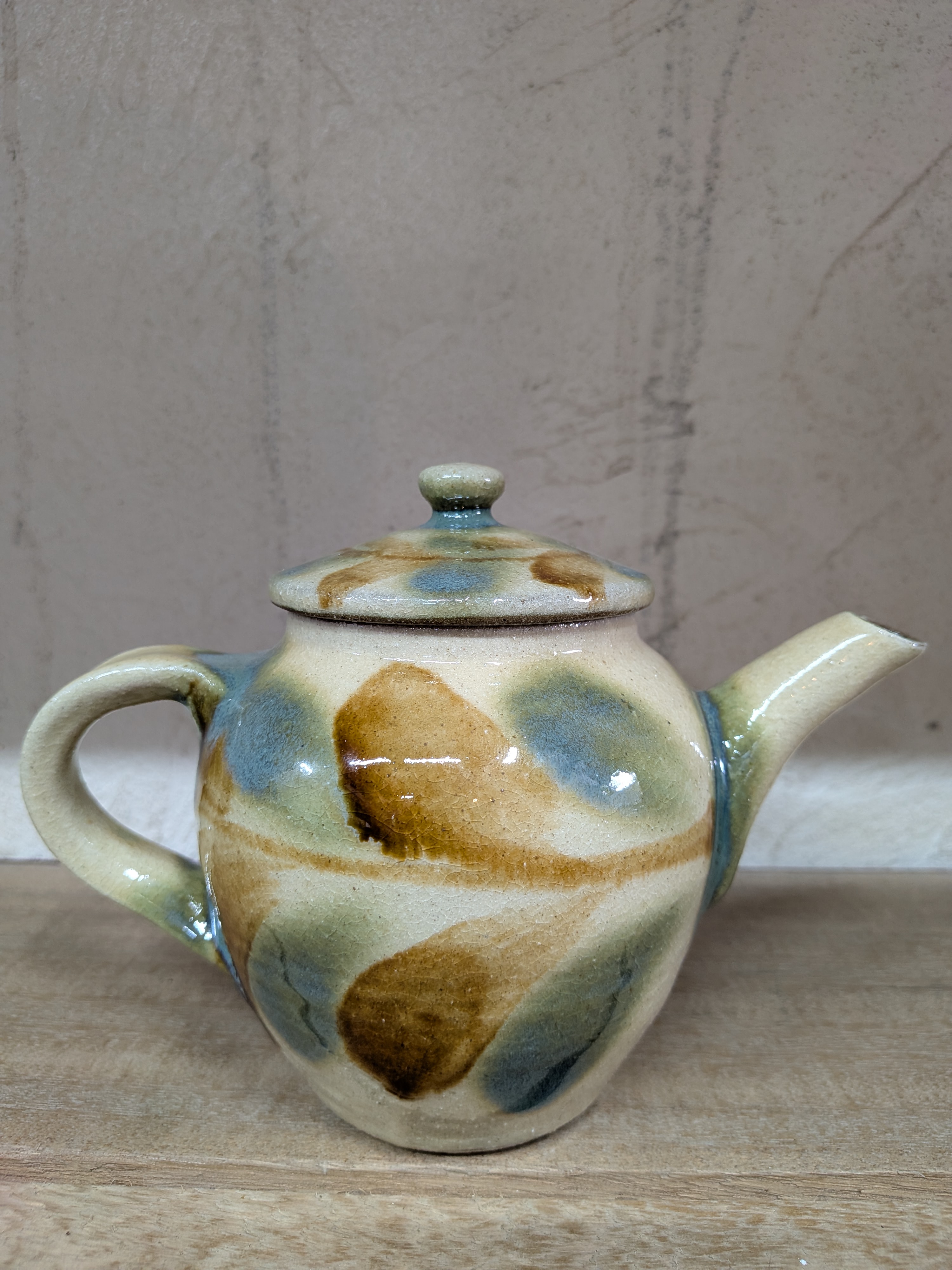
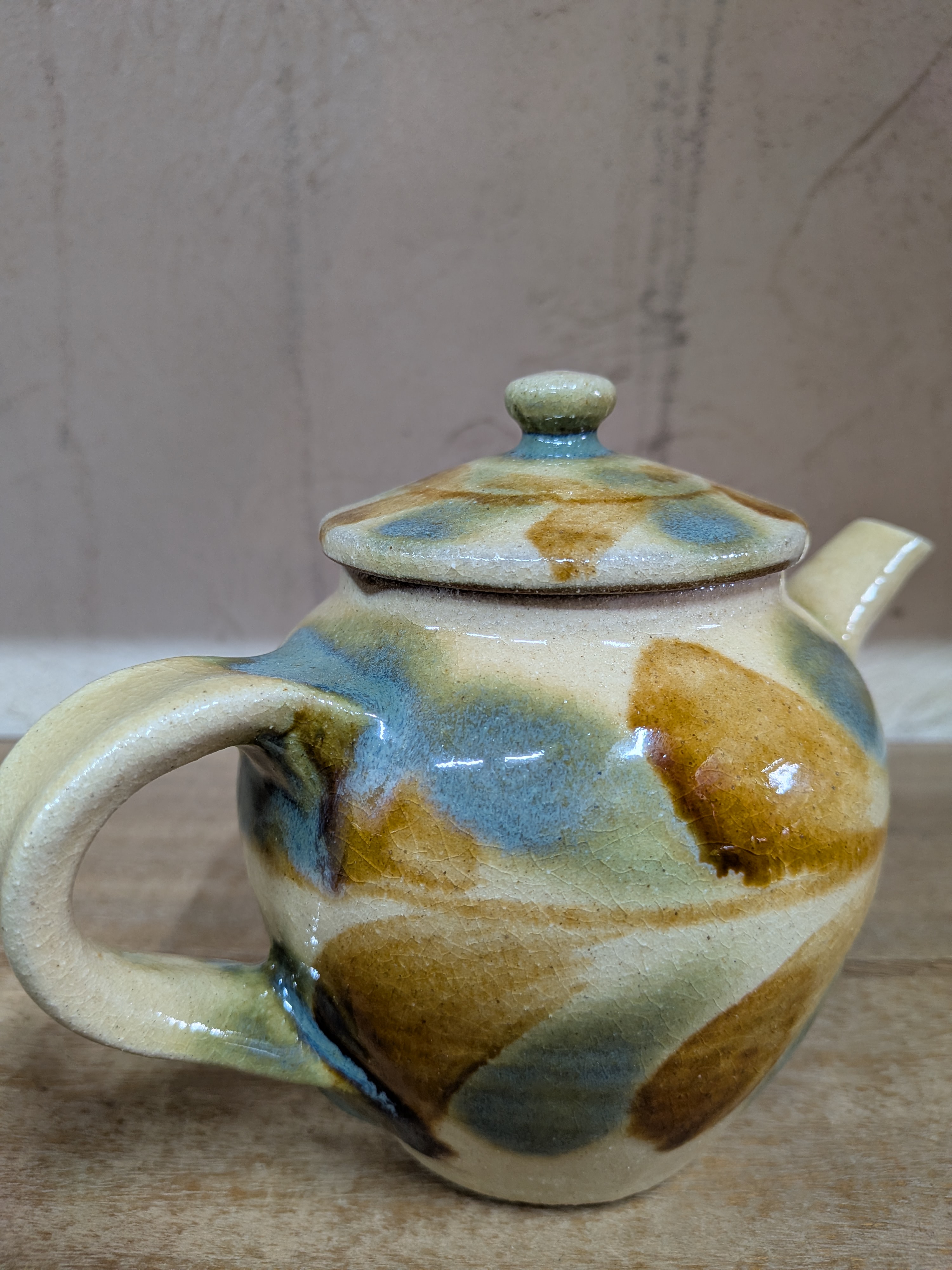
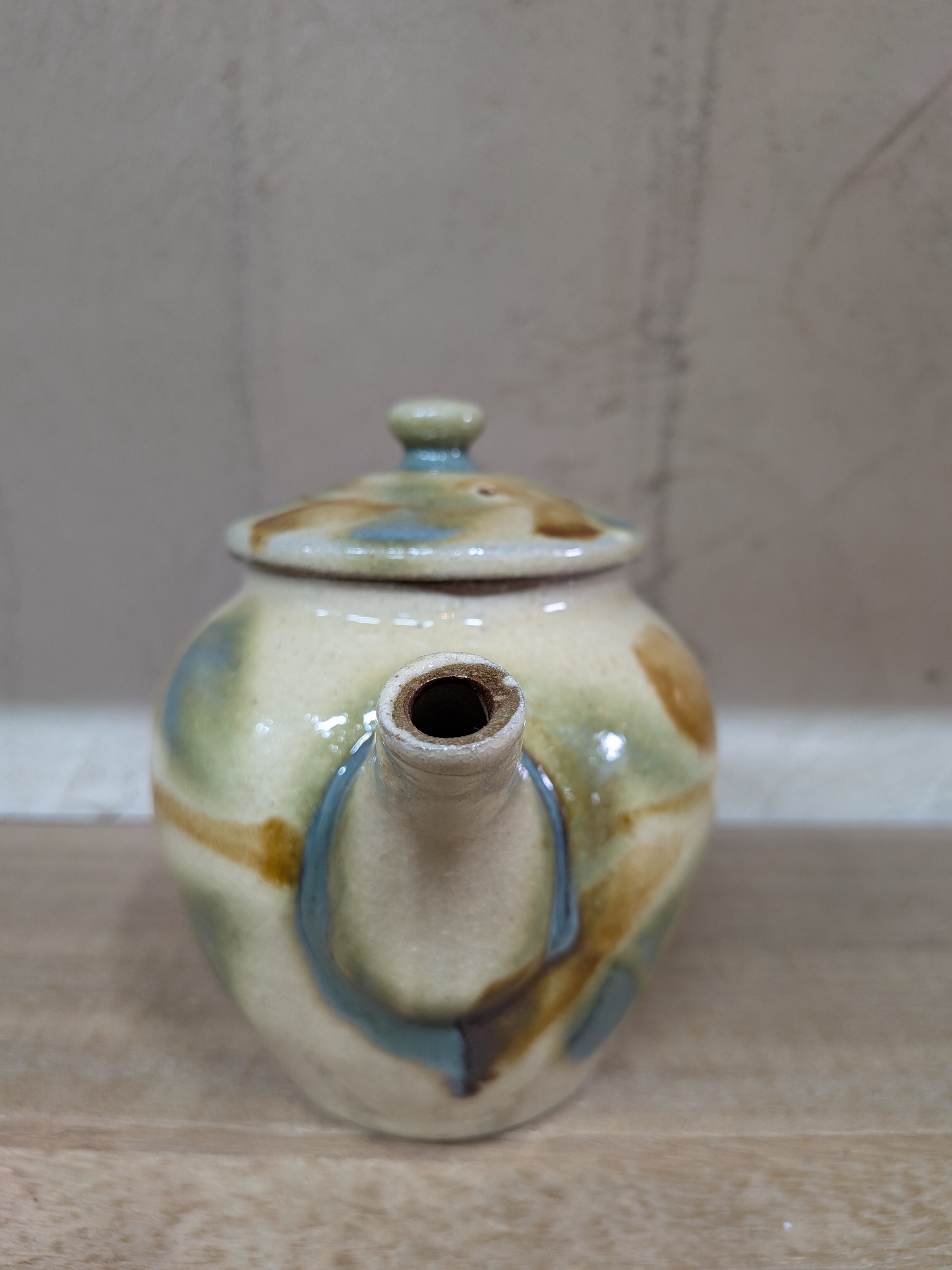
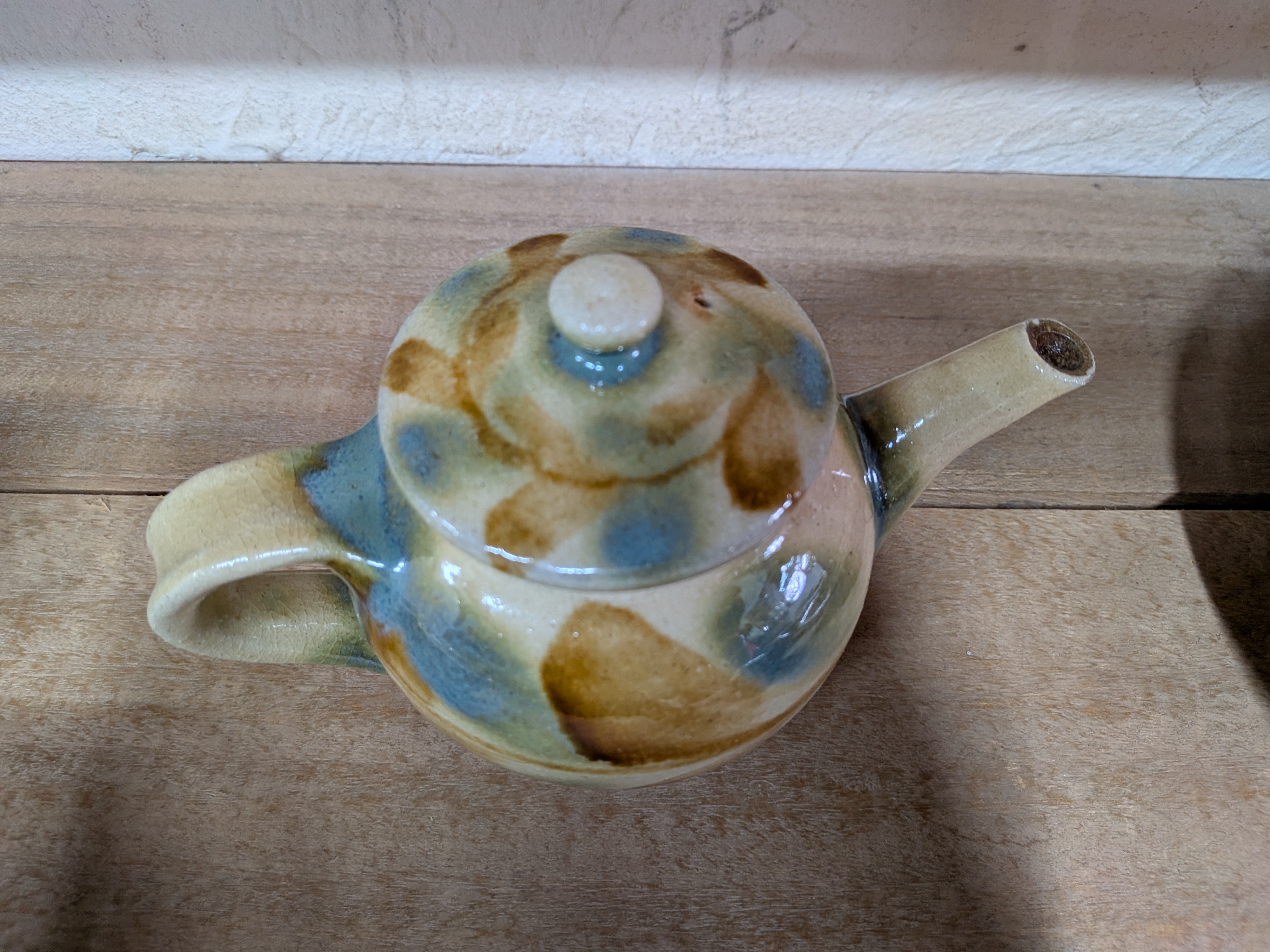
This distinctive Yachimun teapot by Kyōshi Matsuda (松田 共司) presents the expressive character of Okinawan folk ceramics through a functional form designed for everyday tea service and collection. The vessel combines a warm cream-colored slip ground with energetic applications of amber-brown glaze (Ame-yu) and cobalt-blue (Gosu), creating the spontaneous splash-pattern aesthetic associated with traditional Okinawan Yachimun. Its rounded body, fitted lid, pulled handle, and tapered spout give the piece a substantial yet approachable presence. Rather than relying on elaborate ornament, the design allows the movement of the glaze, variation of the kiln surface, and natural character of the clay to define the vessel.
Sourced from Yomitanzan-Yaki Kita-Gama in Yomitan Village, the piece represents the continuing tradition of functional, wood-fired Okinawan ceramics made within the Yachimun no Sato community.
Kyōshi Matsuda & Yomitanzan-Yaki Kita-Gama
Kyōshi Matsuda (松田 共司) is one of the principal ceramic artists associated with Yomitanzan-Yaki Kita-Gama (北窯) in Yomitan Village. Kita-Gama was established in 1992 by Kyōshi Matsuda, his twin brother Yoneshi Matsuda, and fellow ceramic artists. The kiln became part of the continuing development of Yomitan's Yachimun tradition, maintaining the use of a large wood-fired climbing kiln (noborigama) while producing functional ceramics rooted in Okinawan folk-art aesthetics.
Matsuda's work is characterized by an emphasis on strong, practical forms and expressive surface decoration. The restrained geometry of the vessel allows the glaze work and firing atmosphere to remain central to the visual character of each piece. The result is quintessentially Yachimun: useful, tactile, expressive, and closely connected to the materials and firing traditions of Okinawa.
Traditional Sansai Splash Decoration
The defining feature of this teapot is its Sansai-inspired splash decoration, combining contrasting amber and cobalt tones over a light slip ground.
Amber Ame-yu: The warm amber-brown glaze creates an earthy foundation that complements the natural tones of Okinawan clay.
Cobalt Gosu: Deep blue brushwork introduces a striking visual contrast, recalling the strong blue-and-earth palette frequently encountered in Okinawan ceramic decoration.
Expressive Hand Application
The irregular movement of the glaze gives the surface an energetic, spontaneous character. Each application interacts differently with the underlying clay and the wood-firing atmosphere, ensuring that no two handmade vessels have exactly the same surface expression.
The Craft of the Teapot
A functional ceramic teapot requires the successful integration of several individual components.
1. Balanced Body: The rounded chamber provides the vessel with a generous, stable profile while maintaining comfortable proportions for handling.
2. Fitted Lid: The lid is proportioned to the opening of the body and incorporates a small finial that completes the traditional silhouette.
3. Hand-Formed Handle: The substantial handle provides a secure grip and visually balances the body and spout.
4. Controlled Spout: The tapered spout extends naturally from the body and completes the vessel's functional pouring profile.
5. Wood-Fired Surface: The final character of a Yachimun vessel is influenced not only by glaze application but also by the atmosphere and positioning within the wood-fired kiln. Subtle variations in color, texture, and surface response are therefore part of the character of traditionally fired ceramics.
Premium Collector Highlights
- Kyōshi Matsuda (松田 共司) — associated with Yomitanzan-Yaki Kita-Gama
- Kita-Gama Heritage — produced within Yomitan's important Yachimun ceramic community
- Traditional Okinawan Yachimun — functional pottery rooted in Okinawan folk-craft tradition
- Sansai-Inspired Decoration — expressive amber and cobalt splash work over a light slip ground
- Handcrafted Teapot Form — individually formed body, lid, handle, and spout
- Wood-Fired Character — natural variation created through climbing-kiln firing
- Functional Fine Craft — designed for tea service while remaining suitable for display and collection
- Individual Kiln Character — surface variation contributes to the individuality of the vessel
- Okinawan Provenance — sourced from the Kita-Gama/Yomitan ceramic tradition
Curator's Note
The appeal of this teapot lies in its balance between utility and expression. Its rounded silhouette provides a quiet foundation for the energetic movement of amber and cobalt glaze, while the wood-fired surface introduces subtle variations that reveal the handmade character of the vessel. It is a particularly engaging example of how Yachimun transforms an everyday object into a work of functional ceramic art.
Dimensions & Physical Specifications
Measurements are currently presented as estimated studio proportions and should be replaced with measured dimensions before publication whenever possible.
| Attribute | Details |
| Artist | Kyōshi Matsuda (松田 共司) |
| Studio / Kiln | Yomitanzan-Yaki Kita-Gama (読谷山焼 北窯) |
| Origin | Yomitan Village, Okinawa, Japan |
| Category | Okinawan Yachimun / Fine Art Teaware |
| Form | Ceramic Teapot with Lid, Spout & Handle |
| Decoration | Sansai-inspired amber and cobalt splash pattern |
| Clay | Okinawan ceramic stoneware clay |
| Slip | Light cream/white slip ground |
| Glazes | Amber Ame-yu and cobalt Gosu |
| Technique | Hand-formed ceramic construction / wood-fired climbing kiln |
| Color Palette | Cream, amber-brown, cobalt blue, natural earth tones |
| Height | Approx. 13–15 cm |
| Maximum Width | Approx. 18–20 cm |
| Body Diameter | Approx. 11.5–13 cm |
| Lid Opening | Approx. 6.5–7.5 cm |
| Base Diameter | Approx. 6–7 cm |
| Weight | Approx. 550–700 g |
| Capacity | Approx. 450–600 ml |
| Condition | New / unused studio condition, if confirmed |
| Quantity | One individual handcrafted vessel |
Provenance & Collector Presentation
The teapot is associated with Yomitanzan-Yaki Kita-Gama (北窯) in Yomitan Village, one of Okinawa's important contemporary centers for traditional Yachimun production. For the Xandre Store presentation, provenance should be described according to the documentation accompanying the actual piece. If the vessel carries a maker's or studio mark, it may be presented as an identifying mark of the work rather than described as independent authentication unless formal authentication documentation is available.
Because each piece is individually handmade and wood-fired, variations in glaze movement, kiln coloration, surface texture, and minor irregularities should be understood as characteristics of the craft rather than defects.
Care Instructions
- Hand wash gently with warm water.
- Use a soft sponge or cloth rather than abrasive cleaning materials.
- Avoid harsh chemical detergents.
- Do not place in a dishwasher unless the studio specifically confirms dishwasher suitability.
- Do not use over a direct stovetop flame.
- Avoid sudden temperature changes that could cause thermal shock.
- Do not expose the vessel to prolonged soaking.
- Allow the interior and lid to dry thoroughly before storage.
- Store in a stable, dry environment away from extreme temperature or humidity fluctuations.
Note: If used for tea, natural staining from tea, coffee, or other beverages may gradually develop within porous or crazed ceramic surfaces. This can become part of the vessel's evolving character.
Shipping & International Orders
Domestic Japan: Carefully packed and shipped using insured delivery where available.
International: International shipping can be arranged with protective packaging and appropriate courier service. International customers are responsible for any applicable customs duties, import taxes, VAT/GST, brokerage charges, or other destination-country fees.
Description
Xandre Store Exclusive - A Signature Work Connecting Yomitan’s Wood-Fired Yachimun Tradition with Contemporary Tea Culture
- Artist: Kyōshi Matsuda (松田 共司)
- Studio / Kiln Tradition: Yomitanzan-Yaki Kita-Gama (読谷山焼 北窯)
- Origin: Yachimun no Sato, Yomitan Village, Okinawa, Japan
- Category: Okinawan Yachimun Ceramic / Fine Art Teaware / Handcrafted Teapot
- Craft Tradition: やちむん / 登り窯 — Okinawan Yachimun / Wood-Fired Climbing Kiln
This distinctive Yachimun teapot by Kyōshi Matsuda (松田 共司) presents the expressive character of Okinawan folk ceramics through a functional form designed for everyday tea service and collection. The vessel combines a warm cream-colored slip ground with energetic applications of amber-brown glaze (Ame-yu) and cobalt-blue (Gosu), creating the spontaneous splash-pattern aesthetic associated with traditional Okinawan Yachimun. Its rounded body, fitted lid, pulled handle, and tapered spout give the piece a substantial yet approachable presence. Rather than relying on elaborate ornament, the design allows the movement of the glaze, variation of the kiln surface, and natural character of the clay to define the vessel.
Sourced from Yomitanzan-Yaki Kita-Gama in Yomitan Village, the piece represents the continuing tradition of functional, wood-fired Okinawan ceramics made within the Yachimun no Sato community.
Kyōshi Matsuda & Yomitanzan-Yaki Kita-Gama
Kyōshi Matsuda (松田 共司) is one of the principal ceramic artists associated with Yomitanzan-Yaki Kita-Gama (北窯) in Yomitan Village. Kita-Gama was established in 1992 by Kyōshi Matsuda, his twin brother Yoneshi Matsuda, and fellow ceramic artists. The kiln became part of the continuing development of Yomitan's Yachimun tradition, maintaining the use of a large wood-fired climbing kiln (noborigama) while producing functional ceramics rooted in Okinawan folk-art aesthetics.
Matsuda's work is characterized by an emphasis on strong, practical forms and expressive surface decoration. The restrained geometry of the vessel allows the glaze work and firing atmosphere to remain central to the visual character of each piece. The result is quintessentially Yachimun: useful, tactile, expressive, and closely connected to the materials and firing traditions of Okinawa.
Traditional Sansai Splash Decoration
The defining feature of this teapot is its Sansai-inspired splash decoration, combining contrasting amber and cobalt tones over a light slip ground.
Amber Ame-yu: The warm amber-brown glaze creates an earthy foundation that complements the natural tones of Okinawan clay.
Cobalt Gosu: Deep blue brushwork introduces a striking visual contrast, recalling the strong blue-and-earth palette frequently encountered in Okinawan ceramic decoration.
Expressive Hand Application
The irregular movement of the glaze gives the surface an energetic, spontaneous character. Each application interacts differently with the underlying clay and the wood-firing atmosphere, ensuring that no two handmade vessels have exactly the same surface expression.
The Craft of the Teapot
A functional ceramic teapot requires the successful integration of several individual components.
1. Balanced Body: The rounded chamber provides the vessel with a generous, stable profile while maintaining comfortable proportions for handling.
2. Fitted Lid: The lid is proportioned to the opening of the body and incorporates a small finial that completes the traditional silhouette.
3. Hand-Formed Handle: The substantial handle provides a secure grip and visually balances the body and spout.
4. Controlled Spout: The tapered spout extends naturally from the body and completes the vessel's functional pouring profile.
5. Wood-Fired Surface: The final character of a Yachimun vessel is influenced not only by glaze application but also by the atmosphere and positioning within the wood-fired kiln. Subtle variations in color, texture, and surface response are therefore part of the character of traditionally fired ceramics.
Premium Collector Highlights
- Kyōshi Matsuda (松田 共司) — associated with Yomitanzan-Yaki Kita-Gama
- Kita-Gama Heritage — produced within Yomitan's important Yachimun ceramic community
- Traditional Okinawan Yachimun — functional pottery rooted in Okinawan folk-craft tradition
- Sansai-Inspired Decoration — expressive amber and cobalt splash work over a light slip ground
- Handcrafted Teapot Form — individually formed body, lid, handle, and spout
- Wood-Fired Character — natural variation created through climbing-kiln firing
- Functional Fine Craft — designed for tea service while remaining suitable for display and collection
- Individual Kiln Character — surface variation contributes to the individuality of the vessel
- Okinawan Provenance — sourced from the Kita-Gama/Yomitan ceramic tradition
Curator's Note
The appeal of this teapot lies in its balance between utility and expression. Its rounded silhouette provides a quiet foundation for the energetic movement of amber and cobalt glaze, while the wood-fired surface introduces subtle variations that reveal the handmade character of the vessel. It is a particularly engaging example of how Yachimun transforms an everyday object into a work of functional ceramic art.
Dimensions & Physical Specifications
Measurements are currently presented as estimated studio proportions and should be replaced with measured dimensions before publication whenever possible.
| Attribute | Details |
| Artist | Kyōshi Matsuda (松田 共司) |
| Studio / Kiln | Yomitanzan-Yaki Kita-Gama (読谷山焼 北窯) |
| Origin | Yomitan Village, Okinawa, Japan |
| Category | Okinawan Yachimun / Fine Art Teaware |
| Form | Ceramic Teapot with Lid, Spout & Handle |
| Decoration | Sansai-inspired amber and cobalt splash pattern |
| Clay | Okinawan ceramic stoneware clay |
| Slip | Light cream/white slip ground |
| Glazes | Amber Ame-yu and cobalt Gosu |
| Technique | Hand-formed ceramic construction / wood-fired climbing kiln |
| Color Palette | Cream, amber-brown, cobalt blue, natural earth tones |
| Height | Approx. 13–15 cm |
| Maximum Width | Approx. 18–20 cm |
| Body Diameter | Approx. 11.5–13 cm |
| Lid Opening | Approx. 6.5–7.5 cm |
| Base Diameter | Approx. 6–7 cm |
| Weight | Approx. 550–700 g |
| Capacity | Approx. 450–600 ml |
| Condition | New / unused studio condition, if confirmed |
| Quantity | One individual handcrafted vessel |
Provenance & Collector Presentation
The teapot is associated with Yomitanzan-Yaki Kita-Gama (北窯) in Yomitan Village, one of Okinawa's important contemporary centers for traditional Yachimun production. For the Xandre Store presentation, provenance should be described according to the documentation accompanying the actual piece. If the vessel carries a maker's or studio mark, it may be presented as an identifying mark of the work rather than described as independent authentication unless formal authentication documentation is available.
Because each piece is individually handmade and wood-fired, variations in glaze movement, kiln coloration, surface texture, and minor irregularities should be understood as characteristics of the craft rather than defects.
Care Instructions
- Hand wash gently with warm water.
- Use a soft sponge or cloth rather than abrasive cleaning materials.
- Avoid harsh chemical detergents.
- Do not place in a dishwasher unless the studio specifically confirms dishwasher suitability.
- Do not use over a direct stovetop flame.
- Avoid sudden temperature changes that could cause thermal shock.
- Do not expose the vessel to prolonged soaking.
- Allow the interior and lid to dry thoroughly before storage.
- Store in a stable, dry environment away from extreme temperature or humidity fluctuations.
Note: If used for tea, natural staining from tea, coffee, or other beverages may gradually develop within porous or crazed ceramic surfaces. This can become part of the vessel's evolving character.
Shipping & International Orders
Domestic Japan: Carefully packed and shipped using insured delivery where available.
International: International shipping can be arranged with protective packaging and appropriate courier service. International customers are responsible for any applicable customs duties, import taxes, VAT/GST, brokerage charges, or other destination-country fees.
Previously viewed products
No recently viewed products.