

Description
Xandre Store Exclusive: Jiro Kinjo Okinawan Yachimun Masterpiece
Celebrating the Legacy of Okinawa's First Living National Treasure
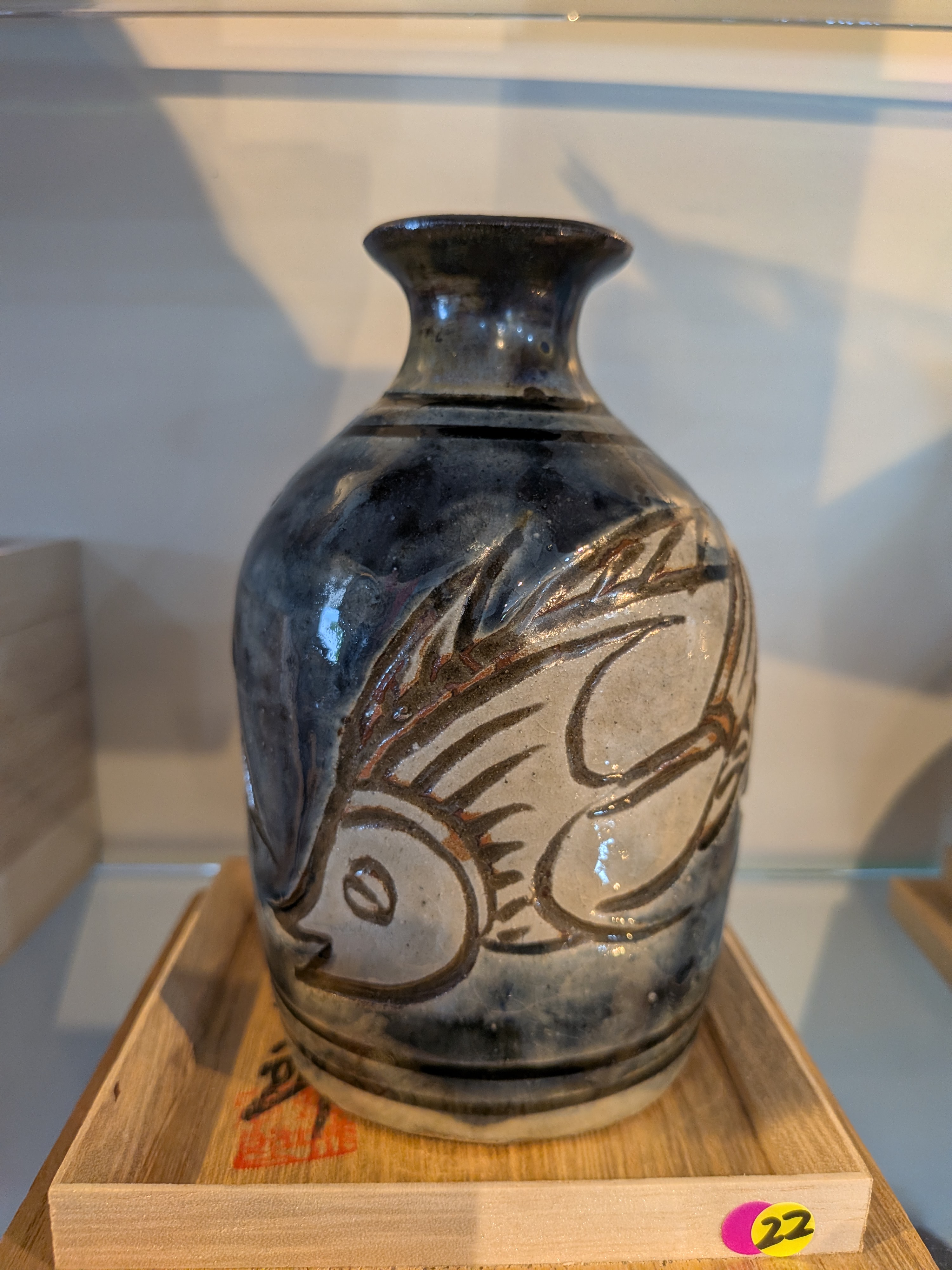
Discover an exceptional example of traditional Okinawan Yachimun (やちむん) pottery attributed to Jiro Kinjo (金城次郎, 1914–2004), Okinawa's first Living National Treasure (人間国宝). Sourced from Kinjo Pottery (金城陶器) in Yomitan Village, Okinawa, this distinctive ceramic tokkuri embodies the expressive fish imagery and hand-carved aesthetic for which Jiro Kinjo became internationally celebrated.
The vessel is accompanied by a paulownia wood presentation box (Kiribako) bearing identifying calligraphy and a stamp associated with Jiro Kinjo, providing important physical documentation supporting its attribution. For collectors, the combination of the Jiro Kinjo identifying mark, accompanying Kiribako, traditional fish motif, and direct Kinjo Pottery provenance makes this a particularly compelling example of Okinawan ceramic art.
Jiro Kinjo (金城次郎) - Fish Motif Tokkuri
魚紋 徳利 / 桐箱入
The art of Okinawan Yachimun is defined by expressive hand-carved decoration, natural mineral glazes, and imagery inspired by the island's landscapes, marine life, and everyday culture.
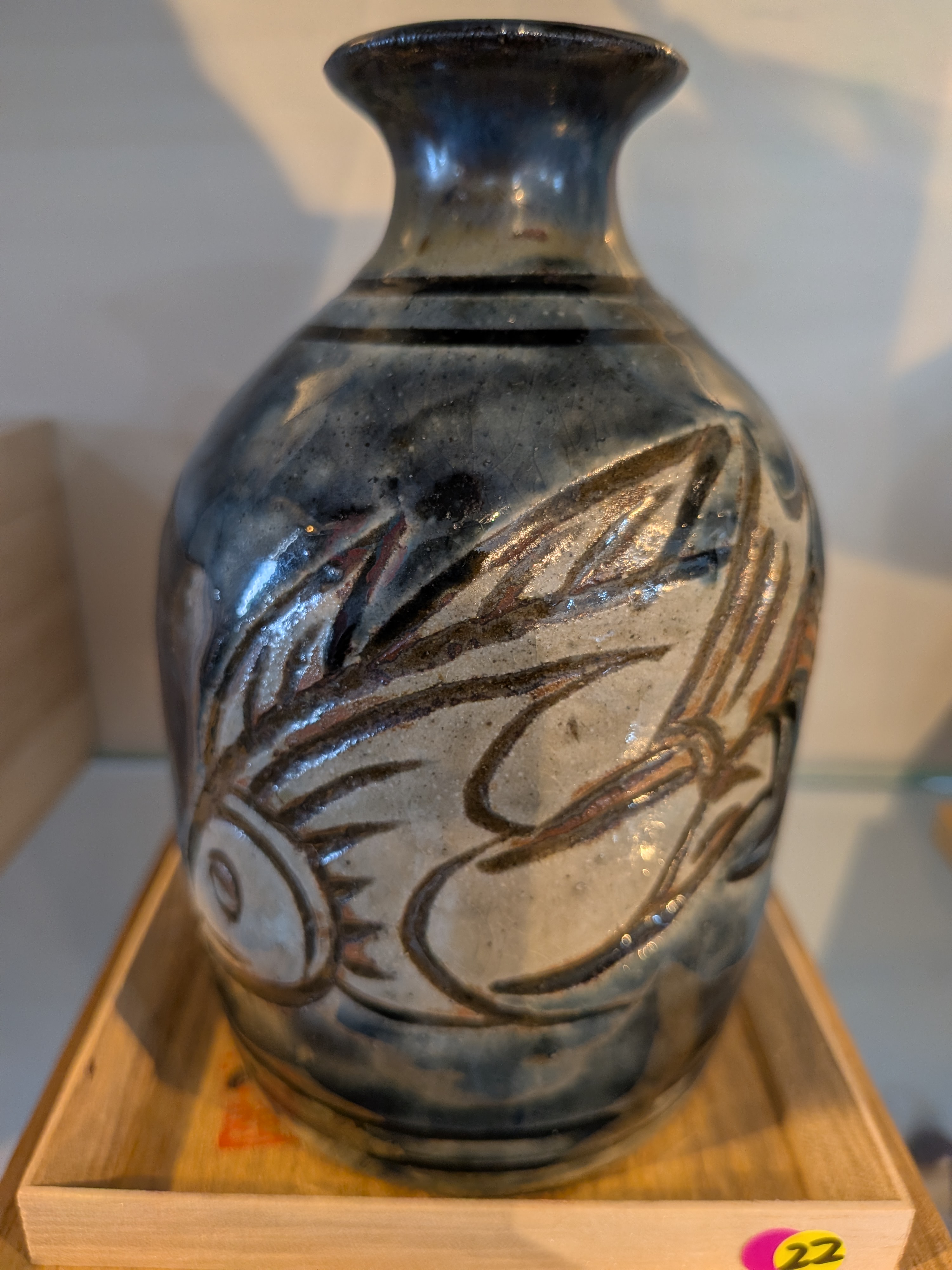
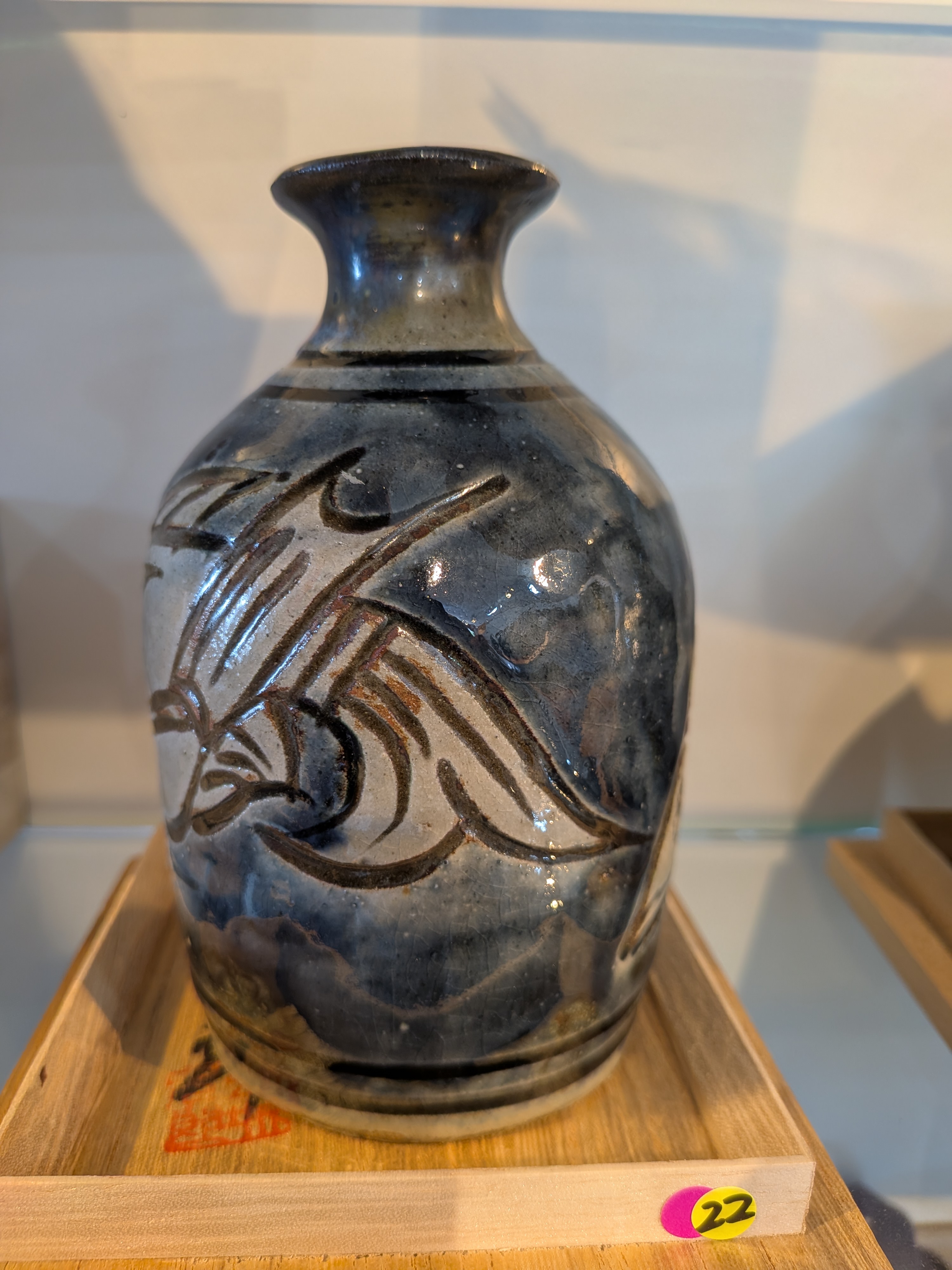
Among the most recognizable motifs in Okinawan ceramic art is the fish motif (魚紋 / Fish-mon), famously associated with Jiro Kinjo. Jiro Kinjo (1914–2004) was a pioneering Okinawan ceramic artist and Okinawa's first Living National Treasure. His distinctive fish designs—characterized by dynamic lines, expressive forms, and a sense of movement-became one of the defining visual signatures of modern Okinawan pottery. This vessel presents that celebrated artistic language through a traditionally formed tokkuri decorated with hand-incised fish motifs encircling the ceramic body.
Jiro Kinjo Fish Motif Ceramic Tokkuri
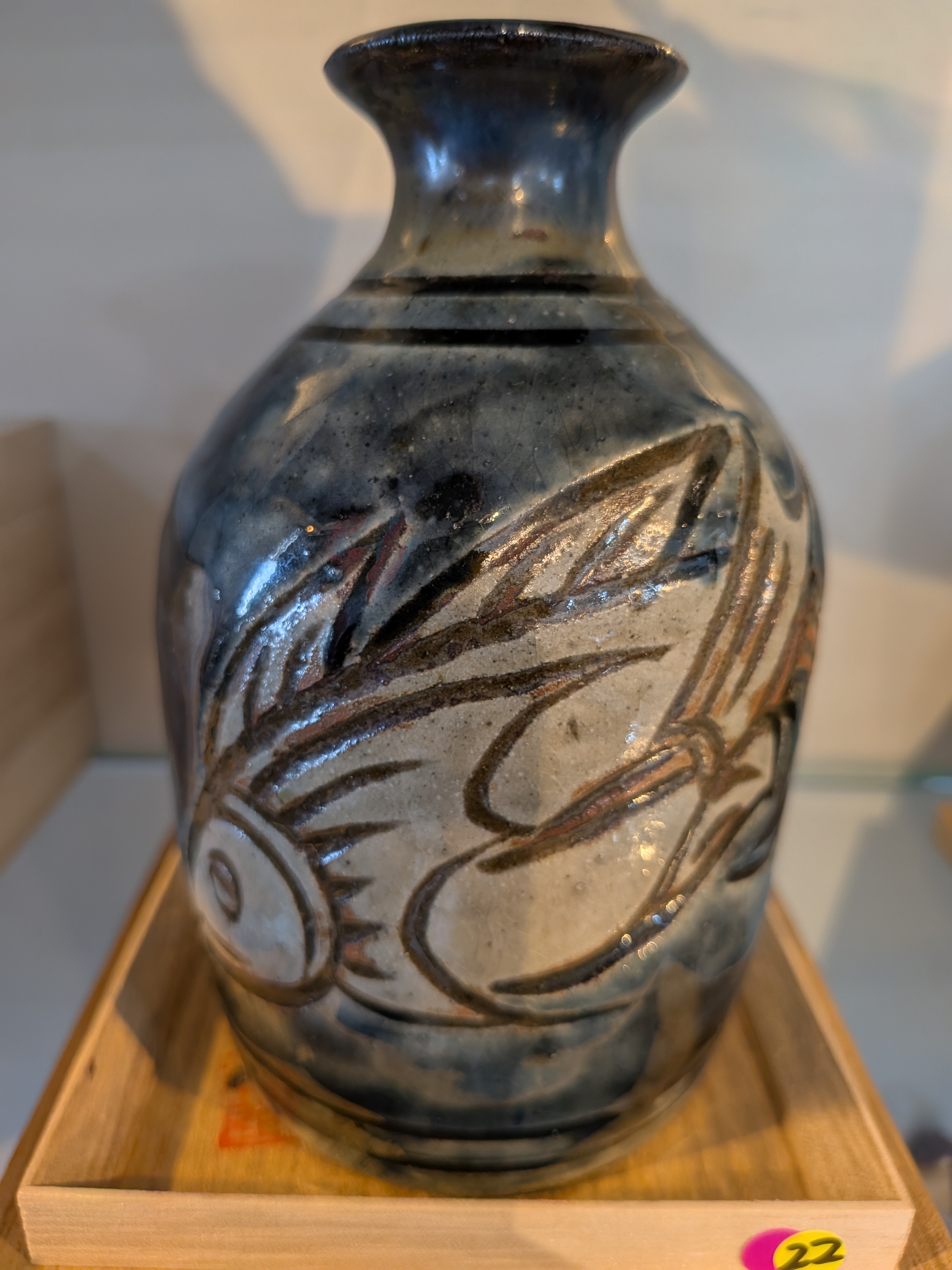
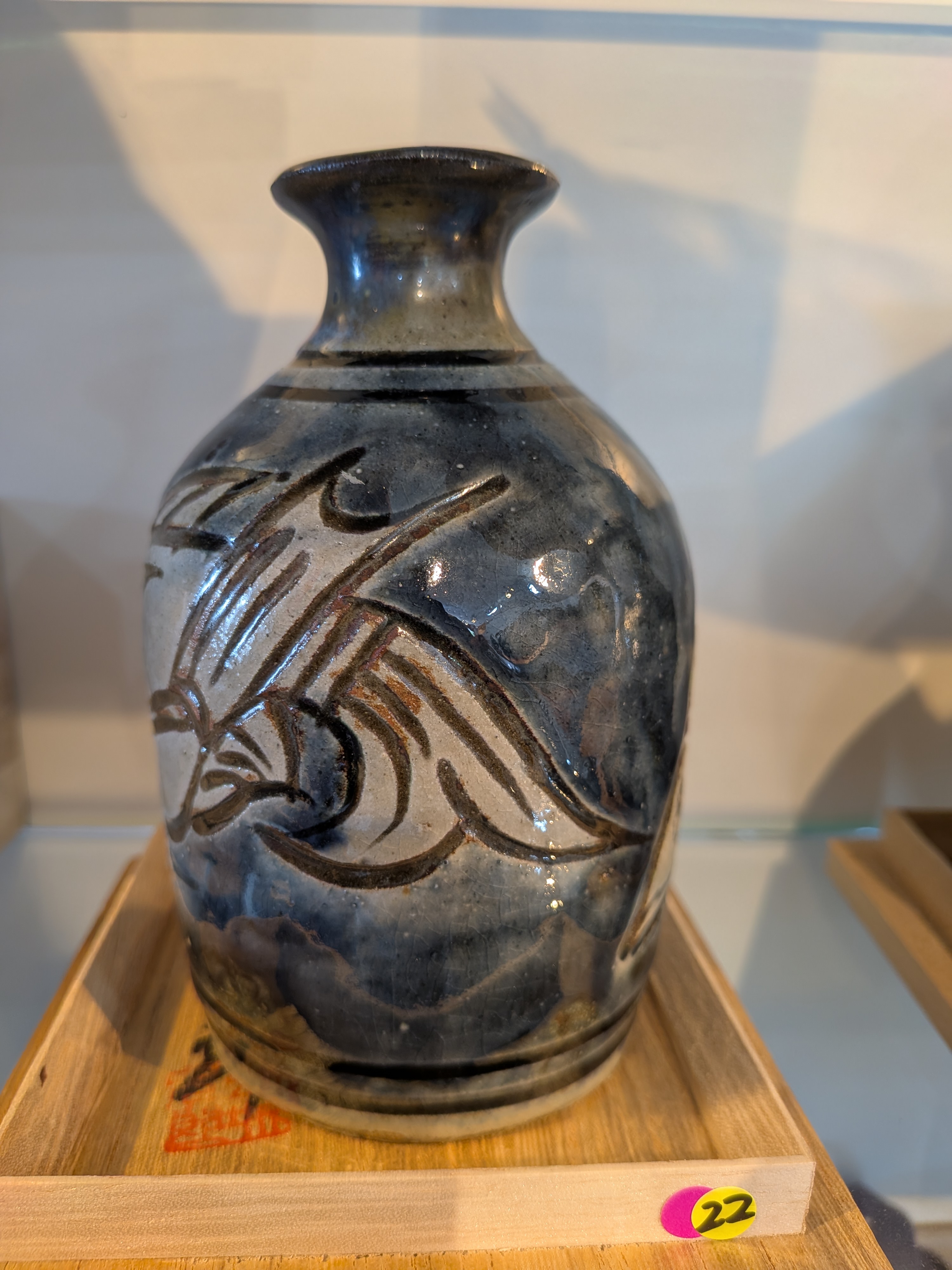
This exceptional tokkuri features a classic rounded Japanese sake-flask form with a gently contoured body and flared opening. Multiple expressive fish motifs are hand-incised around the vessel, creating movement across its surface. The carved imagery is complemented by rich cobalt-indigo and iron-toned glazing, producing a dramatic contrast between the decorated surface and warm underlying ceramic body.
The vessel's combination of form, carving, glaze, and identifying documentation makes it suitable for both serious Yachimun collectors and collectors of Japanese fine craft. Although traditionally associated with sake service, the piece can also be displayed as a collector's ceramic object or decorative vase.
Highlights
- Jiro Kinjo Work: Identified as a work by Jiro Kinjo (金城次郎), Okinawa's first Living National Treasure.
- Physical Identifying Mark: The vessel bears an identifying stamp/mark associated with Jiro Kinjo.
- Accompanying Kiribako: Presented with a paulownia wood box bearing identifying calligraphy and stamp.
- Iconic Fish Motif: Features Jiro Kinjo's celebrated Fish-mon (魚紋) imagery.
- Hand-Incised Decoration: Fish designs are individually carved into the ceramic surface.
- Traditional Yachimun Craftsmanship: Reflects the expressive techniques and aesthetics of Okinawan pottery.
- Rich Cobalt & Iron Glazes: Deep blue and iron-toned glaze complement the carved decoration.
- Collector Presentation: Includes the accompanying paulownia presentation box and documentation.
- Direct Kinjo Pottery Provenance: Sourced through Kinjo Pottery in Yomitan Village, Okinawa.
- Living National Treasure Heritage: Represents the artistic legacy of one of Okinawa's most important ceramic artists.
Curator's Note
The defining feature of this piece is the expressive fish motif. Rather than rendering the fish in rigid or highly realistic detail, the imagery possesses the fluidity and personality characteristic of Jiro Kinjo's celebrated ceramic vocabulary. The carved lines interact naturally with the contours of the vessel, while the glaze settles across the surface to create variations in tone and depth.
The combination of the fish imagery, ceramic form, glaze treatment, identifying mark, and accompanying Kiribako gives the piece a strong sense of historical and artistic identity.
For collectors, the tokkuri offers more than decorative appeal. It represents a tangible example of the artistic legacy of Jiro Kinjo and the development of modern Okinawan Yachimun.
Specifications
Artist: Jiro Kinjo (金城次郎, 1914–2004)
Recognition: Okinawa's first Living National Treasure (人間国宝)
Studio / Provenance: Kinjo Pottery (金城陶器), Yomitan Village
Origin: Yomitan Village, Okinawa Prefecture, Japan
Category: Jiro Kinjo Yachimun / Ceramic Tokkuri / Collector's Fine Craft
Motif: Fish Motif — 魚紋 (Fish-mon)
Craft Tradition: Okinawan Tsuboya-yaki / Yachimun Pottery (壺屋焼・やちむん)
Technique: Wheel-thrown ceramic with hand-incised decoration
Materials: Ceramic clay with mineral-based glaze finishes
Color Palette: Deep cobalt indigo, slate grey, iron brown, and warm terracotta
Height: Approx. 15.5–17.5 cm (6.1–6.9 in)
Maximum Body Diameter: Approx. 10.5–12.0 cm (4.1–4.7 in)
Rim Diameter: Approx. 5.5–6.5 cm (2.2–2.6 in)
Base Diameter: Approx. 6.5–7.5 cm (2.6–3.0 in)
Weight - Vessel Only: Approx. 550–700 g
Identifying Mark: Jiro Kinjo identifying stamp/mark present on the work
Packaging: Paulownia wood Kiribako with identifying calligraphy, stamp, and woven ribbon
Documentation: Biographical/background newspaper documentation, as supplied
Quantity: One (1) individual ceramic vessel
Provenance & Jiro Kinjo Attribution
The vessel is presented as a Jiro Kinjo work, supported by physical identifying elements accompanying the piece. The ceramic itself bears an identifying stamp/mark associated with Jiro Kinjo, while the accompanying paulownia presentation box (Kiribako) bears identifying calligraphy and a stamp corresponding to the work's Jiro Kinjo attribution. The piece was sourced through Kinjo Pottery in Yomitan Village, Okinawa, providing an additional connection to the Kinjo pottery tradition.
Provenance Materials
- Jiro Kinjo identifying mark/stamp on the ceramic
- Accompanying paulownia wood Kiribako
- Identifying calligraphy on the presentation box
- Stamp/seal on the presentation box
- Traditional woven Sanada-himo ribbon
- Biographical/background documentation, as supplied
- Kinjo Pottery/Yomitan sourcing
Attribution Note: The Jiro Kinjo attribution is based on the identifying mark present on the work and the accompanying presentation box and documentation. Unless an independent authentication certificate has been issued, these materials are described as attribution and provenance evidence rather than third-party authentication certification.
The Significance of the Fish Motif
The 魚紋 (Fish-mon) is among the most recognizable motifs associated with Jiro Kinjo.
Fish imagery reflects the profound relationship between Okinawan life and the surrounding sea, while Kinjo's distinctive treatment transformed the motif into a highly recognizable artistic language.
His fish are typically characterized by expressive contours, energetic carving, and an almost playful sense of movement. The imagery is integrated directly into the clay, allowing the carving and glaze to work together as part of the finished composition. This vessel therefore connects a functional traditional form with one of the most recognizable visual languages in modern Okinawan ceramic art.
Care
- Handle carefully with both hands.
- Clean gently by hand using lukewarm water and a soft sponge or cloth.
- If necessary, use a mild, non-abrasive detergent.
- Allow the vessel to dry completely before returning it to the Kiribako.
- Avoid abrasive cleaners and scouring pads.
- Do not place in a dishwasher or microwave.
- Avoid sudden extreme temperature changes.
- Store the wooden presentation box in a dry, well-ventilated environment.
Minor variations in glaze pooling, surface texture, firing marks, and tonal coloration are characteristics of traditionally produced ceramic works.
Shipping & International Orders
The vessel and its accompanying paulownia Kiribako will be carefully protected using specialized packaging designed for collectible ceramics and wooden presentation boxes.
Japan: Secure domestic shipping within Japan.
International: International orders may be shipped using secure courier services where available. Customs duties, import taxes, VAT, brokerage fees, and other destination-country charges are the responsibility of the purchaser.
Because the original presentation box forms an important part of the provenance and collector presentation, both the ceramic and Kiribako will receive protective packaging during transit.
Description
Xandre Store Exclusive: Jiro Kinjo Okinawan Yachimun Masterpiece
Celebrating the Legacy of Okinawa's First Living National Treasure
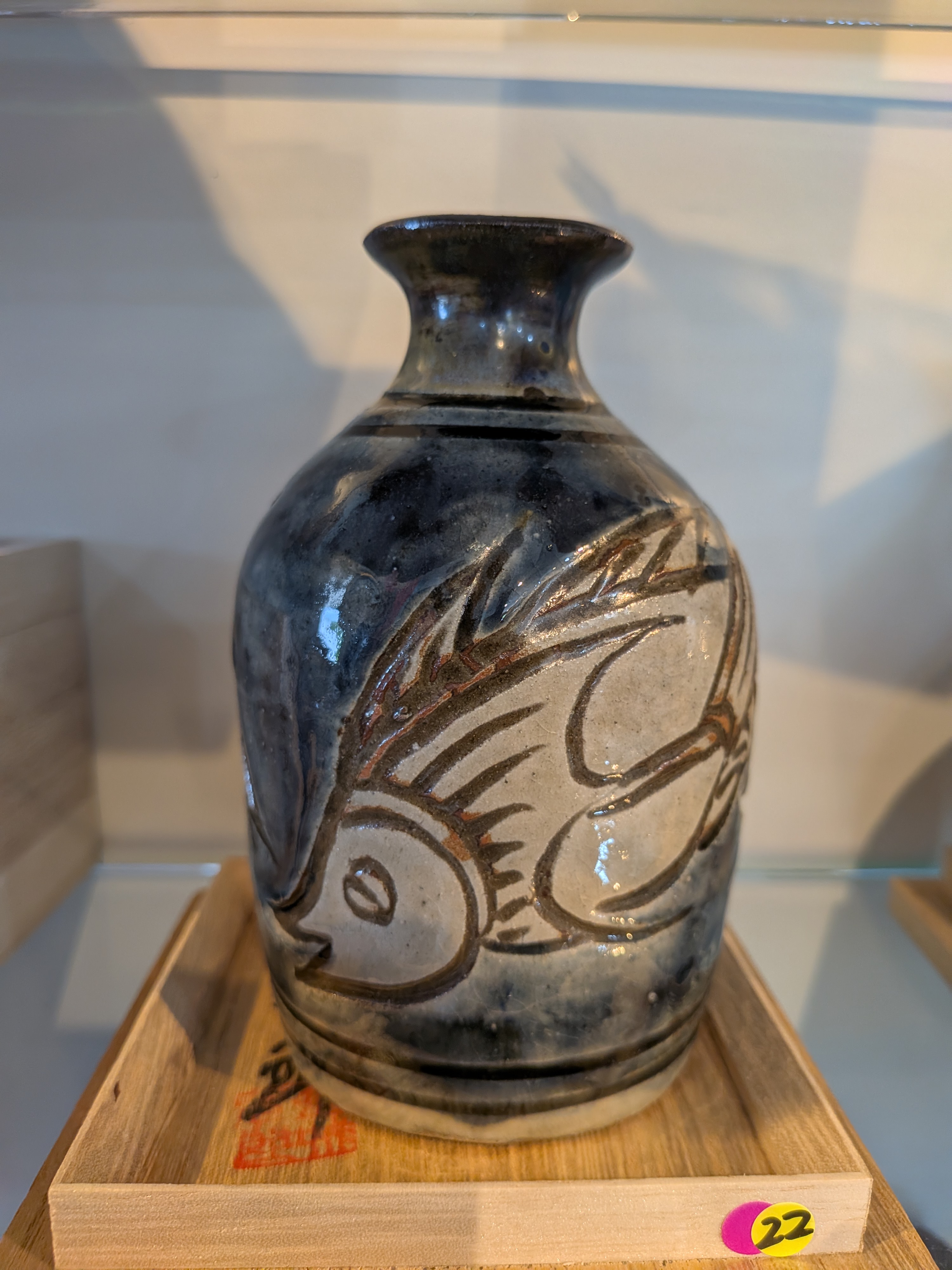
Discover an exceptional example of traditional Okinawan Yachimun (やちむん) pottery attributed to Jiro Kinjo (金城次郎, 1914–2004), Okinawa's first Living National Treasure (人間国宝). Sourced from Kinjo Pottery (金城陶器) in Yomitan Village, Okinawa, this distinctive ceramic tokkuri embodies the expressive fish imagery and hand-carved aesthetic for which Jiro Kinjo became internationally celebrated.
The vessel is accompanied by a paulownia wood presentation box (Kiribako) bearing identifying calligraphy and a stamp associated with Jiro Kinjo, providing important physical documentation supporting its attribution. For collectors, the combination of the Jiro Kinjo identifying mark, accompanying Kiribako, traditional fish motif, and direct Kinjo Pottery provenance makes this a particularly compelling example of Okinawan ceramic art.
Jiro Kinjo (金城次郎) - Fish Motif Tokkuri
魚紋 徳利 / 桐箱入
The art of Okinawan Yachimun is defined by expressive hand-carved decoration, natural mineral glazes, and imagery inspired by the island's landscapes, marine life, and everyday culture.
Among the most recognizable motifs in Okinawan ceramic art is the fish motif (魚紋 / Fish-mon), famously associated with Jiro Kinjo. Jiro Kinjo (1914–2004) was a pioneering Okinawan ceramic artist and Okinawa's first Living National Treasure. His distinctive fish designs—characterized by dynamic lines, expressive forms, and a sense of movement-became one of the defining visual signatures of modern Okinawan pottery. This vessel presents that celebrated artistic language through a traditionally formed tokkuri decorated with hand-incised fish motifs encircling the ceramic body.
Jiro Kinjo Fish Motif Ceramic Tokkuri
This exceptional tokkuri features a classic rounded Japanese sake-flask form with a gently contoured body and flared opening. Multiple expressive fish motifs are hand-incised around the vessel, creating movement across its surface. The carved imagery is complemented by rich cobalt-indigo and iron-toned glazing, producing a dramatic contrast between the decorated surface and warm underlying ceramic body.
The vessel's combination of form, carving, glaze, and identifying documentation makes it suitable for both serious Yachimun collectors and collectors of Japanese fine craft. Although traditionally associated with sake service, the piece can also be displayed as a collector's ceramic object or decorative vase.
Highlights
- Jiro Kinjo Work: Identified as a work by Jiro Kinjo (金城次郎), Okinawa's first Living National Treasure.
- Physical Identifying Mark: The vessel bears an identifying stamp/mark associated with Jiro Kinjo.
- Accompanying Kiribako: Presented with a paulownia wood box bearing identifying calligraphy and stamp.
- Iconic Fish Motif: Features Jiro Kinjo's celebrated Fish-mon (魚紋) imagery.
- Hand-Incised Decoration: Fish designs are individually carved into the ceramic surface.
- Traditional Yachimun Craftsmanship: Reflects the expressive techniques and aesthetics of Okinawan pottery.
- Rich Cobalt & Iron Glazes: Deep blue and iron-toned glaze complement the carved decoration.
- Collector Presentation: Includes the accompanying paulownia presentation box and documentation.
- Direct Kinjo Pottery Provenance: Sourced through Kinjo Pottery in Yomitan Village, Okinawa.
- Living National Treasure Heritage: Represents the artistic legacy of one of Okinawa's most important ceramic artists.
Curator's Note
The defining feature of this piece is the expressive fish motif. Rather than rendering the fish in rigid or highly realistic detail, the imagery possesses the fluidity and personality characteristic of Jiro Kinjo's celebrated ceramic vocabulary. The carved lines interact naturally with the contours of the vessel, while the glaze settles across the surface to create variations in tone and depth.
The combination of the fish imagery, ceramic form, glaze treatment, identifying mark, and accompanying Kiribako gives the piece a strong sense of historical and artistic identity.
For collectors, the tokkuri offers more than decorative appeal. It represents a tangible example of the artistic legacy of Jiro Kinjo and the development of modern Okinawan Yachimun.
Specifications
Artist: Jiro Kinjo (金城次郎, 1914–2004)
Recognition: Okinawa's first Living National Treasure (人間国宝)
Studio / Provenance: Kinjo Pottery (金城陶器), Yomitan Village
Origin: Yomitan Village, Okinawa Prefecture, Japan
Category: Jiro Kinjo Yachimun / Ceramic Tokkuri / Collector's Fine Craft
Motif: Fish Motif — 魚紋 (Fish-mon)
Craft Tradition: Okinawan Tsuboya-yaki / Yachimun Pottery (壺屋焼・やちむん)
Technique: Wheel-thrown ceramic with hand-incised decoration
Materials: Ceramic clay with mineral-based glaze finishes
Color Palette: Deep cobalt indigo, slate grey, iron brown, and warm terracotta
Height: Approx. 15.5–17.5 cm (6.1–6.9 in)
Maximum Body Diameter: Approx. 10.5–12.0 cm (4.1–4.7 in)
Rim Diameter: Approx. 5.5–6.5 cm (2.2–2.6 in)
Base Diameter: Approx. 6.5–7.5 cm (2.6–3.0 in)
Weight - Vessel Only: Approx. 550–700 g
Identifying Mark: Jiro Kinjo identifying stamp/mark present on the work
Packaging: Paulownia wood Kiribako with identifying calligraphy, stamp, and woven ribbon
Documentation: Biographical/background newspaper documentation, as supplied
Quantity: One (1) individual ceramic vessel
Provenance & Jiro Kinjo Attribution
The vessel is presented as a Jiro Kinjo work, supported by physical identifying elements accompanying the piece. The ceramic itself bears an identifying stamp/mark associated with Jiro Kinjo, while the accompanying paulownia presentation box (Kiribako) bears identifying calligraphy and a stamp corresponding to the work's Jiro Kinjo attribution. The piece was sourced through Kinjo Pottery in Yomitan Village, Okinawa, providing an additional connection to the Kinjo pottery tradition.
Provenance Materials
- Jiro Kinjo identifying mark/stamp on the ceramic
- Accompanying paulownia wood Kiribako
- Identifying calligraphy on the presentation box
- Stamp/seal on the presentation box
- Traditional woven Sanada-himo ribbon
- Biographical/background documentation, as supplied
- Kinjo Pottery/Yomitan sourcing
Attribution Note: The Jiro Kinjo attribution is based on the identifying mark present on the work and the accompanying presentation box and documentation. Unless an independent authentication certificate has been issued, these materials are described as attribution and provenance evidence rather than third-party authentication certification.
The Significance of the Fish Motif
The 魚紋 (Fish-mon) is among the most recognizable motifs associated with Jiro Kinjo.
Fish imagery reflects the profound relationship between Okinawan life and the surrounding sea, while Kinjo's distinctive treatment transformed the motif into a highly recognizable artistic language.
His fish are typically characterized by expressive contours, energetic carving, and an almost playful sense of movement. The imagery is integrated directly into the clay, allowing the carving and glaze to work together as part of the finished composition. This vessel therefore connects a functional traditional form with one of the most recognizable visual languages in modern Okinawan ceramic art.
Care
- Handle carefully with both hands.
- Clean gently by hand using lukewarm water and a soft sponge or cloth.
- If necessary, use a mild, non-abrasive detergent.
- Allow the vessel to dry completely before returning it to the Kiribako.
- Avoid abrasive cleaners and scouring pads.
- Do not place in a dishwasher or microwave.
- Avoid sudden extreme temperature changes.
- Store the wooden presentation box in a dry, well-ventilated environment.
Minor variations in glaze pooling, surface texture, firing marks, and tonal coloration are characteristics of traditionally produced ceramic works.
Shipping & International Orders
The vessel and its accompanying paulownia Kiribako will be carefully protected using specialized packaging designed for collectible ceramics and wooden presentation boxes.
Japan: Secure domestic shipping within Japan.
International: International orders may be shipped using secure courier services where available. Customs duties, import taxes, VAT, brokerage fees, and other destination-country charges are the responsibility of the purchaser.
Because the original presentation box forms an important part of the provenance and collector presentation, both the ceramic and Kiribako will receive protective packaging during transit.
Previously viewed products
No recently viewed products.