

Description
Xandre Store Exclusive A Finite Historical Studio Work from the Kiyomasa Touki Tsuboya Tradition
- Artist: Kiyomasa Kobashigawa (小橋川 清正)
- Studio & Kiln Lineage: Kiyomasa Touki / Tsuboya Kiln (清正陶器・壺屋窯)
- Origin: Tsuboya Pottery District, Naha City, Okinawa Prefecture, Japan
- Category: Okinawan Yachimun Ceramic | Fine Art Sake Vessel | Collector Hand-Carved Cup
- Form: Choko / Guinomi — 魚紋お猪口
- Craft Tradition: 壺屋焼 (Tsuboya-yaki)
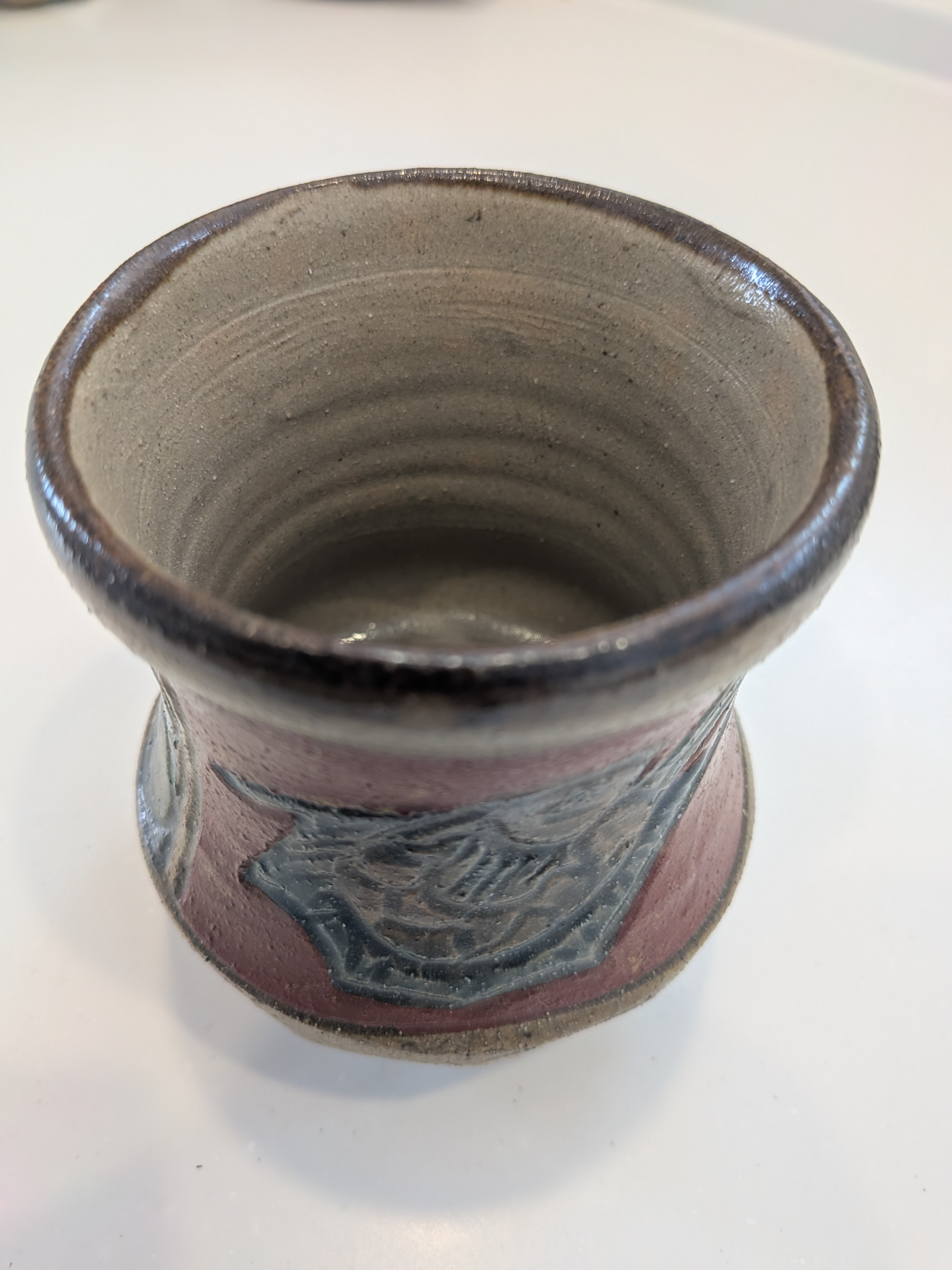
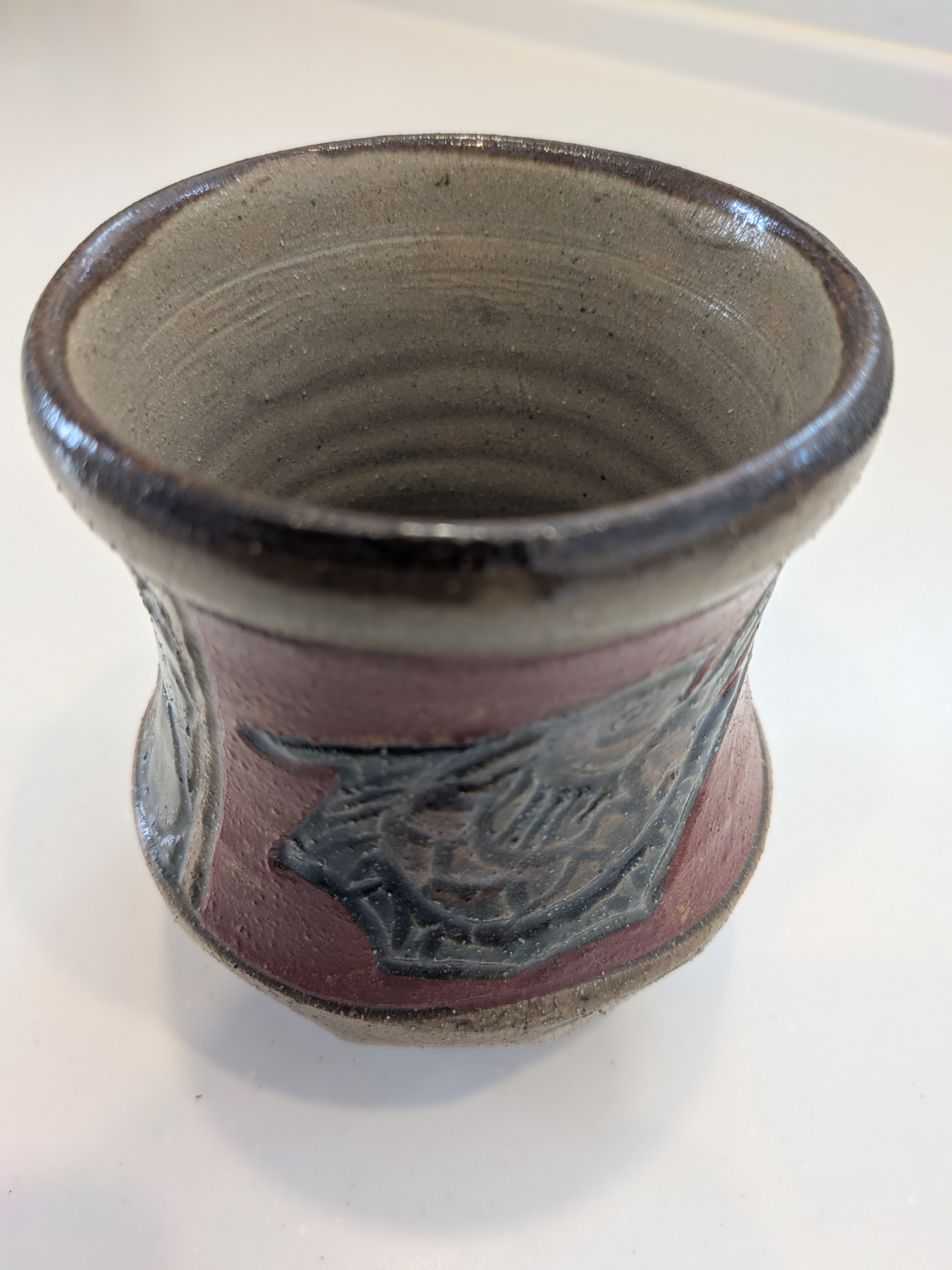
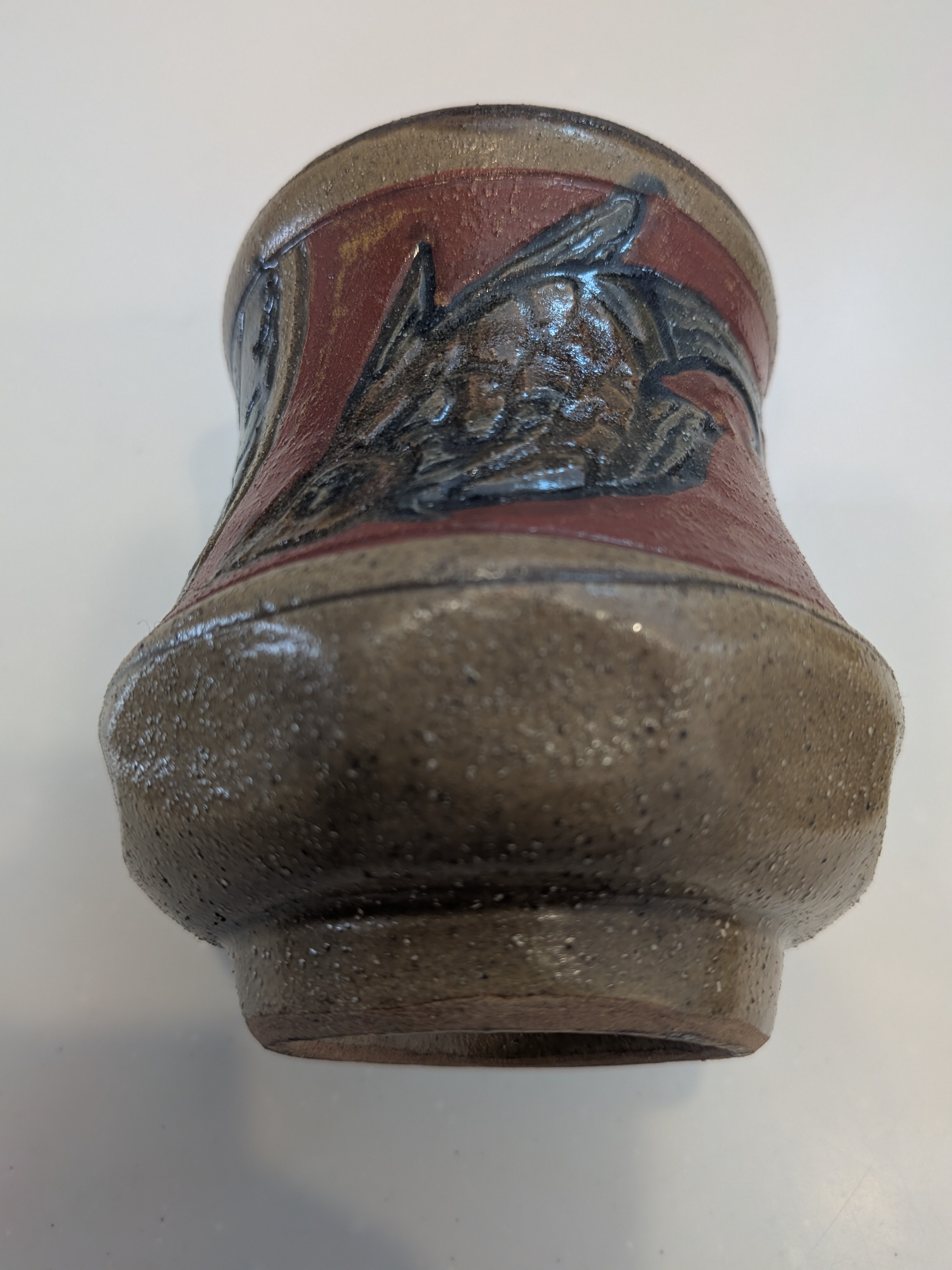
Discover an intimate example of Okinawan Yachimun craftsmanship through this hand-carved sake cup (Choko / Guinomi) by Kiyomasa Kobashigawa (小橋川 清正) of Kiyomasa Touki, the historic Tsuboya studio tradition. Small in scale but rich in technical detail, the vessel combines deep hand-carved fish relief (Gyomon / 魚紋), iron-red Akae mineral coloring, cobalt-blue accents, and an exposed Okinawan clay body. The result is a highly tactile work in which the natural character of the clay remains integral to the visual design.
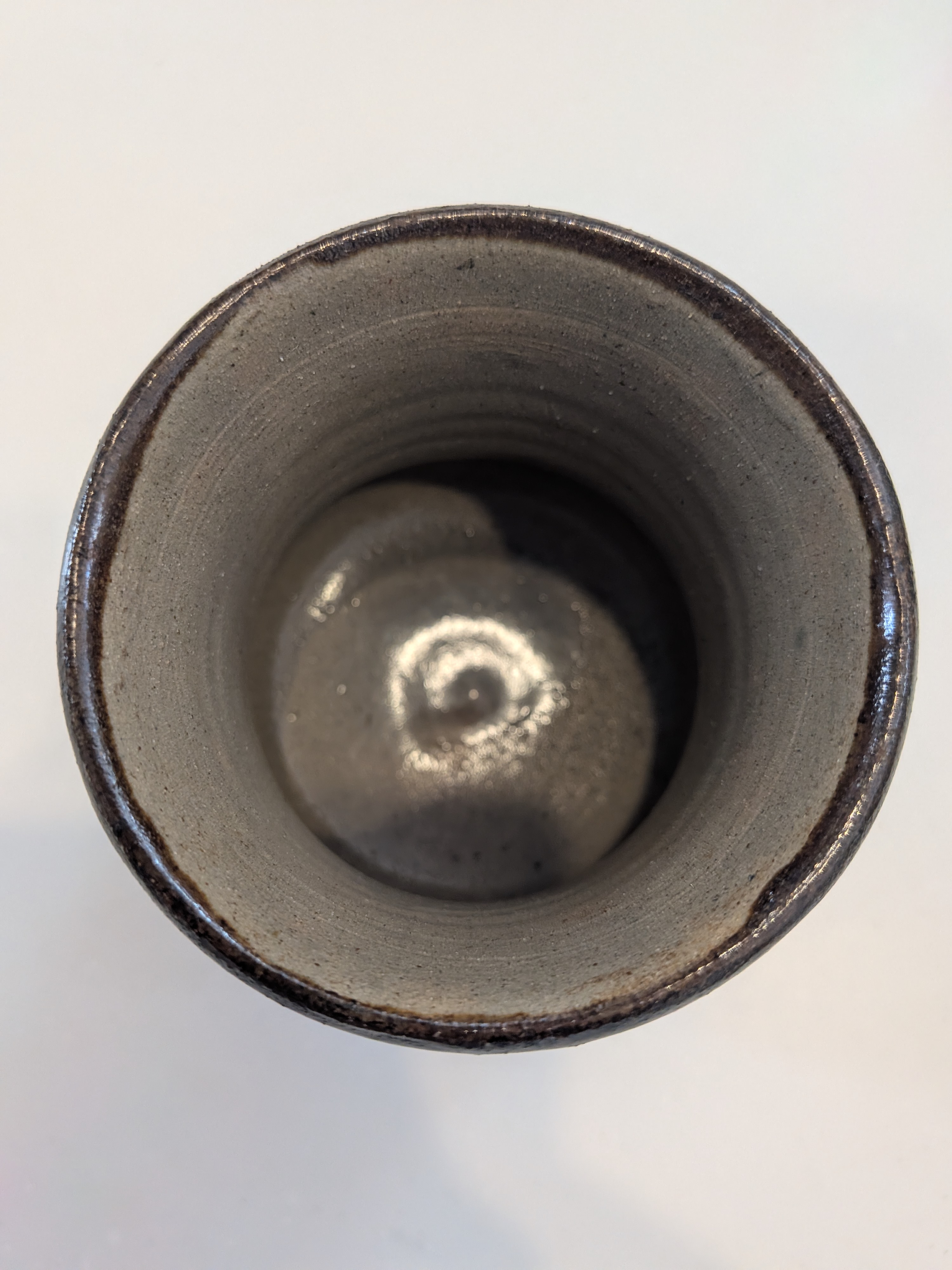
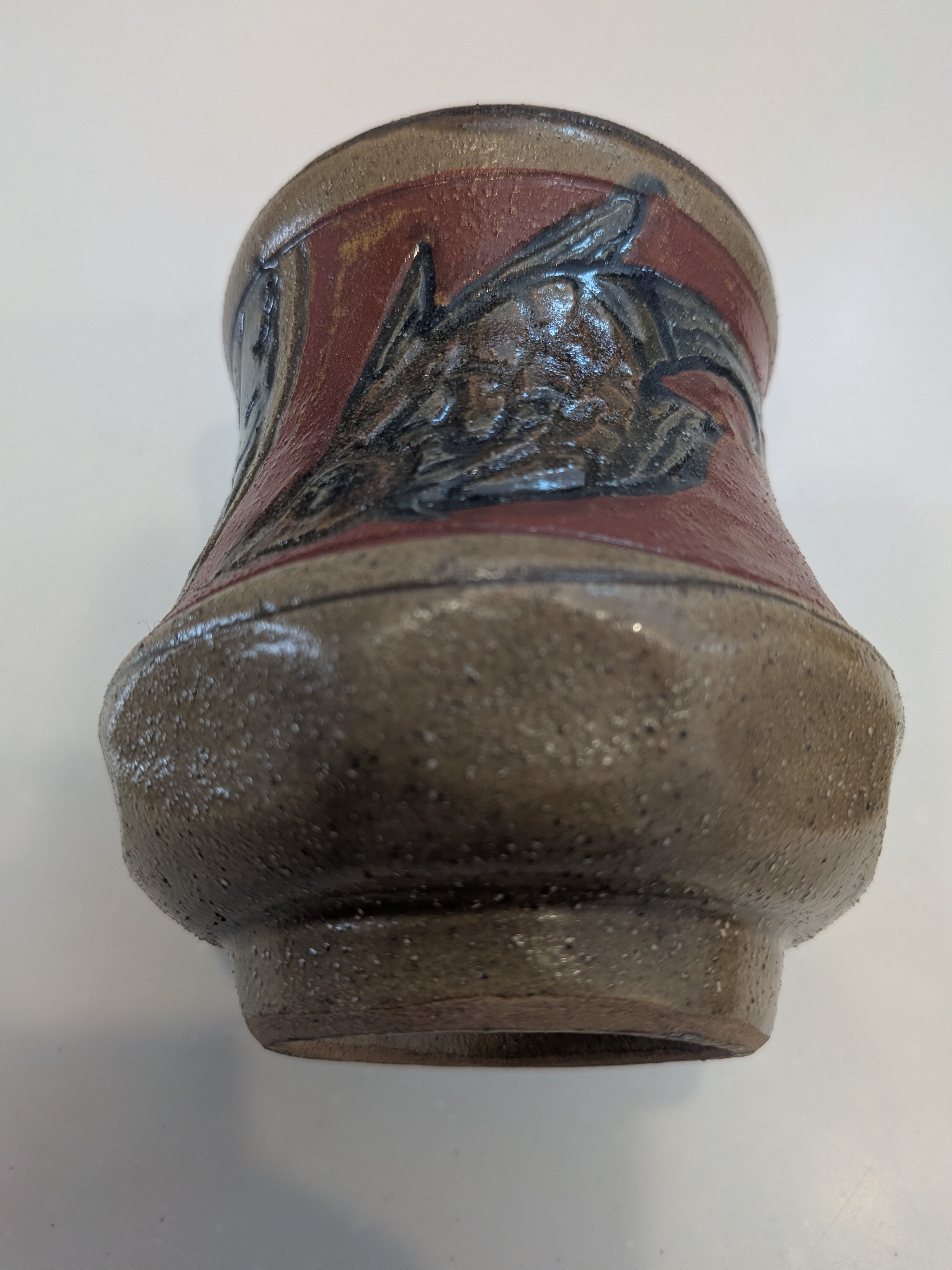
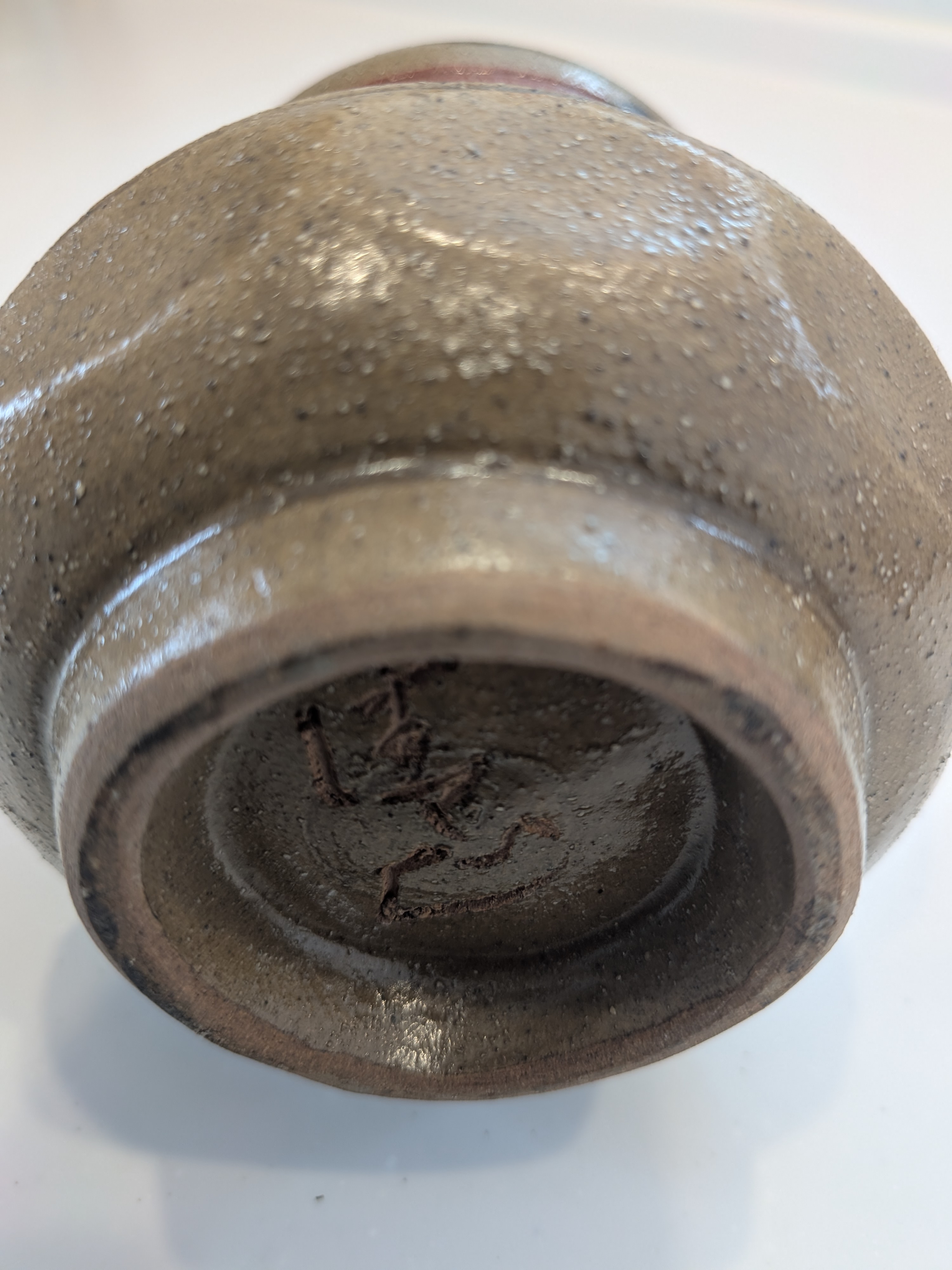
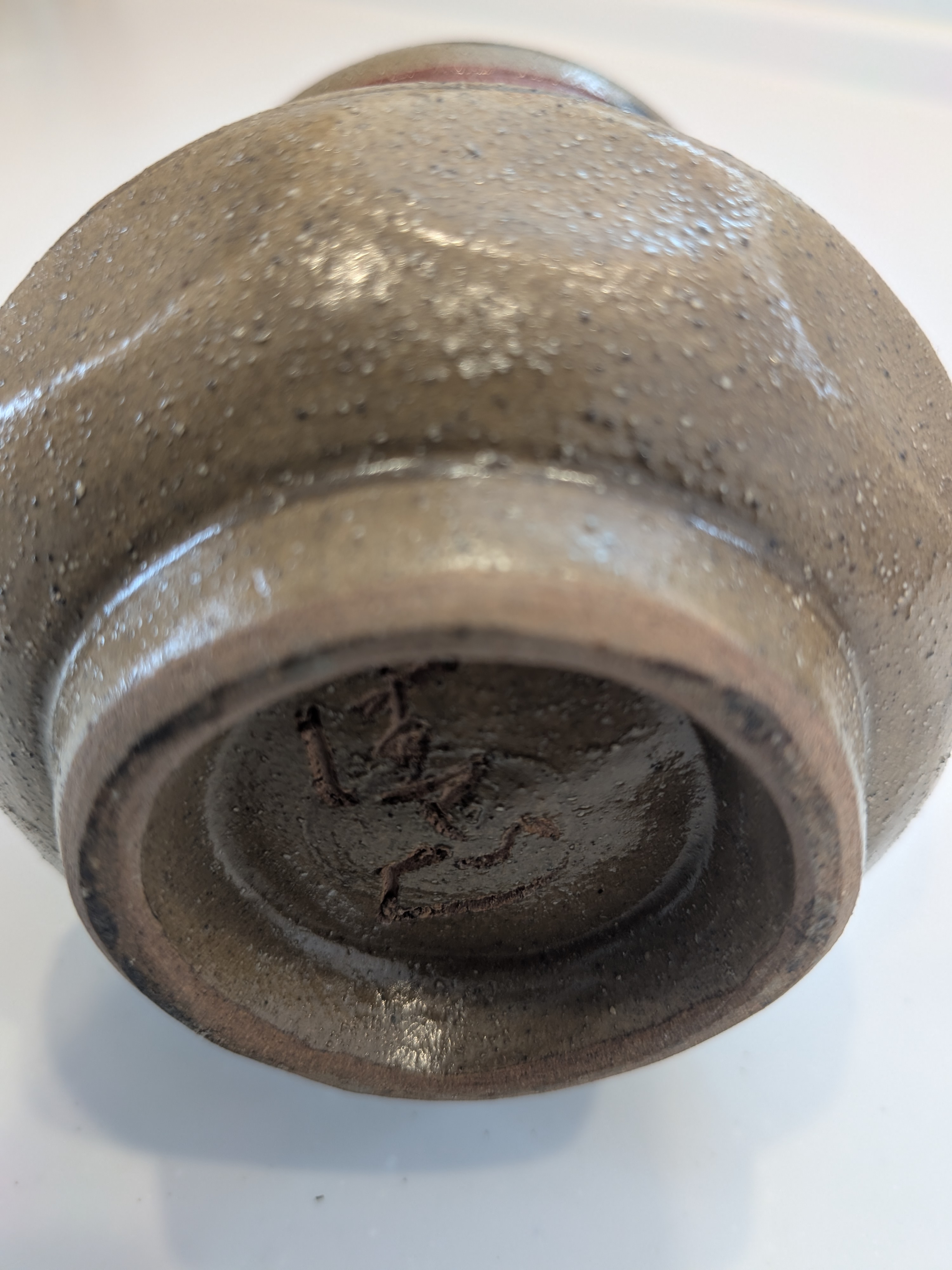
The cup's gently flared drinking rim contrasts with the heavily carved exterior. Across the body, the fish motif is rendered in raised and recessed relief, producing pronounced shadows as light moves across the surface. Areas of red, dark blue, and natural clay create an earthy palette characteristic of traditional Okinawan ceramic aesthetics. The underside carries Kobashigawa's hand-incised 「清」 mark, providing an important physical identifying feature for the piece and connecting it directly to the artist's studio production.
For collectors, the significance of this work extends beyond its function as a sake vessel. Its compact format preserves the artist's characteristic carved vocabulary in a form that can be appreciated both as functional tableware and as a standalone studio ceramic.
Master Kiyomasa Kobashigawa - Studio Lineage & Historical Context
Kiyomasa Kobashigawa (小橋川 清正) was associated with the long-established ceramic tradition of Naha's historic Tsuboya district, one of the central locations in the development and preservation of Okinawan pottery. His studio, Kiyomasa Touki (清正陶器), became associated with traditional Tsuboya ceramic production and Kobashigawa's individual approach to carved decoration and glaze.
Kobashigawa's career also intersects with an important period in Okinawan cultural presentation. He was among the Okinawan ceramic artists associated with preparations surrounding the 2000 Kyushu-Okinawa G8 Summit, held in Okinawa. This historical context adds an important layer to surviving works from his studio, while the present cup remains individually identifiable through its 「清」 studio mark.
The Gyomon Fish Motif
The fish motif (Gyomon / 魚紋) is one of the most recognizable decorative traditions within Okinawan Yachimun. Fish imagery carries strong associations with the sea that surrounds the Ryukyu Islands and is frequently interpreted in Okinawan decorative culture through themes such as:
- Abundance
- Prosperity
- Good fortune
- Life and nourishment
- Connection with the surrounding ocean
The motif became particularly prominent within modern Okinawan pottery and is closely associated with the broader Tsuboya ceramic tradition.
Here, the fish are not simply painted onto the surface. They are physically carved into the clay, giving the design a sculptural quality that becomes particularly visible under directional light.
Hand-Carved Senbori Craftsmanship
The decorative character of this cup depends heavily on the precision of the carving.
1. Forming: The clay is shaped into the compact sake-cup profile, with careful attention to wall thickness, balance, and the gently flared rim.
2. Leather-Hard Carving: Once the clay reaches the appropriate working stage, the fish design is carved into the surface by hand.
At this stage, the clay must retain enough firmness to hold fine detail while remaining workable enough to accept the carving tools.
3. Relief Definition: The artist establishes varying depths within the fish and surrounding decoration, allowing the finished surface to produce natural highlights and shadows.
4. Color & Glaze: Iron-rich red coloration and darker glaze accents are applied to establish contrast between the carved motif and the natural clay body.
5. Firing: The completed vessel undergoes ceramic firing, permanently fixing the clay body, surface decoration, and glaze.
Because every stage is performed on an individual vessel, subtle differences in carving depth, color movement, and firing response are inherent to the work.
Collector Significance
This piece offers several characteristics particularly relevant to collectors of Okinawan studio ceramics:
- Identifiable Artist: Kiyomasa Kobashigawa (小橋川 清正)
- Historic Studio: Kiyomasa Touki / Tsuboya tradition
- Distinctive Handwork: Deeply carved Gyomon fish decoration
- Physical Artist Mark: Hand-incised 「清」
- Traditional Form: Choko / Guinomi
- Regional Material Language: Okinawan clay, mineral coloration, and traditional Yachimun aesthetics
- Finite Studio History: Works from a closed historical studio represent a fixed body of surviving production rather than an ongoing commercial line
The combination of artist identification, studio association, physical signature, traditional form, and hand-carved decoration makes this an especially compelling example for collectors focused on Okinawan ceramics.
Premium Highlights
- Master Potter: Kiyomasa Kobashigawa (小橋川 清正)
- Historic Studio: Kiyomasa Touki / Tsuboya Kiln (清正陶器・壺屋窯)
- Form: Traditional Choko / Guinomi — 魚紋お猪口
- Motif: Hand-carved Gyomon fish
- Technique: Hand-formed ceramic construction with deep relief carving
- Surface: Iron-red Akae, cobalt-blue accents, and exposed natural clay
- Authentication Feature: Hand-incised 「清」 studio mark on the base
- Cultural Context: Historic Tsuboya Yachimun ceramic tradition
- Historical Context: Kobashigawa's association with Okinawan ceramic production during the period surrounding the 2000 Kyushu-Okinawa G8 Summit
- Rarity: Individual historical studio work from a finite production period
Curator's Note
The appeal of this work lies in its intimacy. Unlike a large presentation vessel, this small sake cup places the potter's hand directly into the collector's experience. The carved fish emerge from the clay through changes in depth rather than relying solely on painted decoration. The combination of red mineral color, dark accents, and exposed clay gives the surface a distinctly Okinawan character.
The 「清」 mark on the base provides an important physical connection to Kiyomasa Kobashigawa and the Kiyomasa Touki studio tradition, while the compact Guinomi form makes the work equally suitable for collection, display, or carefully considered functional use.
Specifications
| Attribute | Details |
| Artist | Kiyomasa Kobashigawa (小橋川 清正) |
| Studio & Kiln | Kiyomasa Touki / Tsuboya Kiln (清正陶器・壺屋窯) |
| Origin | Tsuboya, Naha, Okinawa, Japan |
| Category | Okinawan Yachimun / Fine Art Studio Ceramic |
| Form | Choko / Guinomi — 魚紋お猪口 |
| Motif | Hand-carved fish (Gyomon / 魚紋) |
| Materials | Okinawan clay, mineral red slip, cobalt-blue glaze accents |
| Technique | Hand-formed ceramic construction and relief carving |
| Surface Treatment | Deep Senbori carving with multi-tone ceramic decoration |
| Artist Mark | Hand-incised 「清」 on base |
| Era | Vintage studio production |
| Condition | See product photographs for the current condition and surface details |
| Quantity | One individual studio work |
Condition & Authentication
The 「清」 mark visible on the underside is included in the product photography and forms part of the item's identifying documentation.
The original product photographs should be regarded as the primary visual reference for:
- Surface condition
- Carving depth
- Glaze characteristics
- Natural firing variation
- Base construction
- Artist marking
- Overall preservation
Natural variations in handmade ceramics—including minor irregularities, tonal differences, kiln marks, and variations in glaze movement—should be understood as characteristics of individual studio production rather than manufacturing defects.
Care Instructions
- Wash gently by hand with lukewarm water and a soft cloth.
- Avoid abrasive pads, wire sponges, and aggressive chemical cleaners.
- Do not place in an automated dishwasher.
- Do not use in a microwave or oven unless specifically confirmed suitable for the individual piece.
- Avoid sudden temperature changes.
- Allow the vessel to dry completely before long-term storage.
- Handle carefully around the carved exterior and foot.
Shipping & International Orders
Domestic Shipping Japan: The piece will be carefully packaged using protective materials appropriate for collectible ceramic artwork and shipped through an insured delivery service where available.
International Orders: International buyers may be responsible for applicable shipping charges, customs duties, VAT, GST, brokerage fees, import taxes, or other destination-country charges.
All applicable destination-country charges remain the responsibility of the recipient.
Xandre Store
Connecting global collectors with the craftsmanship, heritage, and stories behind Japan's finest regional studio traditions.
Description
Xandre Store Exclusive A Finite Historical Studio Work from the Kiyomasa Touki Tsuboya Tradition
- Artist: Kiyomasa Kobashigawa (小橋川 清正)
- Studio & Kiln Lineage: Kiyomasa Touki / Tsuboya Kiln (清正陶器・壺屋窯)
- Origin: Tsuboya Pottery District, Naha City, Okinawa Prefecture, Japan
- Category: Okinawan Yachimun Ceramic | Fine Art Sake Vessel | Collector Hand-Carved Cup
- Form: Choko / Guinomi — 魚紋お猪口
- Craft Tradition: 壺屋焼 (Tsuboya-yaki)
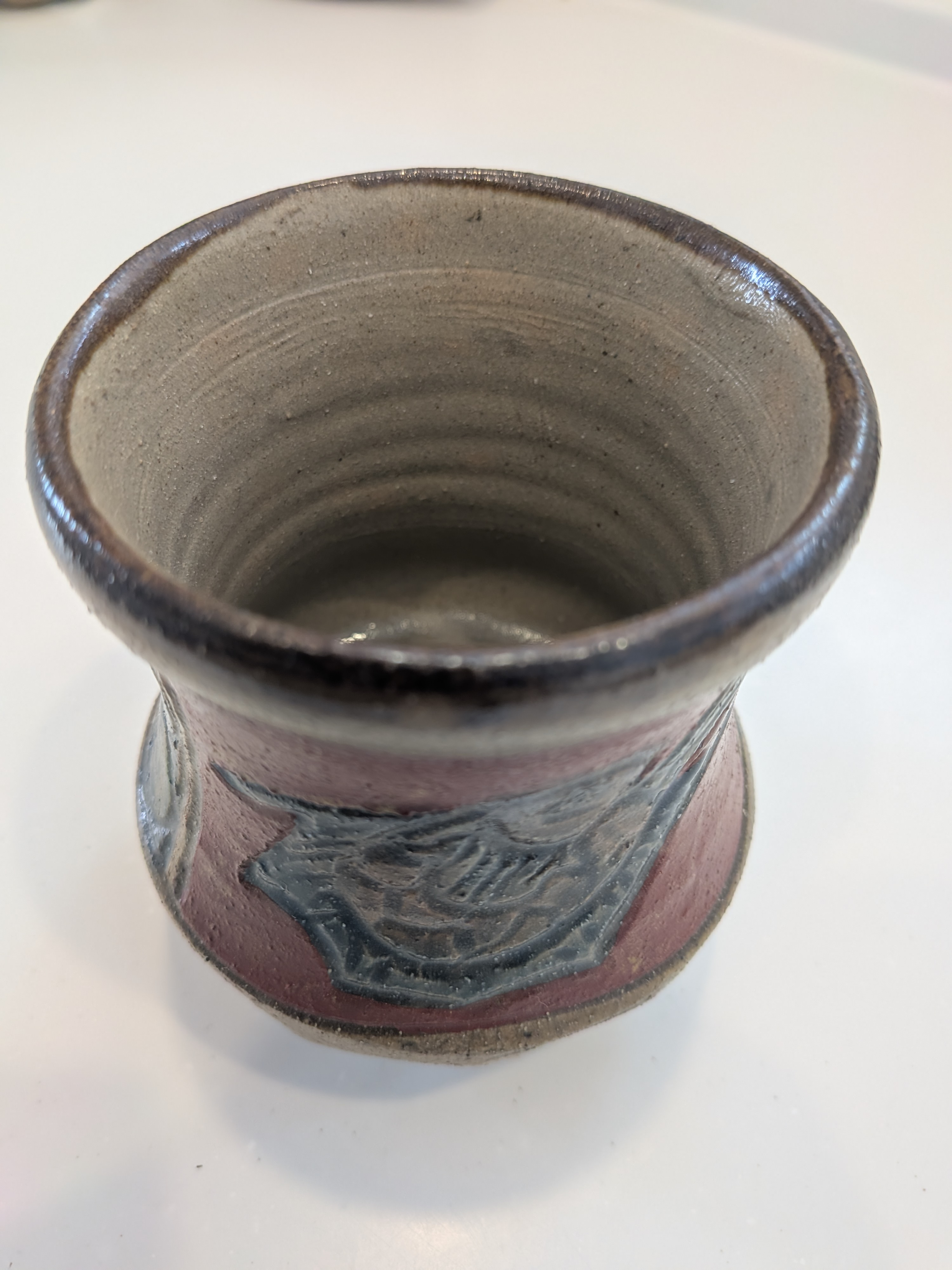
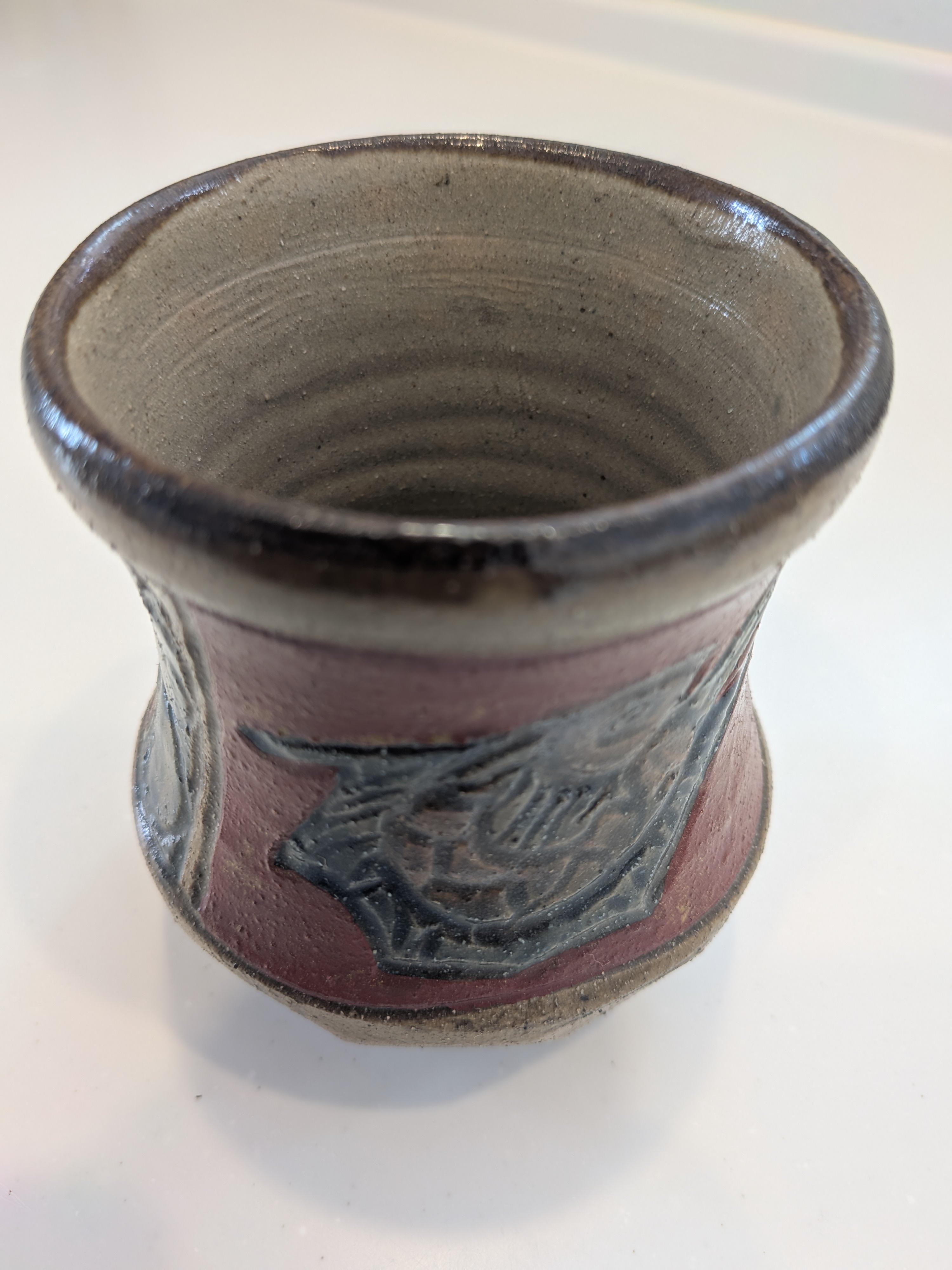
Discover an intimate example of Okinawan Yachimun craftsmanship through this hand-carved sake cup (Choko / Guinomi) by Kiyomasa Kobashigawa (小橋川 清正) of Kiyomasa Touki, the historic Tsuboya studio tradition. Small in scale but rich in technical detail, the vessel combines deep hand-carved fish relief (Gyomon / 魚紋), iron-red Akae mineral coloring, cobalt-blue accents, and an exposed Okinawan clay body. The result is a highly tactile work in which the natural character of the clay remains integral to the visual design.
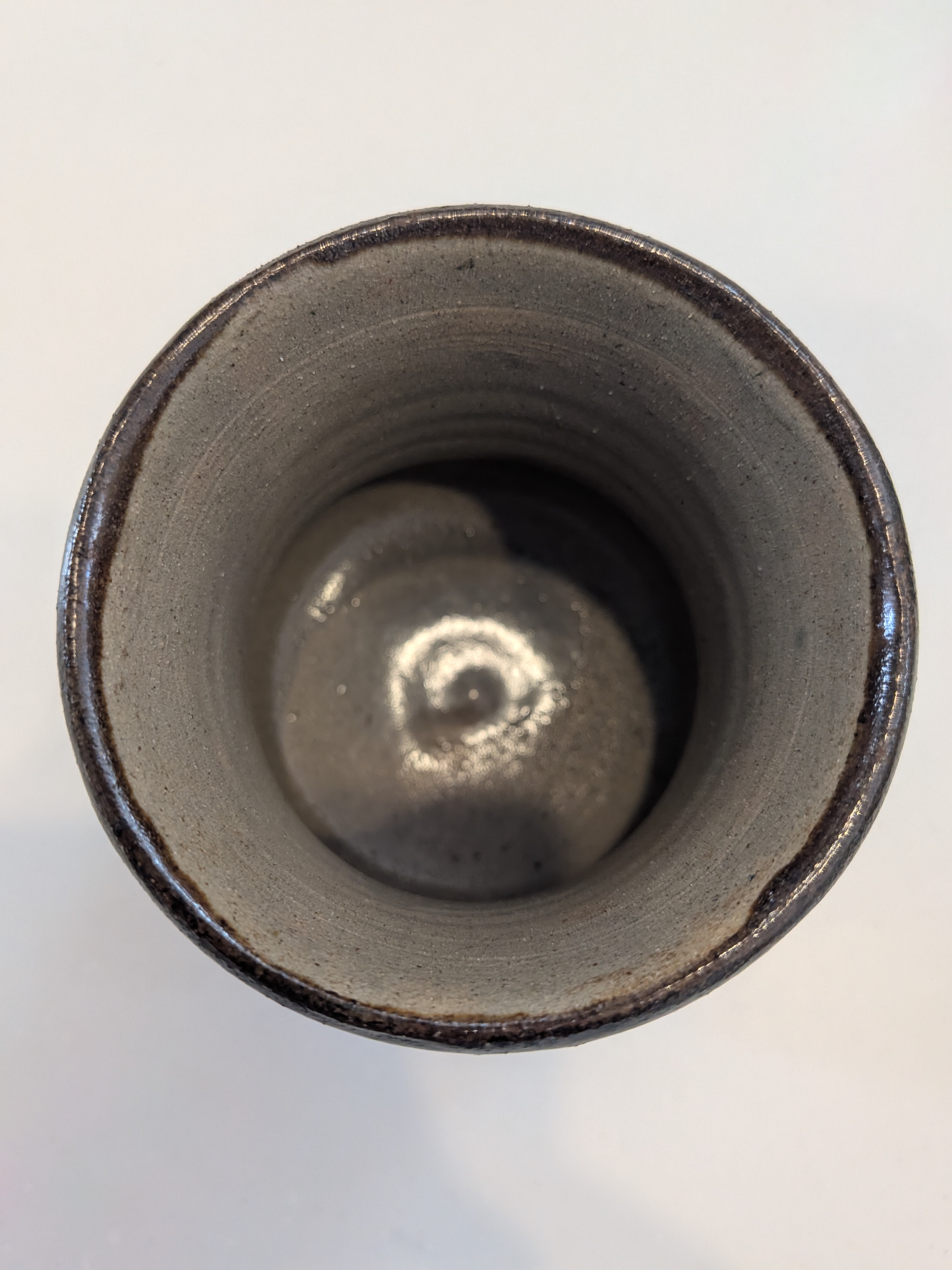
The cup's gently flared drinking rim contrasts with the heavily carved exterior. Across the body, the fish motif is rendered in raised and recessed relief, producing pronounced shadows as light moves across the surface. Areas of red, dark blue, and natural clay create an earthy palette characteristic of traditional Okinawan ceramic aesthetics. The underside carries Kobashigawa's hand-incised 「清」 mark, providing an important physical identifying feature for the piece and connecting it directly to the artist's studio production.
For collectors, the significance of this work extends beyond its function as a sake vessel. Its compact format preserves the artist's characteristic carved vocabulary in a form that can be appreciated both as functional tableware and as a standalone studio ceramic.
Master Kiyomasa Kobashigawa - Studio Lineage & Historical Context
Kiyomasa Kobashigawa (小橋川 清正) was associated with the long-established ceramic tradition of Naha's historic Tsuboya district, one of the central locations in the development and preservation of Okinawan pottery. His studio, Kiyomasa Touki (清正陶器), became associated with traditional Tsuboya ceramic production and Kobashigawa's individual approach to carved decoration and glaze.
Kobashigawa's career also intersects with an important period in Okinawan cultural presentation. He was among the Okinawan ceramic artists associated with preparations surrounding the 2000 Kyushu-Okinawa G8 Summit, held in Okinawa. This historical context adds an important layer to surviving works from his studio, while the present cup remains individually identifiable through its 「清」 studio mark.
The Gyomon Fish Motif
The fish motif (Gyomon / 魚紋) is one of the most recognizable decorative traditions within Okinawan Yachimun. Fish imagery carries strong associations with the sea that surrounds the Ryukyu Islands and is frequently interpreted in Okinawan decorative culture through themes such as:
- Abundance
- Prosperity
- Good fortune
- Life and nourishment
- Connection with the surrounding ocean
The motif became particularly prominent within modern Okinawan pottery and is closely associated with the broader Tsuboya ceramic tradition.
Here, the fish are not simply painted onto the surface. They are physically carved into the clay, giving the design a sculptural quality that becomes particularly visible under directional light.
Hand-Carved Senbori Craftsmanship
The decorative character of this cup depends heavily on the precision of the carving.
1. Forming: The clay is shaped into the compact sake-cup profile, with careful attention to wall thickness, balance, and the gently flared rim.
2. Leather-Hard Carving: Once the clay reaches the appropriate working stage, the fish design is carved into the surface by hand.
At this stage, the clay must retain enough firmness to hold fine detail while remaining workable enough to accept the carving tools.
3. Relief Definition: The artist establishes varying depths within the fish and surrounding decoration, allowing the finished surface to produce natural highlights and shadows.
4. Color & Glaze: Iron-rich red coloration and darker glaze accents are applied to establish contrast between the carved motif and the natural clay body.
5. Firing: The completed vessel undergoes ceramic firing, permanently fixing the clay body, surface decoration, and glaze.
Because every stage is performed on an individual vessel, subtle differences in carving depth, color movement, and firing response are inherent to the work.
Collector Significance
This piece offers several characteristics particularly relevant to collectors of Okinawan studio ceramics:
- Identifiable Artist: Kiyomasa Kobashigawa (小橋川 清正)
- Historic Studio: Kiyomasa Touki / Tsuboya tradition
- Distinctive Handwork: Deeply carved Gyomon fish decoration
- Physical Artist Mark: Hand-incised 「清」
- Traditional Form: Choko / Guinomi
- Regional Material Language: Okinawan clay, mineral coloration, and traditional Yachimun aesthetics
- Finite Studio History: Works from a closed historical studio represent a fixed body of surviving production rather than an ongoing commercial line
The combination of artist identification, studio association, physical signature, traditional form, and hand-carved decoration makes this an especially compelling example for collectors focused on Okinawan ceramics.
Premium Highlights
- Master Potter: Kiyomasa Kobashigawa (小橋川 清正)
- Historic Studio: Kiyomasa Touki / Tsuboya Kiln (清正陶器・壺屋窯)
- Form: Traditional Choko / Guinomi — 魚紋お猪口
- Motif: Hand-carved Gyomon fish
- Technique: Hand-formed ceramic construction with deep relief carving
- Surface: Iron-red Akae, cobalt-blue accents, and exposed natural clay
- Authentication Feature: Hand-incised 「清」 studio mark on the base
- Cultural Context: Historic Tsuboya Yachimun ceramic tradition
- Historical Context: Kobashigawa's association with Okinawan ceramic production during the period surrounding the 2000 Kyushu-Okinawa G8 Summit
- Rarity: Individual historical studio work from a finite production period
Curator's Note
The appeal of this work lies in its intimacy. Unlike a large presentation vessel, this small sake cup places the potter's hand directly into the collector's experience. The carved fish emerge from the clay through changes in depth rather than relying solely on painted decoration. The combination of red mineral color, dark accents, and exposed clay gives the surface a distinctly Okinawan character.
The 「清」 mark on the base provides an important physical connection to Kiyomasa Kobashigawa and the Kiyomasa Touki studio tradition, while the compact Guinomi form makes the work equally suitable for collection, display, or carefully considered functional use.
Specifications
| Attribute | Details |
| Artist | Kiyomasa Kobashigawa (小橋川 清正) |
| Studio & Kiln | Kiyomasa Touki / Tsuboya Kiln (清正陶器・壺屋窯) |
| Origin | Tsuboya, Naha, Okinawa, Japan |
| Category | Okinawan Yachimun / Fine Art Studio Ceramic |
| Form | Choko / Guinomi — 魚紋お猪口 |
| Motif | Hand-carved fish (Gyomon / 魚紋) |
| Materials | Okinawan clay, mineral red slip, cobalt-blue glaze accents |
| Technique | Hand-formed ceramic construction and relief carving |
| Surface Treatment | Deep Senbori carving with multi-tone ceramic decoration |
| Artist Mark | Hand-incised 「清」 on base |
| Era | Vintage studio production |
| Condition | See product photographs for the current condition and surface details |
| Quantity | One individual studio work |
Condition & Authentication
The 「清」 mark visible on the underside is included in the product photography and forms part of the item's identifying documentation.
The original product photographs should be regarded as the primary visual reference for:
- Surface condition
- Carving depth
- Glaze characteristics
- Natural firing variation
- Base construction
- Artist marking
- Overall preservation
Natural variations in handmade ceramics—including minor irregularities, tonal differences, kiln marks, and variations in glaze movement—should be understood as characteristics of individual studio production rather than manufacturing defects.
Care Instructions
- Wash gently by hand with lukewarm water and a soft cloth.
- Avoid abrasive pads, wire sponges, and aggressive chemical cleaners.
- Do not place in an automated dishwasher.
- Do not use in a microwave or oven unless specifically confirmed suitable for the individual piece.
- Avoid sudden temperature changes.
- Allow the vessel to dry completely before long-term storage.
- Handle carefully around the carved exterior and foot.
Shipping & International Orders
Domestic Shipping Japan: The piece will be carefully packaged using protective materials appropriate for collectible ceramic artwork and shipped through an insured delivery service where available.
International Orders: International buyers may be responsible for applicable shipping charges, customs duties, VAT, GST, brokerage fees, import taxes, or other destination-country charges.
All applicable destination-country charges remain the responsibility of the recipient.
Xandre Store
Connecting global collectors with the craftsmanship, heritage, and stories behind Japan's finest regional studio traditions.
Previously viewed products
No recently viewed products.