

Description
Xandre Store Exclusive - Historic Sacred Shrine Lacquer Vessel with Original Inscribed Kiri-Bako
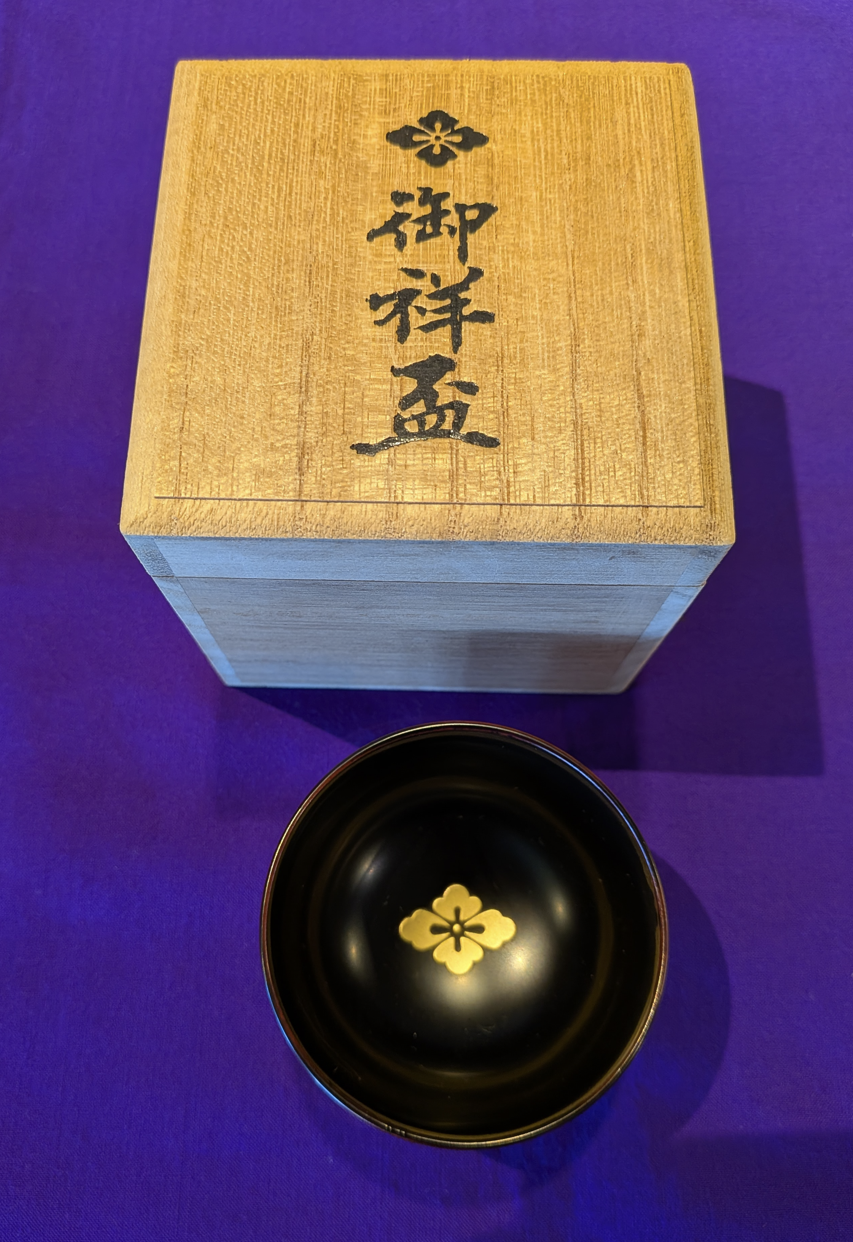
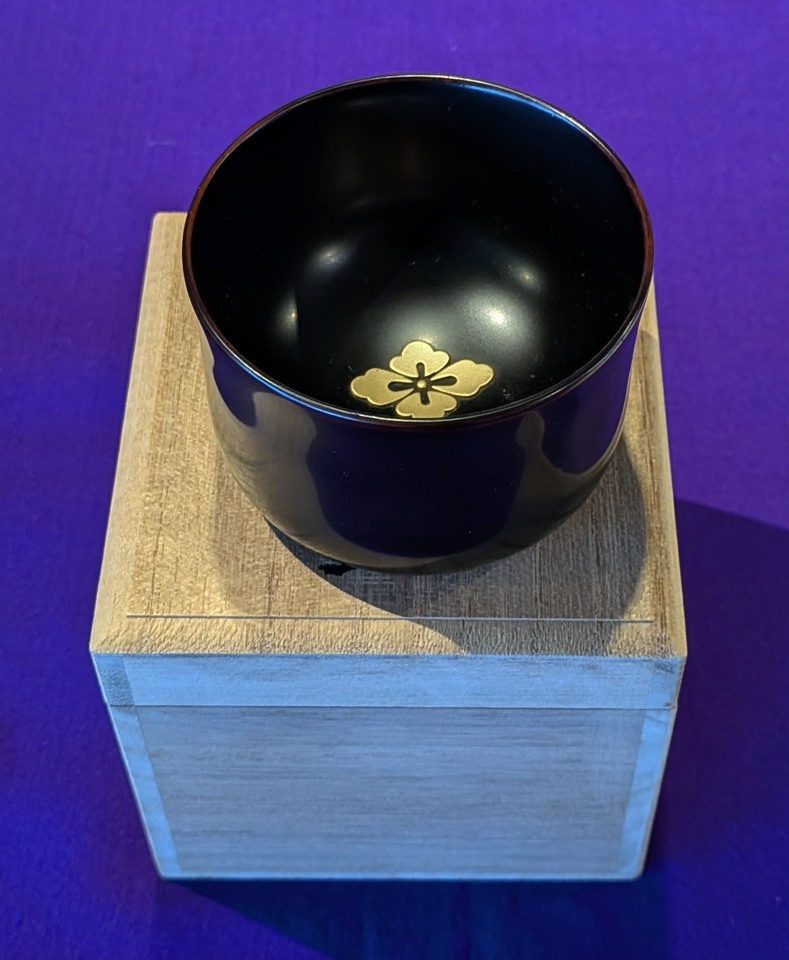
Discover an extraordinary piece of Okinawan Ryukyu and Japanese sacred ceremonial art through this historic lacquer Gohanhai (御拝盃), preserved together with its original fitted paulownia kiri-bako. The compact ceremonial vessel features a deep, exceptionally lustrous black lacquer surface, subtly framed by a vermilion-toned rim. At its center rests a prominent gold Hanabishi (花菱) crest, creating a dramatic contrast between brilliant gold, vermilion, and the deep black lacquer ground.
The accompanying kiri-bako bears its original calligraphic identification, explicitly identifying the vessel as Gohanhai (御拝盃) and preserving the historical presentation associated with the object. Supported by its original markings, presentation materials, and accompanying documentation, this piece represents a rare convergence of sacred ritual practice, royal and noble ceremonial culture, Japanese lacquer craftsmanship, and Okinawan heritage.
Historic Sacred Shrine & Sanctuary Heritage
The Gohanhai (御拝盃) designation identifies this vessel as a ceremonial cup associated with reverential worship and formal ritual practice. Within the documented tradition associated with the piece, such vessels were employed in sacred ceremonial rites and formal libations, where lacquerware served a role extending far beyond ordinary dining or drinking.
The historical documentation accompanying this particular vessel establishes its connection to sacred shrine traditions, royal sanctuary ceremonies, imperial shrine dedications, and noble ceremonial practice. Its provenance further connects the object with the historical relationship between Japanese sacred institutions and the refined lacquer traditions used in formal ritual environments.
Documented Ise Shrine Connection
An especially significant element of the provenance is the documented connection to Ise Shrine, one of Japan's most important Shinto sacred institutions. The association places the vessel within a broader tradition in which carefully crafted ceremonial objects served as material expressions of reverence, ritual hierarchy, and sacred continuity. For collectors of Japanese religious art, Okinawan cultural heritage, and historically significant lacquerware, this connection gives the piece a significance extending well beyond its modest physical scale.
Key Highlights
- Historic Sacred Shrine Artifact: Documented ceremonial and shrine heritage
- Gohanhai (御拝盃): Original box inscription identifies the vessel's ceremonial designation
- Imperial & Shrine Heritage: Documented relationship to formal imperial and sacred shrine traditions
- Ise Shrine Connection: Documented historical connection to Ise Shrine
- Sacred Ritual Use: Documented association with formal sacred rites and ceremonial libations
- Royal Provenance: Historical documentation establishes its connection with royal and elevated ceremonial traditions
- Noble & High-Sanctuary Heritage: Associated with formal ceremonial environments and noble ritual traditions
- Gold Hanabishi Crest: Prominent four-petaled floral-geometric emblem centered within the vessel
- Deep Black Lacquer: Highly polished black lacquer creating a dramatic foundation for the gold emblem
- Vermilion Rim: Subtle traditional color contrast around the vessel's edge
- Original Kiri-Bako: Preserved with its fitted paulownia presentation box
- Original Calligraphic Inscription: Historic Japanese identification preserved on the box
- Museum-Grade Preservation: Exceptional preserved condition retaining the original visual character
- Complete Historical Presentation: Vessel and original presentation materials remain together
Sacred Ceremonial Significance
The importance of this vessel lies in the relationship between form, material, emblem, inscription, and ritual function. The black lacquer surface provides an austere and formal ground, while the gold Hanabishi crest serves as the central visual and symbolic element. The vermilion rim adds a restrained ceremonial accent.
The original kiri-bako is equally significant. Its inscription identifies the object as a Gohanhai, while the associated documentation provides the historical context connecting the vessel to sacred and elevated ceremonial use. This combination distinguishes the piece from ordinary lacquerware: it was created and preserved within a tradition in which the vessel's material refinement and ritual purpose were inseparable.
Curator's Note
At first glance, the vessel's design appears deliberately restrained: black lacquer, a single central gold emblem, and a subtle vermilion edge. That restraint is precisely what gives it its authority. The Hanabishi crest becomes the unmistakable focal point, while the polished lacquer reflects light around it like a dark mirror. The compact proportions further emphasize the formality of the object rather than diminishing it.
For a collector, however, the most compelling aspect may be the complete historical presentation. The vessel remains together with its original inscribed kiri-bako, identifying markings, crest, and supporting provenance documentation. It is therefore best understood not simply as a lacquer cup, but as a preserved object within a larger history of sacred ceremony, royal tradition, shrine culture, and Japanese/Okinawan craftsmanship.
Specifications
Collection: Okinawan Ryukyu & Shinto Sacred Art Collection
Category: Sacred Ritual Artifact / Urushi Lacquerware / Ceremonial Cup
Designation: Gohanhai (御拝盃)
Materials: Lacquered wood/composite construction; gold decorative elements; natural paulownia presentation box
Palette: Deep high-gloss black, vermilion, brilliant gold, and natural paulownia
Motif: Hanabishi (花菱) four-petaled floral-geometric crest
Inscription: Gohanhai (御拝盃) identified on original presentation box
Historical Context: Sacred shrine ceremony / royal and noble ceremonial tradition / documented Ise Shrine connection
Dimensions:
- Cup Diameter: Approx. 7.5–8.5 cm / 2.95–3.35 in.
- Cup Height: Approx. 3.5–4.5 cm / 1.38–1.77 in.
- Kiri-Bako: Approx. 10.0 × 10.0 × 8.5 cm / 3.94 × 3.94 × 3.35 in.
Weight:
- Cup: Approx. 35–50 g / 1.23–1.76 oz
- Total with Box: Approx. 140–180 g / 4.93–6.35 oz
Packaging: Original fitted paulownia kiri-bako with historical calligraphy and crest
Condition: Museum-grade preserved condition
Quantity: One ceremonial vessel with original presentation box
Provenance, Ise Shrine & Historical Documentation
This Gohanhai was acquired directly from the source store together with its original kiri-bako, identifying inscriptions, crest, and supporting historical documentation. The documentation accompanying the piece establishes its sacred ceremonial provenance, including its relationship to Ise Shrine, imperial shrine traditions, royal sanctuary ceremonies, noble ceremonial practice, and formal sacred rites. The original box is particularly important because its calligraphic inscription identifies the vessel as a Gohanhai (御拝盃) and preserves the object's historical presentation.
Xandre Store will present detailed photographs of the vessel, Hanabishi crest, box inscription, presentation box, identifying marks, and supporting documentation so that collectors can examine the historical evidence associated with the piece directly. The complete presentation is therefore offered as a documented historic ceremonial object, rather than merely a decorative lacquer vessel.
Care & Preservation
As a historically significant lacquer object, this vessel should be treated primarily as a collectible and display piece.
- Handle with clean, dry hands.
- Wipe gently with a soft, non-abrasive cloth.
- Do not use chemical cleaners or polishing compounds.
- Do not immerse or soak.
- Avoid dishwasher, microwave, and prolonged exposure to moisture.
- Protect from prolonged direct sunlight.
- Maintain a stable environment away from extreme temperature and humidity fluctuations.
- Preserve the original kiri-bako with the vessel whenever the piece is not being displayed.
Shipping & International Orders
Domestic Japan shipping: Included where specified in the individual Xandre Store listing. International orders: Import duties, VAT/GST, customs fees, brokerage charges, and other destination-country taxes or fees may apply and are the responsibility of the purchaser.
Xandre Store - Curated Okinawan Heritage & Fine Art
At Xandre Store, we seek works whose significance extends beyond appearance-objects where craftsmanship, cultural history, provenance, material quality, and authentic presentation come together. This pieces are particularly suited to that philosophy. The Gohanhai preserves a much more explicitly documented connection to sacred ceremonial and shrine heritage.
Description
Xandre Store Exclusive - Historic Sacred Shrine Lacquer Vessel with Original Inscribed Kiri-Bako
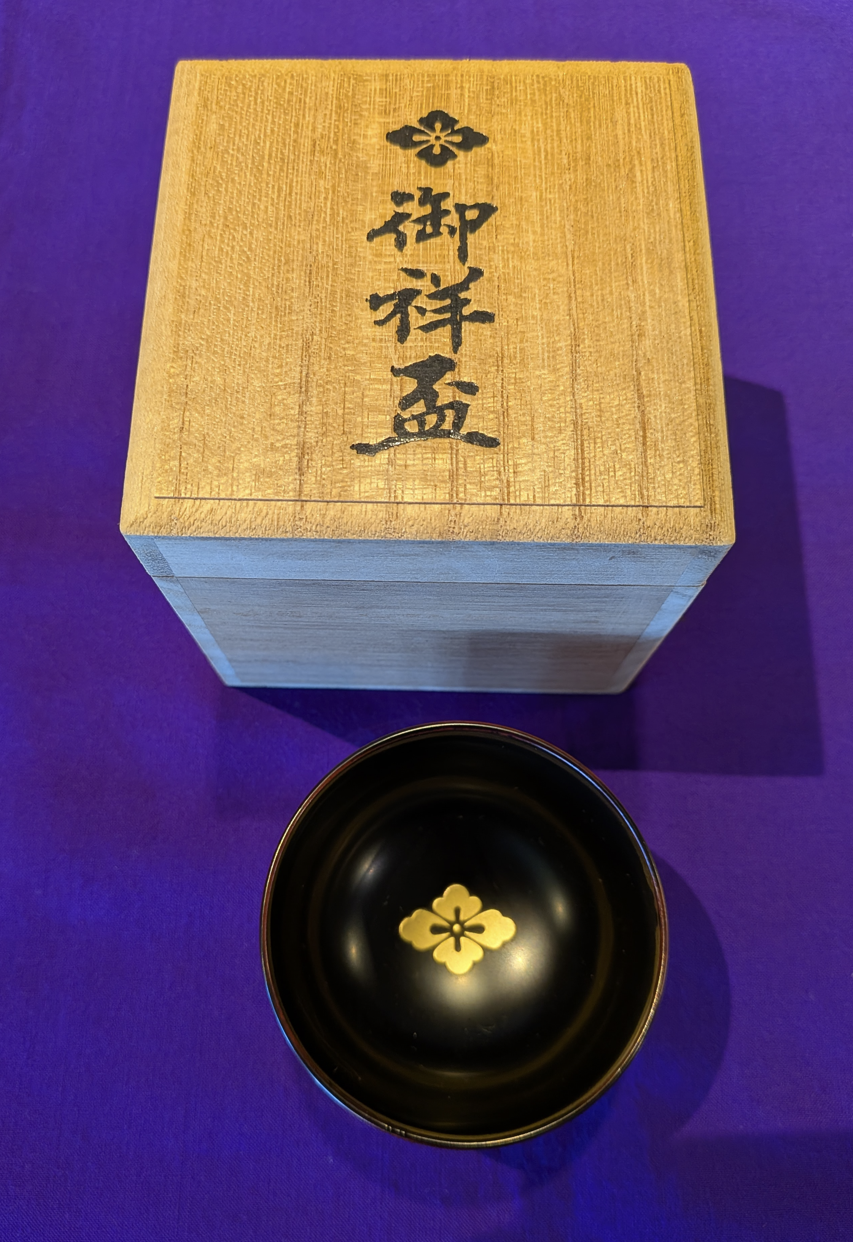
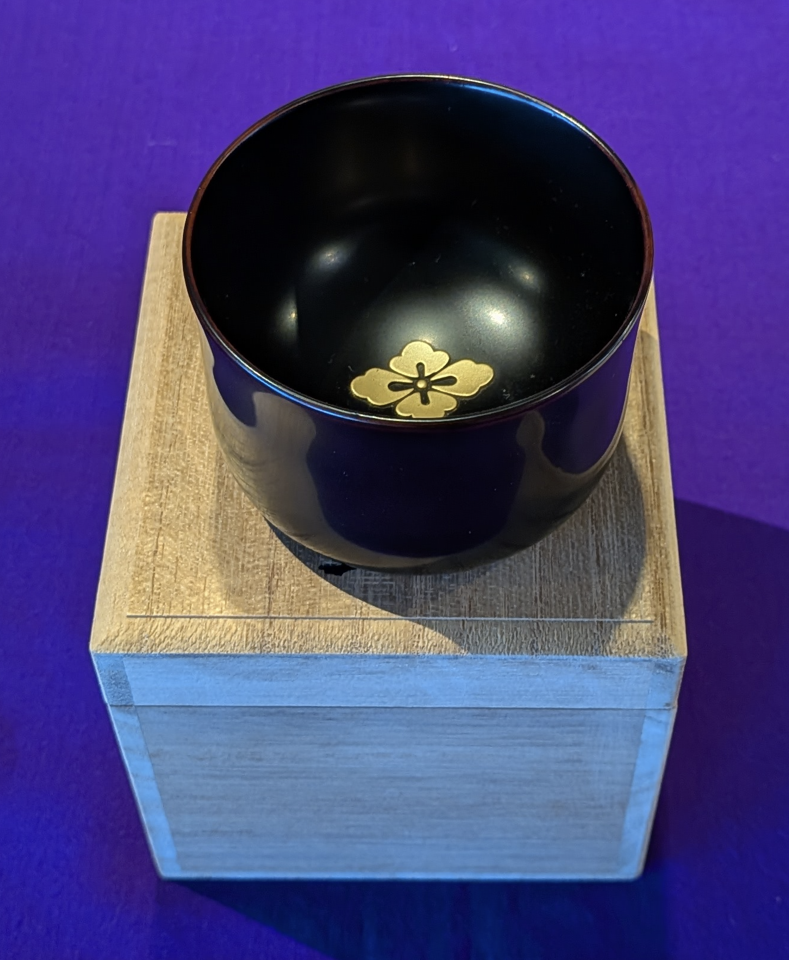
Discover an extraordinary piece of Okinawan Ryukyu and Japanese sacred ceremonial art through this historic lacquer Gohanhai (御拝盃), preserved together with its original fitted paulownia kiri-bako. The compact ceremonial vessel features a deep, exceptionally lustrous black lacquer surface, subtly framed by a vermilion-toned rim. At its center rests a prominent gold Hanabishi (花菱) crest, creating a dramatic contrast between brilliant gold, vermilion, and the deep black lacquer ground.
The accompanying kiri-bako bears its original calligraphic identification, explicitly identifying the vessel as Gohanhai (御拝盃) and preserving the historical presentation associated with the object. Supported by its original markings, presentation materials, and accompanying documentation, this piece represents a rare convergence of sacred ritual practice, royal and noble ceremonial culture, Japanese lacquer craftsmanship, and Okinawan heritage.
Historic Sacred Shrine & Sanctuary Heritage
The Gohanhai (御拝盃) designation identifies this vessel as a ceremonial cup associated with reverential worship and formal ritual practice. Within the documented tradition associated with the piece, such vessels were employed in sacred ceremonial rites and formal libations, where lacquerware served a role extending far beyond ordinary dining or drinking.
The historical documentation accompanying this particular vessel establishes its connection to sacred shrine traditions, royal sanctuary ceremonies, imperial shrine dedications, and noble ceremonial practice. Its provenance further connects the object with the historical relationship between Japanese sacred institutions and the refined lacquer traditions used in formal ritual environments.
Documented Ise Shrine Connection
An especially significant element of the provenance is the documented connection to Ise Shrine, one of Japan's most important Shinto sacred institutions. The association places the vessel within a broader tradition in which carefully crafted ceremonial objects served as material expressions of reverence, ritual hierarchy, and sacred continuity. For collectors of Japanese religious art, Okinawan cultural heritage, and historically significant lacquerware, this connection gives the piece a significance extending well beyond its modest physical scale.
Key Highlights
- Historic Sacred Shrine Artifact: Documented ceremonial and shrine heritage
- Gohanhai (御拝盃): Original box inscription identifies the vessel's ceremonial designation
- Imperial & Shrine Heritage: Documented relationship to formal imperial and sacred shrine traditions
- Ise Shrine Connection: Documented historical connection to Ise Shrine
- Sacred Ritual Use: Documented association with formal sacred rites and ceremonial libations
- Royal Provenance: Historical documentation establishes its connection with royal and elevated ceremonial traditions
- Noble & High-Sanctuary Heritage: Associated with formal ceremonial environments and noble ritual traditions
- Gold Hanabishi Crest: Prominent four-petaled floral-geometric emblem centered within the vessel
- Deep Black Lacquer: Highly polished black lacquer creating a dramatic foundation for the gold emblem
- Vermilion Rim: Subtle traditional color contrast around the vessel's edge
- Original Kiri-Bako: Preserved with its fitted paulownia presentation box
- Original Calligraphic Inscription: Historic Japanese identification preserved on the box
- Museum-Grade Preservation: Exceptional preserved condition retaining the original visual character
- Complete Historical Presentation: Vessel and original presentation materials remain together
Sacred Ceremonial Significance
The importance of this vessel lies in the relationship between form, material, emblem, inscription, and ritual function. The black lacquer surface provides an austere and formal ground, while the gold Hanabishi crest serves as the central visual and symbolic element. The vermilion rim adds a restrained ceremonial accent.
The original kiri-bako is equally significant. Its inscription identifies the object as a Gohanhai, while the associated documentation provides the historical context connecting the vessel to sacred and elevated ceremonial use. This combination distinguishes the piece from ordinary lacquerware: it was created and preserved within a tradition in which the vessel's material refinement and ritual purpose were inseparable.
Curator's Note
At first glance, the vessel's design appears deliberately restrained: black lacquer, a single central gold emblem, and a subtle vermilion edge. That restraint is precisely what gives it its authority. The Hanabishi crest becomes the unmistakable focal point, while the polished lacquer reflects light around it like a dark mirror. The compact proportions further emphasize the formality of the object rather than diminishing it.
For a collector, however, the most compelling aspect may be the complete historical presentation. The vessel remains together with its original inscribed kiri-bako, identifying markings, crest, and supporting provenance documentation. It is therefore best understood not simply as a lacquer cup, but as a preserved object within a larger history of sacred ceremony, royal tradition, shrine culture, and Japanese/Okinawan craftsmanship.
Specifications
Collection: Okinawan Ryukyu & Shinto Sacred Art Collection
Category: Sacred Ritual Artifact / Urushi Lacquerware / Ceremonial Cup
Designation: Gohanhai (御拝盃)
Materials: Lacquered wood/composite construction; gold decorative elements; natural paulownia presentation box
Palette: Deep high-gloss black, vermilion, brilliant gold, and natural paulownia
Motif: Hanabishi (花菱) four-petaled floral-geometric crest
Inscription: Gohanhai (御拝盃) identified on original presentation box
Historical Context: Sacred shrine ceremony / royal and noble ceremonial tradition / documented Ise Shrine connection
Dimensions:
- Cup Diameter: Approx. 7.5–8.5 cm / 2.95–3.35 in.
- Cup Height: Approx. 3.5–4.5 cm / 1.38–1.77 in.
- Kiri-Bako: Approx. 10.0 × 10.0 × 8.5 cm / 3.94 × 3.94 × 3.35 in.
Weight:
- Cup: Approx. 35–50 g / 1.23–1.76 oz
- Total with Box: Approx. 140–180 g / 4.93–6.35 oz
Packaging: Original fitted paulownia kiri-bako with historical calligraphy and crest
Condition: Museum-grade preserved condition
Quantity: One ceremonial vessel with original presentation box
Provenance, Ise Shrine & Historical Documentation
This Gohanhai was acquired directly from the source store together with its original kiri-bako, identifying inscriptions, crest, and supporting historical documentation. The documentation accompanying the piece establishes its sacred ceremonial provenance, including its relationship to Ise Shrine, imperial shrine traditions, royal sanctuary ceremonies, noble ceremonial practice, and formal sacred rites. The original box is particularly important because its calligraphic inscription identifies the vessel as a Gohanhai (御拝盃) and preserves the object's historical presentation.
Xandre Store will present detailed photographs of the vessel, Hanabishi crest, box inscription, presentation box, identifying marks, and supporting documentation so that collectors can examine the historical evidence associated with the piece directly. The complete presentation is therefore offered as a documented historic ceremonial object, rather than merely a decorative lacquer vessel.
Care & Preservation
As a historically significant lacquer object, this vessel should be treated primarily as a collectible and display piece.
- Handle with clean, dry hands.
- Wipe gently with a soft, non-abrasive cloth.
- Do not use chemical cleaners or polishing compounds.
- Do not immerse or soak.
- Avoid dishwasher, microwave, and prolonged exposure to moisture.
- Protect from prolonged direct sunlight.
- Maintain a stable environment away from extreme temperature and humidity fluctuations.
- Preserve the original kiri-bako with the vessel whenever the piece is not being displayed.
Shipping & International Orders
Domestic Japan shipping: Included where specified in the individual Xandre Store listing. International orders: Import duties, VAT/GST, customs fees, brokerage charges, and other destination-country taxes or fees may apply and are the responsibility of the purchaser.
Xandre Store - Curated Okinawan Heritage & Fine Art
At Xandre Store, we seek works whose significance extends beyond appearance-objects where craftsmanship, cultural history, provenance, material quality, and authentic presentation come together. This pieces are particularly suited to that philosophy. The Gohanhai preserves a much more explicitly documented connection to sacred ceremonial and shrine heritage.
Previously viewed products
No recently viewed products.