

Description
Xandre Store Exclusive - Contemporary Okinawan Ceramic Art Bridging Ryukyu Heritage, Master Apprenticeship & Modern Japanese Studio Craft
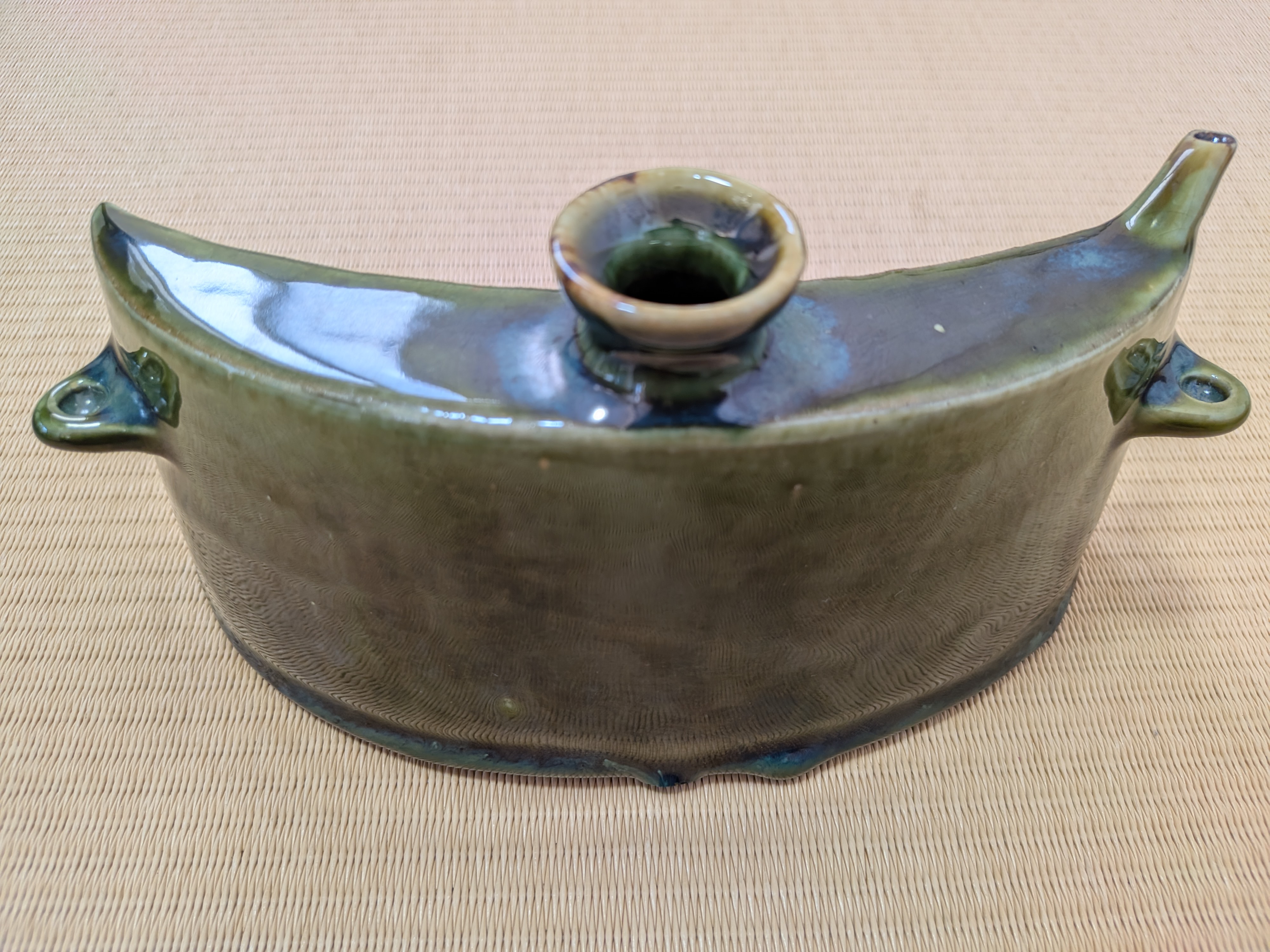
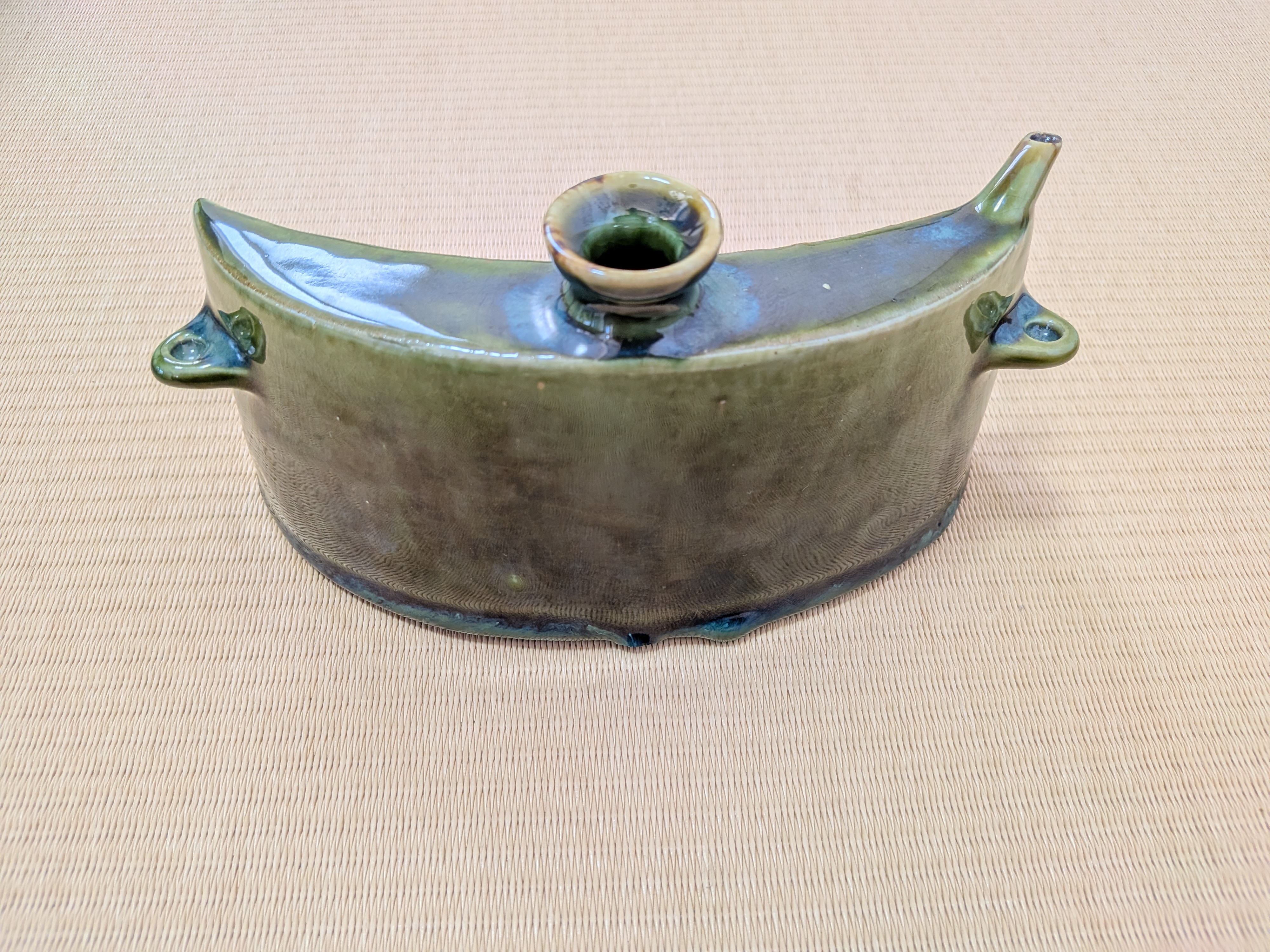
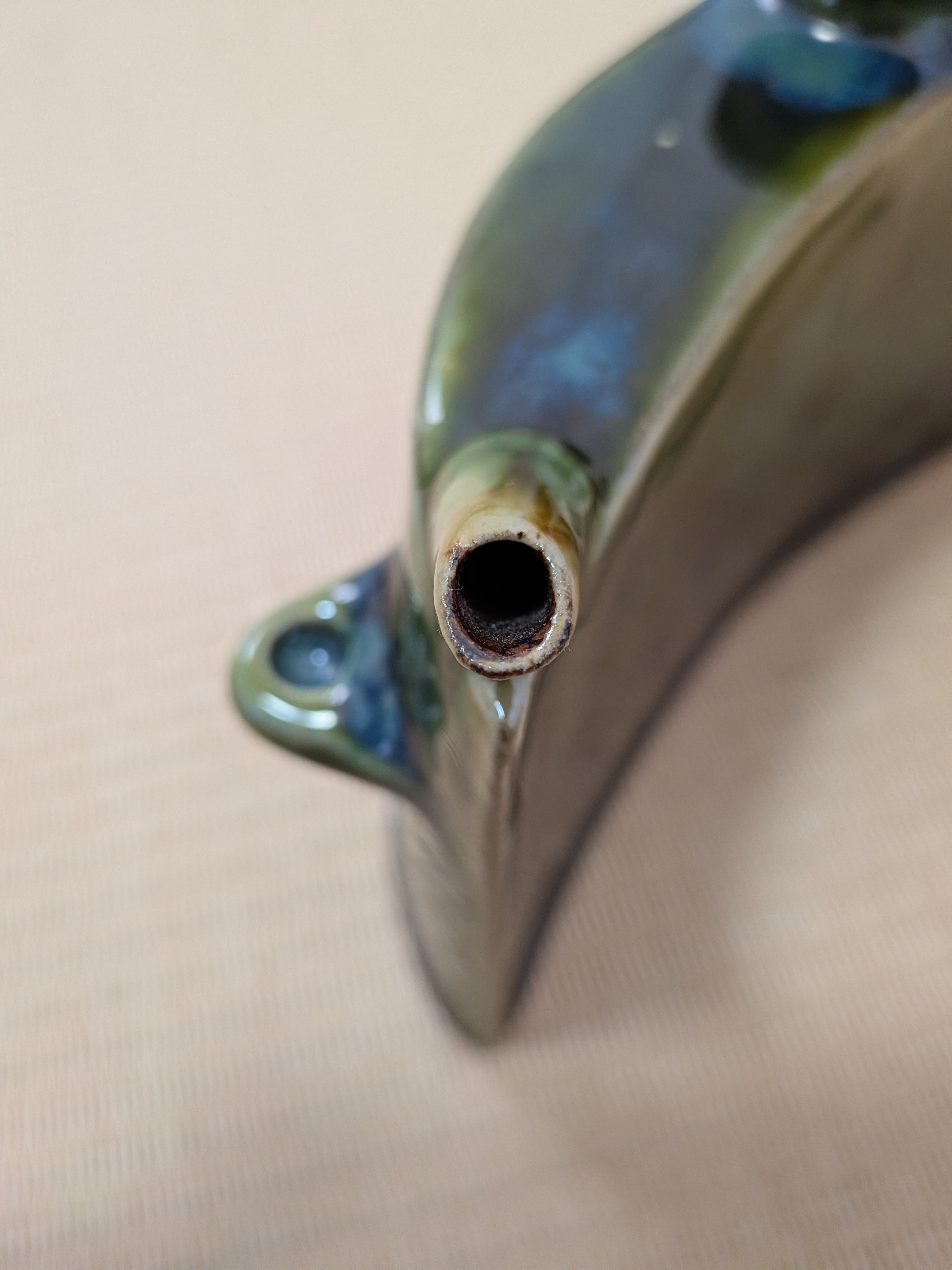
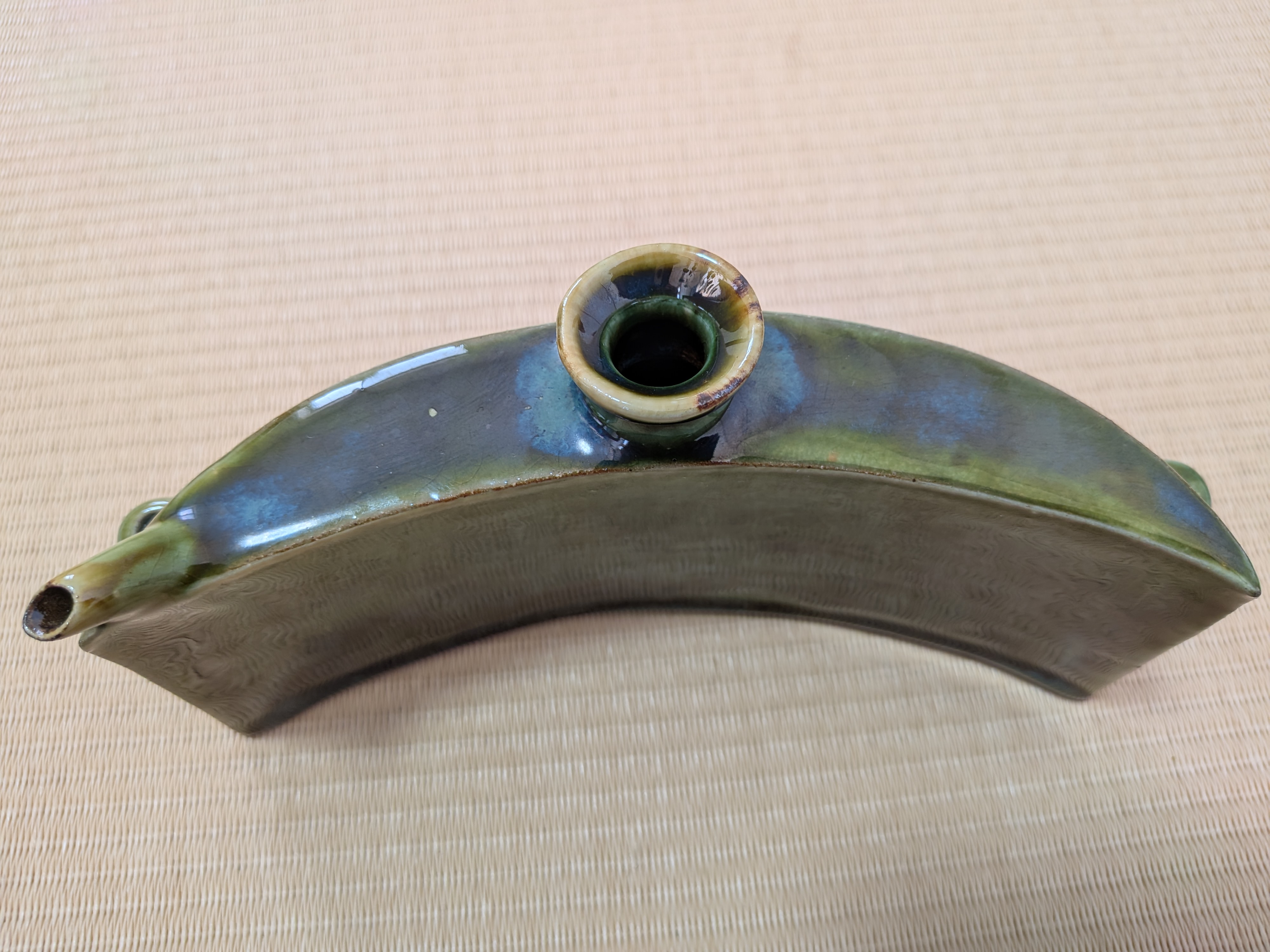
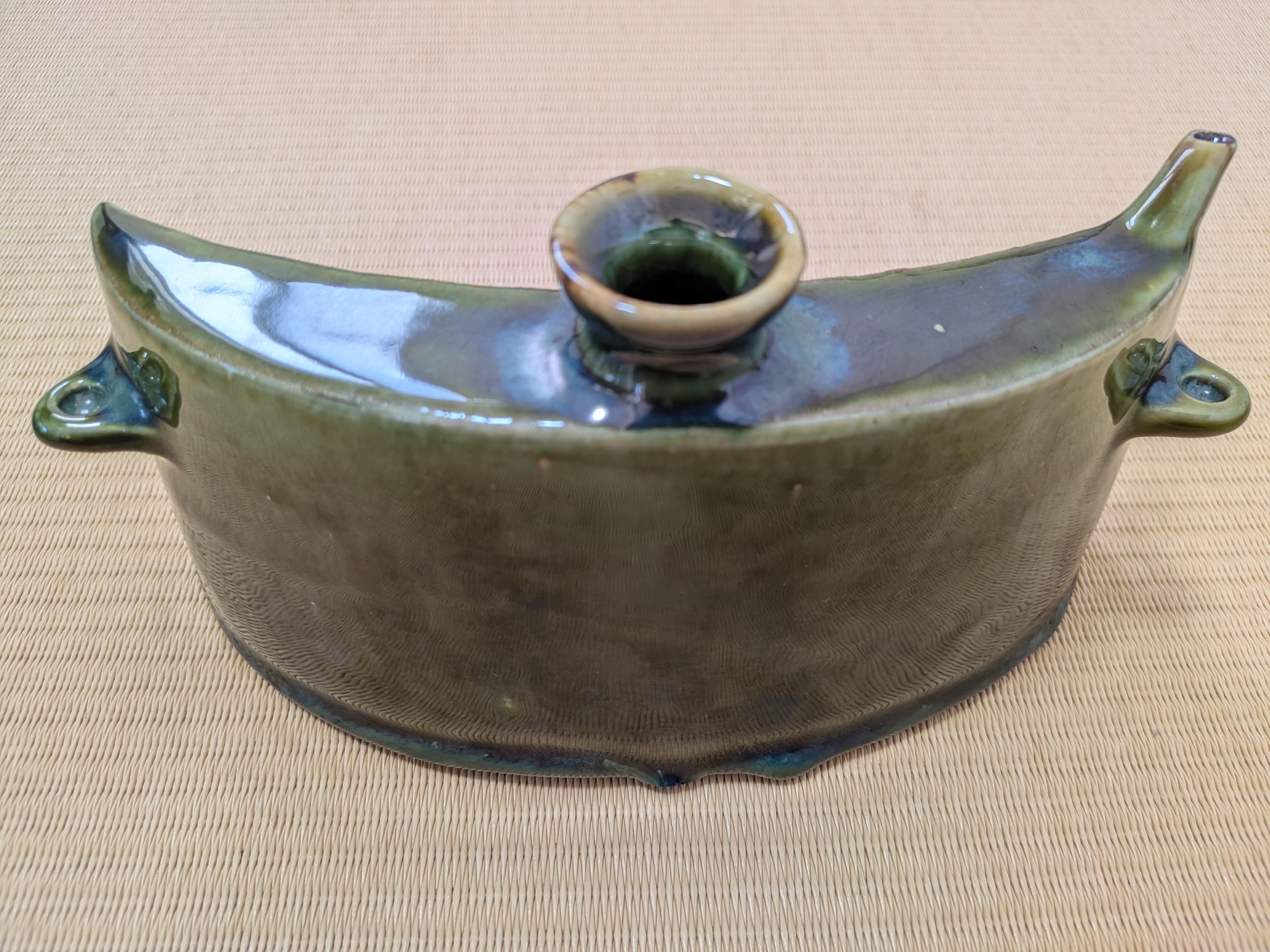
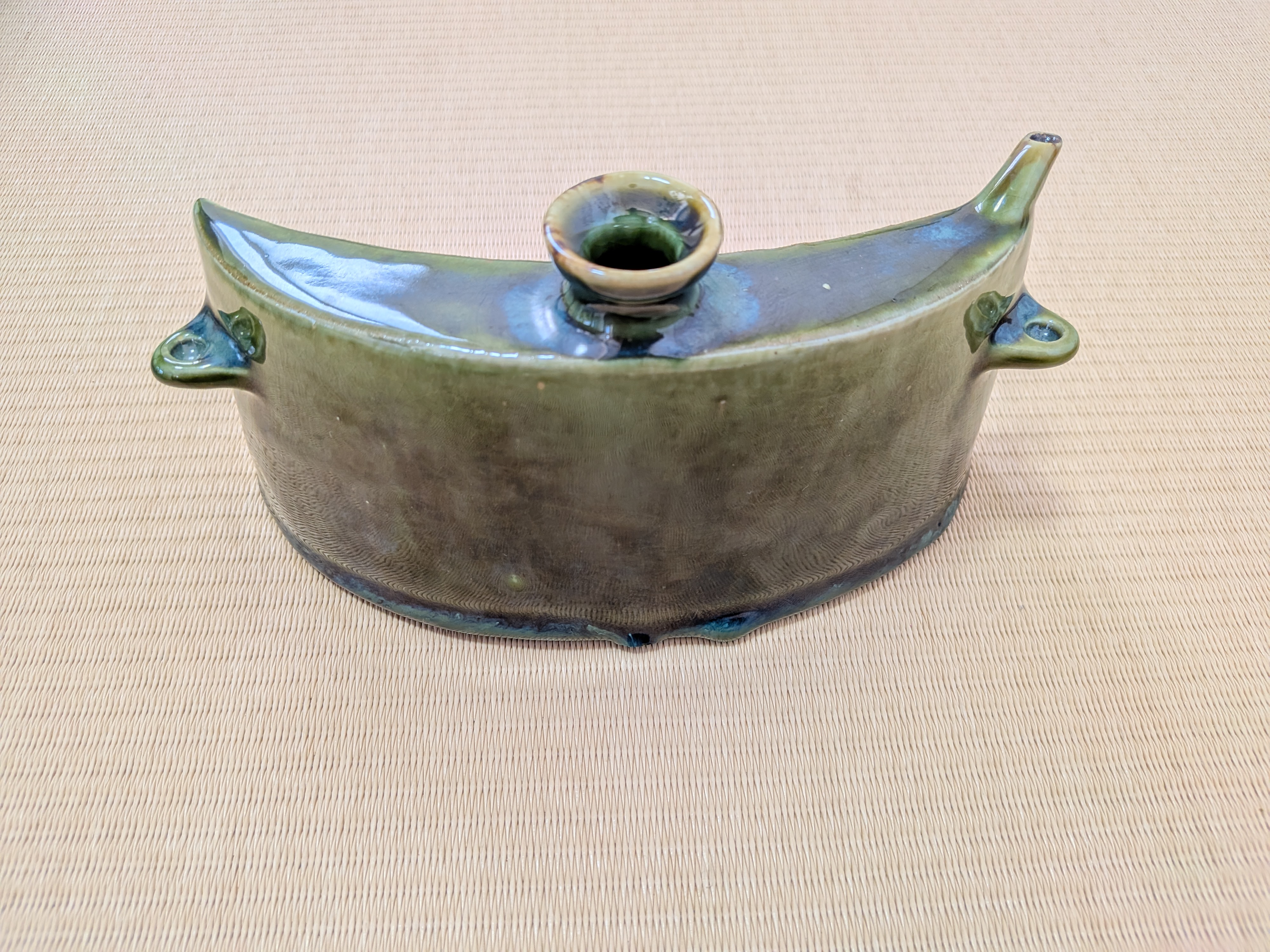
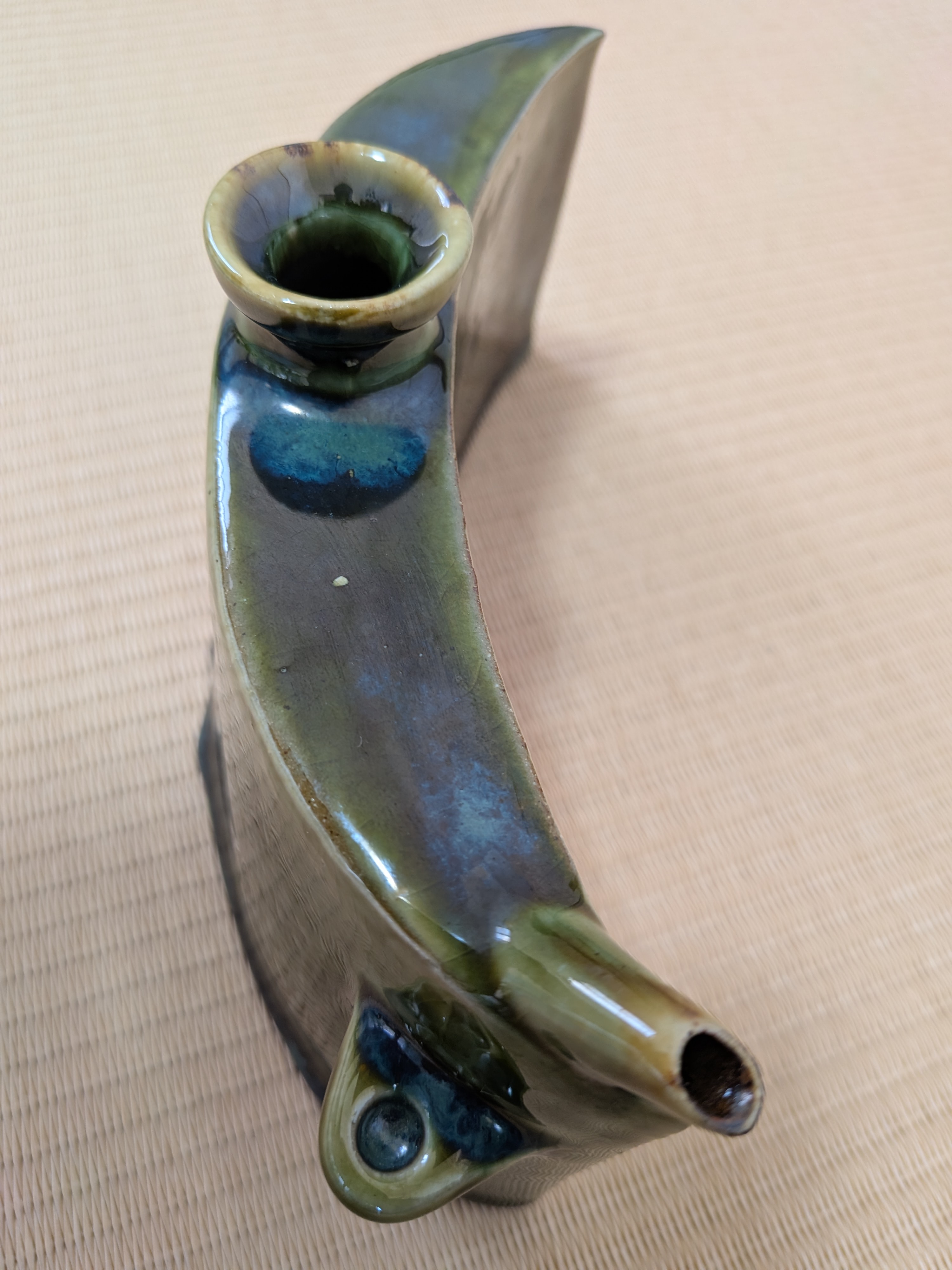
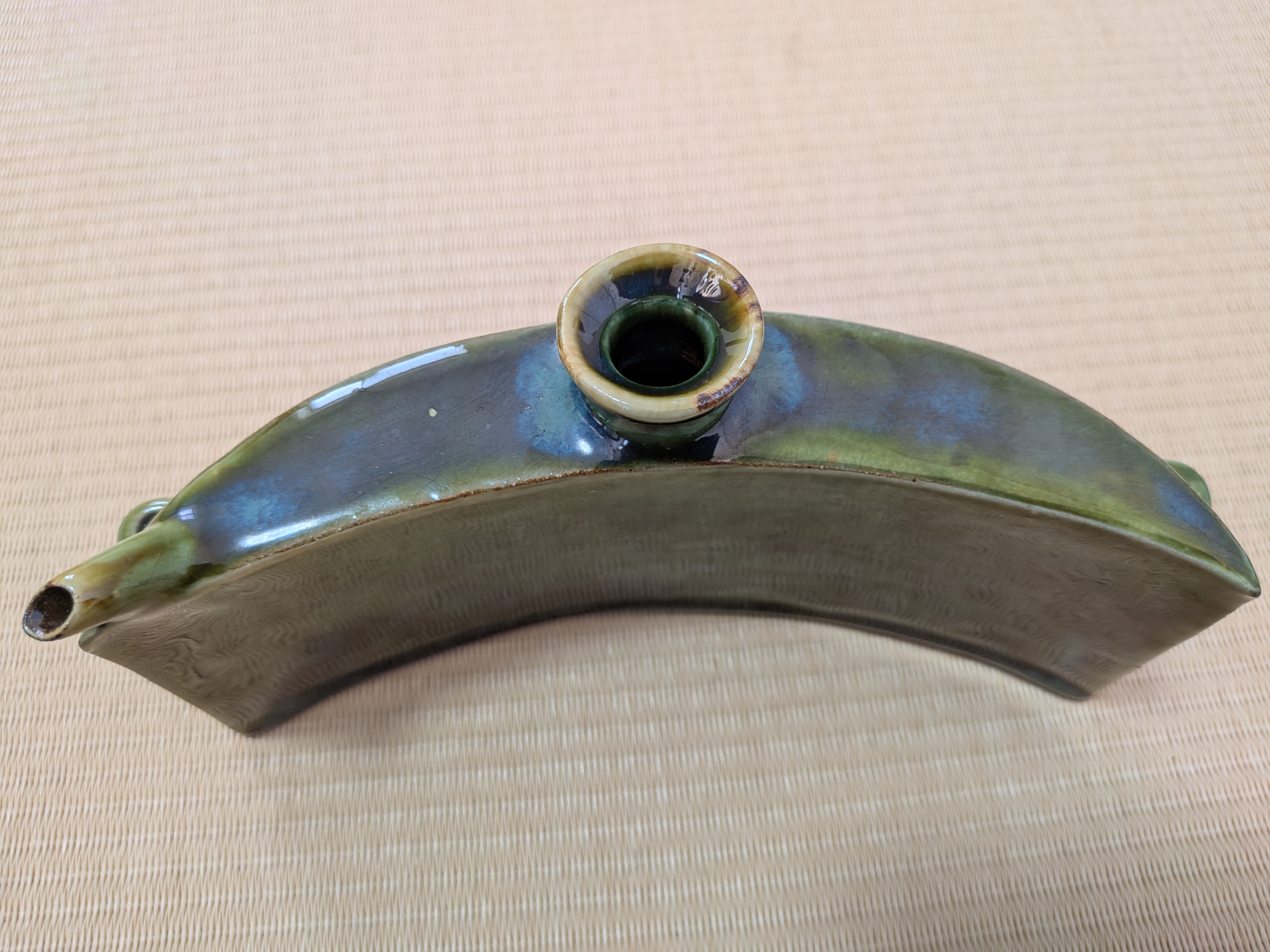
Discover a remarkable expression of contemporary Okinawan Yachimun through this sculptural Dakibin (抱瓶) by respected Okinawan ceramic artist Osamu Makiya (真喜屋 修) of Toubou Makiya (陶房 真喜屋) in Nanjo City. The Dakibin is one of Okinawa's most distinctive traditional ceramic forms. Its characteristic crescent-shaped body was historically designed to sit comfortably against the hip when carried by a cord, creating a functional vessel whose unusual silhouette has become an enduring symbol of Ryukyu ceramic craftsmanship.
Makiya reinterprets this historic form through a sophisticated contemporary palette of deep emerald green, cobalt-blue pooling, dark mineral tones, and warm natural clay. The glaze moves organically across the curved body, producing variations in depth and color that emphasize the vessel's sculptural geometry. Rather than treating the Dakibin simply as historical reproduction, Makiya's approach gives the form a distinctly contemporary presence-equally suited to a refined interior, private collection, or dedicated Japanese ceramics display.
Osamu Makiya - Master Apprenticeship & Okinawan Ceramic Tradition
Osamu Makiya (真喜屋 修) represents an important generation of contemporary Okinawan ceramic artists working between historical Ryukyu forms and modern studio pottery. After graduating from the Okinawa Prefectural University of Arts, Makiya undertook an extended apprenticeship under renowned Okinawan ceramic master Jissei Omine (大嶺 實清), spending approximately seven to eight years refining his ceramic practice before establishing Toubou Makiya.
His work reflects an interest in historic Okinawan pottery, natural materials, traditional firing environments, and the relationship between functional vessels and sculptural form. Makiya subsequently established his independent studio in Nanjo City, where the surrounding Okinawan landscape provides an important setting for his continuing ceramic practice.
The Heritage of the Ryukyu Dakibin (抱瓶)
The Dakibin is an unmistakably Okinawan vessel form. Historically, its curved body allowed the flask to rest against the wearer's hip while being carried with a cord through its side loops. The form was associated with carrying liquids, including awamori, during travel, work, celebrations, and everyday life.
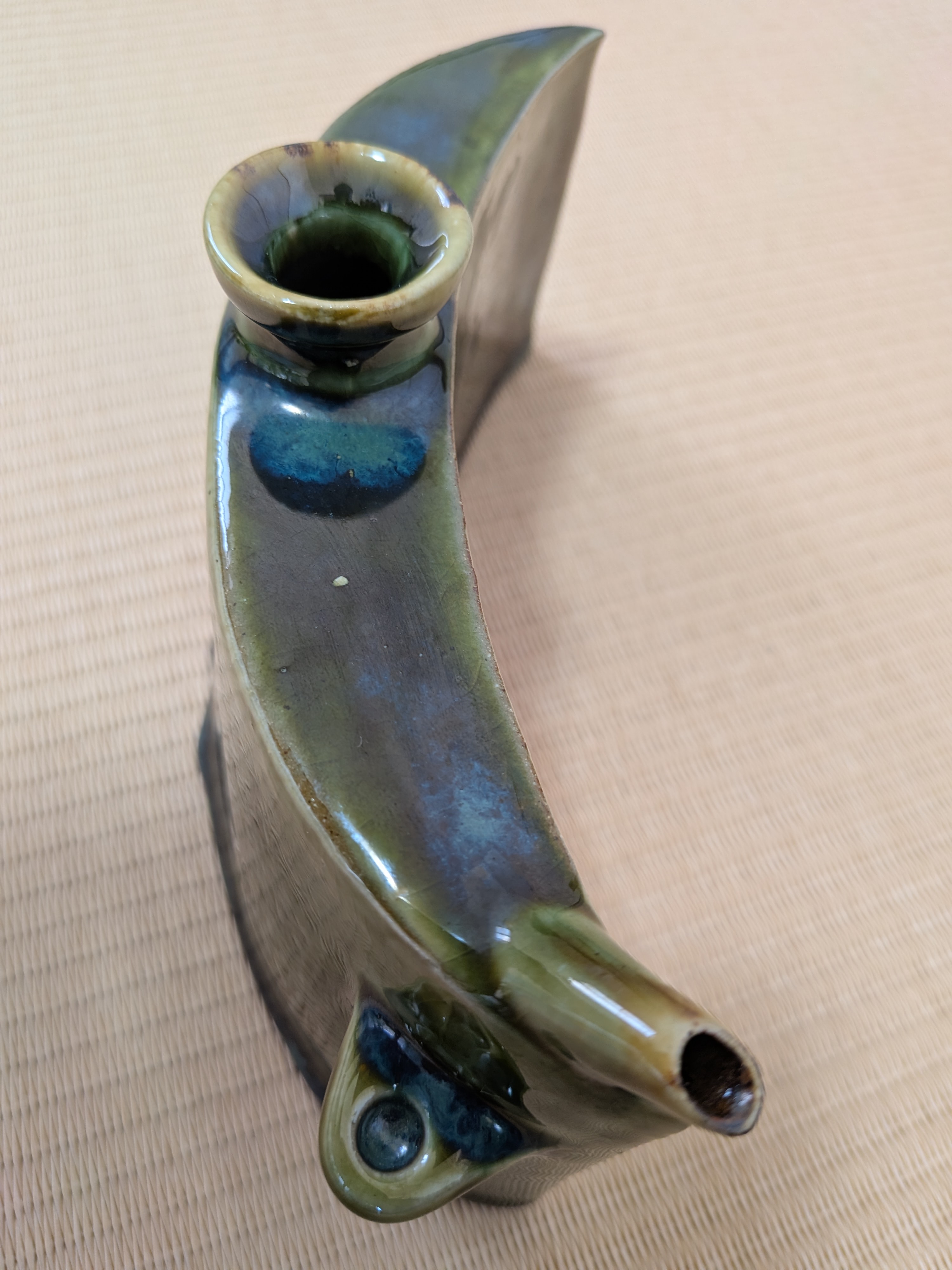
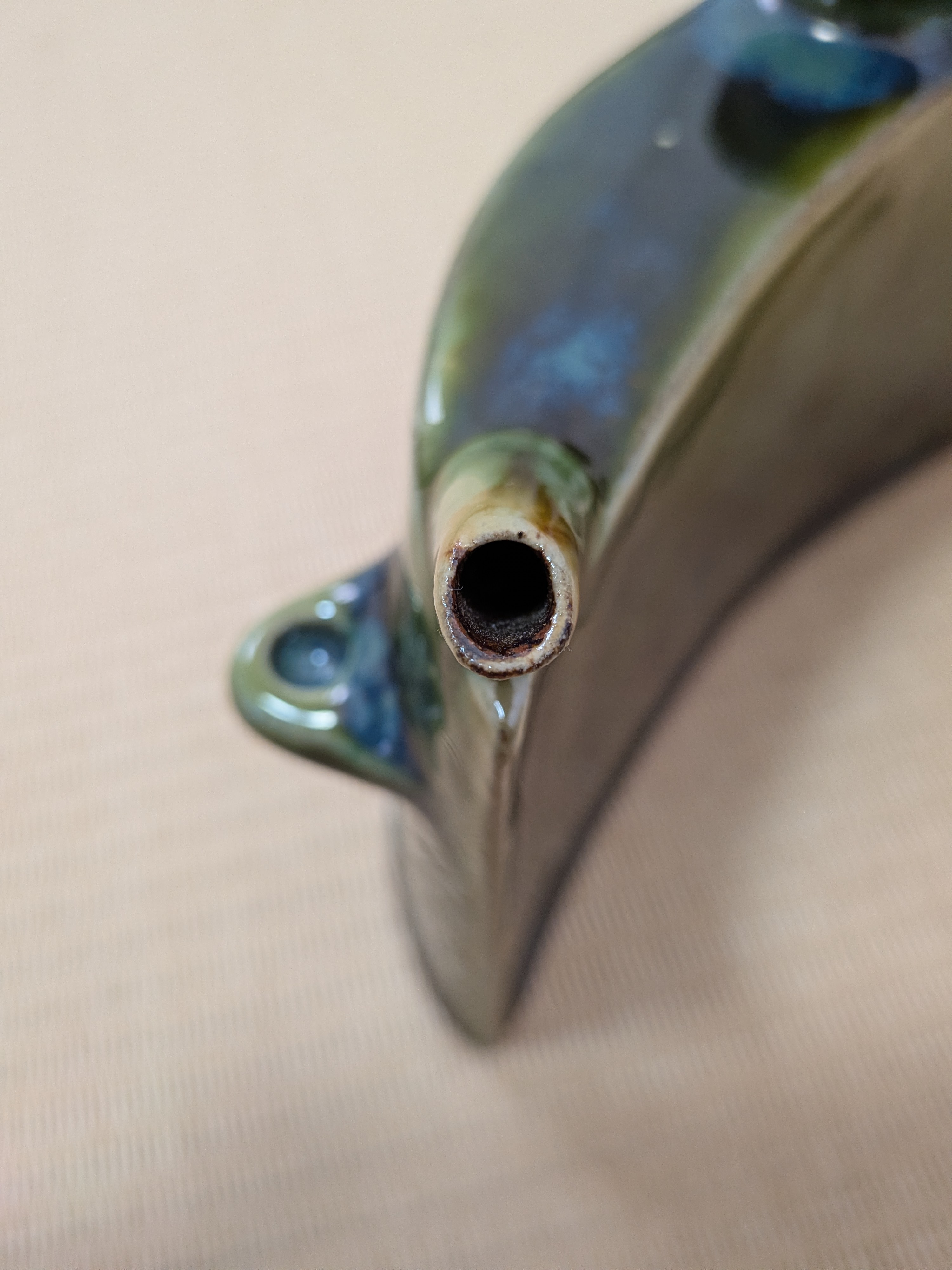
Its construction presents considerable technical challenges. The potter must maintain the structural balance of the curved body while integrating the spout, neck, and cord attachments. The resulting silhouette is simultaneously functional, ergonomic, and highly sculptural.
Makiya's interpretation retains these defining characteristics while presenting them through a contemporary ceramic vocabulary.
Emerald, Cobalt & Mineral Glaze: The visual character of this particular work comes from the interaction between its sculptural body and layered mineral coloration.
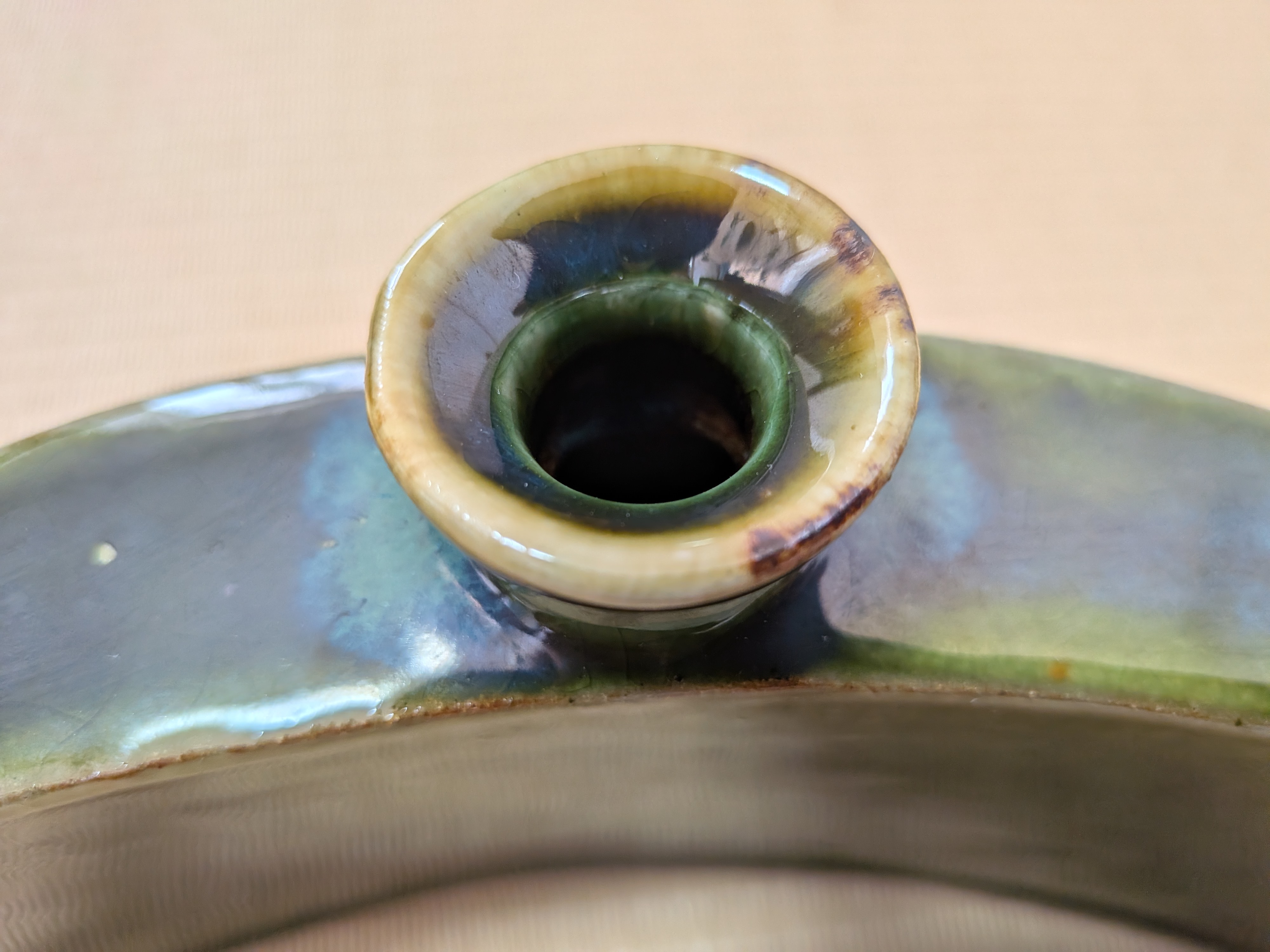
Deep Emerald Green: The principal glaze develops into rich emerald and green tones across the upper body, producing a jewel-like appearance where the glaze becomes more concentrated.
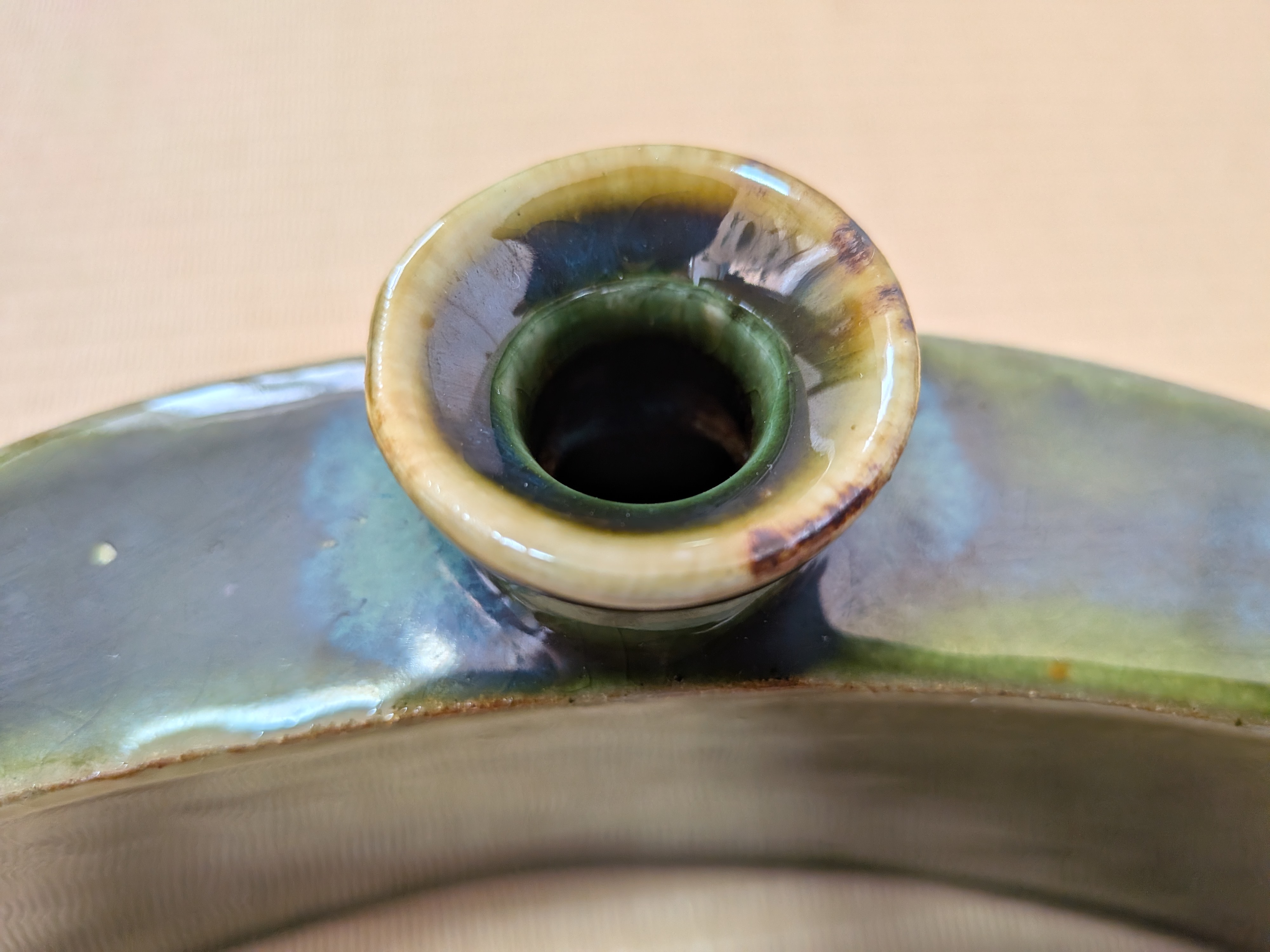
Cobalt-Blue Pooling: Blue coloration gathers around selected areas of the neck, shoulder, and structural transitions, creating depth against the emerald field.
Mineral & Earth Tones: The lower portions reveal warmer brown, charcoal, and natural clay coloration, giving the piece an organic connection to Okinawa's earth.
Natural Kiln Variation: Subtle differences in glaze thickness, pooling, surface movement, and coloration are inherent characteristics of individually produced studio ceramics rather than indications of mechanical uniformity.
Collector Highlights
- Recognized Okinawan Ceramic Artist: Osamu Makiya (真喜屋 修), founder of Toubou Makiya.
- Jissei Omine Apprenticeship: Makiya undertook an extended apprenticeship of approximately seven to eight years under renowned Okinawan ceramic master Jissei Omine (大嶺 實清).
- Authentic Dakibin Form: A distinctive crescent-shaped vessel associated with traditional Okinawan carrying culture.
- Contemporary Interpretation: Historic Ryukyu form reinterpreted through Makiya's modern sculptural aesthetic.
- Deep Emerald Glaze: Rich green coloration complemented by cobalt-blue and mineral-toned glaze variation.
- Organic Surface Character: Natural glaze pooling and tonal transitions give the vessel individual visual character.
- Okinawan Studio Provenance: Work associated directly with Toubou Makiya in Nanjo City, Okinawa.
- Functional & Sculptural: Suitable for collectors interested in both the historical function and contemporary artistic expression of Yachimun.
- Individual Studio Production: Each individually produced ceramic work develops its own combination of form, glaze movement, and firing variation.
Curator's Note
The appeal of this Dakibin lies in the tension between its historical silhouette and contemporary surface treatment. The crescent form immediately identifies the vessel with Okinawan ceramic tradition, while the deep emerald and cobalt glaze gives it a distinctly modern visual language. The curved body creates an almost architectural profile, allowing the vessel to function equally well as a historical object, a sculptural ceramic, or a sophisticated interior accent.
For collectors of Okinawan Yachimun, the significance extends beyond the glaze itself. The piece represents a continuing chain of knowledge-from historic Ryukyu ceramic forms, through the master-apprentice tradition represented by Jissei Omine, to Osamu Makiya's independent contemporary practice.
Specifications
| Attribute | Details |
| Artist | Osamu Makiya (真喜屋 修) |
| Studio | Toubou Makiya (陶房 真喜屋) |
| Origin | Nanjo City, Okinawa Prefecture, Japan |
| Category | Okinawan Yachimun / Contemporary Fine Art Ceramic / Sculptural Vessel |
| Form | Traditional Crescent Hip Flask — Dakibin (抱瓶) |
| Artistic Lineage | Extended apprenticeship under Jissei Omine (大嶺 實清) |
| Materials | Okinawan clay with mineral and wood-ash glaze treatments |
| Technique | Hand-formed ceramic construction with individually applied glaze |
| Glaze Character | Emerald green, cobalt blue, mineral brown and charcoal tonal variation |
| Firing | Traditional high-temperature ceramic firing; exact firing method should be confirmed against the studio documentation if required |
| Color Palette | Deep emerald, cobalt blue, charcoal, mineral brown and natural clay |
| Provenance | Toubou Makiya studio work, Okinawa |
| Quantity | One individual studio vessel |
Condition & Individuality
This is an individually produced studio ceramic. Natural variations in glaze thickness, pooling, coloration, minor surface movement, and firing response are inherent characteristics of the ceramic process. Condition should be understood according to the actual photographed and inspected example. Any specific chips, repairs, restoration, kiln marks, or other condition details should be disclosed in the individual listing where applicable.
Care Instructions
- Display on a stable, level surface.
- If used functionally, rinse gently by hand with lukewarm water and a soft cloth.
- Do not place in a dishwasher.
- Avoid abrasive sponges, wire pads, and harsh chemical cleaners.
- Avoid sudden extreme temperature changes.
- Handle by the main body rather than lifting exclusively from the spout or cord loops.
- For long-term collection display, keep away from locations where the vessel could be knocked or exposed to excessive vibration.
Shipping & International Orders
Domestic Japan: Carefully packaged using protective materials appropriate for collectible studio ceramics.
International: Secure international shipping can be arranged. Depending on destination, additional shipping charges, customs duties, VAT/GST, import taxes, or customs-clearance fees may apply. All destination-country duties and taxes remain the responsibility of the recipient.
A Contemporary Expression of Ryukyu Ceramic Heritage
This Osamu Makiya Dakibin brings together three important elements of Okinawan ceramic culture: the historic Ryukyu vessel form, the master-apprentice tradition of contemporary Yachimun, and the individuality of modern studio ceramics. Its emerald and cobalt glaze gives an ancient functional silhouette a distinctly contemporary presence, while Makiya's connection to the Jissei Omine lineage places the work within a continuing tradition of serious Okinawan ceramic practice.
Xandre Store
Connecting global collectors with the craftsmanship, heritage, and stories behind Japan's finest regional studio traditions.
Description
Xandre Store Exclusive - Contemporary Okinawan Ceramic Art Bridging Ryukyu Heritage, Master Apprenticeship & Modern Japanese Studio Craft
Discover a remarkable expression of contemporary Okinawan Yachimun through this sculptural Dakibin (抱瓶) by respected Okinawan ceramic artist Osamu Makiya (真喜屋 修) of Toubou Makiya (陶房 真喜屋) in Nanjo City. The Dakibin is one of Okinawa's most distinctive traditional ceramic forms. Its characteristic crescent-shaped body was historically designed to sit comfortably against the hip when carried by a cord, creating a functional vessel whose unusual silhouette has become an enduring symbol of Ryukyu ceramic craftsmanship.
Makiya reinterprets this historic form through a sophisticated contemporary palette of deep emerald green, cobalt-blue pooling, dark mineral tones, and warm natural clay. The glaze moves organically across the curved body, producing variations in depth and color that emphasize the vessel's sculptural geometry. Rather than treating the Dakibin simply as historical reproduction, Makiya's approach gives the form a distinctly contemporary presence-equally suited to a refined interior, private collection, or dedicated Japanese ceramics display.
Osamu Makiya - Master Apprenticeship & Okinawan Ceramic Tradition
Osamu Makiya (真喜屋 修) represents an important generation of contemporary Okinawan ceramic artists working between historical Ryukyu forms and modern studio pottery. After graduating from the Okinawa Prefectural University of Arts, Makiya undertook an extended apprenticeship under renowned Okinawan ceramic master Jissei Omine (大嶺 實清), spending approximately seven to eight years refining his ceramic practice before establishing Toubou Makiya.
His work reflects an interest in historic Okinawan pottery, natural materials, traditional firing environments, and the relationship between functional vessels and sculptural form. Makiya subsequently established his independent studio in Nanjo City, where the surrounding Okinawan landscape provides an important setting for his continuing ceramic practice.
The Heritage of the Ryukyu Dakibin (抱瓶)
The Dakibin is an unmistakably Okinawan vessel form. Historically, its curved body allowed the flask to rest against the wearer's hip while being carried with a cord through its side loops. The form was associated with carrying liquids, including awamori, during travel, work, celebrations, and everyday life.
Its construction presents considerable technical challenges. The potter must maintain the structural balance of the curved body while integrating the spout, neck, and cord attachments. The resulting silhouette is simultaneously functional, ergonomic, and highly sculptural.
Makiya's interpretation retains these defining characteristics while presenting them through a contemporary ceramic vocabulary.
Emerald, Cobalt & Mineral Glaze: The visual character of this particular work comes from the interaction between its sculptural body and layered mineral coloration.
Deep Emerald Green: The principal glaze develops into rich emerald and green tones across the upper body, producing a jewel-like appearance where the glaze becomes more concentrated.
Cobalt-Blue Pooling: Blue coloration gathers around selected areas of the neck, shoulder, and structural transitions, creating depth against the emerald field.
Mineral & Earth Tones: The lower portions reveal warmer brown, charcoal, and natural clay coloration, giving the piece an organic connection to Okinawa's earth.
Natural Kiln Variation: Subtle differences in glaze thickness, pooling, surface movement, and coloration are inherent characteristics of individually produced studio ceramics rather than indications of mechanical uniformity.
Collector Highlights
- Recognized Okinawan Ceramic Artist: Osamu Makiya (真喜屋 修), founder of Toubou Makiya.
- Jissei Omine Apprenticeship: Makiya undertook an extended apprenticeship of approximately seven to eight years under renowned Okinawan ceramic master Jissei Omine (大嶺 實清).
- Authentic Dakibin Form: A distinctive crescent-shaped vessel associated with traditional Okinawan carrying culture.
- Contemporary Interpretation: Historic Ryukyu form reinterpreted through Makiya's modern sculptural aesthetic.
- Deep Emerald Glaze: Rich green coloration complemented by cobalt-blue and mineral-toned glaze variation.
- Organic Surface Character: Natural glaze pooling and tonal transitions give the vessel individual visual character.
- Okinawan Studio Provenance: Work associated directly with Toubou Makiya in Nanjo City, Okinawa.
- Functional & Sculptural: Suitable for collectors interested in both the historical function and contemporary artistic expression of Yachimun.
- Individual Studio Production: Each individually produced ceramic work develops its own combination of form, glaze movement, and firing variation.
Curator's Note
The appeal of this Dakibin lies in the tension between its historical silhouette and contemporary surface treatment. The crescent form immediately identifies the vessel with Okinawan ceramic tradition, while the deep emerald and cobalt glaze gives it a distinctly modern visual language. The curved body creates an almost architectural profile, allowing the vessel to function equally well as a historical object, a sculptural ceramic, or a sophisticated interior accent.
For collectors of Okinawan Yachimun, the significance extends beyond the glaze itself. The piece represents a continuing chain of knowledge-from historic Ryukyu ceramic forms, through the master-apprentice tradition represented by Jissei Omine, to Osamu Makiya's independent contemporary practice.
Specifications
| Attribute | Details |
| Artist | Osamu Makiya (真喜屋 修) |
| Studio | Toubou Makiya (陶房 真喜屋) |
| Origin | Nanjo City, Okinawa Prefecture, Japan |
| Category | Okinawan Yachimun / Contemporary Fine Art Ceramic / Sculptural Vessel |
| Form | Traditional Crescent Hip Flask — Dakibin (抱瓶) |
| Artistic Lineage | Extended apprenticeship under Jissei Omine (大嶺 實清) |
| Materials | Okinawan clay with mineral and wood-ash glaze treatments |
| Technique | Hand-formed ceramic construction with individually applied glaze |
| Glaze Character | Emerald green, cobalt blue, mineral brown and charcoal tonal variation |
| Firing | Traditional high-temperature ceramic firing; exact firing method should be confirmed against the studio documentation if required |
| Color Palette | Deep emerald, cobalt blue, charcoal, mineral brown and natural clay |
| Provenance | Toubou Makiya studio work, Okinawa |
| Quantity | One individual studio vessel |
Condition & Individuality
This is an individually produced studio ceramic. Natural variations in glaze thickness, pooling, coloration, minor surface movement, and firing response are inherent characteristics of the ceramic process. Condition should be understood according to the actual photographed and inspected example. Any specific chips, repairs, restoration, kiln marks, or other condition details should be disclosed in the individual listing where applicable.
Care Instructions
- Display on a stable, level surface.
- If used functionally, rinse gently by hand with lukewarm water and a soft cloth.
- Do not place in a dishwasher.
- Avoid abrasive sponges, wire pads, and harsh chemical cleaners.
- Avoid sudden extreme temperature changes.
- Handle by the main body rather than lifting exclusively from the spout or cord loops.
- For long-term collection display, keep away from locations where the vessel could be knocked or exposed to excessive vibration.
Shipping & International Orders
Domestic Japan: Carefully packaged using protective materials appropriate for collectible studio ceramics.
International: Secure international shipping can be arranged. Depending on destination, additional shipping charges, customs duties, VAT/GST, import taxes, or customs-clearance fees may apply. All destination-country duties and taxes remain the responsibility of the recipient.
A Contemporary Expression of Ryukyu Ceramic Heritage
This Osamu Makiya Dakibin brings together three important elements of Okinawan ceramic culture: the historic Ryukyu vessel form, the master-apprentice tradition of contemporary Yachimun, and the individuality of modern studio ceramics. Its emerald and cobalt glaze gives an ancient functional silhouette a distinctly contemporary presence, while Makiya's connection to the Jissei Omine lineage places the work within a continuing tradition of serious Okinawan ceramic practice.
Xandre Store
Connecting global collectors with the craftsmanship, heritage, and stories behind Japan's finest regional studio traditions.
Previously viewed products
No recently viewed products.