

Description
Xandre Store Exclusive - A Contemporary Okinawan Masterwork Bridging Ryukyu Ceramic Heritage, Regional Materials & Architectural Tableware
- Artist: Osamu Makiya (真喜屋 修)
- Studio: Toubou Makiya (陶房 真喜屋)
- Origin: Nanjo City, Okinawa Prefecture, Japan
- Category: Okinawan Yachimun Ceramic | Fine Art Platter | Large-Format Collector Tableware
- Craft Tradition: やちむん / 登り窯 (Okinawan Yachimun / Climbing-Kiln Ceramic Tradition)
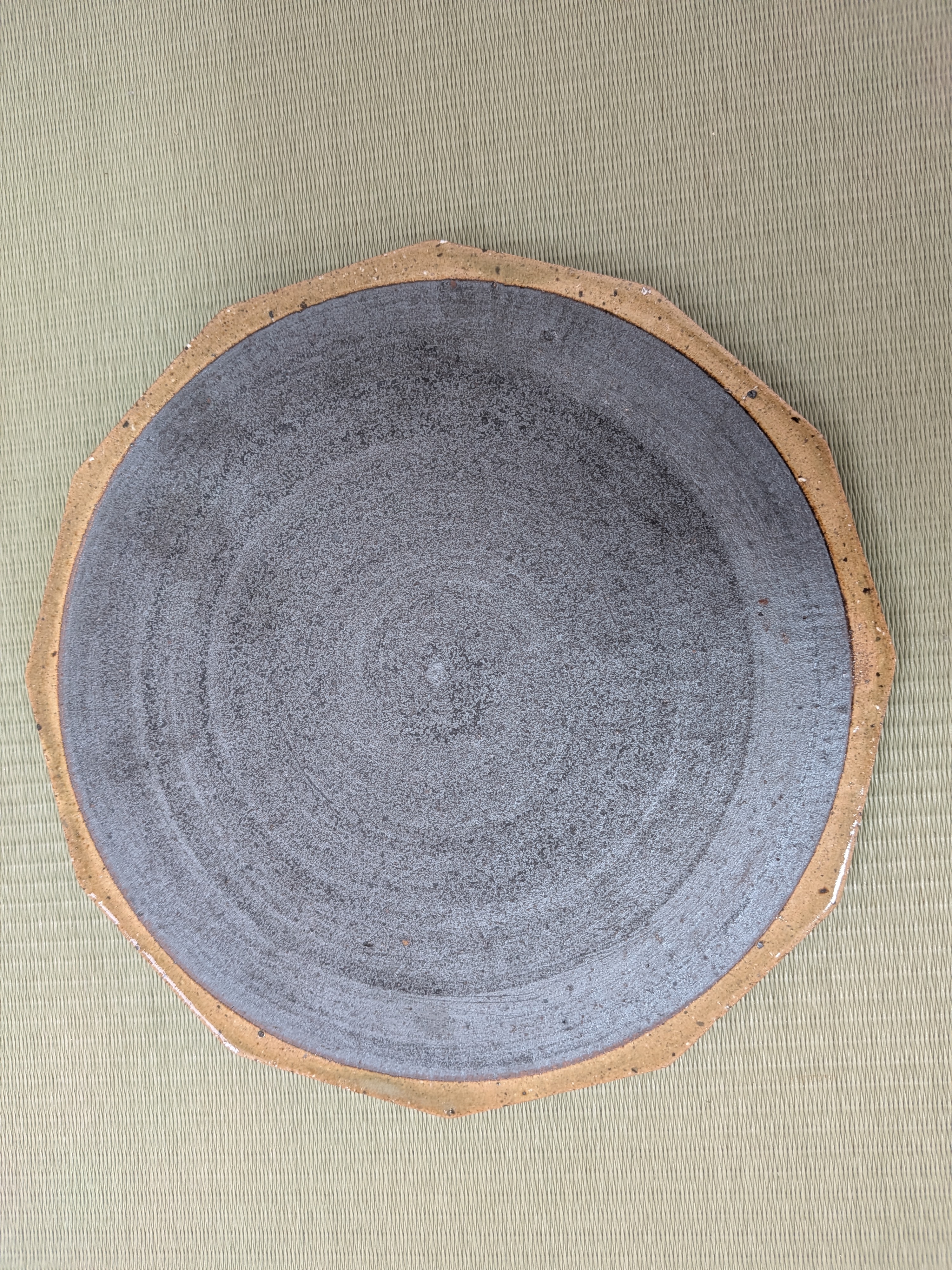
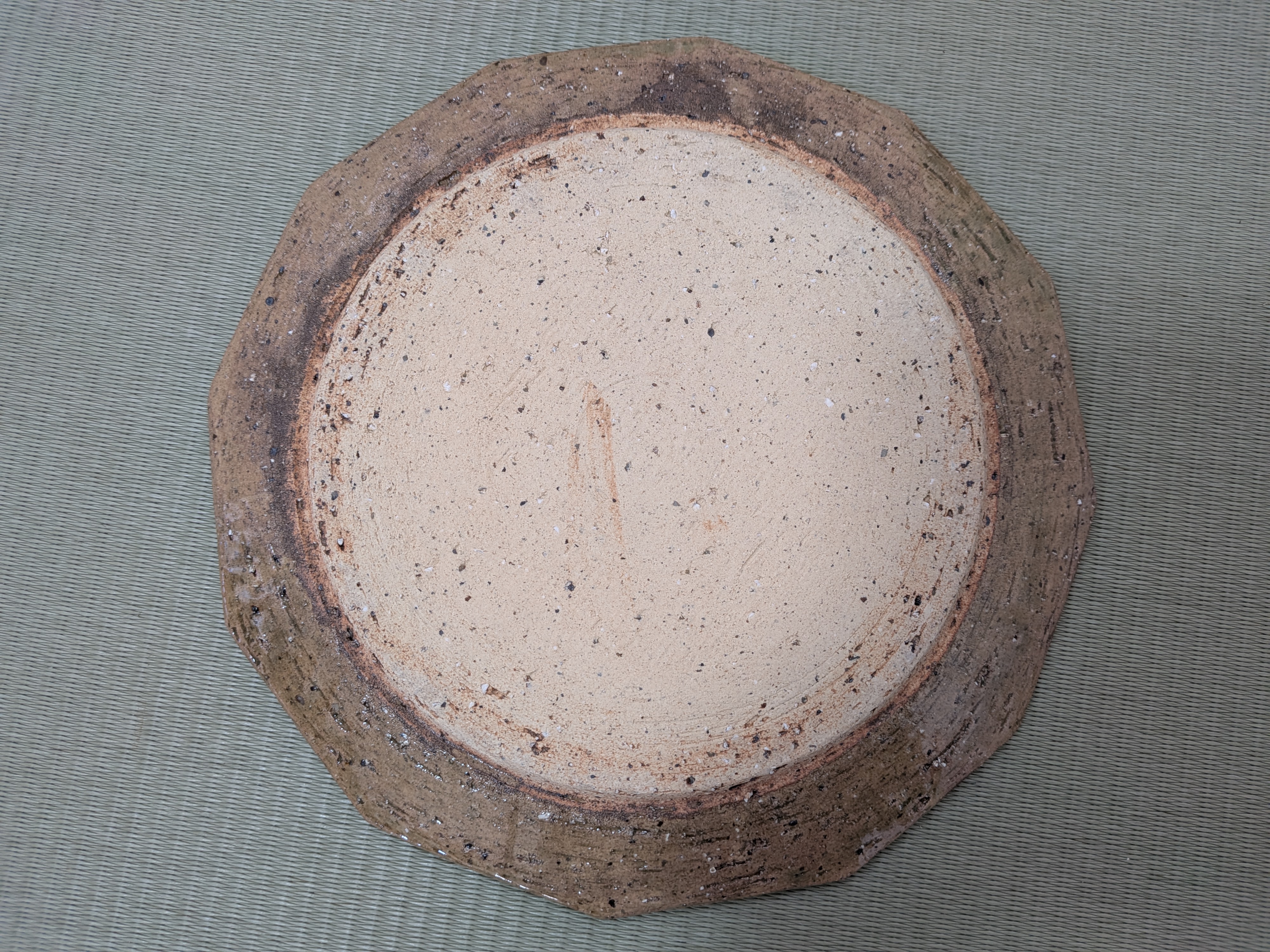
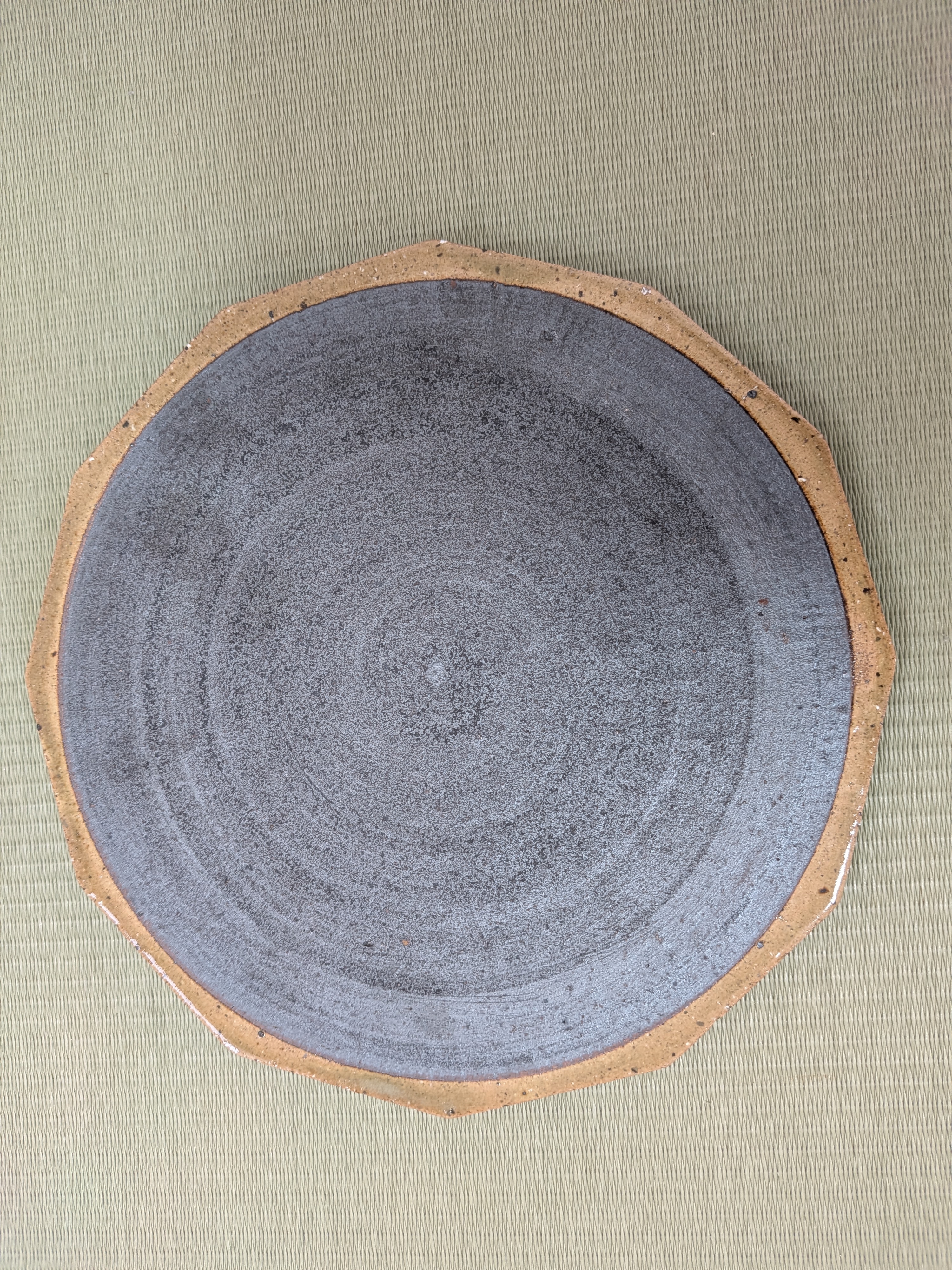
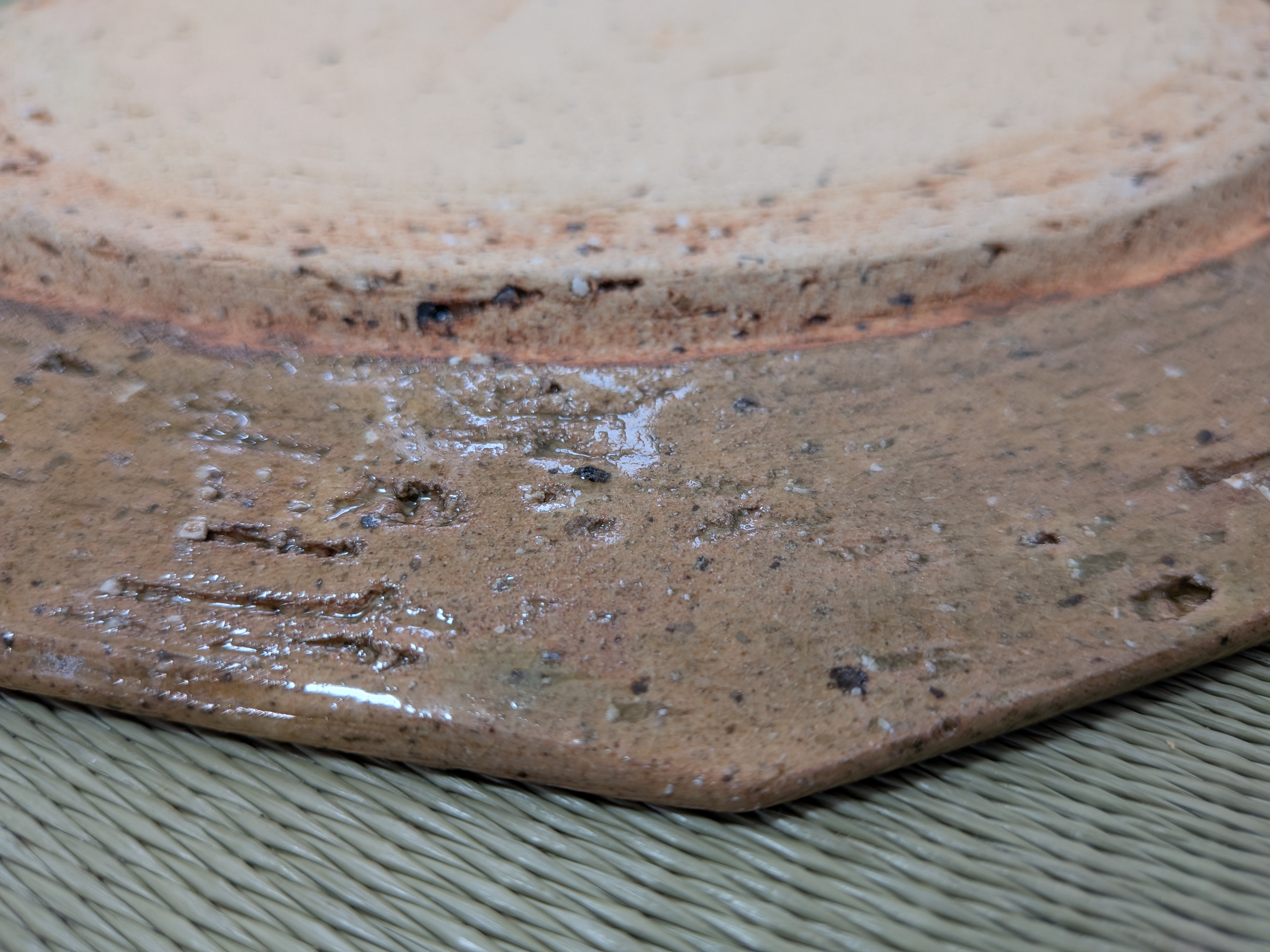
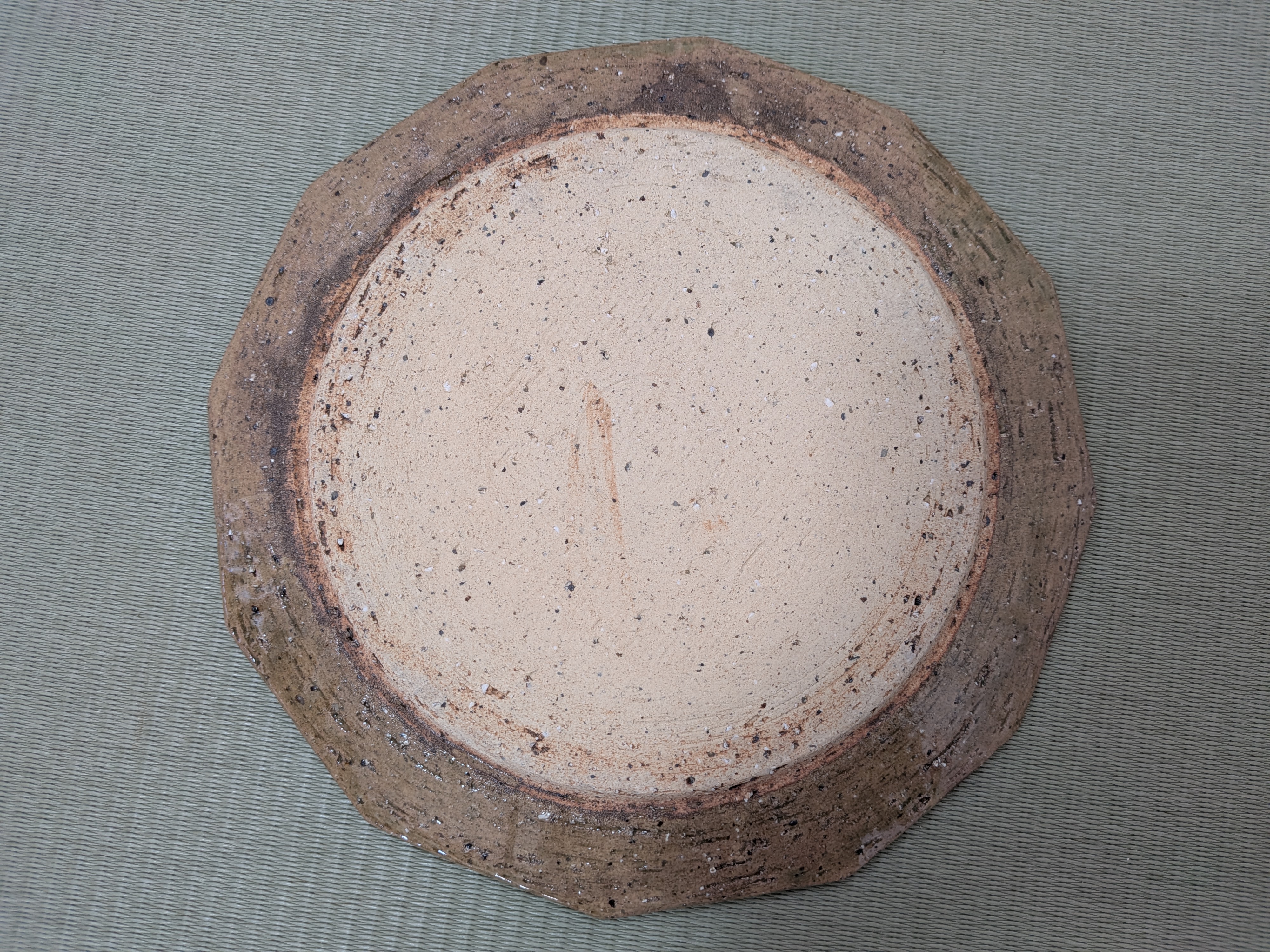
This striking large-format octagonal platter (Tagakuzara L / 多角皿 L) by contemporary Okinawan ceramic master Osamu Makiya (真喜屋 修) presents a powerful combination of geometric form, regional clay, natural ash glazing, and functional design. Formed from Okinawan Yanbaru clay, the broad platter is shaped into a disciplined octagonal silhouette before being finished with a natural pine-ash glaze (Matsuhai-yu / 松灰釉). The central surface develops a subdued charcoal-grey and slate coloration, while the exposed outer rim retains the warm buff and earthy character of the underlying clay.
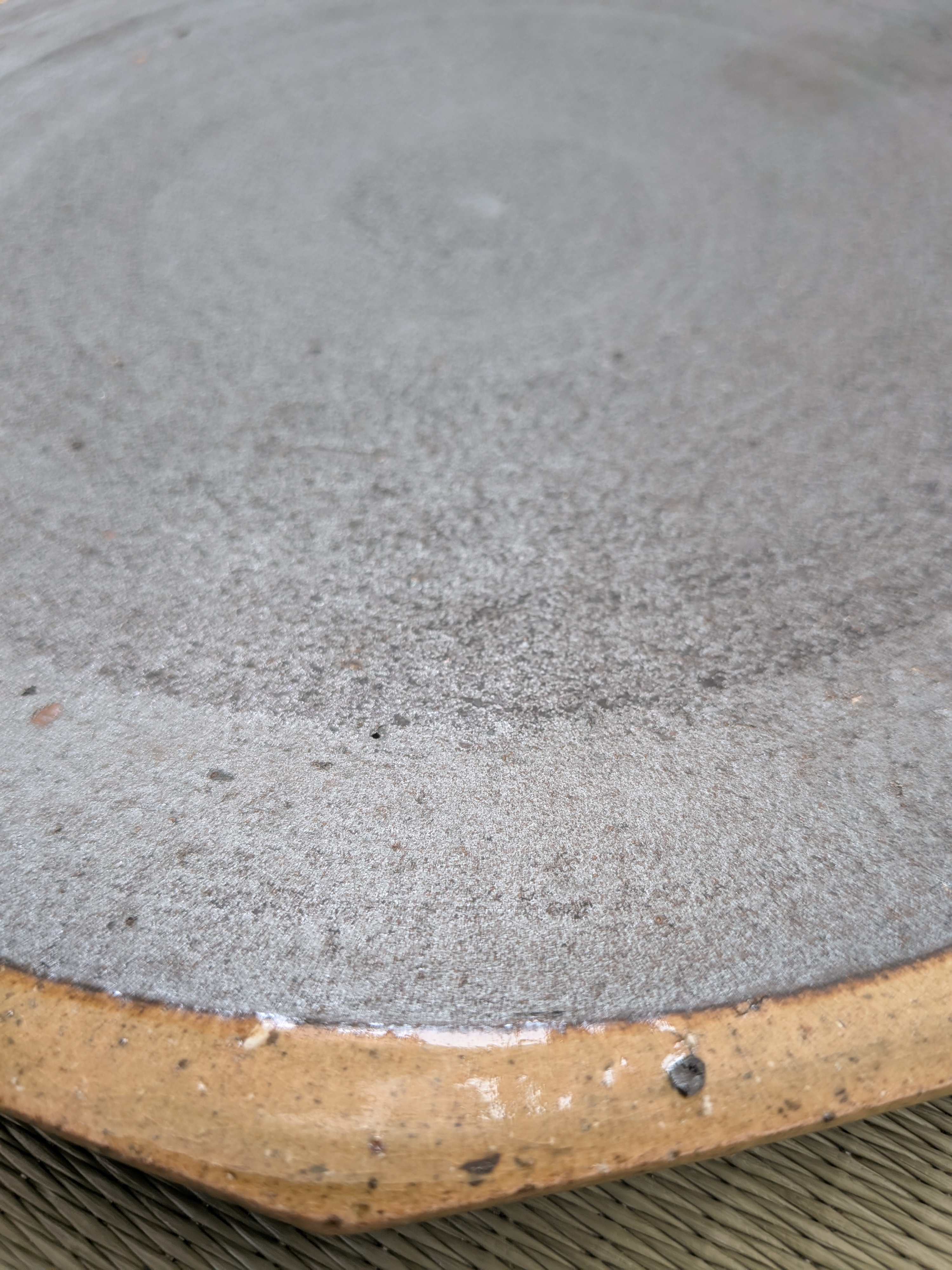
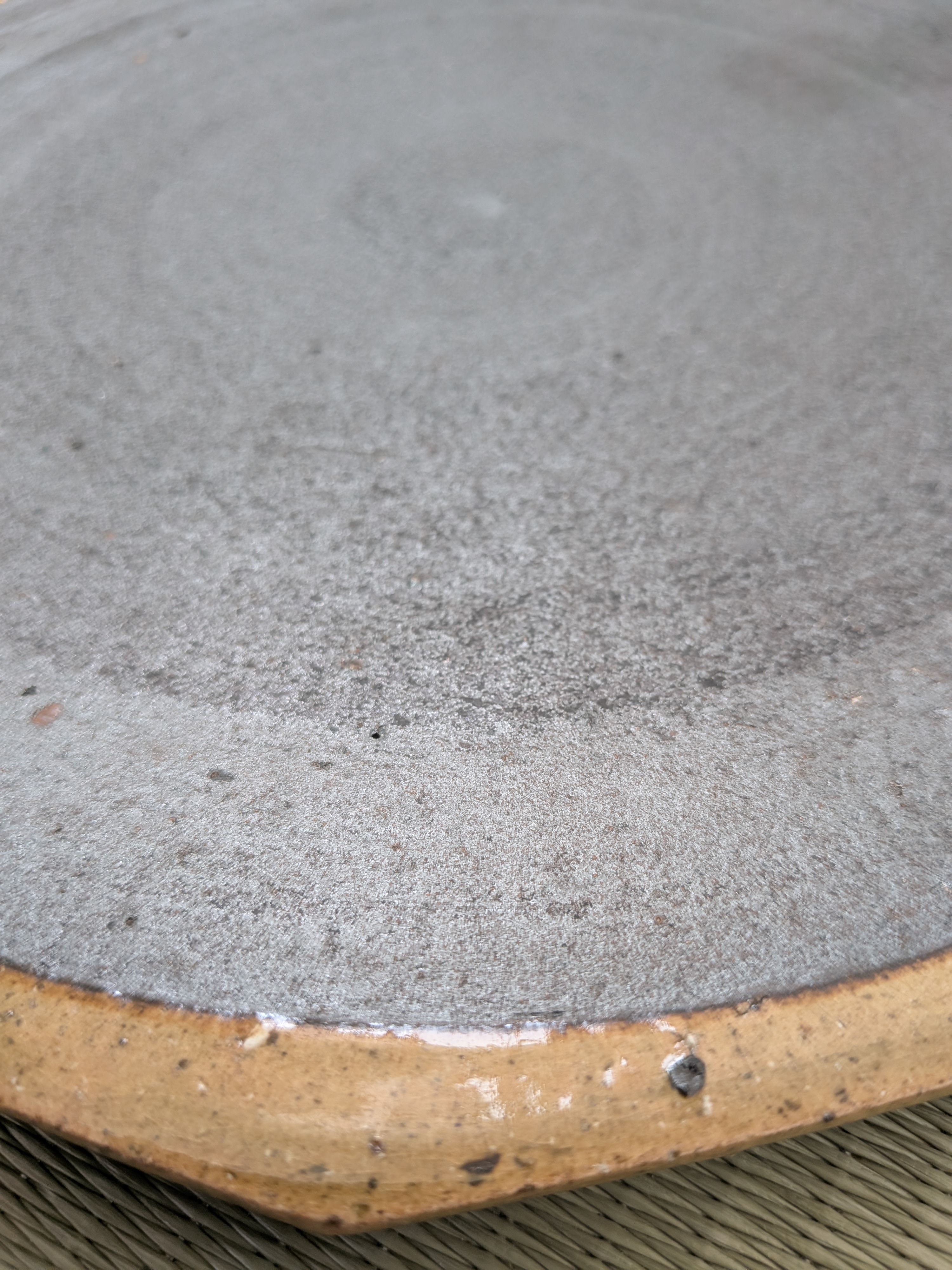
The contrast between the glazed interior and naturally exposed clay border gives the work an architectural quality. Rather than relying on elaborate decoration, Makiya allows proportion, texture, material variation, and kiln atmosphere to define the visual character. Across the expansive basin, subtle wheel marks and natural surface variation remain visible beneath the ash glaze. Fine mineral speckling and tonal shifts further emphasize the organic character of the clay. The result is a platter equally suited to refined culinary presentation, a substantial dining table, or display as a contemporary Okinawan ceramic artwork.
Master Osamu Makiya - Lineage & Material Heritage
Osamu Makiya (真喜屋 修) is a contemporary Okinawan ceramic artist whose practice is deeply connected to the Yachimun tradition. After graduating from the Okinawa Prefectural University of Arts in 1994, Makiya undertook an extended apprenticeship under renowned Okinawan ceramic master Jissei Omine (大嶺 實清). In 2001, he established Toubou Makiya (陶房 真喜屋) and subsequently developed his studio practice in Nanjo City, where the surrounding landscape became an important part of his material and artistic vocabulary.
Makiya's approach emphasizes the relationship between regional clay, natural glaze materials, traditional firing, and contemporary form. His work draws upon historical Okinawan ceramic traditions while reducing unnecessary ornamentation, allowing the physical qualities of the material and the geometry of each vessel to become the primary visual language.
Yanbaru Clay & Pine-Ash Glaze
One of the defining characteristics of this platter is the interaction between regional clay and natural ash glaze. Makiya's ceramic practice incorporates Yanbaru clay, connecting the work directly to northern Okinawa's distinctive geological environment. The surface is finished with pine-ash glaze (Matsuhai-yu / 松灰釉), allowing natural mineral reactions and kiln atmosphere to influence the final appearance.
Surface Characteristics
- Charcoal-Grey Basin: The broad interior develops a restrained grey-to-slate tonal range beneath the ash glaze.
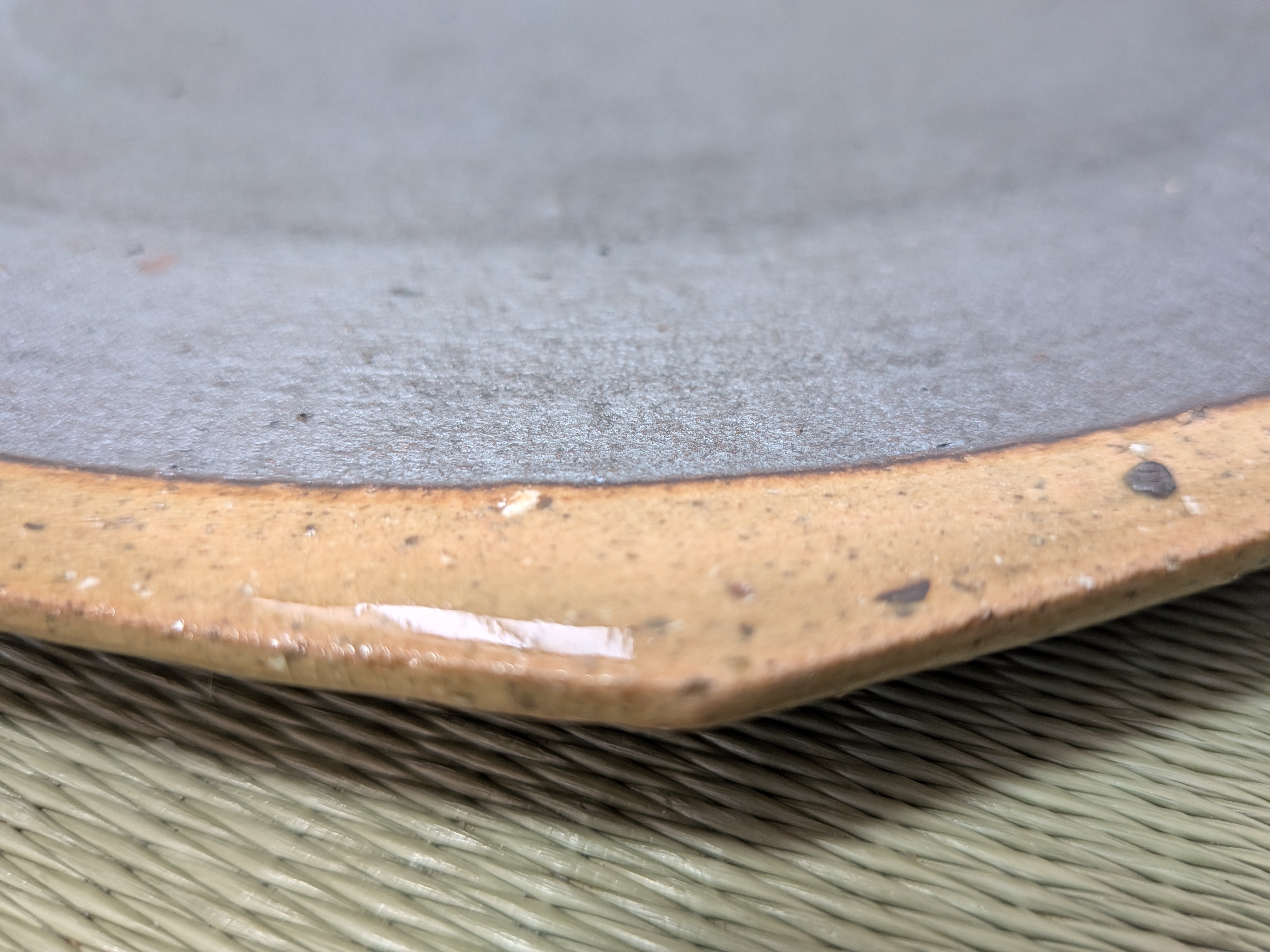
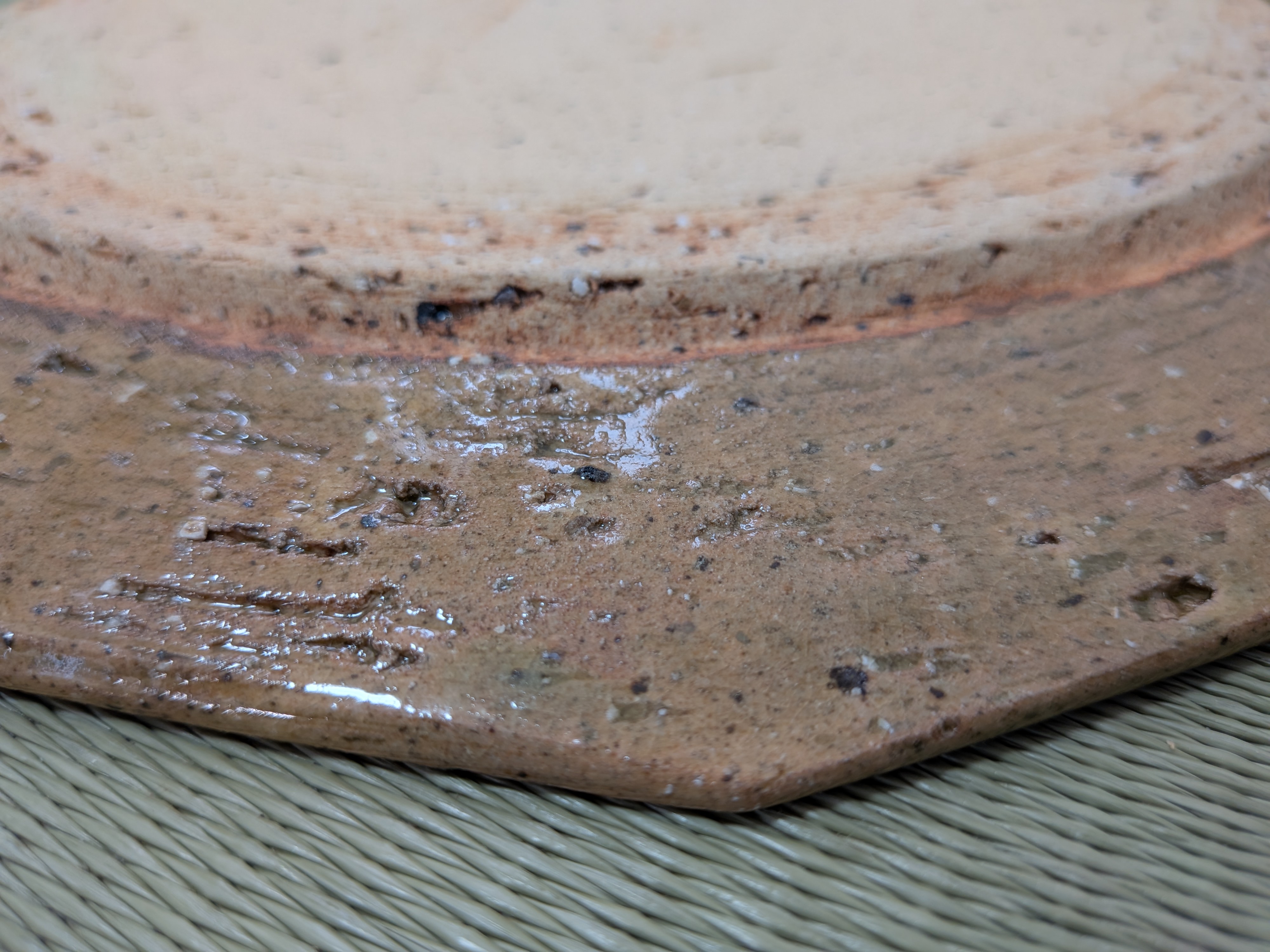
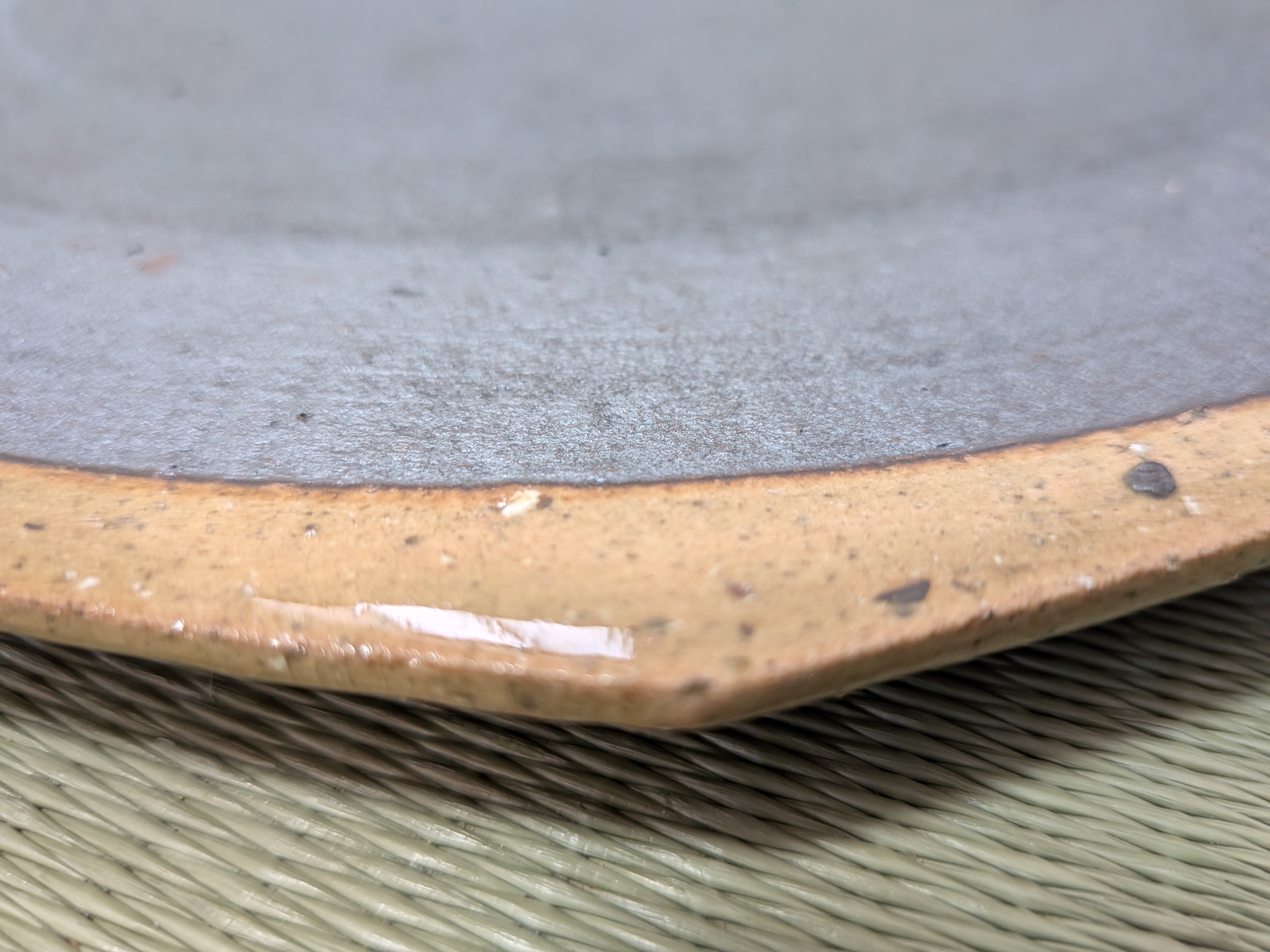
- Warm Clay Border: The exposed perimeter reveals the natural buff and earthy coloration of the ceramic body.
- Mineral Speckling: Naturally occurring iron and mineral particles can emerge through the glaze during firing.
- Variable Glaze Movement: Differences in glaze thickness and kiln atmosphere create subtle changes across the surface.
- Natural Texture: Wheel marks and small firing variations contribute to the individual character of the finished platter.
The resulting appearance is intentionally organic rather than mechanically uniform.
The Architectural Octagonal Form
The Tagakuzara (多角皿) format gives the platter its distinctive structural identity. The eight-sided perimeter establishes a strong geometric frame around the softer circular movement of the thrown interior.
This creates a deliberate contrast:
Circular wheel movement → Geometric octagonal perimeter → Organic ash-glaze surface
The effect allows the platter to function simultaneously as tableware and as a sculptural ceramic composition. Its large scale also gives the work an architectural presence, making it suitable for presentation on substantial dining tables, counters, display consoles, or gallery-style interiors.
Technical Challenge of Large-Format Ceramic
Large flat ceramic vessels are technically demanding because their broad surfaces are particularly vulnerable to distortion during drying and firing.
1. Large-Scale Wheel Formation: The wide body requires careful control of clay distribution and wall thickness. Excessive variation can lead to uneven drying, cracking, or distortion.
2. Octagonal Faceting: The circular form is transformed into an eight-sided perimeter while the clay retains sufficient structural stability. Maintaining consistent proportions across the eight sections requires careful hand finishing.
3. Drying & Shrinkage Control: Large ceramic surfaces must dry gradually and evenly. Differences in moisture between the center and perimeter can introduce tension into the clay body.
4. High-Temperature Firing: During climbing-kiln firing, thermal expansion and contraction can produce warping or cracking in large flat forms. Successful completion therefore depends upon careful preparation, drying, kiln placement, and firing control.
5. Natural Ash Interaction: Wood ash carried through the kiln atmosphere can settle unevenly across the surface, producing subtle differences in glaze density, tone, and mineral response.
Ash Glaze Dynamics & Surface Character
The visual appeal of the platter comes largely from its restrained surface rather than elaborate decoration.
Pine-Ash Glaze - 松灰釉: Natural pine ash contributes to the glaze's subdued grey and earthy character while allowing variations in the underlying clay to remain visible.
Wheel Texture: Subtle throwing and finishing marks create gentle variations across the broad basin, preventing the large surface from appearing visually flat.
Natural Clay Border: The unglazed perimeter creates a strong transition between the dark glazed center and warm Okinawan clay.
Mineral Variation: Small iron and mineral inclusions contribute natural speckling and tonal irregularities that distinguish the piece from industrially manufactured tableware.
Contemporary Fine Dining & Interior Use
The scale and restrained palette make this platter particularly adaptable to contemporary spaces.
It can function as:
- A large-format serving platter
- A centerpiece for a dining table
- A presentation surface for refined Japanese cuisine
- A sculptural accent in a modern interior
- A collector's display piece
- A foundation for seasonal floral or artistic arrangements
The neutral charcoal, slate, and natural clay palette allows the platter to complement both traditional Japanese interiors and contemporary architectural spaces.
Collector Significance
This work represents the intersection of several important elements of Okinawan studio ceramics:
- Contemporary Yachimun craftsmanship
- Regional Yanbaru clay
- Natural pine-ash glazing
- Geometric hand-forming
- Traditional climbing-kiln firing
- The artistic lineage of Jissei Omine
- Functional Japanese tableware interpreted as contemporary studio art
Because hand-forming, natural ash glazing, and kiln atmosphere produce inherent variations, the precise combination of surface tone, mineral response, clay coloration, and firing character is unique to the individual work.
Premium Highlights
- Artist: Osamu Makiya (真喜屋 修)
- Studio: Toubou Makiya (陶房 真喜屋), Nanjo City, Okinawa
- Lineage: Extended apprenticeship under Master Jissei Omine
- Form: Large octagonal platter (Tagakuzara L / 多角皿 L)
- Materials: Okinawan Yanbaru clay and natural pine ash
- Glaze: Natural pine-ash glaze (Matsuhai-yu)
- Technique: Wheel-forming, hand-faceted perimeter, high-temperature kiln firing
- Surface: Charcoal-grey ash glaze, warm exposed clay border, natural mineral variation
- Use: Fine dining, centerpiece, interior display, or ceramic collection
- Provenance: Original studio work from Okinawa
- Rarity: Individually crafted studio piece with naturally variable firing characteristics
Curator's Note
"Large-format ceramic vessels reveal a different side of a master potter's discipline. With a small vessel, the hand can control nearly every aspect of the form; with a platter of this scale, clay preparation, drying, geometry, and firing become equally important. Makiya's restrained pine-ash surface allows the material itself to become the decoration. The charcoal-grey basin contrasts beautifully with the warm exposed clay perimeter, while the octagonal silhouette gives the work a distinctly architectural presence. It is equally convincing as refined functional tableware or as a sculptural statement within a contemporary interior."
Specifications
| Attribute | Details |
| Artist | Osamu Makiya (真喜屋 修) |
| Pedigree / Lineage | Extended apprenticeship under Master Jissei Omine (大嶺 實清) |
| Studio | Toubou Makiya (陶房 真喜屋) — Nanjo City, Okinawa |
| Category | Okinawan Yachimun / Fine Art Serving Platter |
| Form | Large Octagonal Faceted Platter (Matsuhai-yu Tagakuzara L / 松灰釉多角皿 L) |
| Materials | Regional Yanbaru Clay, Natural Pine-Ash Glaze |
| Technique | Wheel-formed construction, hand-faceted octagonal perimeter, high-temperature kiln firing |
| Surface | Charcoal-grey ash glaze, exposed clay rim, natural mineral variation |
| Color Palette | Charcoal Grey, Slate, Warm Buff Clay, Earthy Iron Speckles |
| Firing Tradition | Climbing-kiln (Noborigama) ceramic tradition |
| Condition | Pristine studio condition |
| Origin | Nanjo City, Okinawa Prefecture, Japan |
Care Instructions
- Wash gently by hand using lukewarm water.
- Use a soft cloth or non-abrasive sponge.
- Avoid harsh chemical detergents and abrasive cleaning materials.
- Do not use metal scrubbers or wire brushes.
- Do not place in an automated dishwasher.
- Do not use in a microwave or oven unless specifically confirmed by the studio.
- Avoid sudden temperature changes that could cause thermal shock.
- Dry completely before long-term storage or display.
Shipping & International Delivery
- Domestic Shipping (Japan): Shipped via insured express courier using reinforced protective packaging appropriate for large-format ceramics.
- International Orders (USA, EU, UK, Canada, Australia): Insured international delivery is available. Destination customs duties, VAT, GST, import duties, and other applicable charges are the responsibility of the recipient.
- Packaging: Due to the platter's large format, reinforced impact-resistant packaging and additional internal protection are used to minimize movement during international transit.
Xandre Store
Connecting global collectors with the craftsmanship, heritage, regional materials, and stories behind Japan's finest studio masters.
Description
Xandre Store Exclusive - A Contemporary Okinawan Masterwork Bridging Ryukyu Ceramic Heritage, Regional Materials & Architectural Tableware
- Artist: Osamu Makiya (真喜屋 修)
- Studio: Toubou Makiya (陶房 真喜屋)
- Origin: Nanjo City, Okinawa Prefecture, Japan
- Category: Okinawan Yachimun Ceramic | Fine Art Platter | Large-Format Collector Tableware
- Craft Tradition: やちむん / 登り窯 (Okinawan Yachimun / Climbing-Kiln Ceramic Tradition)
This striking large-format octagonal platter (Tagakuzara L / 多角皿 L) by contemporary Okinawan ceramic master Osamu Makiya (真喜屋 修) presents a powerful combination of geometric form, regional clay, natural ash glazing, and functional design. Formed from Okinawan Yanbaru clay, the broad platter is shaped into a disciplined octagonal silhouette before being finished with a natural pine-ash glaze (Matsuhai-yu / 松灰釉). The central surface develops a subdued charcoal-grey and slate coloration, while the exposed outer rim retains the warm buff and earthy character of the underlying clay.
The contrast between the glazed interior and naturally exposed clay border gives the work an architectural quality. Rather than relying on elaborate decoration, Makiya allows proportion, texture, material variation, and kiln atmosphere to define the visual character. Across the expansive basin, subtle wheel marks and natural surface variation remain visible beneath the ash glaze. Fine mineral speckling and tonal shifts further emphasize the organic character of the clay. The result is a platter equally suited to refined culinary presentation, a substantial dining table, or display as a contemporary Okinawan ceramic artwork.
Master Osamu Makiya - Lineage & Material Heritage
Osamu Makiya (真喜屋 修) is a contemporary Okinawan ceramic artist whose practice is deeply connected to the Yachimun tradition. After graduating from the Okinawa Prefectural University of Arts in 1994, Makiya undertook an extended apprenticeship under renowned Okinawan ceramic master Jissei Omine (大嶺 實清). In 2001, he established Toubou Makiya (陶房 真喜屋) and subsequently developed his studio practice in Nanjo City, where the surrounding landscape became an important part of his material and artistic vocabulary.
Makiya's approach emphasizes the relationship between regional clay, natural glaze materials, traditional firing, and contemporary form. His work draws upon historical Okinawan ceramic traditions while reducing unnecessary ornamentation, allowing the physical qualities of the material and the geometry of each vessel to become the primary visual language.
Yanbaru Clay & Pine-Ash Glaze
One of the defining characteristics of this platter is the interaction between regional clay and natural ash glaze. Makiya's ceramic practice incorporates Yanbaru clay, connecting the work directly to northern Okinawa's distinctive geological environment. The surface is finished with pine-ash glaze (Matsuhai-yu / 松灰釉), allowing natural mineral reactions and kiln atmosphere to influence the final appearance.
Surface Characteristics
- Charcoal-Grey Basin: The broad interior develops a restrained grey-to-slate tonal range beneath the ash glaze.
- Warm Clay Border: The exposed perimeter reveals the natural buff and earthy coloration of the ceramic body.
- Mineral Speckling: Naturally occurring iron and mineral particles can emerge through the glaze during firing.
- Variable Glaze Movement: Differences in glaze thickness and kiln atmosphere create subtle changes across the surface.
- Natural Texture: Wheel marks and small firing variations contribute to the individual character of the finished platter.
The resulting appearance is intentionally organic rather than mechanically uniform.
The Architectural Octagonal Form
The Tagakuzara (多角皿) format gives the platter its distinctive structural identity. The eight-sided perimeter establishes a strong geometric frame around the softer circular movement of the thrown interior.
This creates a deliberate contrast:
Circular wheel movement → Geometric octagonal perimeter → Organic ash-glaze surface
The effect allows the platter to function simultaneously as tableware and as a sculptural ceramic composition. Its large scale also gives the work an architectural presence, making it suitable for presentation on substantial dining tables, counters, display consoles, or gallery-style interiors.
Technical Challenge of Large-Format Ceramic
Large flat ceramic vessels are technically demanding because their broad surfaces are particularly vulnerable to distortion during drying and firing.
1. Large-Scale Wheel Formation: The wide body requires careful control of clay distribution and wall thickness. Excessive variation can lead to uneven drying, cracking, or distortion.
2. Octagonal Faceting: The circular form is transformed into an eight-sided perimeter while the clay retains sufficient structural stability. Maintaining consistent proportions across the eight sections requires careful hand finishing.
3. Drying & Shrinkage Control: Large ceramic surfaces must dry gradually and evenly. Differences in moisture between the center and perimeter can introduce tension into the clay body.
4. High-Temperature Firing: During climbing-kiln firing, thermal expansion and contraction can produce warping or cracking in large flat forms. Successful completion therefore depends upon careful preparation, drying, kiln placement, and firing control.
5. Natural Ash Interaction: Wood ash carried through the kiln atmosphere can settle unevenly across the surface, producing subtle differences in glaze density, tone, and mineral response.
Ash Glaze Dynamics & Surface Character
The visual appeal of the platter comes largely from its restrained surface rather than elaborate decoration.
Pine-Ash Glaze - 松灰釉: Natural pine ash contributes to the glaze's subdued grey and earthy character while allowing variations in the underlying clay to remain visible.
Wheel Texture: Subtle throwing and finishing marks create gentle variations across the broad basin, preventing the large surface from appearing visually flat.
Natural Clay Border: The unglazed perimeter creates a strong transition between the dark glazed center and warm Okinawan clay.
Mineral Variation: Small iron and mineral inclusions contribute natural speckling and tonal irregularities that distinguish the piece from industrially manufactured tableware.
Contemporary Fine Dining & Interior Use
The scale and restrained palette make this platter particularly adaptable to contemporary spaces.
It can function as:
- A large-format serving platter
- A centerpiece for a dining table
- A presentation surface for refined Japanese cuisine
- A sculptural accent in a modern interior
- A collector's display piece
- A foundation for seasonal floral or artistic arrangements
The neutral charcoal, slate, and natural clay palette allows the platter to complement both traditional Japanese interiors and contemporary architectural spaces.
Collector Significance
This work represents the intersection of several important elements of Okinawan studio ceramics:
- Contemporary Yachimun craftsmanship
- Regional Yanbaru clay
- Natural pine-ash glazing
- Geometric hand-forming
- Traditional climbing-kiln firing
- The artistic lineage of Jissei Omine
- Functional Japanese tableware interpreted as contemporary studio art
Because hand-forming, natural ash glazing, and kiln atmosphere produce inherent variations, the precise combination of surface tone, mineral response, clay coloration, and firing character is unique to the individual work.
Premium Highlights
- Artist: Osamu Makiya (真喜屋 修)
- Studio: Toubou Makiya (陶房 真喜屋), Nanjo City, Okinawa
- Lineage: Extended apprenticeship under Master Jissei Omine
- Form: Large octagonal platter (Tagakuzara L / 多角皿 L)
- Materials: Okinawan Yanbaru clay and natural pine ash
- Glaze: Natural pine-ash glaze (Matsuhai-yu)
- Technique: Wheel-forming, hand-faceted perimeter, high-temperature kiln firing
- Surface: Charcoal-grey ash glaze, warm exposed clay border, natural mineral variation
- Use: Fine dining, centerpiece, interior display, or ceramic collection
- Provenance: Original studio work from Okinawa
- Rarity: Individually crafted studio piece with naturally variable firing characteristics
Curator's Note
"Large-format ceramic vessels reveal a different side of a master potter's discipline. With a small vessel, the hand can control nearly every aspect of the form; with a platter of this scale, clay preparation, drying, geometry, and firing become equally important. Makiya's restrained pine-ash surface allows the material itself to become the decoration. The charcoal-grey basin contrasts beautifully with the warm exposed clay perimeter, while the octagonal silhouette gives the work a distinctly architectural presence. It is equally convincing as refined functional tableware or as a sculptural statement within a contemporary interior."
Specifications
| Attribute | Details |
| Artist | Osamu Makiya (真喜屋 修) |
| Pedigree / Lineage | Extended apprenticeship under Master Jissei Omine (大嶺 實清) |
| Studio | Toubou Makiya (陶房 真喜屋) — Nanjo City, Okinawa |
| Category | Okinawan Yachimun / Fine Art Serving Platter |
| Form | Large Octagonal Faceted Platter (Matsuhai-yu Tagakuzara L / 松灰釉多角皿 L) |
| Materials | Regional Yanbaru Clay, Natural Pine-Ash Glaze |
| Technique | Wheel-formed construction, hand-faceted octagonal perimeter, high-temperature kiln firing |
| Surface | Charcoal-grey ash glaze, exposed clay rim, natural mineral variation |
| Color Palette | Charcoal Grey, Slate, Warm Buff Clay, Earthy Iron Speckles |
| Firing Tradition | Climbing-kiln (Noborigama) ceramic tradition |
| Condition | Pristine studio condition |
| Origin | Nanjo City, Okinawa Prefecture, Japan |
Care Instructions
- Wash gently by hand using lukewarm water.
- Use a soft cloth or non-abrasive sponge.
- Avoid harsh chemical detergents and abrasive cleaning materials.
- Do not use metal scrubbers or wire brushes.
- Do not place in an automated dishwasher.
- Do not use in a microwave or oven unless specifically confirmed by the studio.
- Avoid sudden temperature changes that could cause thermal shock.
- Dry completely before long-term storage or display.
Shipping & International Delivery
- Domestic Shipping (Japan): Shipped via insured express courier using reinforced protective packaging appropriate for large-format ceramics.
- International Orders (USA, EU, UK, Canada, Australia): Insured international delivery is available. Destination customs duties, VAT, GST, import duties, and other applicable charges are the responsibility of the recipient.
- Packaging: Due to the platter's large format, reinforced impact-resistant packaging and additional internal protection are used to minimize movement during international transit.
Xandre Store
Connecting global collectors with the craftsmanship, heritage, regional materials, and stories behind Japan's finest studio masters.
Previously viewed products
No recently viewed products.