

Description
Xandre Store Exclusive - A Signature Contemporary Masterwork Bridging Ryukyu Ceramic Lineage, Regional Materials & Modern Tea Culture
- Artist: Osamu Makiya (真喜屋 修)
- Studio: Toubou Makiya (陶房 真喜屋)
- Origin: Nanjo City, Okinawa Prefecture, Japan
- Category: Okinawan Yachimun Ceramic | Fine Art Teaware | Collector Teapot
- Craft Tradition: やちむん / 登り窯 (Okinawan Yachimun / Climbing-Kiln Ceramic Tradition)
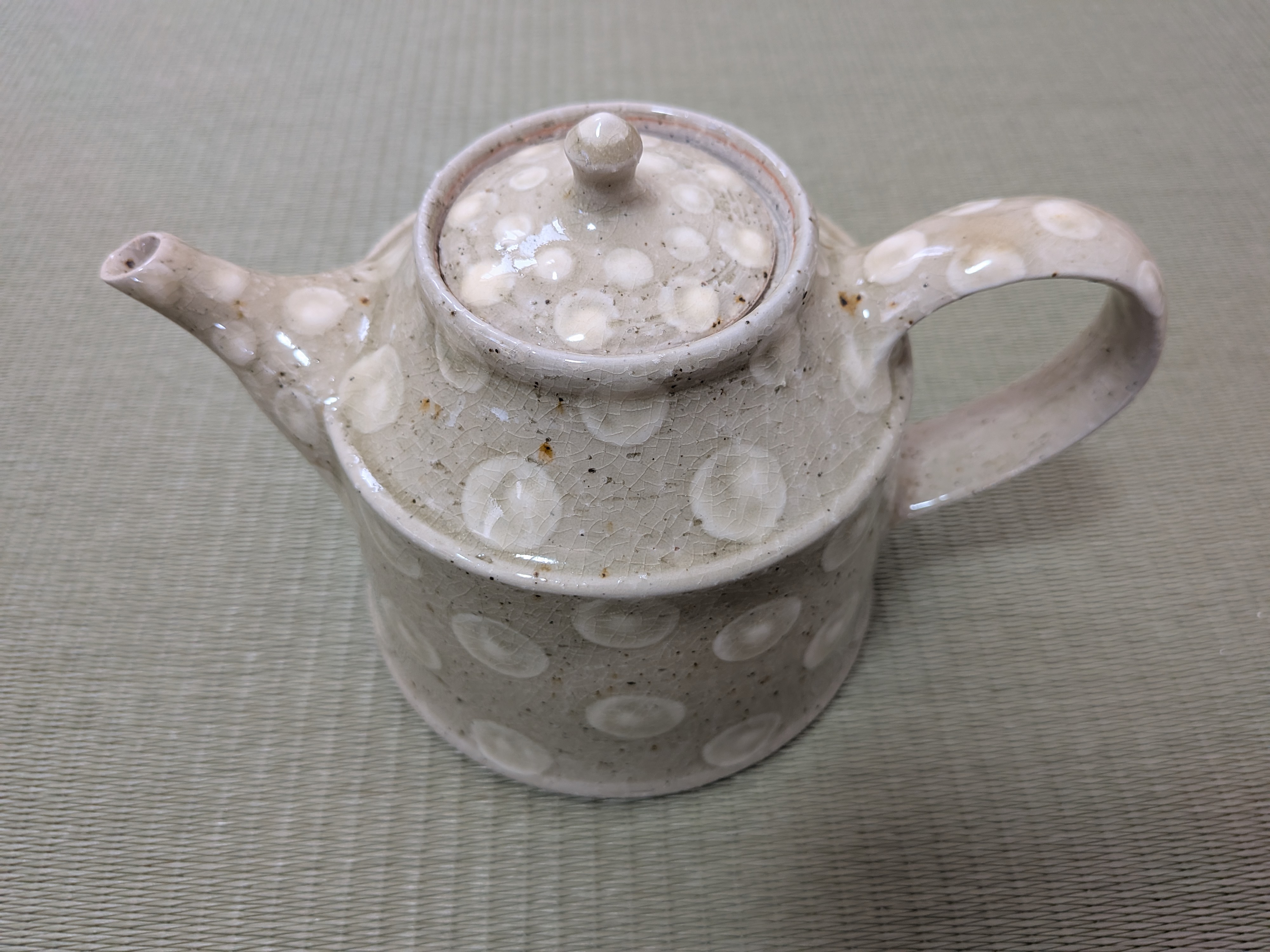
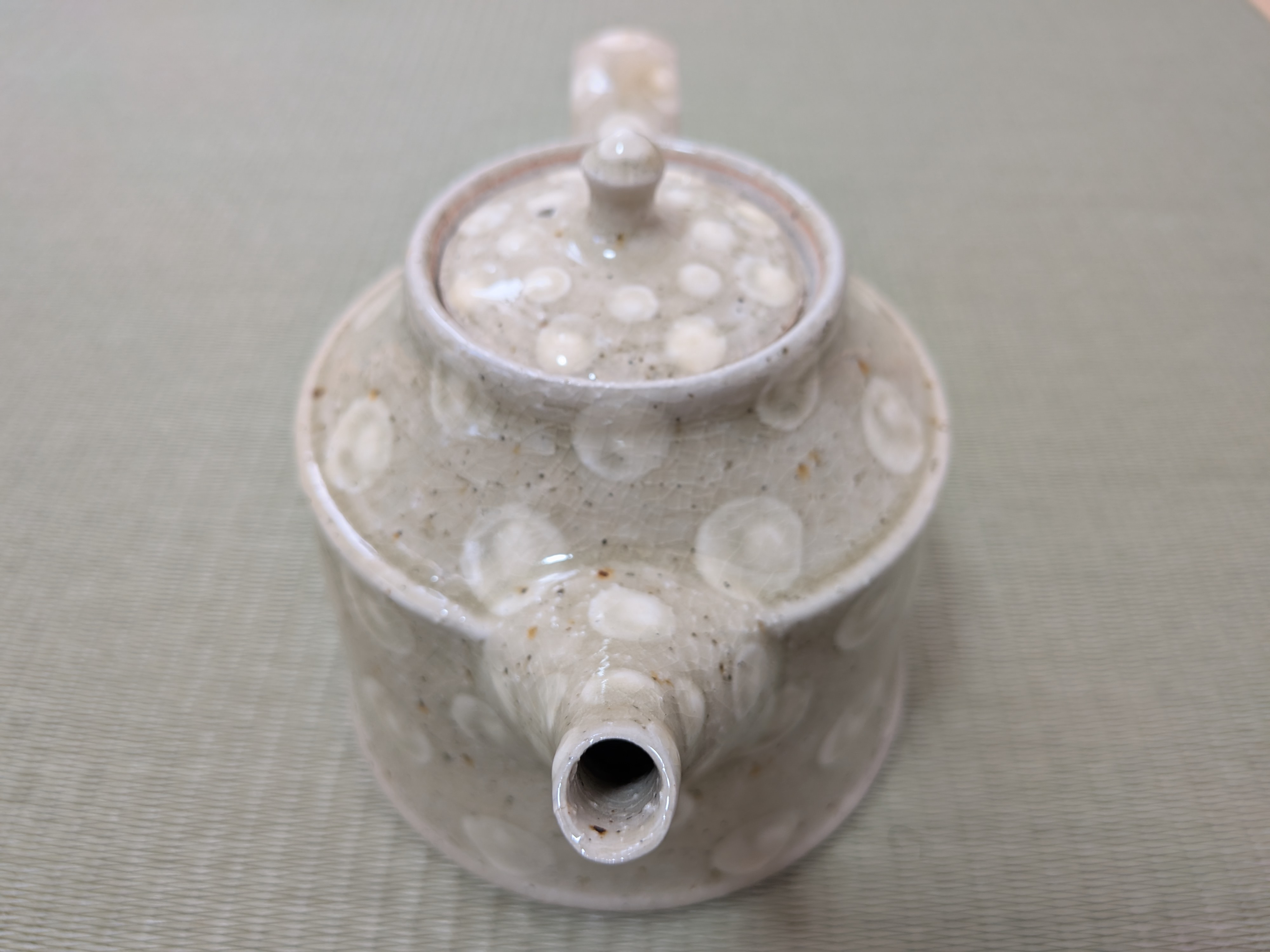
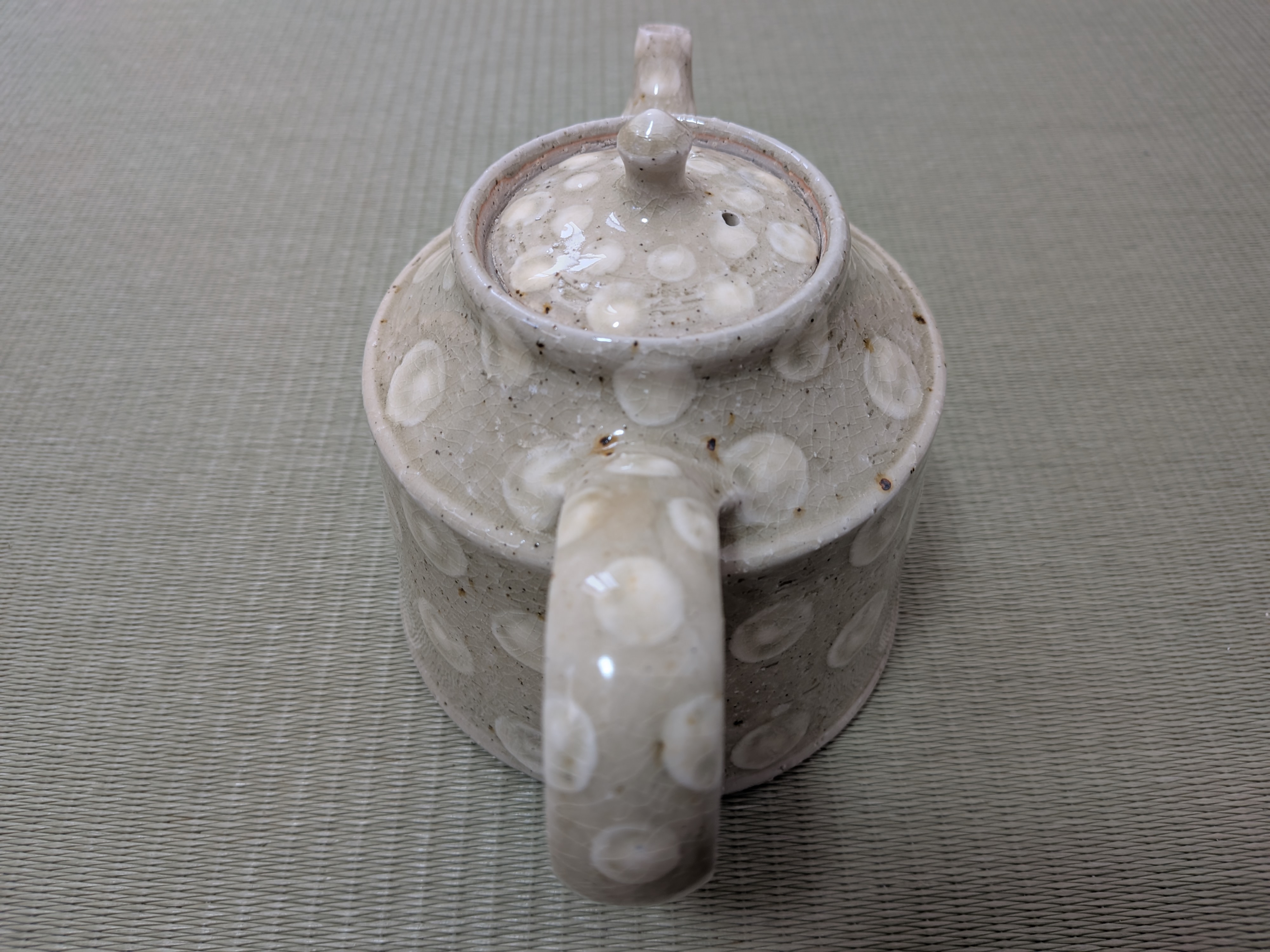
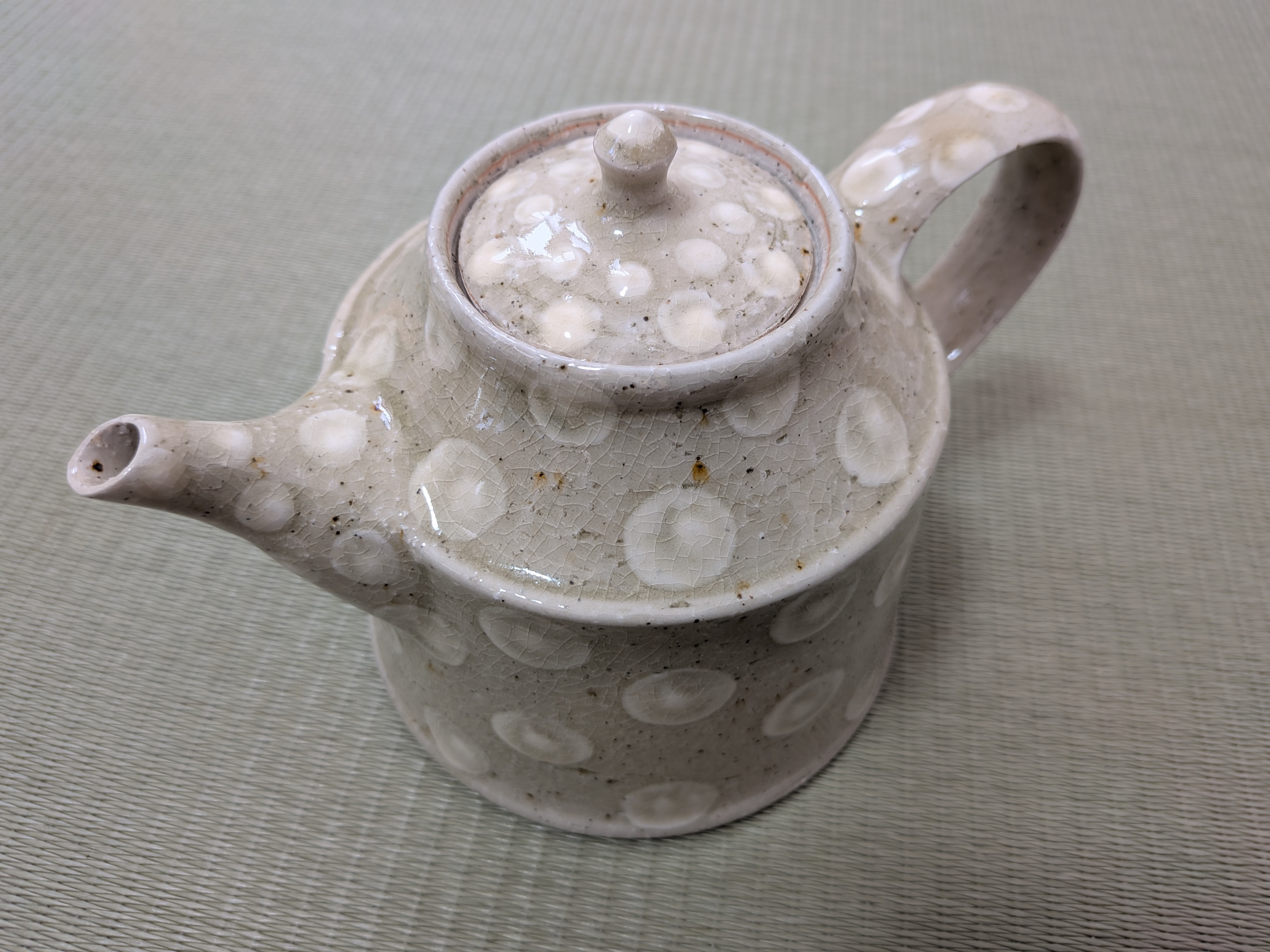
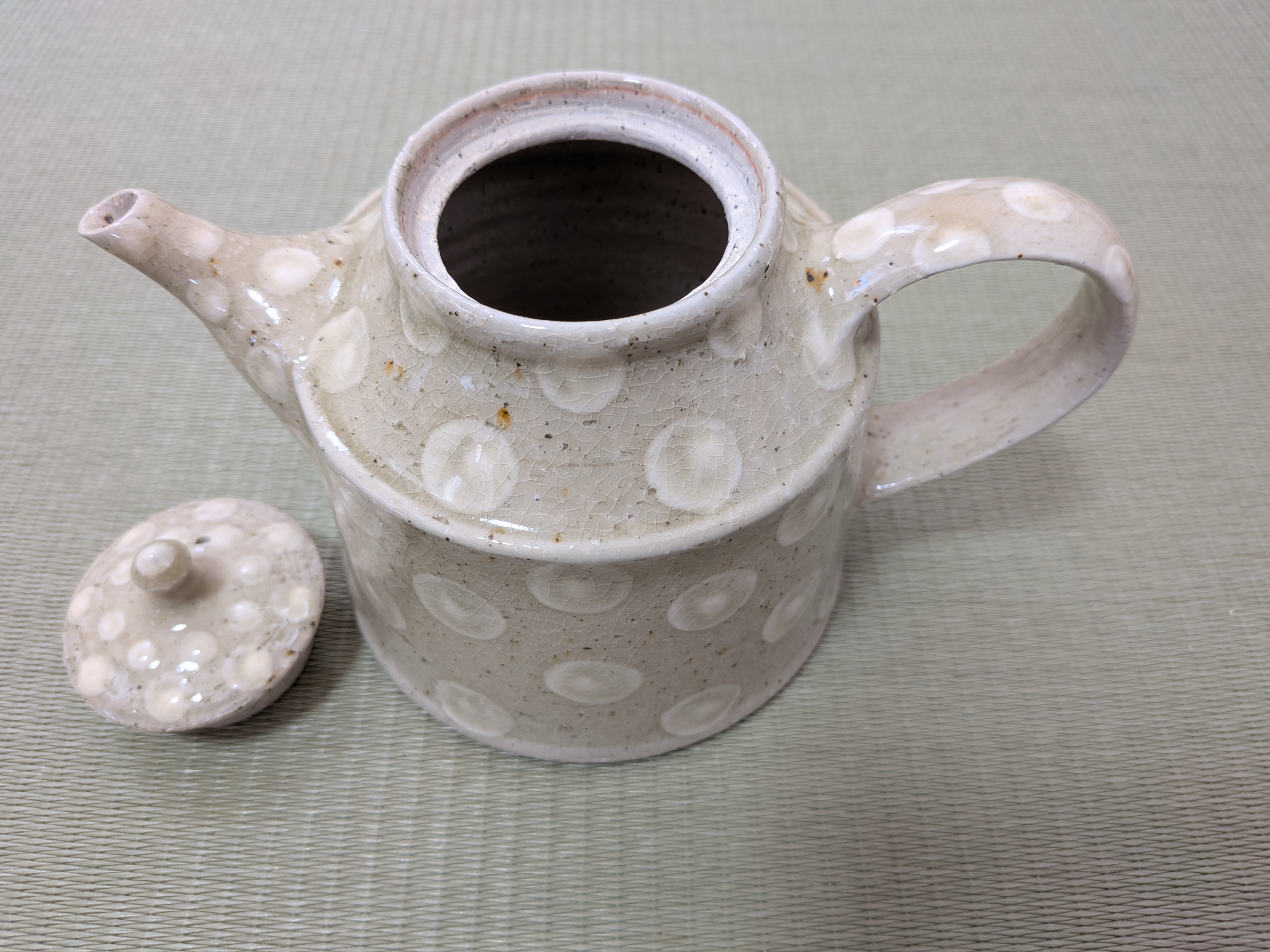
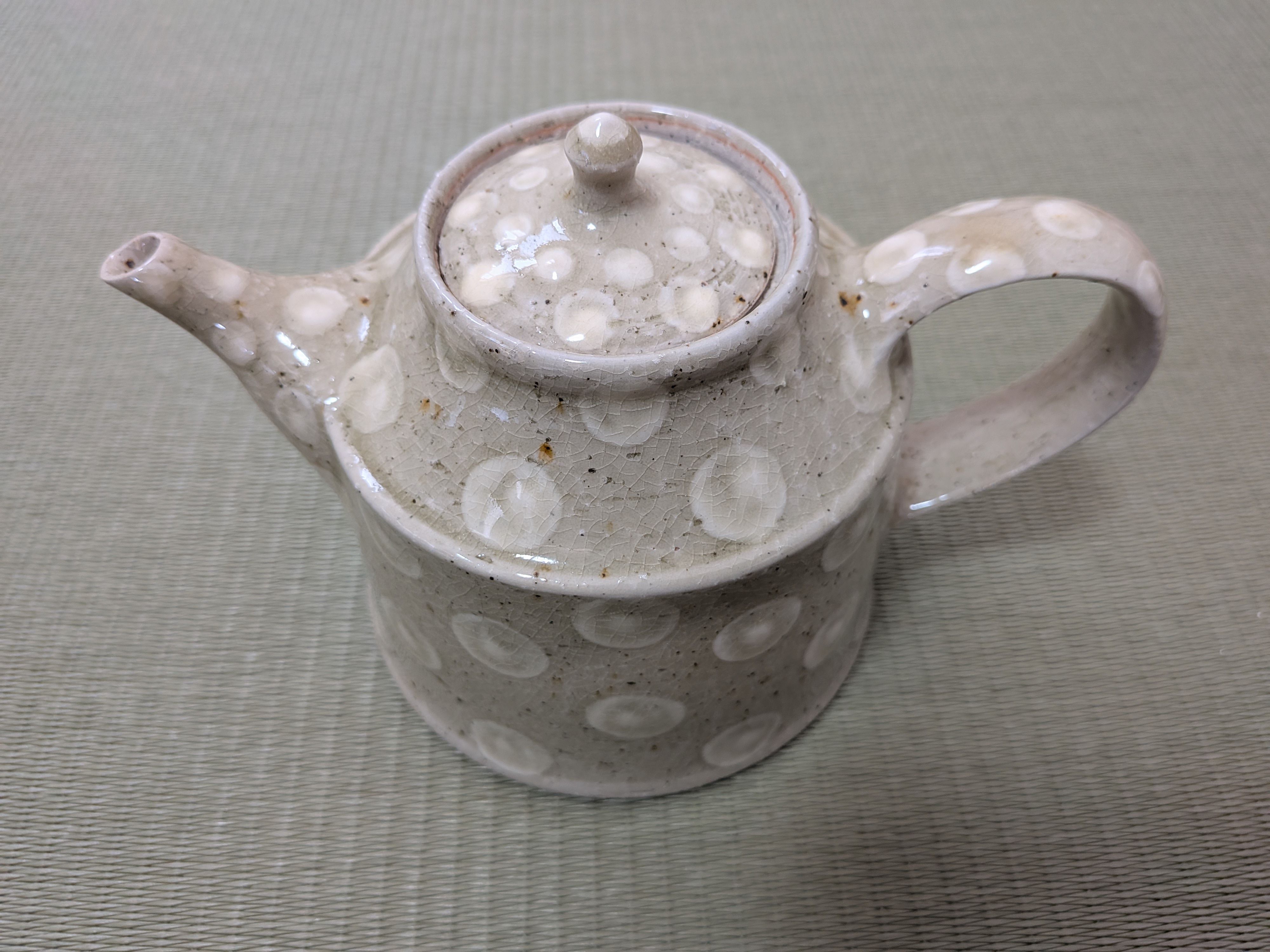
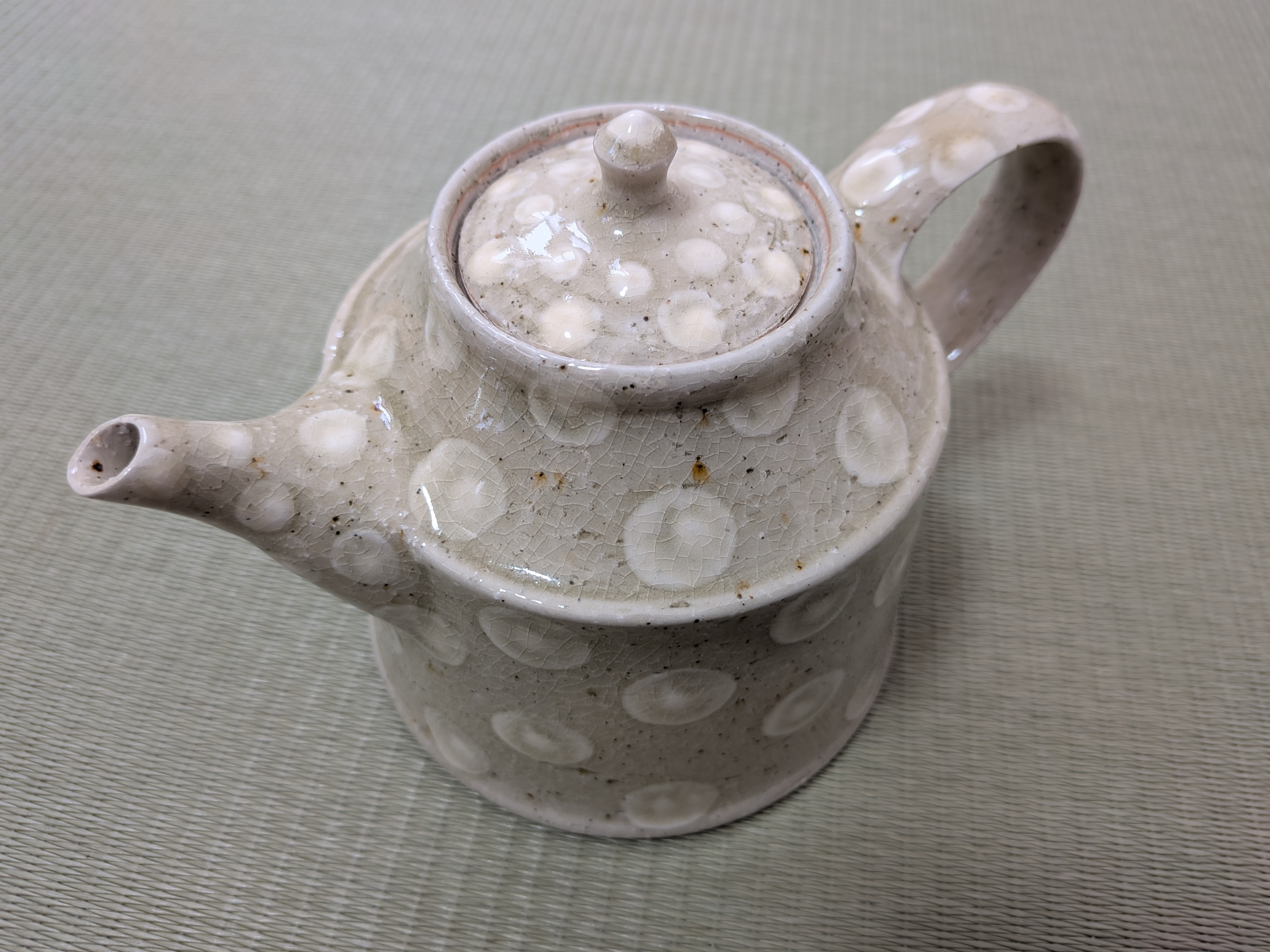
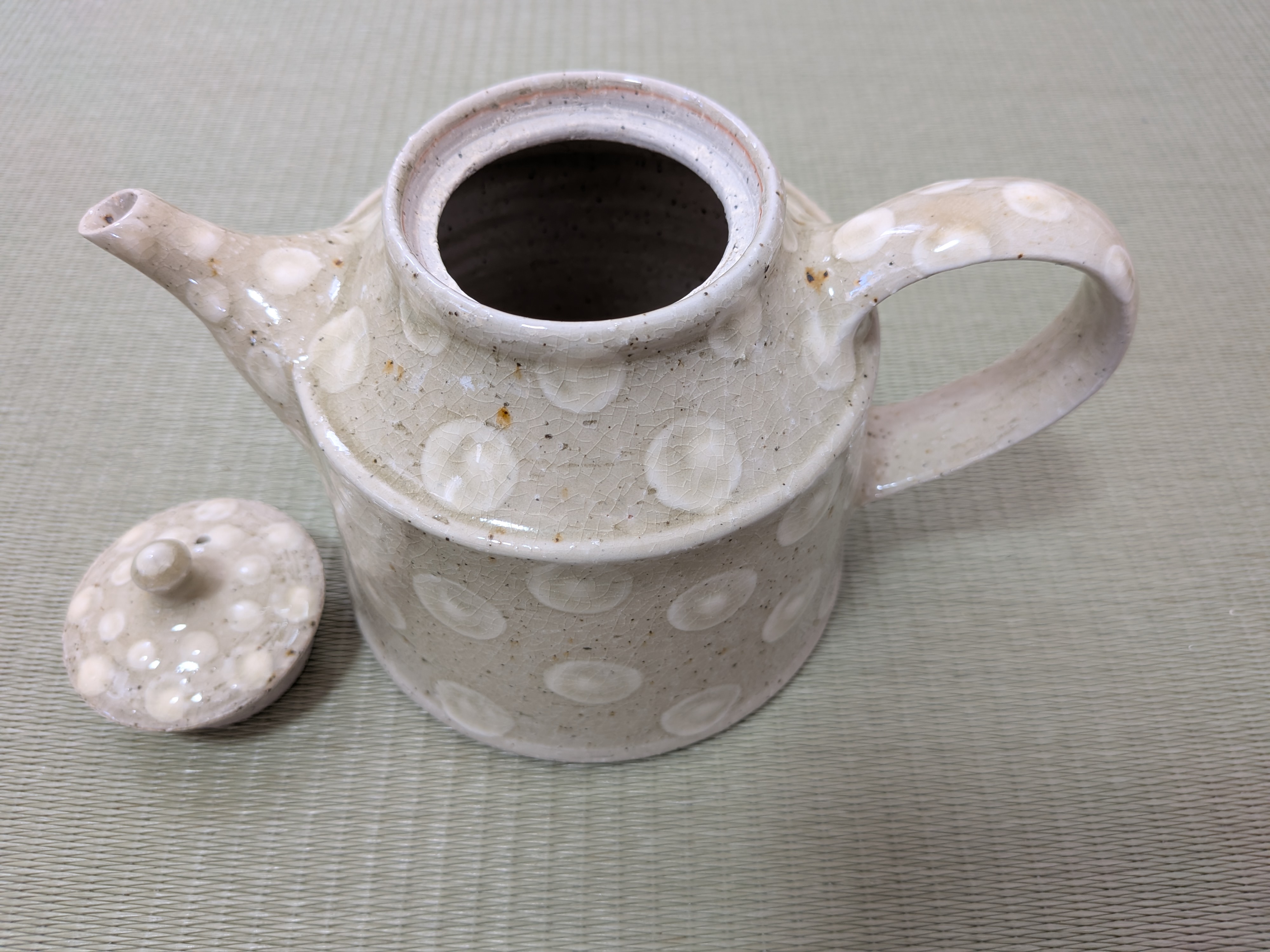
This exceptional ceramic teapot by contemporary Okinawan master Osamu Makiya (真喜屋 修) presents a refined combination of traditional Yachimun craftsmanship, locally sourced materials, and highly controlled functional design. Hand-formed using Makiya's distinctive approach to Okinawan Yanbaru clay, the vessel features a softly translucent natural pine-ash glaze (Matsuhai-yu / 松灰釉) enriched by a rhythmic white slip-dot pattern (Tenten / 点打). The combination creates a restrained surface in which warm ivory, muted ash-green, oatmeal, and naturally occurring iron tones interact across the body.
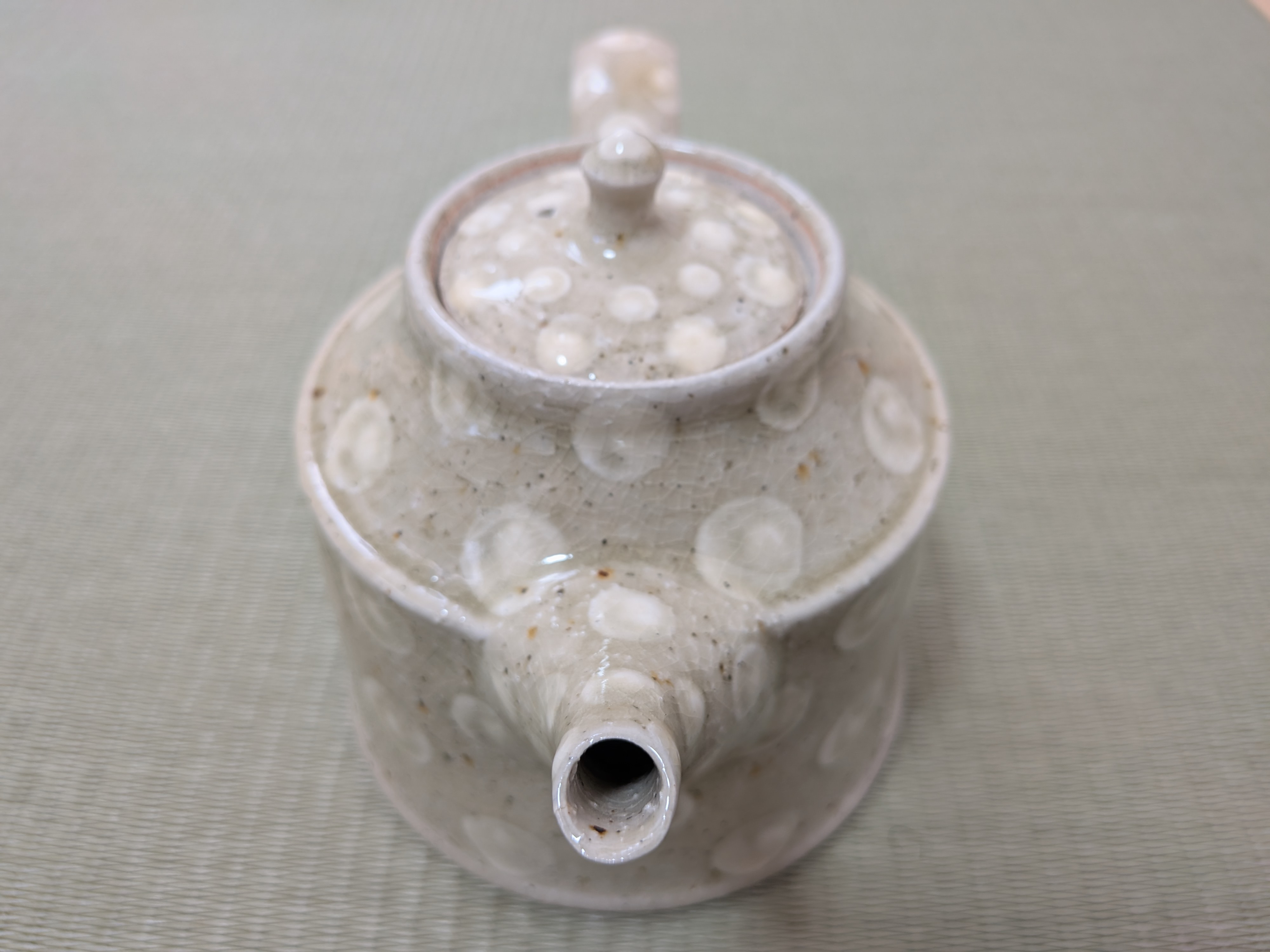
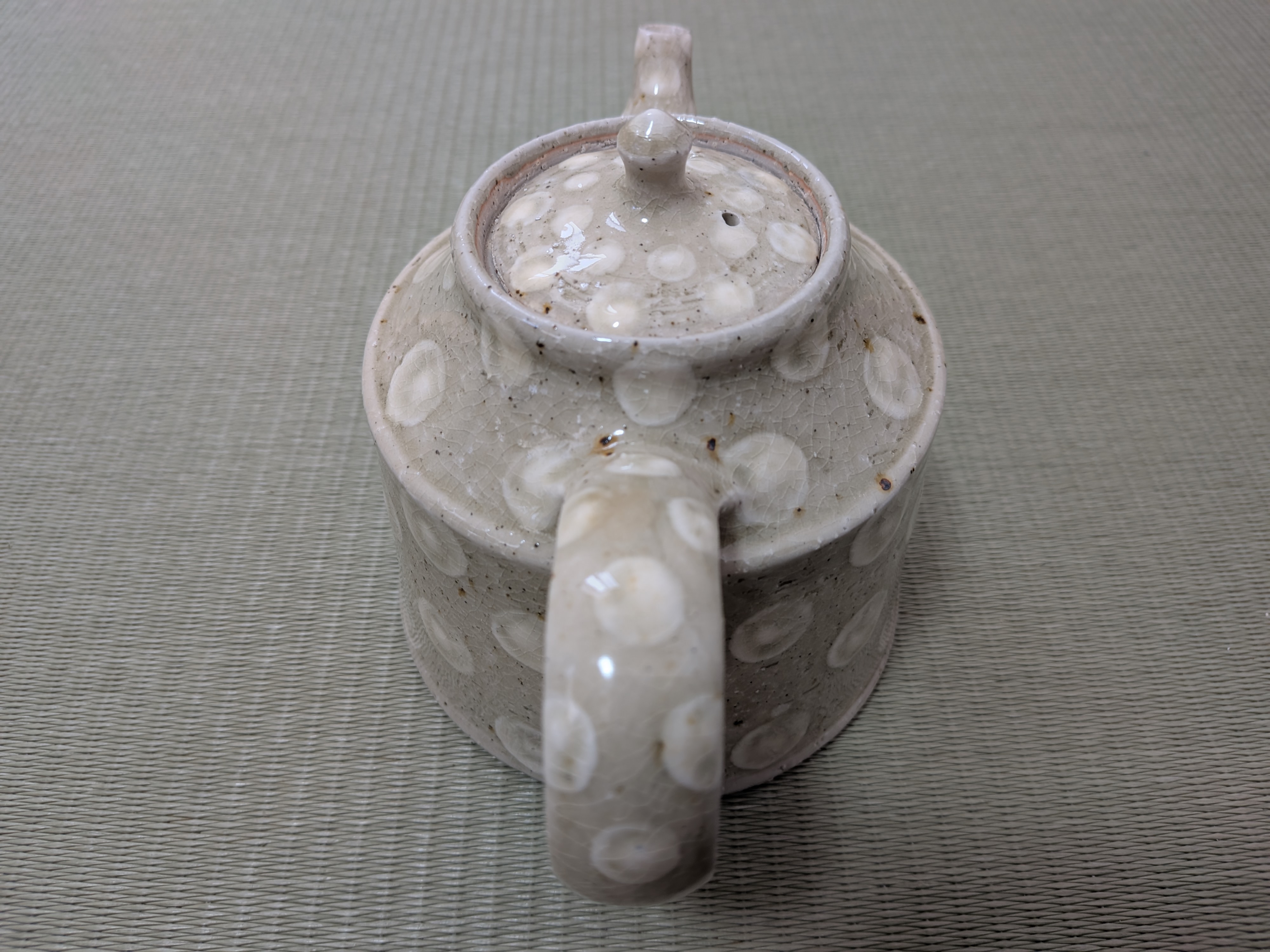
The teapot's compact cylindrical body rises into gently sloping shoulders and terminates in a carefully fitted lid. A balanced pulled handle and tapered pouring spout complete the silhouette, giving the vessel a harmonious relationship between sculptural presence and practical tea service. Rather than relying on industrial uniformity, the piece reflects the inherent variation of natural ash glazing and high-temperature kiln firing. Subtle differences in glaze thickness, mineral response, surface coloration, and kiln atmosphere give the finished work its individual character. The repeated white slip dots provide another layer of visual rhythm. Applied by hand across the curved body, the pattern becomes increasingly dimensional as the dots interact with the translucent glaze.
Master Osamu Makiya - Lineage & Material Heritage
Osamu Makiya (真喜屋 修) is a contemporary Okinawan ceramic artist whose work is rooted in the region's long Yachimun tradition. After graduating from the Okinawa Prefectural University of Arts in 1994, Makiya undertook an extended apprenticeship under renowned Okinawan ceramic master Jissei Omine (大嶺 實清). He subsequently established Toubou Makiya (陶房 真喜屋) in 2001 and developed an independent studio practice in Nanjo City.
His approach places particular emphasis on the relationship between regional clay, natural glaze materials, firing atmosphere, and functional form. Makiya's ceramic vocabulary draws upon historical Okinawan pottery while incorporating a contemporary sense of proportion and restraint. His work demonstrates how traditional materials and techniques can be adapted to objects intended for modern daily life.
Yanbaru Clay & Natural Pine-Ash Glaze
A defining characteristic of Makiya's work is the importance given to the raw materials themselves. The ceramic body incorporates Yanbaru clay, connecting the finished vessel directly to the geological and cultural landscape of Okinawa. The surface is complemented by a natural pine-ash glaze (Matsuhai-yu / 松灰釉). During high-temperature firing, the ash interacts with the ceramic surface to produce subtle variations in translucency, tone, pooling, and mineral response.
The resulting surface is intentionally different from a factory-produced finish:
- Natural tonal variation: Glaze thickness and kiln atmosphere create subtle differences across the body.
- Mineral interaction: Iron-bearing particles within the clay can emerge as fine natural speckling.
- Ash-glaze depth: The translucent surface allows portions of the underlying clay and slip work to remain visually present.
- Individual kiln character: Each firing produces its own combination of surface movement and coloration.
The Hand-Applied Tenten Dot Pattern
The white dot decoration (Tenten / 点打) provides the vessel with its distinctive visual identity.
Rather than being mechanically printed, the raised slip elements are individually applied to the ceramic surface before final glazing and firing. Because the dots follow the curvature of the vessel, their spacing and visual rhythm change subtly as the body transitions from the lower chamber toward the shoulder.
Under the pine-ash glaze, the white slip becomes integrated into the surface rather than appearing as a simple painted decoration. This combination of raised slip, translucent ash glaze, regional clay, and kiln atmosphere creates a surface that rewards close observation.
Technical Craftsmanship
Creating a functional studio teapot requires considerably more coordination than producing a simple open vessel.
1. Body Formation: The primary body is shaped to establish the vessel's capacity, balance, wall thickness, and overall proportions.
2. Lid Construction: The lid must correspond precisely with the gallery of the main body. Even small dimensional differences can affect the fit after firing because ceramic components undergo substantial shrinkage.
3. Spout Formation: The pouring spout requires careful control of its internal opening, exterior taper, attachment point, and terminal lip to create an efficient pouring action.
4. Handle Attachment: The pulled handle must be positioned to provide an ergonomic grip while maintaining visual and structural balance against the weight of the spout and body.
5. Slip Decoration: The Tenten pattern is applied by hand before glazing, requiring consistent pressure and placement across the curved surface.
6. High-Temperature Firing: The assembled work is subjected to high-temperature kiln firing, during which clay shrinkage, glaze movement, atmospheric conditions, and mineral reactions collectively determine the final appearance.
Functional Design & Contemporary Tea Culture
Although visually suited to a collector's display, the vessel retains the essential qualities of functional Japanese teaware.
Its proportions are designed around the relationship between:
- Body volume
- Lid fit
- Handle position
- Spout angle
- Pouring control
- Hand comfort
This balance between utility and artistic expression is central to the Japanese studio-ceramic tradition. The result is not simply a decorative object, but a vessel intended to bring the material qualities of Okinawan ceramic art into everyday tea preparation.
Collector Significance
The appeal of this work extends beyond its visual appearance.
It represents the convergence of several important elements:
- Contemporary Okinawan studio pottery
- Regional Yanbaru clay
- Natural pine-ash glazing
- Hand-applied slip decoration
- Traditional climbing-kiln firing
- The artistic lineage of Jissei Omine
- Modern reinterpretation of Yachimun functional ware
Because natural clay bodies, hand-applied decoration, and atmospheric firing produce variable results, each completed vessel possesses its own surface characteristics. The exact combination of glaze movement, mineral response, slip placement, and firing atmosphere cannot be precisely reproduced.
Premium Highlights
- Artist: Osamu Makiya (真喜屋 修)
- Studio: Toubou Makiya (陶房 真喜屋), Nanjo City, Okinawa
- Lineage: Apprenticed under renowned Okinawan ceramic master Jissei Omine
- Form: Contemporary functional ceramic teapot (Kyūsu / ポット)
- Materials: Okinawan Yanbaru clay, natural pine ash, white clay slip
- Decoration: Hand-applied raised Tenten dot pattern
- Glaze: Natural pine-ash glaze (Matsuhai-yu)
- Firing: High-temperature climbing-kiln (Noborigama) tradition
- Surface: Ivory ash glaze, subtle mineral speckling, raised white slip, natural tonal variation
- Provenance: Original studio work from Okinawa
- Rarity: Individually crafted studio piece with naturally variable kiln results
Curator's Note
"This teapot demonstrates the quiet sophistication that can emerge when a master potter allows regional materials to remain visible rather than concealing them beneath a uniform industrial finish. The warm pine-ash surface, restrained white slip dots, and subtle mineral variation create a vessel that feels unmistakably connected to Okinawa while remaining contemporary in form.
Its significance lies not in ornament alone, but in the integration of material, proportion, craftsmanship, and everyday function."
Specifications
| Attribute | Details |
| Artist | Osamu Makiya (真喜屋 修) |
| Pedigree / Lineage | Apprenticed under Master Jissei Omine (大嶺 實清) |
| Studio | Toubou Makiya (陶房 真喜屋) — Nanjo City, Okinawa |
| Category | Okinawan Yachimun / Contemporary Fine Art Teaware |
| Form | Ceramic Teapot with Lid & Pulled Handle (Tenten Pot / 点打ポット) |
| Materials | Regional Yanbaru Clay, Pine-Ash Glaze (Matsuhai-yu), White Clay Slip |
| Technique | Hand-formed construction, multi-part assembly, hand-applied slip dots, high-temperature kiln firing |
| Decoration | Raised white Tenten dot pattern |
| Glaze | Natural pine-ash glaze |
| Color Palette | Ivory White, Soft Ash Green, Oatmeal, Natural Iron Speckling |
| Firing Tradition | Climbing-kiln (Noborigama) ceramic tradition |
| Condition | Pristine studio condition |
| Origin | Nanjo City, Okinawa Prefecture, Japan |
Care Instructions
- Rinse gently by hand using lukewarm water.
- Use a soft cloth or non-abrasive sponge when cleaning.
- Avoid harsh detergents, abrasive cleaners, and metal scrubbers.
- Do not place in an automated dishwasher.
- Do not use directly on a stovetop or open flame.
- Do not place in a microwave unless the studio specifically confirms microwave suitability.
- Avoid sudden temperature changes that could subject the ceramic to thermal shock.
- Allow the interior and lid to dry thoroughly before long-term storage.
Shipping & International Delivery
Domestic Shipping (Japan): Shipped via insured express courier with protective double-box packaging. International Orders (USA, EU, UK, Canada, Australia): Insured international delivery is available. Destination-country customs duties, VAT, GST, import fees, and other applicable charges are the responsibility of the recipient. Packaging: Each vessel is individually protected using impact-absorbing materials appropriate for delicate studio ceramics.
Xandre Store
Connecting global collectors with the craftsmanship, heritage, materials, and stories behind Japan's finest regional studio masters.
Description
Xandre Store Exclusive - A Signature Contemporary Masterwork Bridging Ryukyu Ceramic Lineage, Regional Materials & Modern Tea Culture
- Artist: Osamu Makiya (真喜屋 修)
- Studio: Toubou Makiya (陶房 真喜屋)
- Origin: Nanjo City, Okinawa Prefecture, Japan
- Category: Okinawan Yachimun Ceramic | Fine Art Teaware | Collector Teapot
- Craft Tradition: やちむん / 登り窯 (Okinawan Yachimun / Climbing-Kiln Ceramic Tradition)
This exceptional ceramic teapot by contemporary Okinawan master Osamu Makiya (真喜屋 修) presents a refined combination of traditional Yachimun craftsmanship, locally sourced materials, and highly controlled functional design. Hand-formed using Makiya's distinctive approach to Okinawan Yanbaru clay, the vessel features a softly translucent natural pine-ash glaze (Matsuhai-yu / 松灰釉) enriched by a rhythmic white slip-dot pattern (Tenten / 点打). The combination creates a restrained surface in which warm ivory, muted ash-green, oatmeal, and naturally occurring iron tones interact across the body.
The teapot's compact cylindrical body rises into gently sloping shoulders and terminates in a carefully fitted lid. A balanced pulled handle and tapered pouring spout complete the silhouette, giving the vessel a harmonious relationship between sculptural presence and practical tea service. Rather than relying on industrial uniformity, the piece reflects the inherent variation of natural ash glazing and high-temperature kiln firing. Subtle differences in glaze thickness, mineral response, surface coloration, and kiln atmosphere give the finished work its individual character. The repeated white slip dots provide another layer of visual rhythm. Applied by hand across the curved body, the pattern becomes increasingly dimensional as the dots interact with the translucent glaze.
Master Osamu Makiya - Lineage & Material Heritage
Osamu Makiya (真喜屋 修) is a contemporary Okinawan ceramic artist whose work is rooted in the region's long Yachimun tradition. After graduating from the Okinawa Prefectural University of Arts in 1994, Makiya undertook an extended apprenticeship under renowned Okinawan ceramic master Jissei Omine (大嶺 實清). He subsequently established Toubou Makiya (陶房 真喜屋) in 2001 and developed an independent studio practice in Nanjo City.
His approach places particular emphasis on the relationship between regional clay, natural glaze materials, firing atmosphere, and functional form. Makiya's ceramic vocabulary draws upon historical Okinawan pottery while incorporating a contemporary sense of proportion and restraint. His work demonstrates how traditional materials and techniques can be adapted to objects intended for modern daily life.
Yanbaru Clay & Natural Pine-Ash Glaze
A defining characteristic of Makiya's work is the importance given to the raw materials themselves. The ceramic body incorporates Yanbaru clay, connecting the finished vessel directly to the geological and cultural landscape of Okinawa. The surface is complemented by a natural pine-ash glaze (Matsuhai-yu / 松灰釉). During high-temperature firing, the ash interacts with the ceramic surface to produce subtle variations in translucency, tone, pooling, and mineral response.
The resulting surface is intentionally different from a factory-produced finish:
- Natural tonal variation: Glaze thickness and kiln atmosphere create subtle differences across the body.
- Mineral interaction: Iron-bearing particles within the clay can emerge as fine natural speckling.
- Ash-glaze depth: The translucent surface allows portions of the underlying clay and slip work to remain visually present.
- Individual kiln character: Each firing produces its own combination of surface movement and coloration.
The Hand-Applied Tenten Dot Pattern
The white dot decoration (Tenten / 点打) provides the vessel with its distinctive visual identity.
Rather than being mechanically printed, the raised slip elements are individually applied to the ceramic surface before final glazing and firing. Because the dots follow the curvature of the vessel, their spacing and visual rhythm change subtly as the body transitions from the lower chamber toward the shoulder.
Under the pine-ash glaze, the white slip becomes integrated into the surface rather than appearing as a simple painted decoration. This combination of raised slip, translucent ash glaze, regional clay, and kiln atmosphere creates a surface that rewards close observation.
Technical Craftsmanship
Creating a functional studio teapot requires considerably more coordination than producing a simple open vessel.
1. Body Formation: The primary body is shaped to establish the vessel's capacity, balance, wall thickness, and overall proportions.
2. Lid Construction: The lid must correspond precisely with the gallery of the main body. Even small dimensional differences can affect the fit after firing because ceramic components undergo substantial shrinkage.
3. Spout Formation: The pouring spout requires careful control of its internal opening, exterior taper, attachment point, and terminal lip to create an efficient pouring action.
4. Handle Attachment: The pulled handle must be positioned to provide an ergonomic grip while maintaining visual and structural balance against the weight of the spout and body.
5. Slip Decoration: The Tenten pattern is applied by hand before glazing, requiring consistent pressure and placement across the curved surface.
6. High-Temperature Firing: The assembled work is subjected to high-temperature kiln firing, during which clay shrinkage, glaze movement, atmospheric conditions, and mineral reactions collectively determine the final appearance.
Functional Design & Contemporary Tea Culture
Although visually suited to a collector's display, the vessel retains the essential qualities of functional Japanese teaware.
Its proportions are designed around the relationship between:
- Body volume
- Lid fit
- Handle position
- Spout angle
- Pouring control
- Hand comfort
This balance between utility and artistic expression is central to the Japanese studio-ceramic tradition. The result is not simply a decorative object, but a vessel intended to bring the material qualities of Okinawan ceramic art into everyday tea preparation.
Collector Significance
The appeal of this work extends beyond its visual appearance.
It represents the convergence of several important elements:
- Contemporary Okinawan studio pottery
- Regional Yanbaru clay
- Natural pine-ash glazing
- Hand-applied slip decoration
- Traditional climbing-kiln firing
- The artistic lineage of Jissei Omine
- Modern reinterpretation of Yachimun functional ware
Because natural clay bodies, hand-applied decoration, and atmospheric firing produce variable results, each completed vessel possesses its own surface characteristics. The exact combination of glaze movement, mineral response, slip placement, and firing atmosphere cannot be precisely reproduced.
Premium Highlights
- Artist: Osamu Makiya (真喜屋 修)
- Studio: Toubou Makiya (陶房 真喜屋), Nanjo City, Okinawa
- Lineage: Apprenticed under renowned Okinawan ceramic master Jissei Omine
- Form: Contemporary functional ceramic teapot (Kyūsu / ポット)
- Materials: Okinawan Yanbaru clay, natural pine ash, white clay slip
- Decoration: Hand-applied raised Tenten dot pattern
- Glaze: Natural pine-ash glaze (Matsuhai-yu)
- Firing: High-temperature climbing-kiln (Noborigama) tradition
- Surface: Ivory ash glaze, subtle mineral speckling, raised white slip, natural tonal variation
- Provenance: Original studio work from Okinawa
- Rarity: Individually crafted studio piece with naturally variable kiln results
Curator's Note
"This teapot demonstrates the quiet sophistication that can emerge when a master potter allows regional materials to remain visible rather than concealing them beneath a uniform industrial finish. The warm pine-ash surface, restrained white slip dots, and subtle mineral variation create a vessel that feels unmistakably connected to Okinawa while remaining contemporary in form.
Its significance lies not in ornament alone, but in the integration of material, proportion, craftsmanship, and everyday function."
Specifications
| Attribute | Details |
| Artist | Osamu Makiya (真喜屋 修) |
| Pedigree / Lineage | Apprenticed under Master Jissei Omine (大嶺 實清) |
| Studio | Toubou Makiya (陶房 真喜屋) — Nanjo City, Okinawa |
| Category | Okinawan Yachimun / Contemporary Fine Art Teaware |
| Form | Ceramic Teapot with Lid & Pulled Handle (Tenten Pot / 点打ポット) |
| Materials | Regional Yanbaru Clay, Pine-Ash Glaze (Matsuhai-yu), White Clay Slip |
| Technique | Hand-formed construction, multi-part assembly, hand-applied slip dots, high-temperature kiln firing |
| Decoration | Raised white Tenten dot pattern |
| Glaze | Natural pine-ash glaze |
| Color Palette | Ivory White, Soft Ash Green, Oatmeal, Natural Iron Speckling |
| Firing Tradition | Climbing-kiln (Noborigama) ceramic tradition |
| Condition | Pristine studio condition |
| Origin | Nanjo City, Okinawa Prefecture, Japan |
Care Instructions
- Rinse gently by hand using lukewarm water.
- Use a soft cloth or non-abrasive sponge when cleaning.
- Avoid harsh detergents, abrasive cleaners, and metal scrubbers.
- Do not place in an automated dishwasher.
- Do not use directly on a stovetop or open flame.
- Do not place in a microwave unless the studio specifically confirms microwave suitability.
- Avoid sudden temperature changes that could subject the ceramic to thermal shock.
- Allow the interior and lid to dry thoroughly before long-term storage.
Shipping & International Delivery
Domestic Shipping (Japan): Shipped via insured express courier with protective double-box packaging. International Orders (USA, EU, UK, Canada, Australia): Insured international delivery is available. Destination-country customs duties, VAT, GST, import fees, and other applicable charges are the responsibility of the recipient. Packaging: Each vessel is individually protected using impact-absorbing materials appropriate for delicate studio ceramics.
Xandre Store
Connecting global collectors with the craftsmanship, heritage, materials, and stories behind Japan's finest regional studio masters.
Previously viewed products
No recently viewed products.