

Description
Xandre Store Exclusive: Celebrating Okinawan Artisanal Heritage Through Ceramic Fine Art
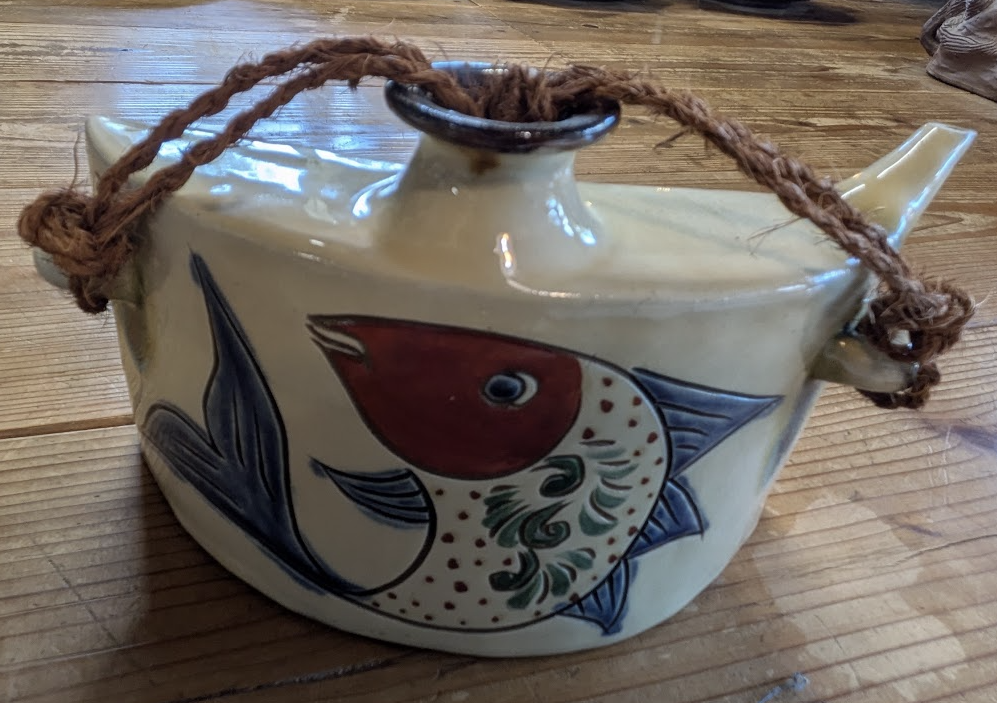
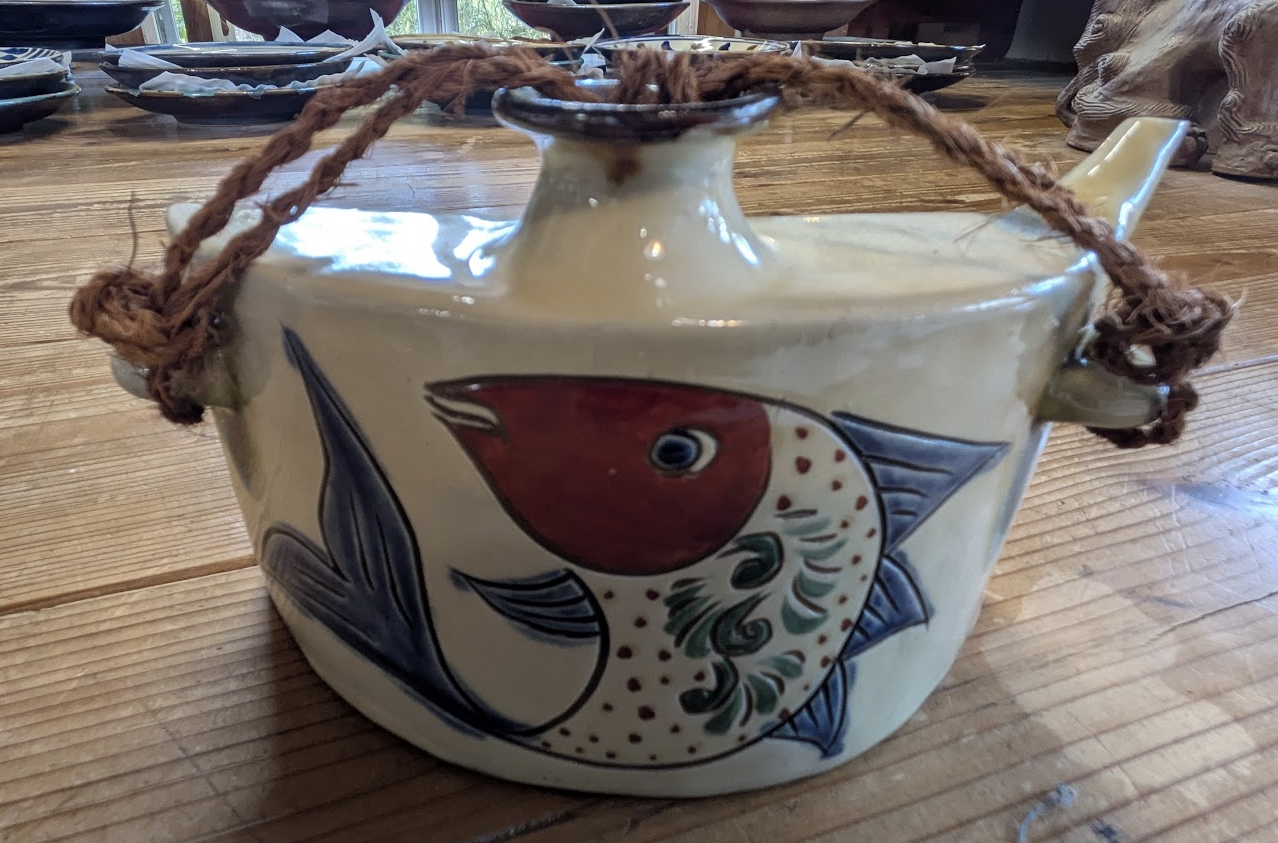
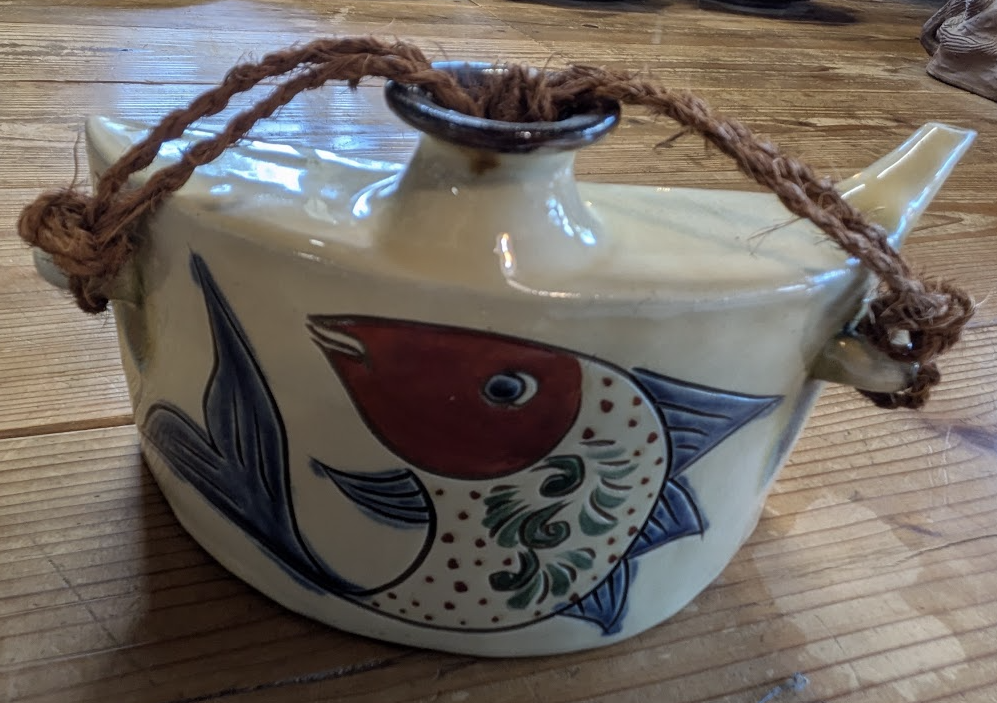
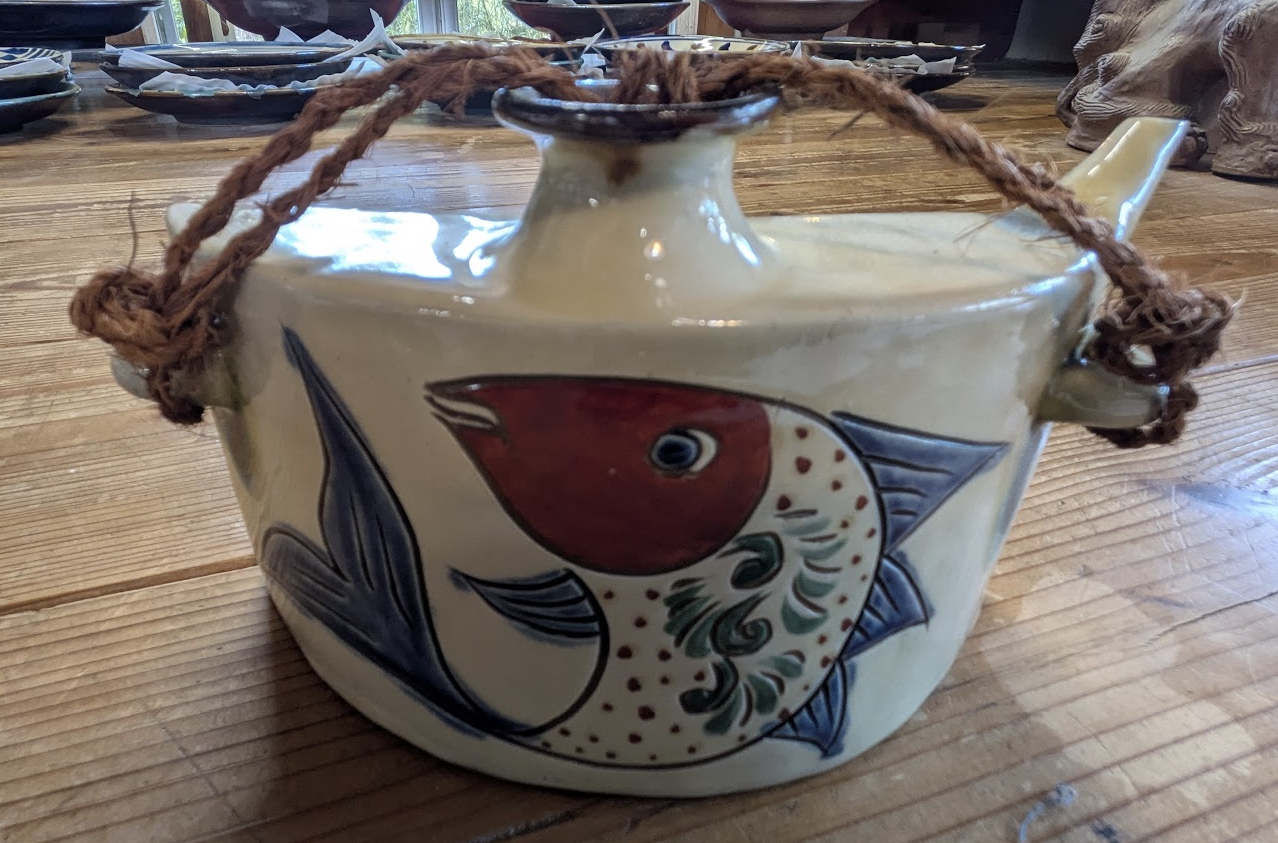
Discover a distinctive expression of Okinawan ceramic craftsmanship through this Dakibin (抱瓶), a traditional crescent-shaped vessel associated with the island's history of portable ceramic wares. Crafted by master potter Tsunehide Shimabukuro (島袋常秀) of Tsunehide Studio (常秀工房) in Yomitan, Okinawa, the vessel combines the characteristic curved Dakibin profile with an expressive Gyomon (魚紋 / fish motif), hand-painted in iron-red, cobalt-blue, and green accents. The result is a functional vessel with the presence of a small ceramic artwork—bringing together traditional Okinawan form, individual brushwork, and the distinctive character of Yachimun pottery.
Okinawan Yachimun Ceramic Heritage
Yachimun (やちむん) is one of Okinawa's defining ceramic traditions, developing through historic pottery centers such as Tsuboya and continuing through contemporary studios throughout the island, including Yomitan. The tradition is recognized for its expressive forms, natural clay bodies, distinctive glazes, and bold hand-applied decoration. Marine imagery, particularly fish motifs, is among the recurring visual languages found in Okinawan ceramic art. The Dakibin (抱瓶) is one of Okinawa's most recognizable traditional vessel forms. Its flattened, curved body was designed to sit against the hip, allowing liquid to be carried conveniently while traveling or participating in outdoor activities and celebrations. Today, Okinawan ceramic artists continue to produce Dakibin vessels, preserving the distinctive form while interpreting it through their own materials, techniques, and decorative styles.
Master Tsunehide Shimabukuro: Handcrafted Okinawan “Dakibin” Crescent Vessel
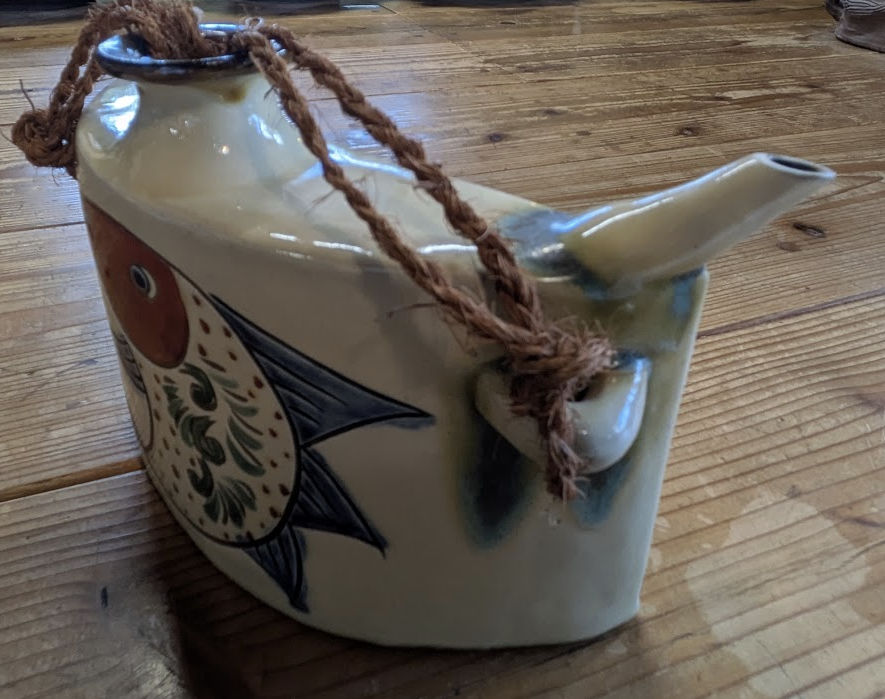
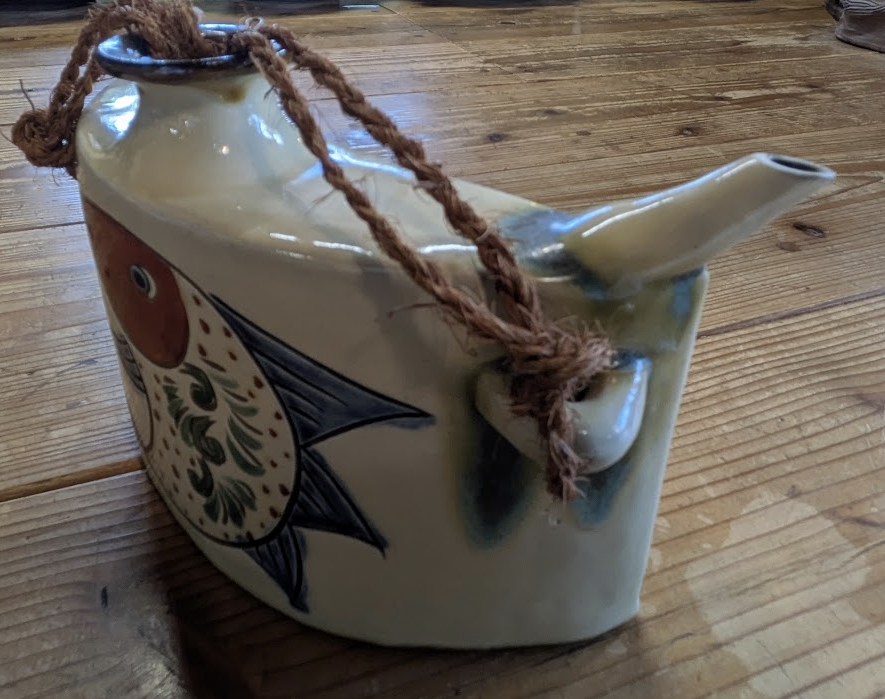
Created by master potter Tsunehide Shimabukuro (島袋常秀) of Tsunehide Studio (常秀工房), this distinctive Dakibin features a gently curved profile with side attachment loops and a traditional twisted natural-fiber carrying cord.
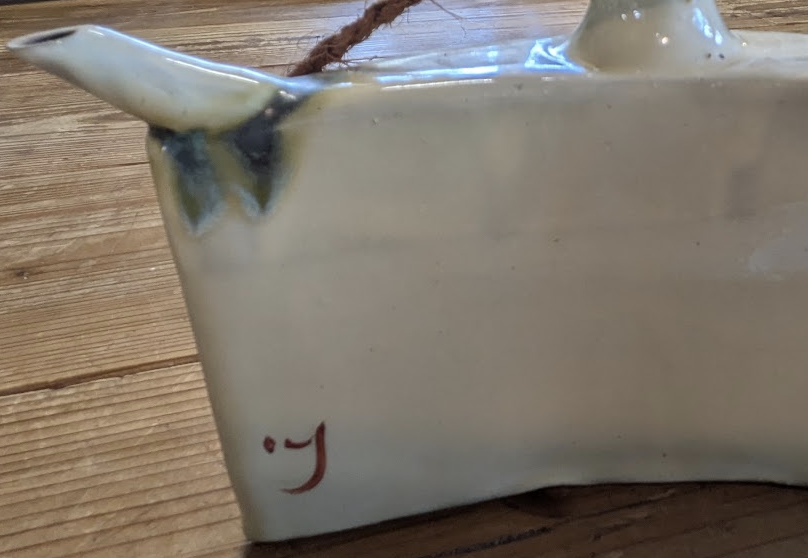
The warm cream-beige ceramic body is decorated with an expressive fish motif (魚紋), incorporating rich iron-red, deep cobalt-blue, and green details. Subtle glaze movement around the body and spout adds depth to the surface, while the artist's handwritten signature mark provides an important identifying feature.
Highlights
- Traditional Dakibin Form (抱瓶): Characteristic crescent-shaped profile designed around the historic hip-carried vessel form.
- Master Tsunehide Shimabukuro Craftsmanship: Created by Okinawan master potter Tsunehide Shimabukuro of Tsunehide Studio.
- Hand-Painted Gyomon (魚紋): Expressive fish imagery rendered with iron-red, cobalt-blue, and green decorative pigments.
- Natural Carrying Cord: Fitted with a twisted natural-fiber cord through the vessel's side attachment points.
- Distinctive Glaze Character: Warm cream-beige body complemented by colored accents and subtle glaze movement.
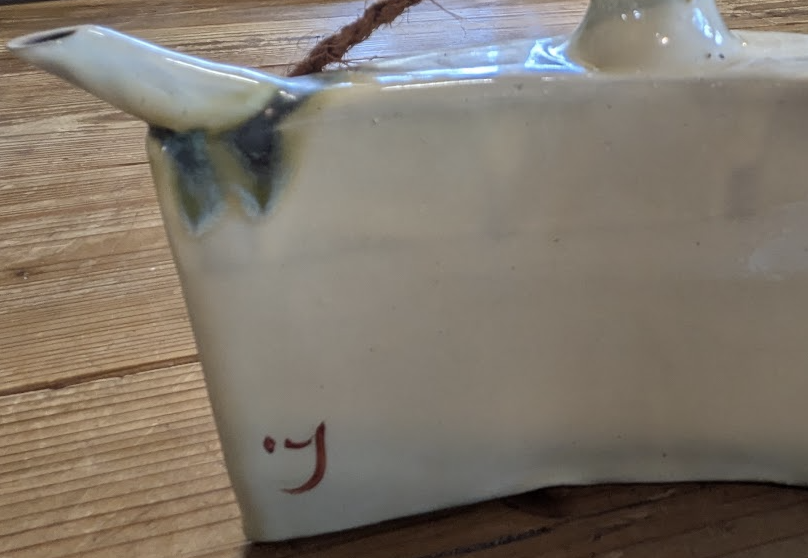
- Artist Signature: Features a handwritten studio/artist mark attributed to Tsunehide Shimabukuro on the lower rear portion.
- Functional Ceramic Art: Suitable for display, collection, or traditional-style serving use.
Curator's Note
This Dakibin is particularly compelling because it brings together a recognizable Okinawan historical form and the individual artistic language of a contemporary master potter. The curved silhouette gives the vessel its unmistakable identity, while the fish decoration introduces movement across the ceramic surface. Rather than appearing mechanically uniform, the brushwork, glaze distribution, and firing characteristics reveal the individuality of the making process. The presence of the artist's signature further distinguishes the vessel as an individually authored work rather than a generic reproduction.
Specifications
- Master Craftsman: Tsunehide Shimabukuro (島袋常秀)
- Studio: Tsunehide Studio / Tsunehide Kobo (常秀工房)
- Origin: Yomitan Village, Okinawa Prefecture, Japan
- Craft Tradition: Okinawan Yachimun Ceramic Art (やちむん)
- Category: Handcrafted Ceramic Vessel / Dakibin / Sake Flask / Decorative Art Vessel
- Collection: Okinawan Historic Yachimun Collection
- Form: Dakibin (抱瓶)
- Motif: Hand-Painted Fish Pattern / Gyomon (魚紋)
- Signature: Artist/studio mark attributed to Tsunehide Shimabukuro
- Materials: Okinawan earthenware clay, ceramic glazes, iron-red and cobalt pigments, natural-fiber carrying cord
- Primary Color: Cream-beige
- Decorative Colors: Iron-red, cobalt-blue, olive/green
- Cord: Natural brown fiber
Approximate Dimensions
- Height, excluding cord: 12.0–14.0 cm (4.7–5.5 in)
- Total width, spout to loop: 18.0–21.0 cm (7.1–8.3 in)
- Depth: 8.0–10.0 cm (3.1–3.9 in)
- Packaging: Presentation gift wrapping with available studio or heritage documentation
- Quantity: One (1) handcrafted Okinawan Dakibin vessel with attached carrying cord
Dimensions, glaze coloration, brushwork, and surface characteristics may vary slightly due to the individually crafted nature of the piece.
Historic Material & Authenticity
The significance of this vessel rests in its connection to Okinawan Yachimun craftsmanship and the traditional Dakibin form, combined with the individual authorship of master potter Tsunehide Shimabukuro. Each vessel undergoes its own shaping, decoration, glazing, and firing process. Consequently, variations in clay texture, brushwork, glaze thickness, firing coloration, and surface movement are expected. The artist's mark on the reverse provides an additional identifying characteristic of the individual work. Where available, original studio documentation, provenance information, or accompanying materials should be retained as part of the collector's permanent record.
Care Instructions
Rinse gently with warm water after use. If cleaning is required, use a mild dish soap with a soft cloth or non-abrasive sponge.
Allow the natural-fiber carrying cord to dry completely if it becomes wet.
Avoid:
- Dishwasher cleaning
- Microwave use
- Direct flame
- Abrasive cleaning materials
- Harsh chemical cleaners
- Sudden temperature changes
Take particular care around the spout, side loops, and carrying cord.
Shipping & International Orders
Domestic shipping within Japan is available. International orders may be subject to additional shipping charges, import duties, VAT, GST, customs fees, or other applicable local taxes. Such charges remain the responsibility of the recipient. Xandre Store - Connecting collectors with the craftsmanship, heritage, and stories behind Japan's regional artistic traditions.
Description
Xandre Store Exclusive: Celebrating Okinawan Artisanal Heritage Through Ceramic Fine Art
Discover a distinctive expression of Okinawan ceramic craftsmanship through this Dakibin (抱瓶), a traditional crescent-shaped vessel associated with the island's history of portable ceramic wares. Crafted by master potter Tsunehide Shimabukuro (島袋常秀) of Tsunehide Studio (常秀工房) in Yomitan, Okinawa, the vessel combines the characteristic curved Dakibin profile with an expressive Gyomon (魚紋 / fish motif), hand-painted in iron-red, cobalt-blue, and green accents. The result is a functional vessel with the presence of a small ceramic artwork—bringing together traditional Okinawan form, individual brushwork, and the distinctive character of Yachimun pottery.
Okinawan Yachimun Ceramic Heritage
Yachimun (やちむん) is one of Okinawa's defining ceramic traditions, developing through historic pottery centers such as Tsuboya and continuing through contemporary studios throughout the island, including Yomitan. The tradition is recognized for its expressive forms, natural clay bodies, distinctive glazes, and bold hand-applied decoration. Marine imagery, particularly fish motifs, is among the recurring visual languages found in Okinawan ceramic art. The Dakibin (抱瓶) is one of Okinawa's most recognizable traditional vessel forms. Its flattened, curved body was designed to sit against the hip, allowing liquid to be carried conveniently while traveling or participating in outdoor activities and celebrations. Today, Okinawan ceramic artists continue to produce Dakibin vessels, preserving the distinctive form while interpreting it through their own materials, techniques, and decorative styles.
Master Tsunehide Shimabukuro: Handcrafted Okinawan “Dakibin” Crescent Vessel
Created by master potter Tsunehide Shimabukuro (島袋常秀) of Tsunehide Studio (常秀工房), this distinctive Dakibin features a gently curved profile with side attachment loops and a traditional twisted natural-fiber carrying cord.
The warm cream-beige ceramic body is decorated with an expressive fish motif (魚紋), incorporating rich iron-red, deep cobalt-blue, and green details. Subtle glaze movement around the body and spout adds depth to the surface, while the artist's handwritten signature mark provides an important identifying feature.
Highlights
- Traditional Dakibin Form (抱瓶): Characteristic crescent-shaped profile designed around the historic hip-carried vessel form.
- Master Tsunehide Shimabukuro Craftsmanship: Created by Okinawan master potter Tsunehide Shimabukuro of Tsunehide Studio.
- Hand-Painted Gyomon (魚紋): Expressive fish imagery rendered with iron-red, cobalt-blue, and green decorative pigments.
- Natural Carrying Cord: Fitted with a twisted natural-fiber cord through the vessel's side attachment points.
- Distinctive Glaze Character: Warm cream-beige body complemented by colored accents and subtle glaze movement.
- Artist Signature: Features a handwritten studio/artist mark attributed to Tsunehide Shimabukuro on the lower rear portion.
- Functional Ceramic Art: Suitable for display, collection, or traditional-style serving use.
Curator's Note
This Dakibin is particularly compelling because it brings together a recognizable Okinawan historical form and the individual artistic language of a contemporary master potter. The curved silhouette gives the vessel its unmistakable identity, while the fish decoration introduces movement across the ceramic surface. Rather than appearing mechanically uniform, the brushwork, glaze distribution, and firing characteristics reveal the individuality of the making process. The presence of the artist's signature further distinguishes the vessel as an individually authored work rather than a generic reproduction.
Specifications
- Master Craftsman: Tsunehide Shimabukuro (島袋常秀)
- Studio: Tsunehide Studio / Tsunehide Kobo (常秀工房)
- Origin: Yomitan Village, Okinawa Prefecture, Japan
- Craft Tradition: Okinawan Yachimun Ceramic Art (やちむん)
- Category: Handcrafted Ceramic Vessel / Dakibin / Sake Flask / Decorative Art Vessel
- Collection: Okinawan Historic Yachimun Collection
- Form: Dakibin (抱瓶)
- Motif: Hand-Painted Fish Pattern / Gyomon (魚紋)
- Signature: Artist/studio mark attributed to Tsunehide Shimabukuro
- Materials: Okinawan earthenware clay, ceramic glazes, iron-red and cobalt pigments, natural-fiber carrying cord
- Primary Color: Cream-beige
- Decorative Colors: Iron-red, cobalt-blue, olive/green
- Cord: Natural brown fiber
Approximate Dimensions
- Height, excluding cord: 12.0–14.0 cm (4.7–5.5 in)
- Total width, spout to loop: 18.0–21.0 cm (7.1–8.3 in)
- Depth: 8.0–10.0 cm (3.1–3.9 in)
- Packaging: Presentation gift wrapping with available studio or heritage documentation
- Quantity: One (1) handcrafted Okinawan Dakibin vessel with attached carrying cord
Dimensions, glaze coloration, brushwork, and surface characteristics may vary slightly due to the individually crafted nature of the piece.
Historic Material & Authenticity
The significance of this vessel rests in its connection to Okinawan Yachimun craftsmanship and the traditional Dakibin form, combined with the individual authorship of master potter Tsunehide Shimabukuro. Each vessel undergoes its own shaping, decoration, glazing, and firing process. Consequently, variations in clay texture, brushwork, glaze thickness, firing coloration, and surface movement are expected. The artist's mark on the reverse provides an additional identifying characteristic of the individual work. Where available, original studio documentation, provenance information, or accompanying materials should be retained as part of the collector's permanent record.
Care Instructions
Rinse gently with warm water after use. If cleaning is required, use a mild dish soap with a soft cloth or non-abrasive sponge.
Allow the natural-fiber carrying cord to dry completely if it becomes wet.
Avoid:
- Dishwasher cleaning
- Microwave use
- Direct flame
- Abrasive cleaning materials
- Harsh chemical cleaners
- Sudden temperature changes
Take particular care around the spout, side loops, and carrying cord.
Shipping & International Orders
Domestic shipping within Japan is available. International orders may be subject to additional shipping charges, import duties, VAT, GST, customs fees, or other applicable local taxes. Such charges remain the responsibility of the recipient. Xandre Store - Connecting collectors with the craftsmanship, heritage, and stories behind Japan's regional artistic traditions.
Previously viewed products
No recently viewed products.