

Description
Xandre Store Exclusive: Celebrating Okinawan Artisanal Heritage Through Ceramic Fine Art
Discover a distinctive expression of Okinawan ceramic tradition through this handcrafted Shisa (シーサー) chopstick rest by Kinjou Son, son of National Living Treasure Jiro Kinjo (金城次郎, 1914–2004). Hand-sculpted in Okinawa, this charming tabletop work combines the protective symbolism of the Ryukyu Shisa with the expressive modeling and organic surface character associated with traditional Yachimun (やちむん) pottery. More than a functional table accessory, the piece represents a continuation of Okinawan ceramic craftsmanship within the Kinjo family tradition, offering collectors a tangible connection to the island's enduring folk-art heritage.
Okinawan Yachimun Ceramic Heritage
Yachimun (やちむん) is one of Okinawa's defining ceramic traditions, with roots in the historic pottery centers of Tsuboya and the continued development of regional ceramic arts throughout Okinawa. Traditional Okinawan pottery is recognized for its expressive forms, organic glazes, hand-applied decoration, and culturally meaningful motifs. Among the most recognizable is the Shisa, the legendary guardian traditionally placed at Okinawan homes, gates, temples, and other important spaces as a protective symbol.
Jiro Kinjo, who lived from 1914 to 2004, became Okinawa's first designated Living National Treasure (Ningen Kokuhō) for his contribution to Ryukyu ceramics. His artistic legacy is particularly associated with expressive fish motifs and the preservation and advancement of Okinawan ceramic craftsmanship. This piece, however, is not a work by Jiro Kinjo himself. It is attributed to Kinjou Son, his son, and should therefore be appreciated as a work of the subsequent generation of the Kinjo family.
Kinjou Son: Handcrafted Okinawan “Shisa” Ceramic Chopstick Rest
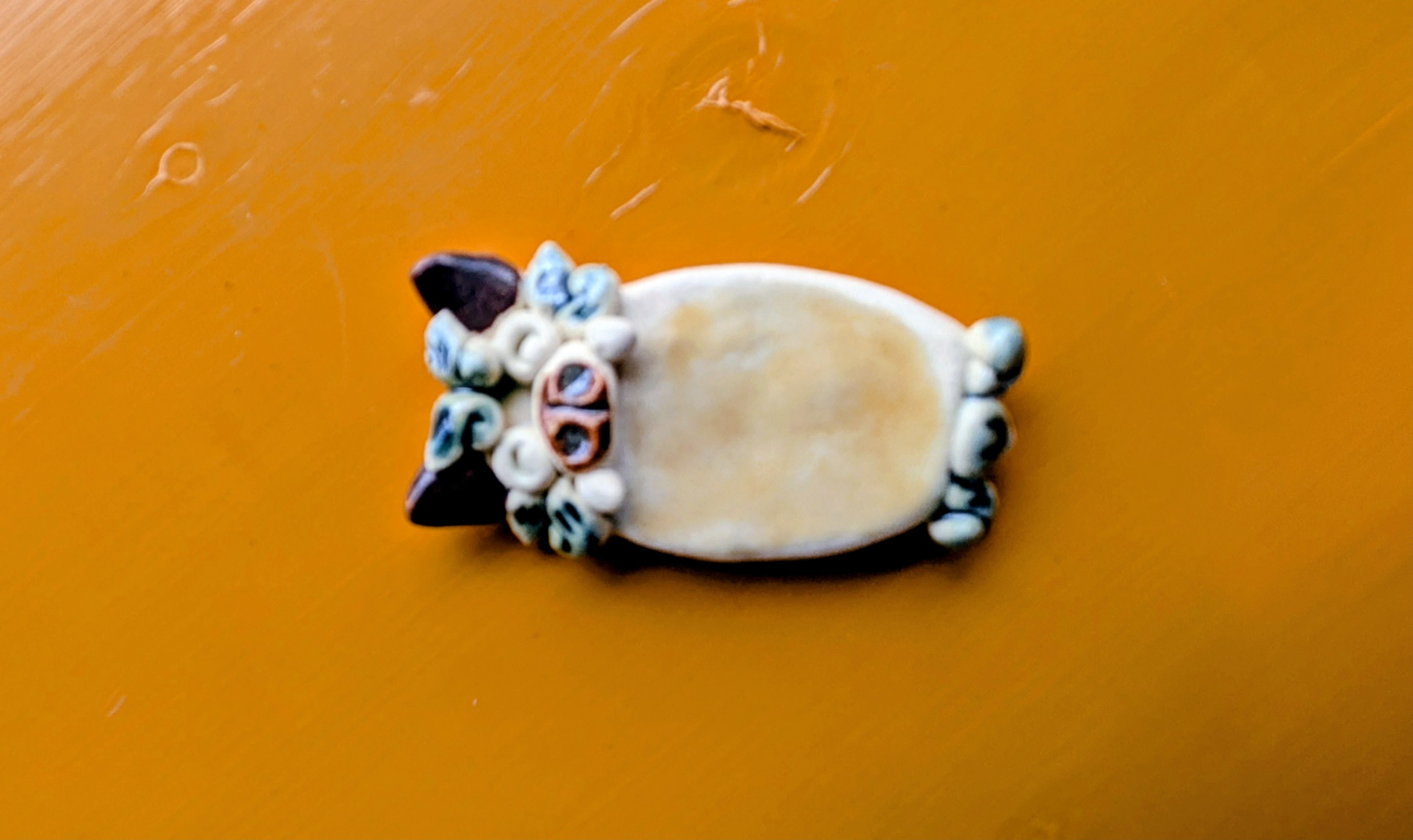
This individually crafted Hashioki (箸置き) takes the form of a Shisa lying horizontally, creating a compact sculptural surface for resting chopsticks or small utensils.
The Shisa features an expressive face with prominent sculpted eyes, raised snout, defined ears, and applied mane details. Small areas of colored glaze emphasize the facial and decorative elements against the warm ceramic body. Its modest size makes it practical for everyday dining while its hand-modeled character gives it the presence of a miniature Okinawan folk-art sculpture.
Highlights
- Kinjou Son Craftsmanship: Created by Kinjou Son, son of National Living Treasure Jiro Kinjo.
- Authentic Shisa Motif: Represents the traditional Okinawan guardian lion associated with protection and good fortune.
- Hand-Sculpted Form: Individually modeled rather than presented as a uniform mass-produced decorative object.
- Expressive Detailing: Sculpted eyes, snout, ears, mane curls, and facial features give each Shisa its own personality.
- Organic Glaze Character: Cream, brown, white, and blue/green glaze accents complement the natural ceramic body.
- Functional Art: Designed as a traditional Hashioki while functioning equally well as a small collectible display piece.
- Okinawan Heritage: Connects contemporary collecting with the island's longstanding Yachimun ceramic tradition.
Curator's Note
The appeal of this piece lies in its combination of function, symbolism, craftsmanship, and family artistic heritage.
The Shisa's compact form allows an everyday dining object to become a small piece of Okinawan ceramic art. Because the figure is individually shaped and finished, subtle differences in expression, proportions, texture, and glaze contribute to the personality of each example.
For collectors, the connection to Kinjou Son is particularly significant because the work belongs to the next generation of the Kinjo ceramic family, rather than being presented as an object made by Jiro Kinjo himself.
Specifications
- Artist: Kinjou Son
- Family Heritage: Son of National Living Treasure Jiro Kinjo (金城次郎, 1914–2004)
- Craft Tradition: Okinawan Yachimun Ceramic Art
- Origin: Okinawa Prefecture, Japan
- Category: Handcrafted Ceramic Chopstick Rest / Hashioki / Ceramic Art
- Motif: Ryukyu Shisa Guardian Lion (シーサー)
- Materials: Okinawan earthenware clay with colored glaze accents
- Primary Color: Warm cream ceramic body
- Decorative Colors: Dark brown, white, blue/green and related natural glaze variations
- Length: Approx. 5.5–6.5 cm (2.2–2.6 in)
- Width: Approx. 2.5–3.2 cm (1.0–1.3 in)
- Height: Approx. 1.2–1.8 cm (0.5–0.7 in)
- Quantity: One (1) handcrafted Shisa chopstick rest
- Packaging: Individual presentation packaging; heritage or studio documentation where available
Dimensions, coloration, facial expression, and surface characteristics may vary due to the handcrafted nature of the work.
Authenticity & Material Character
The character of this Shisa comes from its individually modeled construction and hand-finished surface. Variations in clay texture, glaze distribution, firing coloration, facial proportions, and small decorative details are natural characteristics of handcrafted Yachimun ceramics. These differences should not be regarded as defects; they are evidence of the individual making and firing process. For collectors, the work should be understood specifically as a Kinjou Son creation connected to the Kinjo family ceramic tradition, rather than as an original Jiro Kinjo piece.
Care Instructions
Rinse gently with warm water after use. When necessary, use a mild dish soap and soft sponge.
Avoid:
- Dishwasher cleaning
- Abrasive scrubbers
- Harsh chemical cleaners
- Direct flame
- Sudden extreme temperature changes
Handle carefully around the sculpted mane, ears, and other raised clay details.
Shipping & International Orders
Domestic shipping within Japan is available. International orders may be subject to additional shipping charges, import duties, VAT, GST, customs fees, or other applicable local taxes. Such charges are the responsibility of the recipient. Xandre Store - Preserving access to the craftsmanship, heritage, and stories behind Japan's regional artistic traditions.
Description
Xandre Store Exclusive: Celebrating Okinawan Artisanal Heritage Through Ceramic Fine Art
Discover a distinctive expression of Okinawan ceramic tradition through this handcrafted Shisa (シーサー) chopstick rest by Kinjou Son, son of National Living Treasure Jiro Kinjo (金城次郎, 1914–2004). Hand-sculpted in Okinawa, this charming tabletop work combines the protective symbolism of the Ryukyu Shisa with the expressive modeling and organic surface character associated with traditional Yachimun (やちむん) pottery. More than a functional table accessory, the piece represents a continuation of Okinawan ceramic craftsmanship within the Kinjo family tradition, offering collectors a tangible connection to the island's enduring folk-art heritage.
Okinawan Yachimun Ceramic Heritage
Yachimun (やちむん) is one of Okinawa's defining ceramic traditions, with roots in the historic pottery centers of Tsuboya and the continued development of regional ceramic arts throughout Okinawa. Traditional Okinawan pottery is recognized for its expressive forms, organic glazes, hand-applied decoration, and culturally meaningful motifs. Among the most recognizable is the Shisa, the legendary guardian traditionally placed at Okinawan homes, gates, temples, and other important spaces as a protective symbol.
Jiro Kinjo, who lived from 1914 to 2004, became Okinawa's first designated Living National Treasure (Ningen Kokuhō) for his contribution to Ryukyu ceramics. His artistic legacy is particularly associated with expressive fish motifs and the preservation and advancement of Okinawan ceramic craftsmanship. This piece, however, is not a work by Jiro Kinjo himself. It is attributed to Kinjou Son, his son, and should therefore be appreciated as a work of the subsequent generation of the Kinjo family.
Kinjou Son: Handcrafted Okinawan “Shisa” Ceramic Chopstick Rest
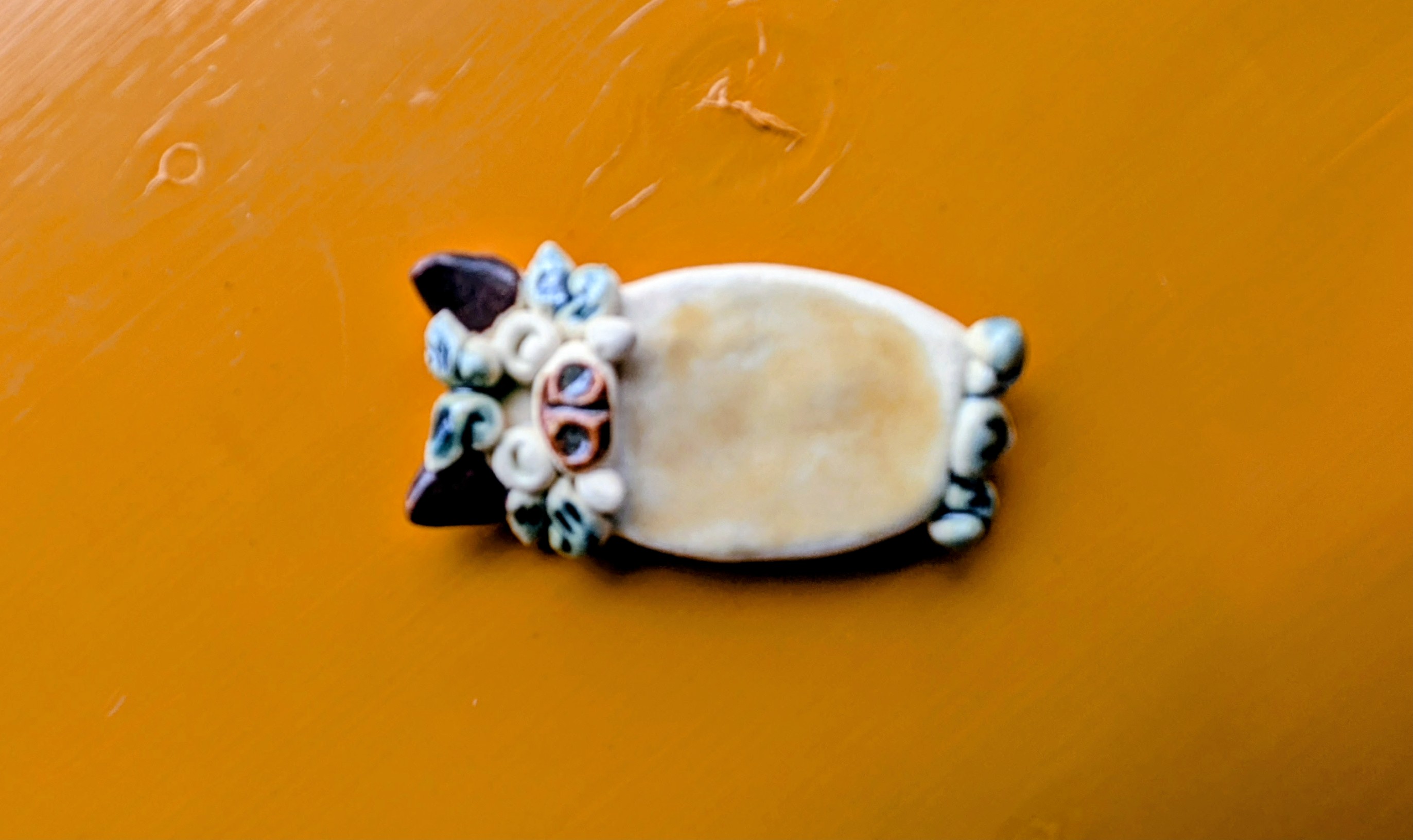
This individually crafted Hashioki (箸置き) takes the form of a Shisa lying horizontally, creating a compact sculptural surface for resting chopsticks or small utensils.
The Shisa features an expressive face with prominent sculpted eyes, raised snout, defined ears, and applied mane details. Small areas of colored glaze emphasize the facial and decorative elements against the warm ceramic body. Its modest size makes it practical for everyday dining while its hand-modeled character gives it the presence of a miniature Okinawan folk-art sculpture.
Highlights
- Kinjou Son Craftsmanship: Created by Kinjou Son, son of National Living Treasure Jiro Kinjo.
- Authentic Shisa Motif: Represents the traditional Okinawan guardian lion associated with protection and good fortune.
- Hand-Sculpted Form: Individually modeled rather than presented as a uniform mass-produced decorative object.
- Expressive Detailing: Sculpted eyes, snout, ears, mane curls, and facial features give each Shisa its own personality.
- Organic Glaze Character: Cream, brown, white, and blue/green glaze accents complement the natural ceramic body.
- Functional Art: Designed as a traditional Hashioki while functioning equally well as a small collectible display piece.
- Okinawan Heritage: Connects contemporary collecting with the island's longstanding Yachimun ceramic tradition.
Curator's Note
The appeal of this piece lies in its combination of function, symbolism, craftsmanship, and family artistic heritage.
The Shisa's compact form allows an everyday dining object to become a small piece of Okinawan ceramic art. Because the figure is individually shaped and finished, subtle differences in expression, proportions, texture, and glaze contribute to the personality of each example.
For collectors, the connection to Kinjou Son is particularly significant because the work belongs to the next generation of the Kinjo ceramic family, rather than being presented as an object made by Jiro Kinjo himself.
Specifications
- Artist: Kinjou Son
- Family Heritage: Son of National Living Treasure Jiro Kinjo (金城次郎, 1914–2004)
- Craft Tradition: Okinawan Yachimun Ceramic Art
- Origin: Okinawa Prefecture, Japan
- Category: Handcrafted Ceramic Chopstick Rest / Hashioki / Ceramic Art
- Motif: Ryukyu Shisa Guardian Lion (シーサー)
- Materials: Okinawan earthenware clay with colored glaze accents
- Primary Color: Warm cream ceramic body
- Decorative Colors: Dark brown, white, blue/green and related natural glaze variations
- Length: Approx. 5.5–6.5 cm (2.2–2.6 in)
- Width: Approx. 2.5–3.2 cm (1.0–1.3 in)
- Height: Approx. 1.2–1.8 cm (0.5–0.7 in)
- Quantity: One (1) handcrafted Shisa chopstick rest
- Packaging: Individual presentation packaging; heritage or studio documentation where available
Dimensions, coloration, facial expression, and surface characteristics may vary due to the handcrafted nature of the work.
Authenticity & Material Character
The character of this Shisa comes from its individually modeled construction and hand-finished surface. Variations in clay texture, glaze distribution, firing coloration, facial proportions, and small decorative details are natural characteristics of handcrafted Yachimun ceramics. These differences should not be regarded as defects; they are evidence of the individual making and firing process. For collectors, the work should be understood specifically as a Kinjou Son creation connected to the Kinjo family ceramic tradition, rather than as an original Jiro Kinjo piece.
Care Instructions
Rinse gently with warm water after use. When necessary, use a mild dish soap and soft sponge.
Avoid:
- Dishwasher cleaning
- Abrasive scrubbers
- Harsh chemical cleaners
- Direct flame
- Sudden extreme temperature changes
Handle carefully around the sculpted mane, ears, and other raised clay details.
Shipping & International Orders
Domestic shipping within Japan is available. International orders may be subject to additional shipping charges, import duties, VAT, GST, customs fees, or other applicable local taxes. Such charges are the responsibility of the recipient. Xandre Store - Preserving access to the craftsmanship, heritage, and stories behind Japan's regional artistic traditions.
Previously viewed products
No recently viewed products.