

Description
Xandre Store Exclusive - A Distinctive Studio Work Celebrating the Earth, Sea & Craftsmanship of Okinawa
Artist: Seikichi Inamine (稲嶺 盛吉)
Studio Tradition: Chu-Fuki Glass Studio “Niji” (宙吹ガラス工房「虹」)
Origin: Yomitan Village, Okinawa, Japan
Category: Okinawan Hand-Blown Glass | Fine Art Rock Cup | Studio Tableware
Craft Tradition: 宙吹ガラス (Chūfuki Glass)
This elegant Ryukyu hand-blown rock cup by Seikichi Inamine (稲嶺 盛吉) presents a refined interpretation of Okinawa's natural landscape, bringing together the warm character of coastal earth with the movement and color of the surrounding Pacific. Recognized as a Contemporary Master Craftsman (現代の名工), Inamine stands among the most important figures in modern Okinawan glassmaking. His work is distinguished by its organic surfaces, expressive coloration, and distinctive approach to transforming hand-blown glass into objects that feel closely connected to the natural environment of the Ryukyu Islands.
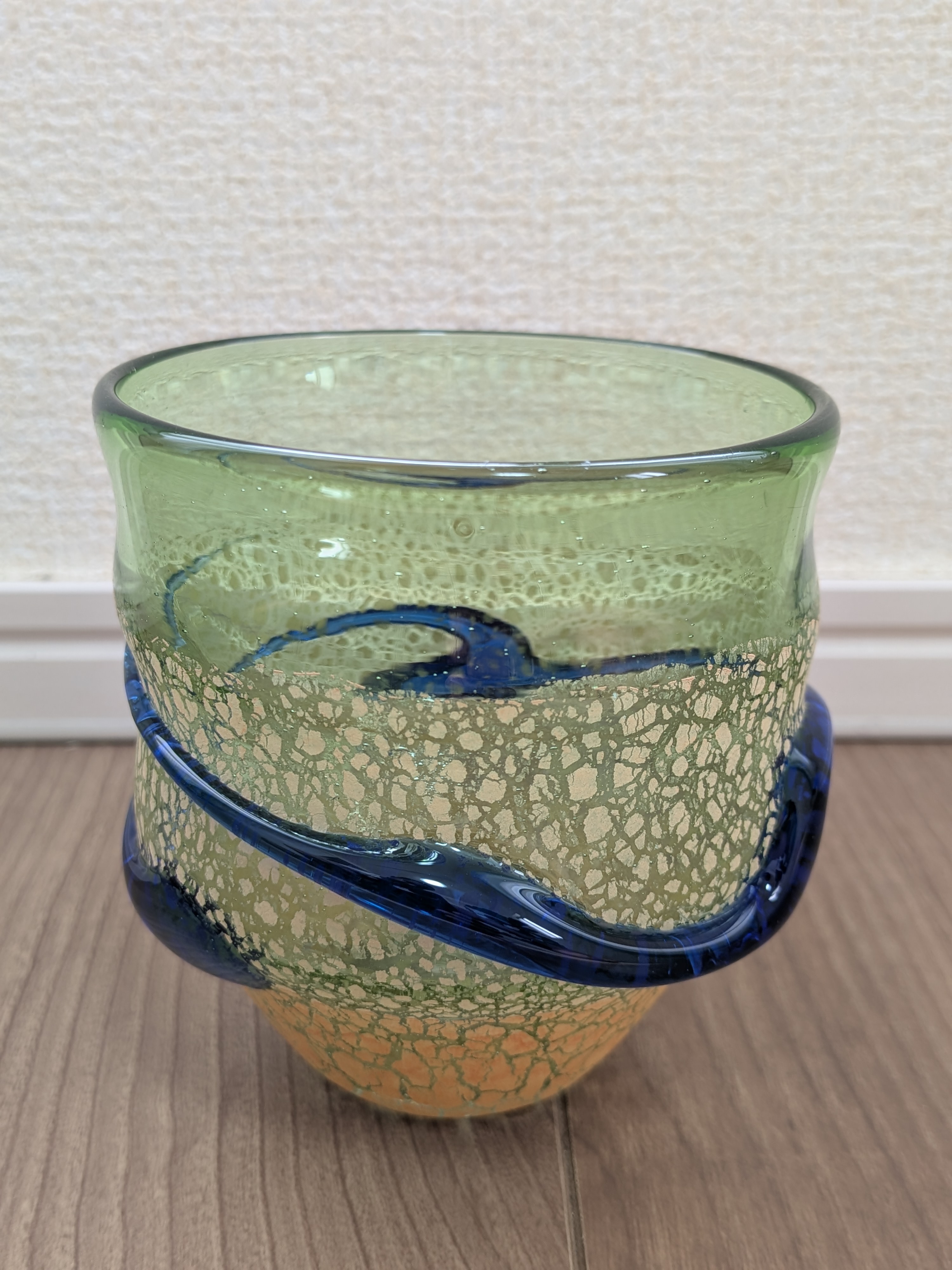
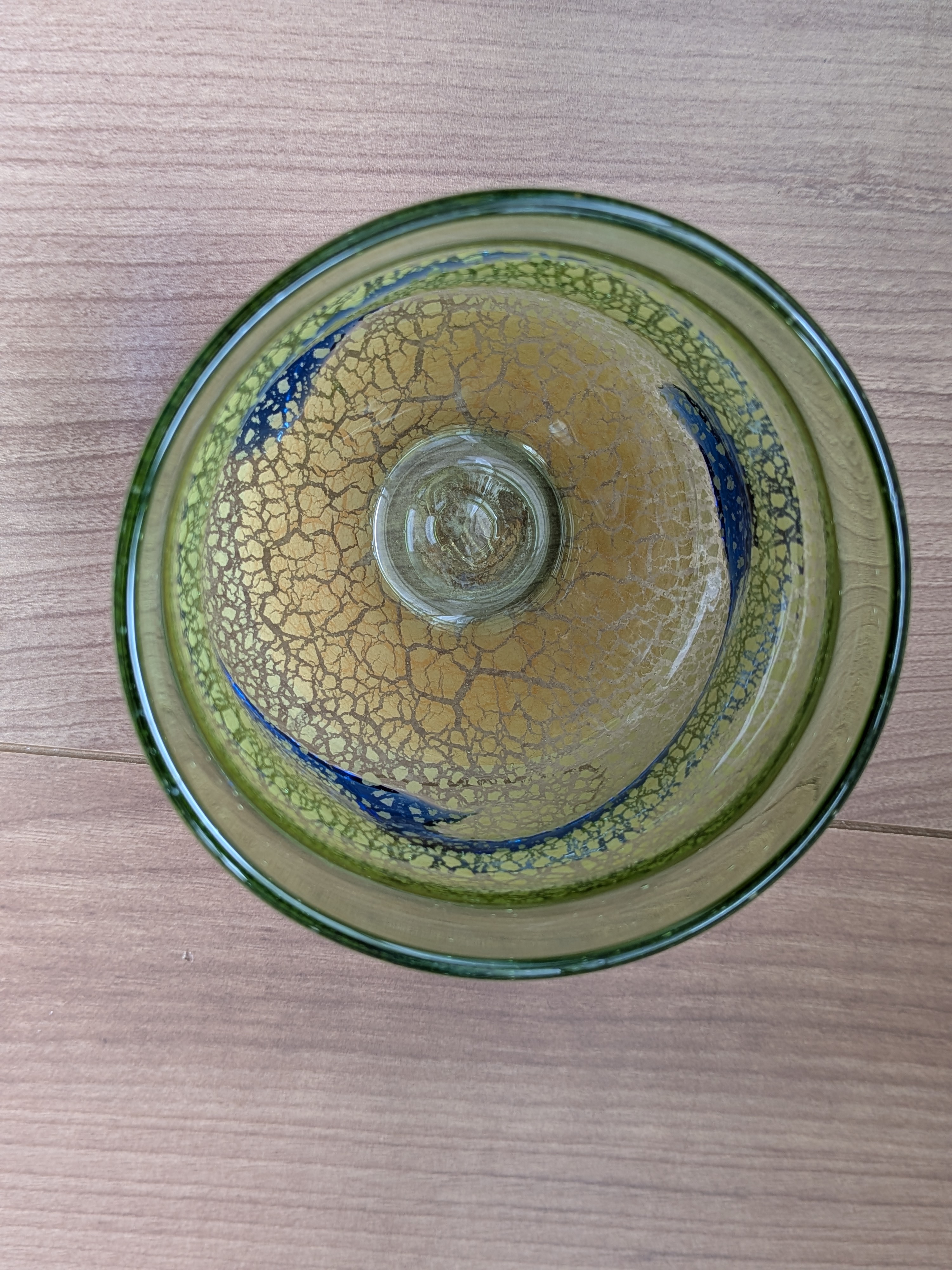
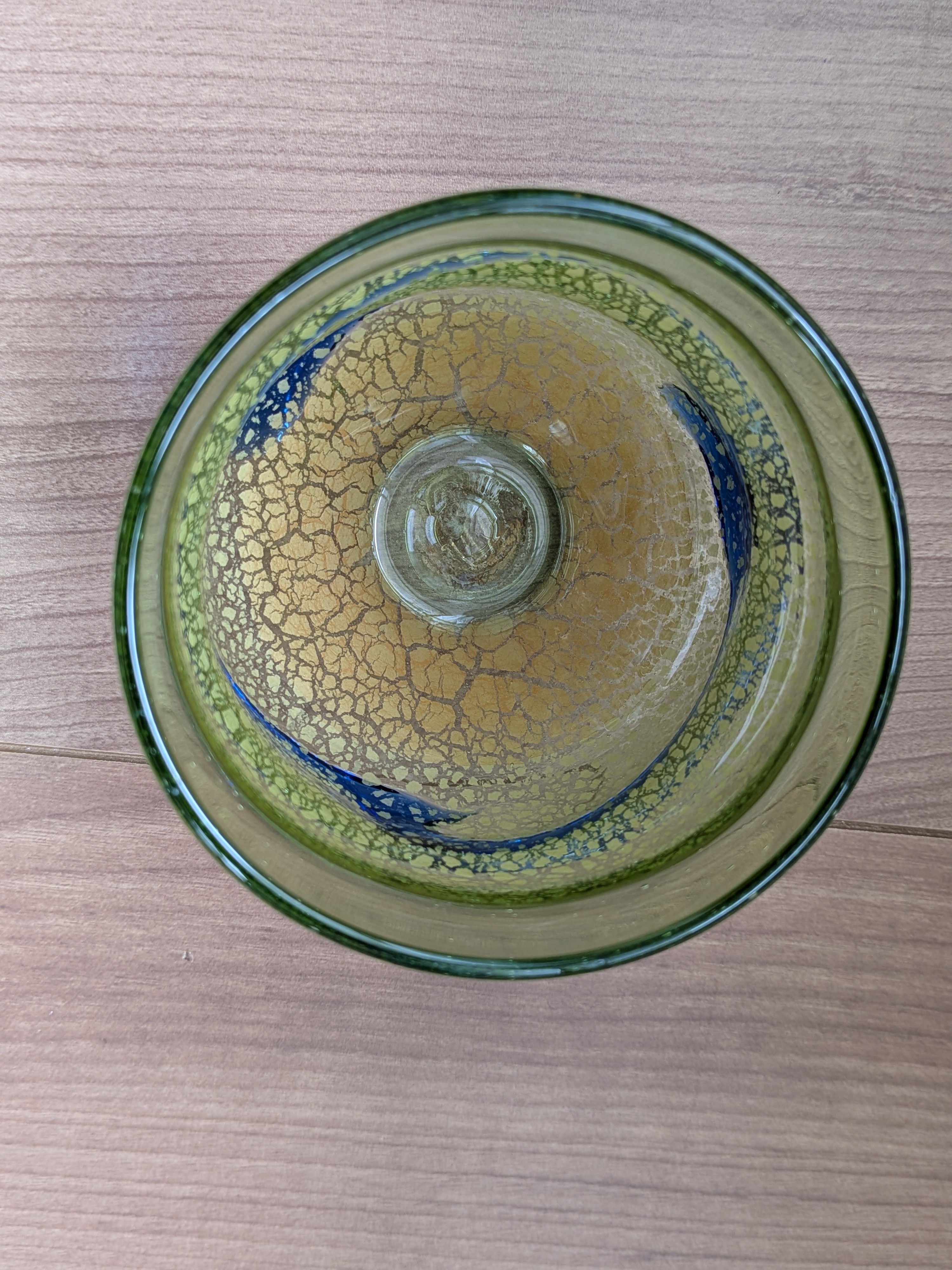
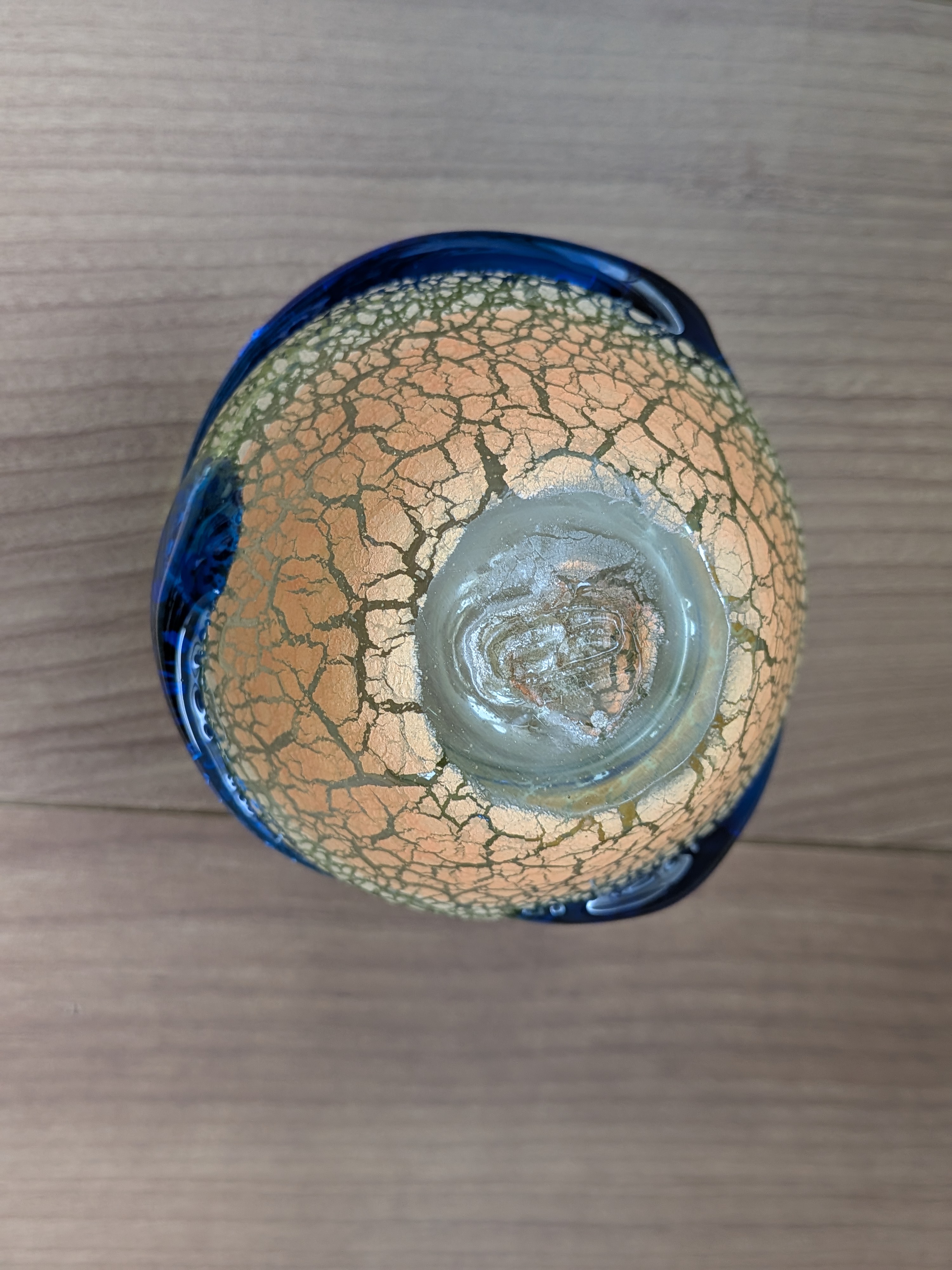
This particular cup is defined by an exceptionally harmonious palette. The body carries a delicate ceramic-like crackle texture, beginning with warm terracotta and sandy-earth tones near the base before transitioning upward into a soft, translucent pale olive-green rim. Encircling the vessel is a substantial sculptural ribbon of cobalt and ocean-blue glass, sweeping around the body like a wave against an Okinawan shoreline.
The contrast is beautifully balanced:
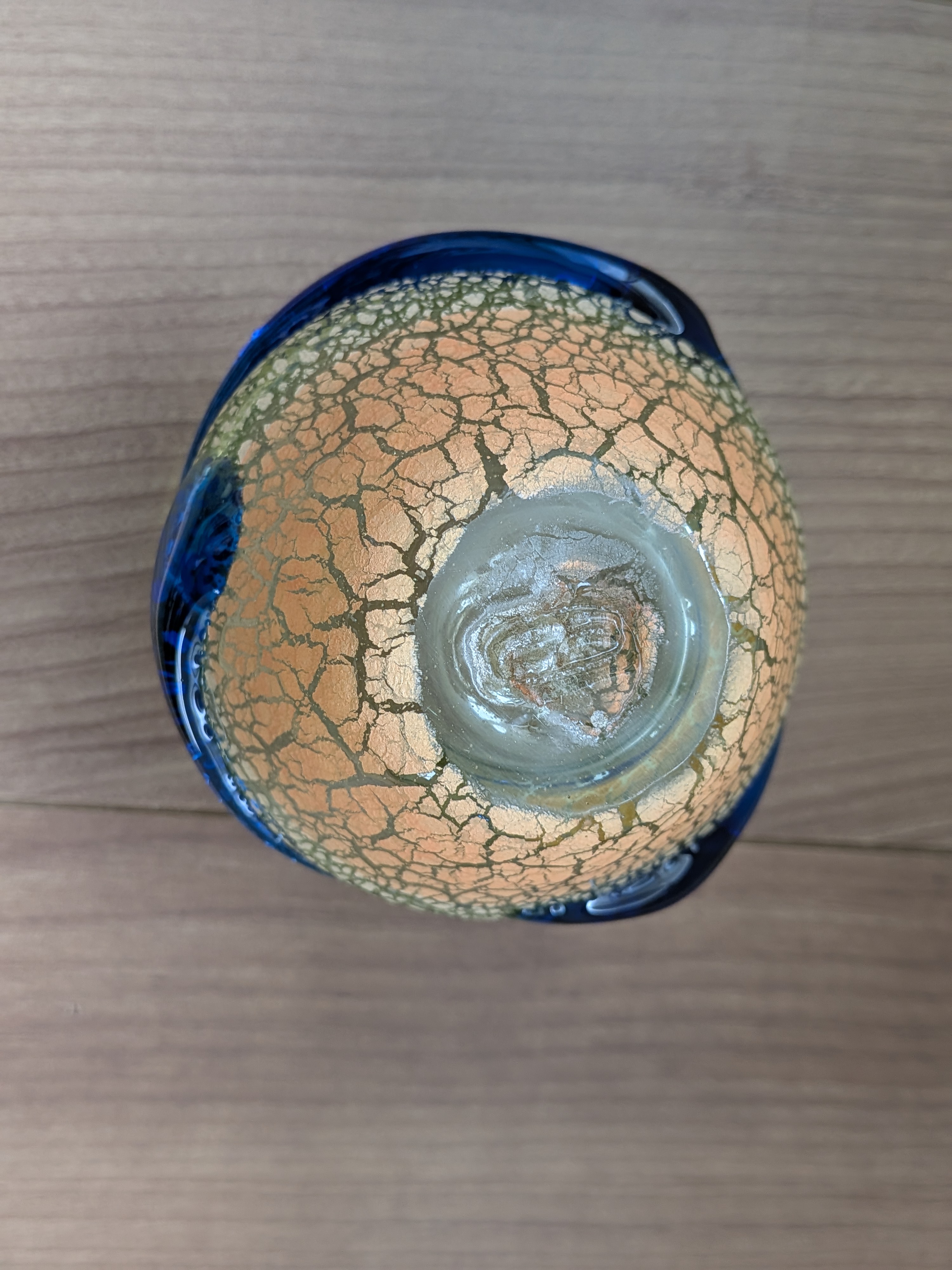
earth and water, texture and translucency, weathered stone and flowing sea. The base bears an impressed 「吉」 (Yoshi) mark, providing an important physical identifying feature associated with the Inamine studio tradition.
Seikichi Inamine - A Defining Figure of Modern Ryukyu Glass
Seikichi Inamine (稲嶺 盛吉) is widely celebrated as a pivotal figure in the evolution of contemporary Okinawan Ryukyu glass. Within the postwar development of Okinawan glassmaking, Inamine helped expand the medium beyond conventional utilitarian forms toward increasingly expressive studio art. His artistic experimentation incorporated organic textures and unconventional natural materials into the glassmaking process, producing surfaces that evoke earth, stone, ash, sand, and other elements of Okinawa's distinctive environment.
As the founder of Glass Studio “Niji” (宙吹ガラス工房「虹」) in Yomitan Village, his approach established an influential studio lineage within Okinawan glassmaking. His recognition as a Contemporary Master Craftsman - 現代の名工 further reflects the exceptional craftsmanship associated with his career.
Earth & Ocean in a Single Vessel
The visual language of this rock cup can be understood as a meeting of two Okinawan environments.
Earth: The terracotta and sandy tones at the base recall the warm mineral colors of Okinawan soil, weathered stone, and coastal terrain.
Mineral Texture: The fine crackle surface gives the glass an almost ceramic appearance, creating an intriguing tactile contrast with the smoother areas of the vessel.
Ocean: The cobalt and ocean-blue ribbon introduces the unmistakable character of the surrounding Pacific, appearing to flow around the body like a continuous wave.
Olive Green: The translucent olive-green upper section provides the transition between land and sea, adding a subtle botanical and mineral tone to the composition.
Together, these colors create a distinctly Okinawan palette without relying on overt symbolism.
The Fine Crackle Surface
One of the most compelling characteristics of the vessel is its fine, organic crackle-like texture.
The irregular surface breaks the reflection of light, giving portions of the body a soft, mineral appearance rather than the uniformly reflective surface associated with conventional glassware.
This effect becomes particularly beautiful when viewed under natural light, where the pale olive and sandy tones reveal subtle changes in depth and translucency. The texture also contributes to the tactile experience of holding the vessel, reinforcing its identity as a handmade studio object.
Sculptural Cobalt & Ocean-Blue Swirl
A bold ribbon of cobalt and ocean-blue glass wraps organically around the exterior.
Its pronounced three-dimensional construction creates a dynamic visual line while providing a natural tactile point for the hand. The glossy blue glass contrasts against the quieter crackled body, giving the piece a sense of movement-as though a wave has been permanently captured around the vessel. This is an especially successful example of the relationship between function and sculpture in Okinawan studio glass.
Traditional Chūfuki Craftsmanship
The cup reflects the traditional Okinawan 宙吹き (Chūfuki) method of free-hand glassblowing.
Each individually blown vessel carries subtle variations created during the forming process. Differences in surface texture, coloration, thickness, bubbles, contours, and decorative placement are part of the character of handmade studio glass. Rather than being imperfections, these individual characteristics help distinguish an artisanally produced work from standardized industrial glassware.
The 「吉」 Studio Mark
The base bears an impressed:
「吉」 - Yoshi mark within the base of the vessel. This physical studio marking is an important identifying feature for collectors and should be preserved as part of the object's provenance and collector documentation. Detailed photographs of the base mark can be retained alongside the piece to document its identifying characteristics.
Collector Significance
This rock cup occupies a compelling space between Japanese functional craft and contemporary fine art. Its relatively intimate scale makes it suitable for actual use, yet the complexity of its surface and sculptural blue element gives it the presence of a collectible studio work. For collectors of Japanese glass, Okinawan craft, and contemporary Asian studio art, the piece offers a particularly appealing combination of:
recognized craftsmanship + Okinawan provenance + distinctive surface treatment + identifiable studio marking + functional sculpture.
Premium Highlights
- Seikichi Inamine (稲嶺 盛吉)
- Recognized Contemporary Master Craftsman - 現代の名工
- Associated with Chu-Fuki Glass Studio “Niji” - 宙吹ガラス工房「虹」
- Origin: Yomitan Village, Okinawa
- Traditional Okinawan 宙吹き (Chūfuki) hand-blown construction
- Fine organic crackle-like surface
- Warm terracotta and sandy mineral tones
- Translucent pale olive-green upper body
- Sculptural cobalt and ocean-blue glass ribbon
- Distinctive coastal-inspired color harmony
- Impressed 「吉」 (Yoshi) base marking
- Individually crafted studio character
- Functional rock-cup form with fine-art qualities
- Distinctive representation of contemporary Ryukyu glassmaking
- One-of-a-kind visual character inherent to hand-crafted production
Curator’s Note
This piece demonstrates a quieter and more restrained side of Seikichi Inamine's artistic vocabulary. Where some Okinawan glass is immediately recognizable through intense color and dramatic contrast, this vessel achieves its impact through balance. The pale olive body provides a calm mineral foundation. The terracotta-sand base introduces warmth and the appearance of weathered earth, while the cobalt ribbon suddenly sweeps across the composition with the energy of the Pacific.
The result feels remarkably natural. It is easy to imagine the vessel as a small abstract landscape of Okinawa: sun-warmed earth below, coastal vegetation above, and the deep blue sea moving between them. The impressed 「吉」 mark further enhances the collector appeal by providing a tangible physical connection to the studio tradition associated with Inamine. For those who appreciate Japanese studio glass not merely as decoration but as an expression of place, material, and artistic philosophy, this is a particularly compelling example.
Specifications
| Attribute | Details |
| Artist | Seikichi Inamine (稲嶺 盛吉) |
| Recognition | Contemporary Master Craftsman — 現代の名工 |
| Studio Tradition | Chu-Fuki Glass Studio “Niji” — 宙吹ガラス工房「虹」 |
| Origin | Yomitan Village, Okinawa Prefecture, Japan |
| Category | Okinawan Hand-Blown Glass / Fine Art Rock Cup |
| Form | Rock Cup / Tumbler |
| Craft Tradition | Okinawan 宙吹ガラス |
| Technique | Traditional mouth-blown / free-blown glassmaking |
| Surface | Fine organic crackle-like texture |
| Accent | Sculptural cobalt and ocean-blue glass swirl |
| Color Palette | Pale olive green, terracotta sand, cobalt blue, ocean blue |
| Marking | Impressed 「吉」 (Yoshi) studio mark on base |
| Character | Individually crafted studio work |
| Condition | Excellent studio condition |
Care Instructions
- Hand wash gently using lukewarm water and mild dish soap.
- Avoid abrasive sponges, brushes, and harsh chemical cleaners.
- Do not place in a dishwasher.
- Do not use in a microwave or freezer.
- Avoid sudden temperature changes, including boiling liquids or ice-cold water.
- Handle the sculptural blue glass ribbon carefully during washing and drying.
- Dry with a soft, non-abrasive cloth.
- Display or store securely on a stable, level surface.
Because traditional hand-blown glass can be sensitive to thermal shock, gradual temperature changes are strongly recommended.
Shipping & International Orders
Domestic shipping within Japan is available with protective packaging specifically selected for delicate studio glass. International orders may be subject to shipping charges, import duties, VAT, GST, customs fees, brokerage charges, or other destination-country taxes. All applicable destination-country charges are the responsibility of the recipient. Due to the individually crafted nature and fragility of the work, international shipping arrangements should be confirmed with Xandre Store prior to purchase.
A Quiet Expression of the Ryukyu Landscape
This Seikichi Inamine rock cup captures Okinawa through subtlety rather than spectacle.
Its sandy terracotta base evokes earth and stone. The delicate crackle surface introduces an aged mineral character. Pale olive glass provides a gentle transition, while the sweeping cobalt and ocean-blue ribbon brings the Pacific into the composition. The result is a piece that feels simultaneously earthbound and oceanic, tactile and fluid, functional and sculptural. For the collector, it represents a refined example of the artistic philosophy that has made Seikichi Inamine such an important name in contemporary Okinawan glassmaking.
Xandre Store
Connecting collectors with the craftsmanship, heritage, and stories behind Japan’s regional artistic traditions.
Description
Xandre Store Exclusive - A Distinctive Studio Work Celebrating the Earth, Sea & Craftsmanship of Okinawa
Artist: Seikichi Inamine (稲嶺 盛吉)
Studio Tradition: Chu-Fuki Glass Studio “Niji” (宙吹ガラス工房「虹」)
Origin: Yomitan Village, Okinawa, Japan
Category: Okinawan Hand-Blown Glass | Fine Art Rock Cup | Studio Tableware
Craft Tradition: 宙吹ガラス (Chūfuki Glass)
This elegant Ryukyu hand-blown rock cup by Seikichi Inamine (稲嶺 盛吉) presents a refined interpretation of Okinawa's natural landscape, bringing together the warm character of coastal earth with the movement and color of the surrounding Pacific. Recognized as a Contemporary Master Craftsman (現代の名工), Inamine stands among the most important figures in modern Okinawan glassmaking. His work is distinguished by its organic surfaces, expressive coloration, and distinctive approach to transforming hand-blown glass into objects that feel closely connected to the natural environment of the Ryukyu Islands.
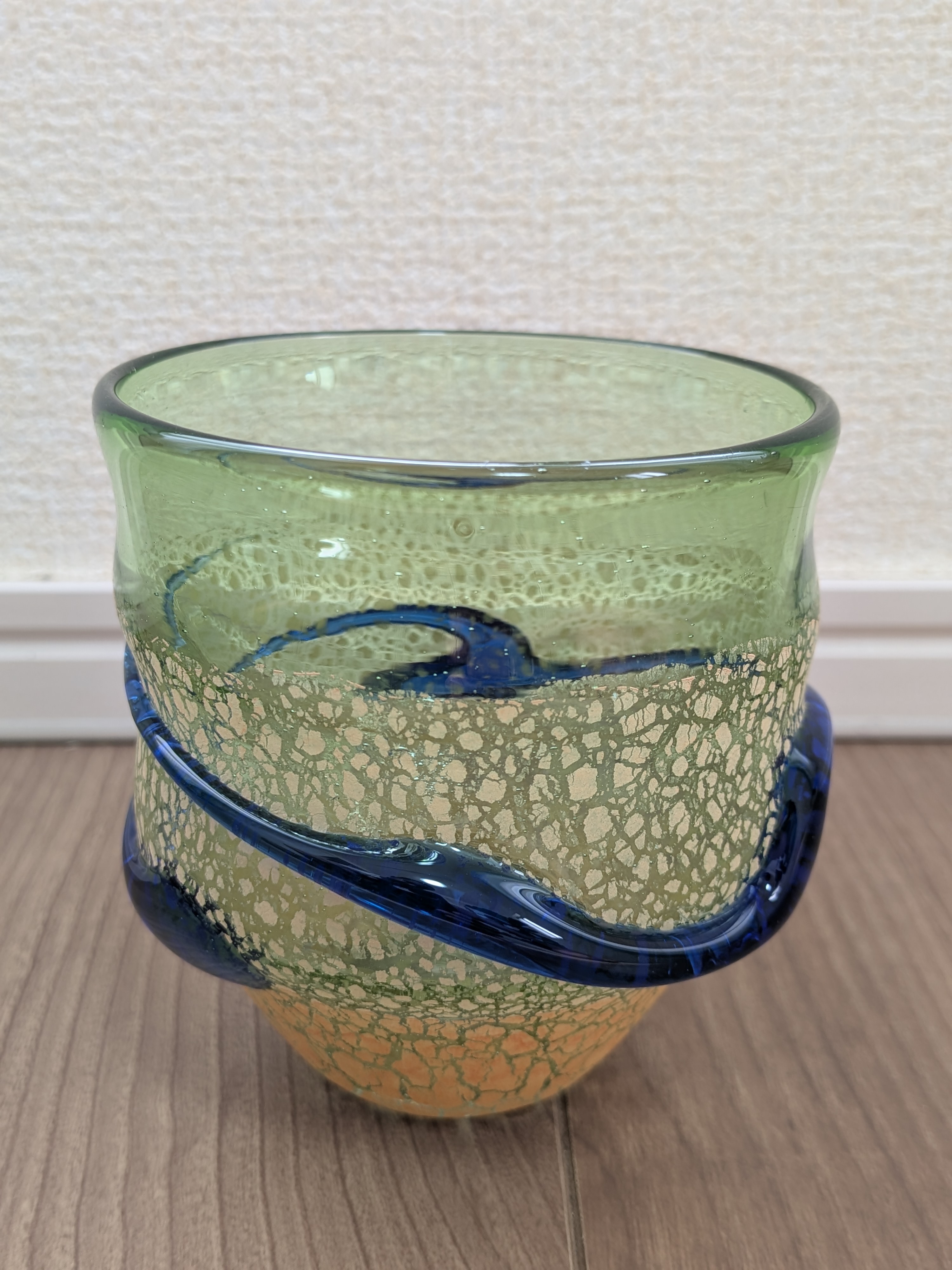
This particular cup is defined by an exceptionally harmonious palette. The body carries a delicate ceramic-like crackle texture, beginning with warm terracotta and sandy-earth tones near the base before transitioning upward into a soft, translucent pale olive-green rim. Encircling the vessel is a substantial sculptural ribbon of cobalt and ocean-blue glass, sweeping around the body like a wave against an Okinawan shoreline.
The contrast is beautifully balanced:
earth and water, texture and translucency, weathered stone and flowing sea. The base bears an impressed 「吉」 (Yoshi) mark, providing an important physical identifying feature associated with the Inamine studio tradition.
Seikichi Inamine - A Defining Figure of Modern Ryukyu Glass
Seikichi Inamine (稲嶺 盛吉) is widely celebrated as a pivotal figure in the evolution of contemporary Okinawan Ryukyu glass. Within the postwar development of Okinawan glassmaking, Inamine helped expand the medium beyond conventional utilitarian forms toward increasingly expressive studio art. His artistic experimentation incorporated organic textures and unconventional natural materials into the glassmaking process, producing surfaces that evoke earth, stone, ash, sand, and other elements of Okinawa's distinctive environment.
As the founder of Glass Studio “Niji” (宙吹ガラス工房「虹」) in Yomitan Village, his approach established an influential studio lineage within Okinawan glassmaking. His recognition as a Contemporary Master Craftsman - 現代の名工 further reflects the exceptional craftsmanship associated with his career.
Earth & Ocean in a Single Vessel
The visual language of this rock cup can be understood as a meeting of two Okinawan environments.
Earth: The terracotta and sandy tones at the base recall the warm mineral colors of Okinawan soil, weathered stone, and coastal terrain.
Mineral Texture: The fine crackle surface gives the glass an almost ceramic appearance, creating an intriguing tactile contrast with the smoother areas of the vessel.
Ocean: The cobalt and ocean-blue ribbon introduces the unmistakable character of the surrounding Pacific, appearing to flow around the body like a continuous wave.
Olive Green: The translucent olive-green upper section provides the transition between land and sea, adding a subtle botanical and mineral tone to the composition.
Together, these colors create a distinctly Okinawan palette without relying on overt symbolism.
The Fine Crackle Surface
One of the most compelling characteristics of the vessel is its fine, organic crackle-like texture.
The irregular surface breaks the reflection of light, giving portions of the body a soft, mineral appearance rather than the uniformly reflective surface associated with conventional glassware.
This effect becomes particularly beautiful when viewed under natural light, where the pale olive and sandy tones reveal subtle changes in depth and translucency. The texture also contributes to the tactile experience of holding the vessel, reinforcing its identity as a handmade studio object.
Sculptural Cobalt & Ocean-Blue Swirl
A bold ribbon of cobalt and ocean-blue glass wraps organically around the exterior.
Its pronounced three-dimensional construction creates a dynamic visual line while providing a natural tactile point for the hand. The glossy blue glass contrasts against the quieter crackled body, giving the piece a sense of movement-as though a wave has been permanently captured around the vessel. This is an especially successful example of the relationship between function and sculpture in Okinawan studio glass.
Traditional Chūfuki Craftsmanship
The cup reflects the traditional Okinawan 宙吹き (Chūfuki) method of free-hand glassblowing.
Each individually blown vessel carries subtle variations created during the forming process. Differences in surface texture, coloration, thickness, bubbles, contours, and decorative placement are part of the character of handmade studio glass. Rather than being imperfections, these individual characteristics help distinguish an artisanally produced work from standardized industrial glassware.
The 「吉」 Studio Mark
The base bears an impressed:
「吉」 - Yoshi mark within the base of the vessel. This physical studio marking is an important identifying feature for collectors and should be preserved as part of the object's provenance and collector documentation. Detailed photographs of the base mark can be retained alongside the piece to document its identifying characteristics.
Collector Significance
This rock cup occupies a compelling space between Japanese functional craft and contemporary fine art. Its relatively intimate scale makes it suitable for actual use, yet the complexity of its surface and sculptural blue element gives it the presence of a collectible studio work. For collectors of Japanese glass, Okinawan craft, and contemporary Asian studio art, the piece offers a particularly appealing combination of:
recognized craftsmanship + Okinawan provenance + distinctive surface treatment + identifiable studio marking + functional sculpture.
Premium Highlights
- Seikichi Inamine (稲嶺 盛吉)
- Recognized Contemporary Master Craftsman - 現代の名工
- Associated with Chu-Fuki Glass Studio “Niji” - 宙吹ガラス工房「虹」
- Origin: Yomitan Village, Okinawa
- Traditional Okinawan 宙吹き (Chūfuki) hand-blown construction
- Fine organic crackle-like surface
- Warm terracotta and sandy mineral tones
- Translucent pale olive-green upper body
- Sculptural cobalt and ocean-blue glass ribbon
- Distinctive coastal-inspired color harmony
- Impressed 「吉」 (Yoshi) base marking
- Individually crafted studio character
- Functional rock-cup form with fine-art qualities
- Distinctive representation of contemporary Ryukyu glassmaking
- One-of-a-kind visual character inherent to hand-crafted production
Curator’s Note
This piece demonstrates a quieter and more restrained side of Seikichi Inamine's artistic vocabulary. Where some Okinawan glass is immediately recognizable through intense color and dramatic contrast, this vessel achieves its impact through balance. The pale olive body provides a calm mineral foundation. The terracotta-sand base introduces warmth and the appearance of weathered earth, while the cobalt ribbon suddenly sweeps across the composition with the energy of the Pacific.
The result feels remarkably natural. It is easy to imagine the vessel as a small abstract landscape of Okinawa: sun-warmed earth below, coastal vegetation above, and the deep blue sea moving between them. The impressed 「吉」 mark further enhances the collector appeal by providing a tangible physical connection to the studio tradition associated with Inamine. For those who appreciate Japanese studio glass not merely as decoration but as an expression of place, material, and artistic philosophy, this is a particularly compelling example.
Specifications
| Attribute | Details |
| Artist | Seikichi Inamine (稲嶺 盛吉) |
| Recognition | Contemporary Master Craftsman — 現代の名工 |
| Studio Tradition | Chu-Fuki Glass Studio “Niji” — 宙吹ガラス工房「虹」 |
| Origin | Yomitan Village, Okinawa Prefecture, Japan |
| Category | Okinawan Hand-Blown Glass / Fine Art Rock Cup |
| Form | Rock Cup / Tumbler |
| Craft Tradition | Okinawan 宙吹ガラス |
| Technique | Traditional mouth-blown / free-blown glassmaking |
| Surface | Fine organic crackle-like texture |
| Accent | Sculptural cobalt and ocean-blue glass swirl |
| Color Palette | Pale olive green, terracotta sand, cobalt blue, ocean blue |
| Marking | Impressed 「吉」 (Yoshi) studio mark on base |
| Character | Individually crafted studio work |
| Condition | Excellent studio condition |
Care Instructions
- Hand wash gently using lukewarm water and mild dish soap.
- Avoid abrasive sponges, brushes, and harsh chemical cleaners.
- Do not place in a dishwasher.
- Do not use in a microwave or freezer.
- Avoid sudden temperature changes, including boiling liquids or ice-cold water.
- Handle the sculptural blue glass ribbon carefully during washing and drying.
- Dry with a soft, non-abrasive cloth.
- Display or store securely on a stable, level surface.
Because traditional hand-blown glass can be sensitive to thermal shock, gradual temperature changes are strongly recommended.
Shipping & International Orders
Domestic shipping within Japan is available with protective packaging specifically selected for delicate studio glass. International orders may be subject to shipping charges, import duties, VAT, GST, customs fees, brokerage charges, or other destination-country taxes. All applicable destination-country charges are the responsibility of the recipient. Due to the individually crafted nature and fragility of the work, international shipping arrangements should be confirmed with Xandre Store prior to purchase.
A Quiet Expression of the Ryukyu Landscape
This Seikichi Inamine rock cup captures Okinawa through subtlety rather than spectacle.
Its sandy terracotta base evokes earth and stone. The delicate crackle surface introduces an aged mineral character. Pale olive glass provides a gentle transition, while the sweeping cobalt and ocean-blue ribbon brings the Pacific into the composition. The result is a piece that feels simultaneously earthbound and oceanic, tactile and fluid, functional and sculptural. For the collector, it represents a refined example of the artistic philosophy that has made Seikichi Inamine such an important name in contemporary Okinawan glassmaking.
Xandre Store
Connecting collectors with the craftsmanship, heritage, and stories behind Japan’s regional artistic traditions.
Previously viewed products
No recently viewed products.