

Description
Xandre Store Exclusive - A Monumental Contemporary Work by Pioneering Okinawan Glass Artist Seikichi Inamine
- Artist: Seikichi Inamine (稲嶺 盛吉)
- Studio Tradition: Chūfuki Glass Studio “Niji” (宙吹ガラス工房「虹」)
- Origin: Yomitan Village, Okinawa Prefecture, Japan
- Category: Okinawan Hand-Blown Glass | Sculptural Fine Art Vase | Collector Studio Glass
- Craft Tradition: 宙吹ガラス (Chūfuki — free-form mouth-blown glass)
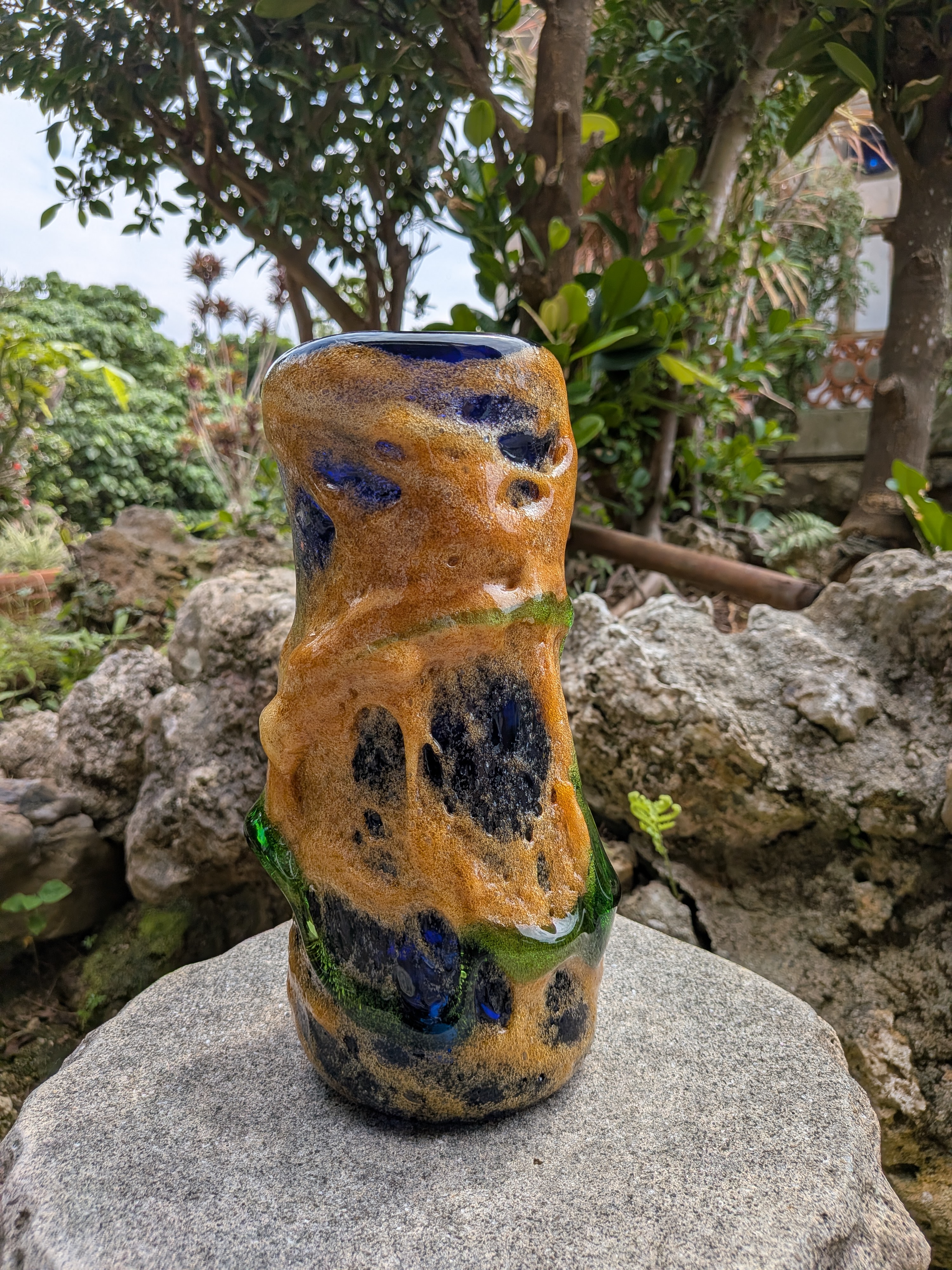
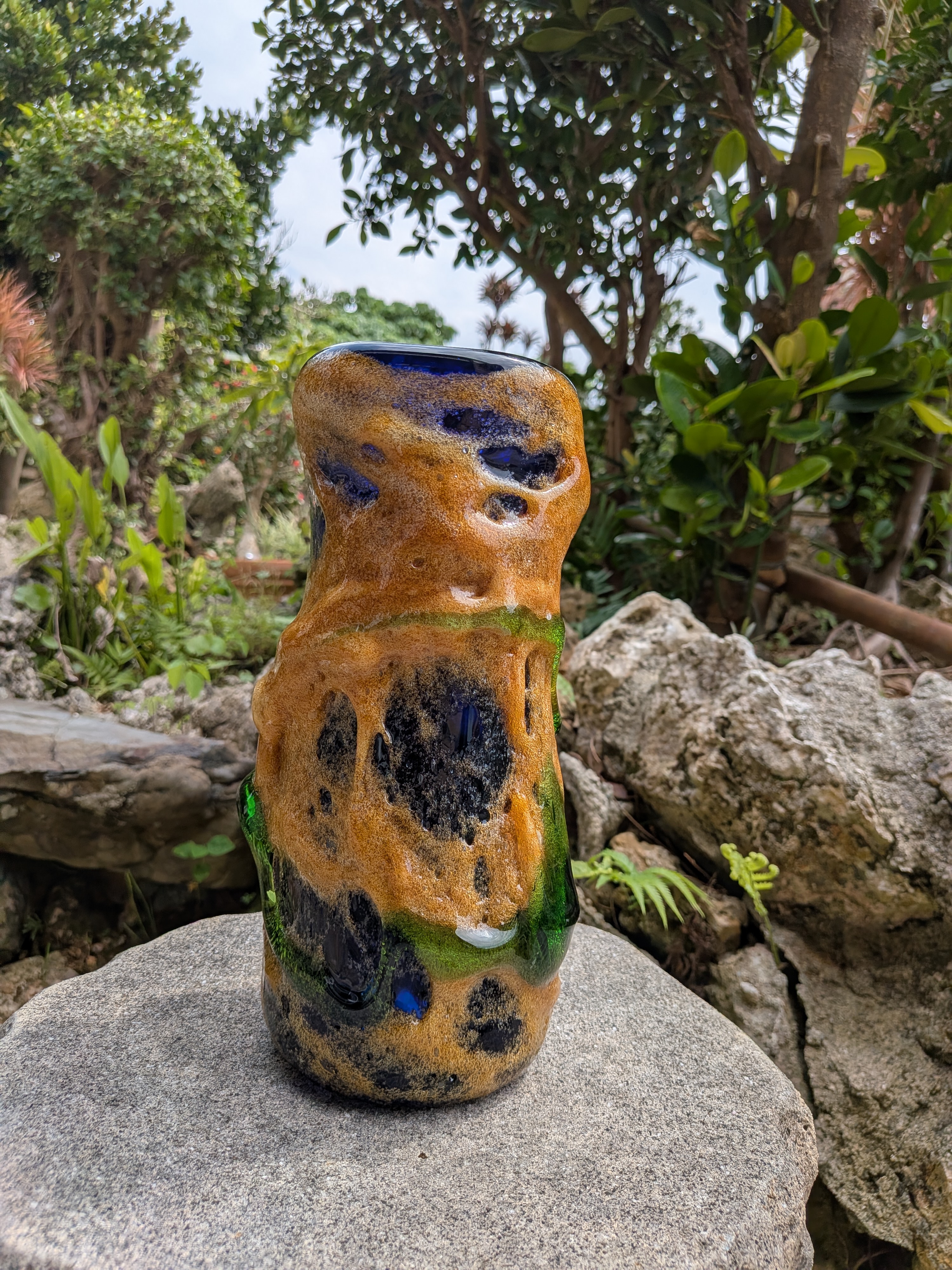
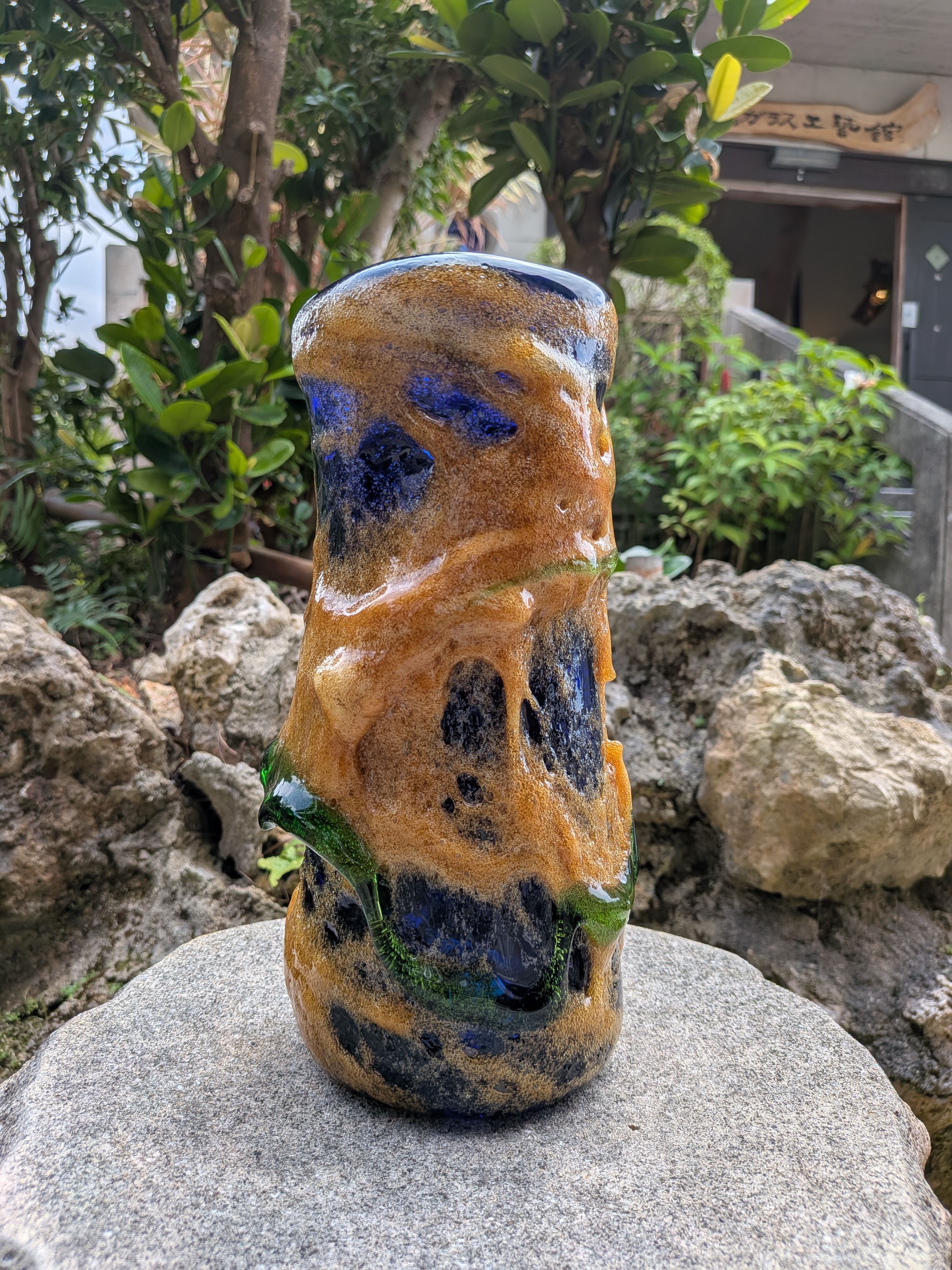
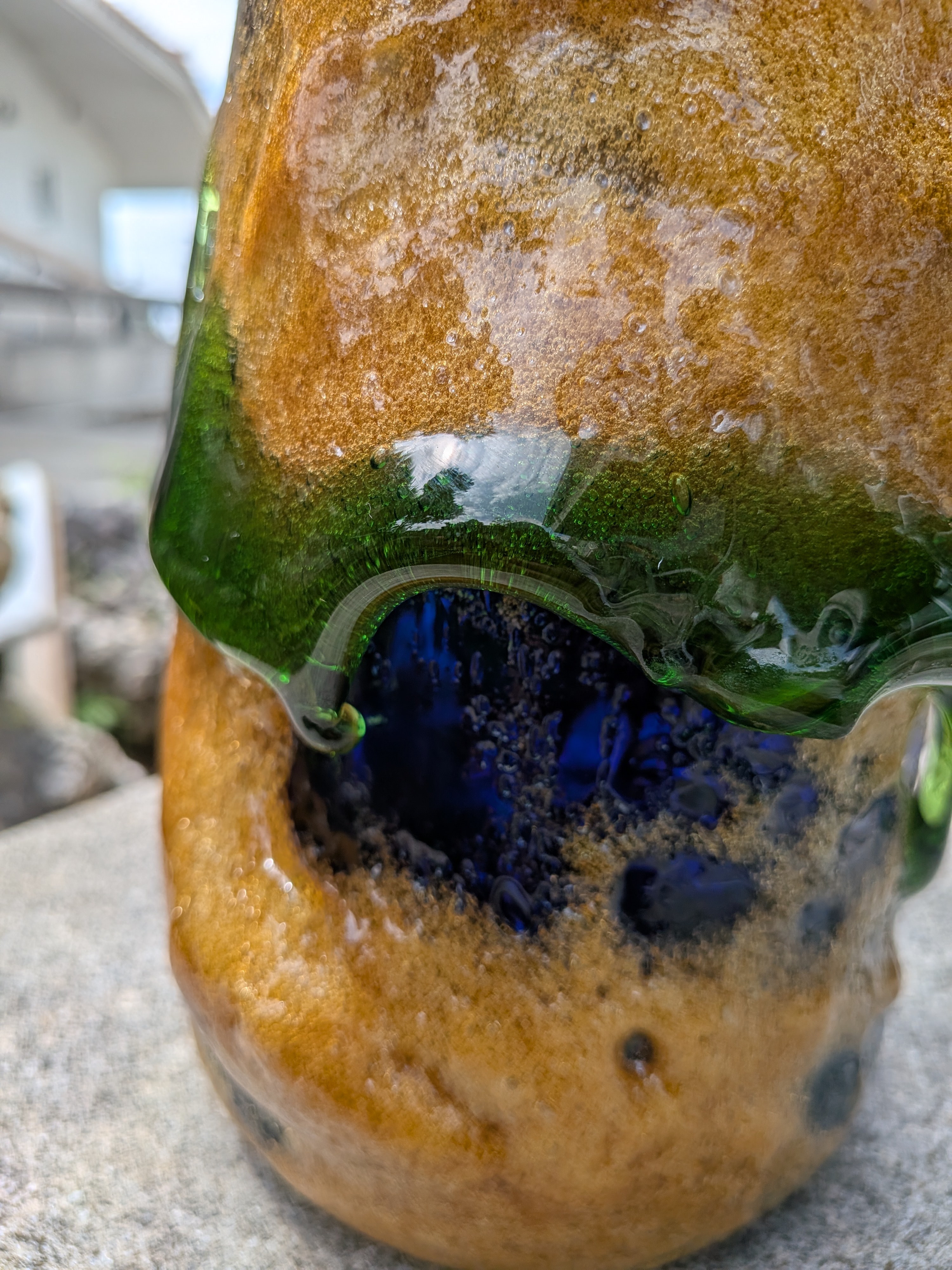
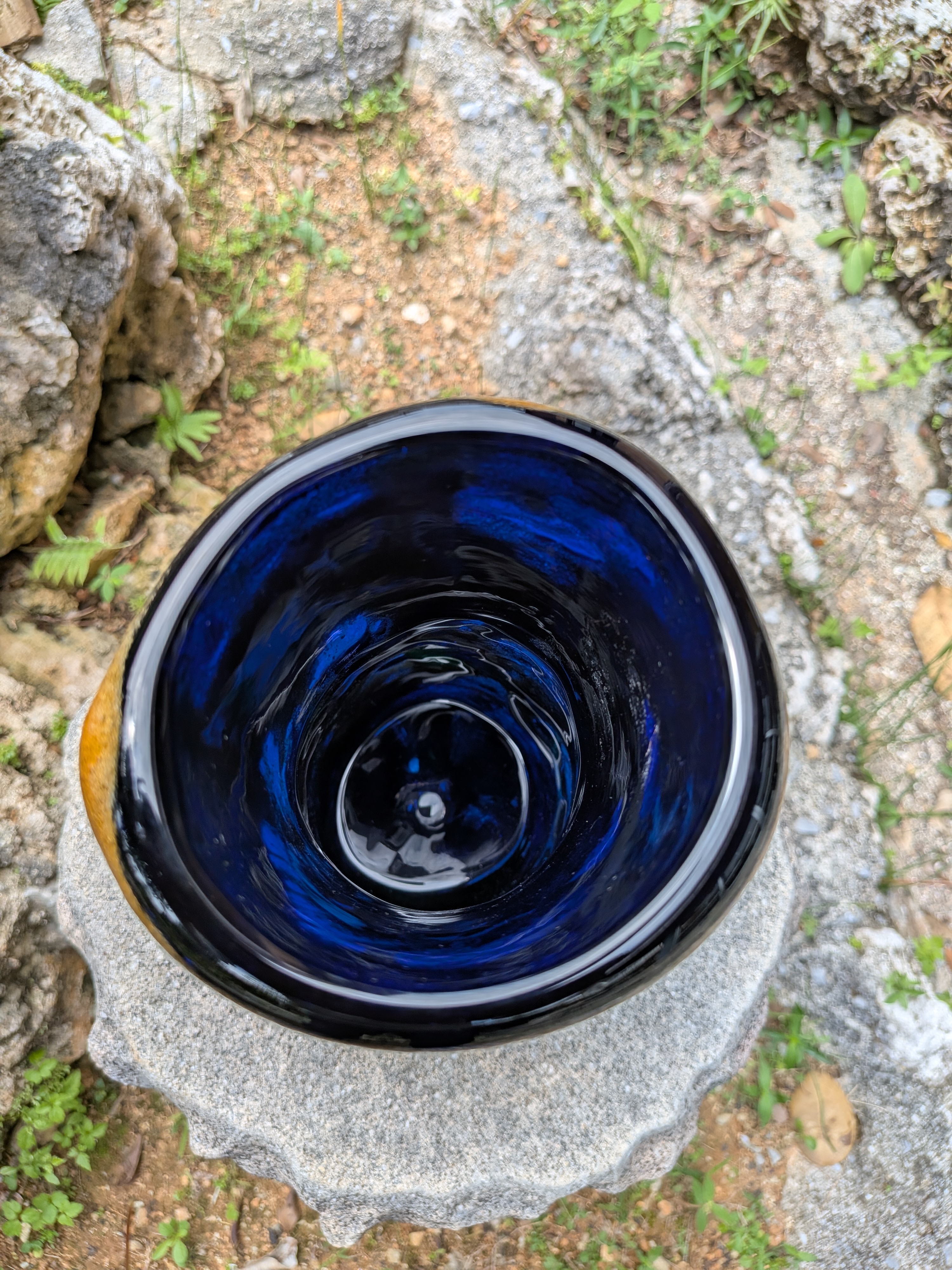
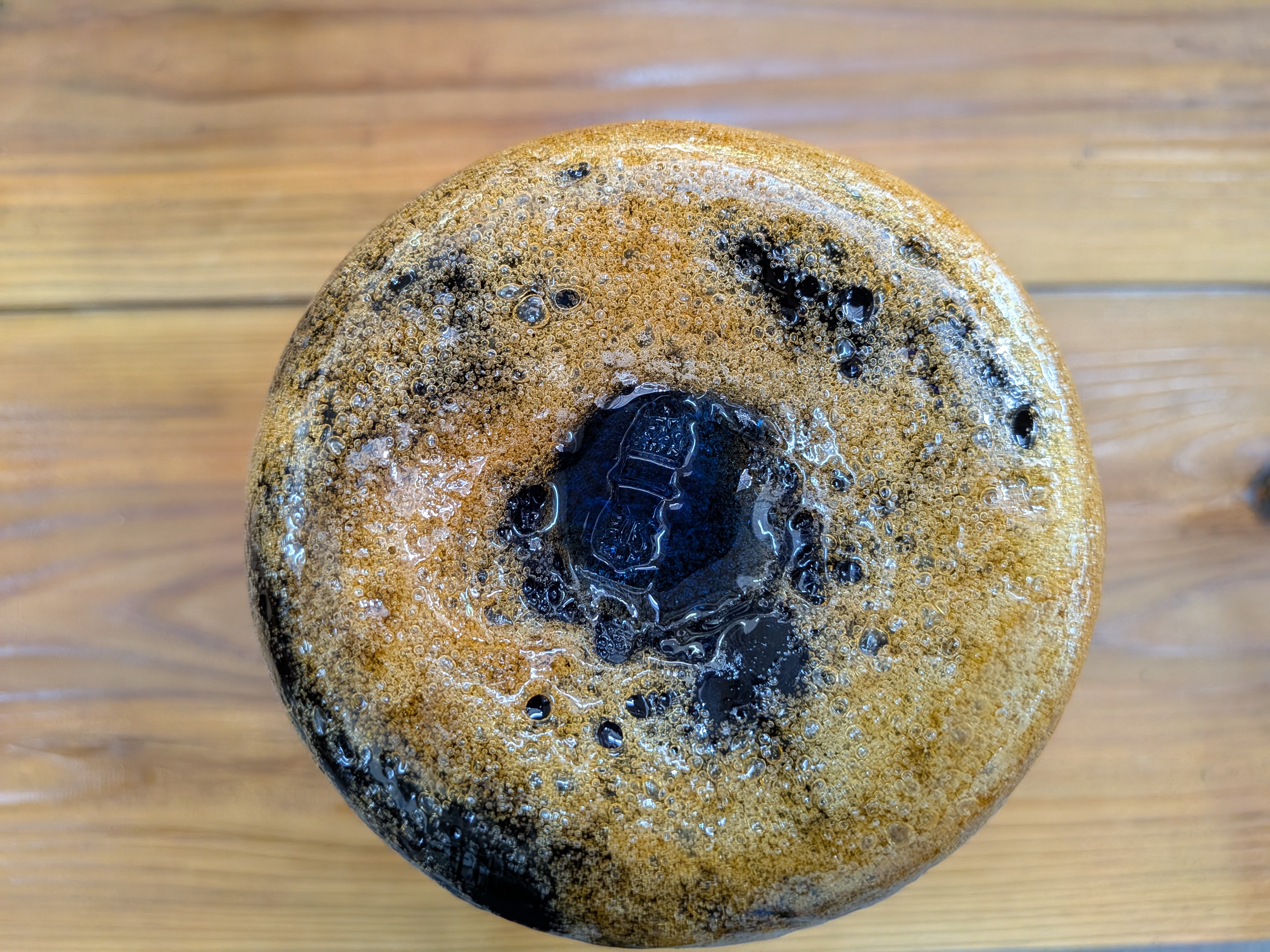
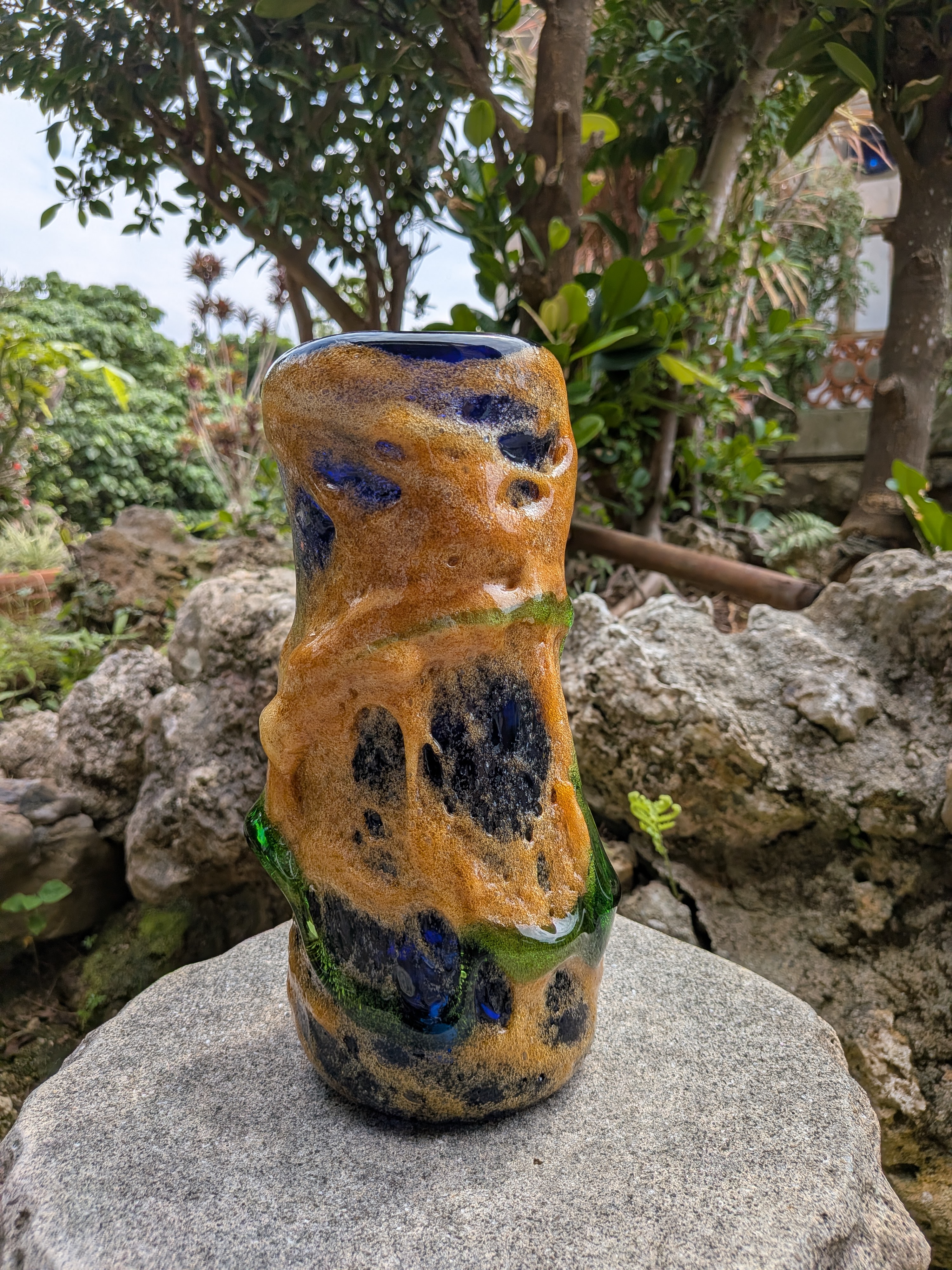
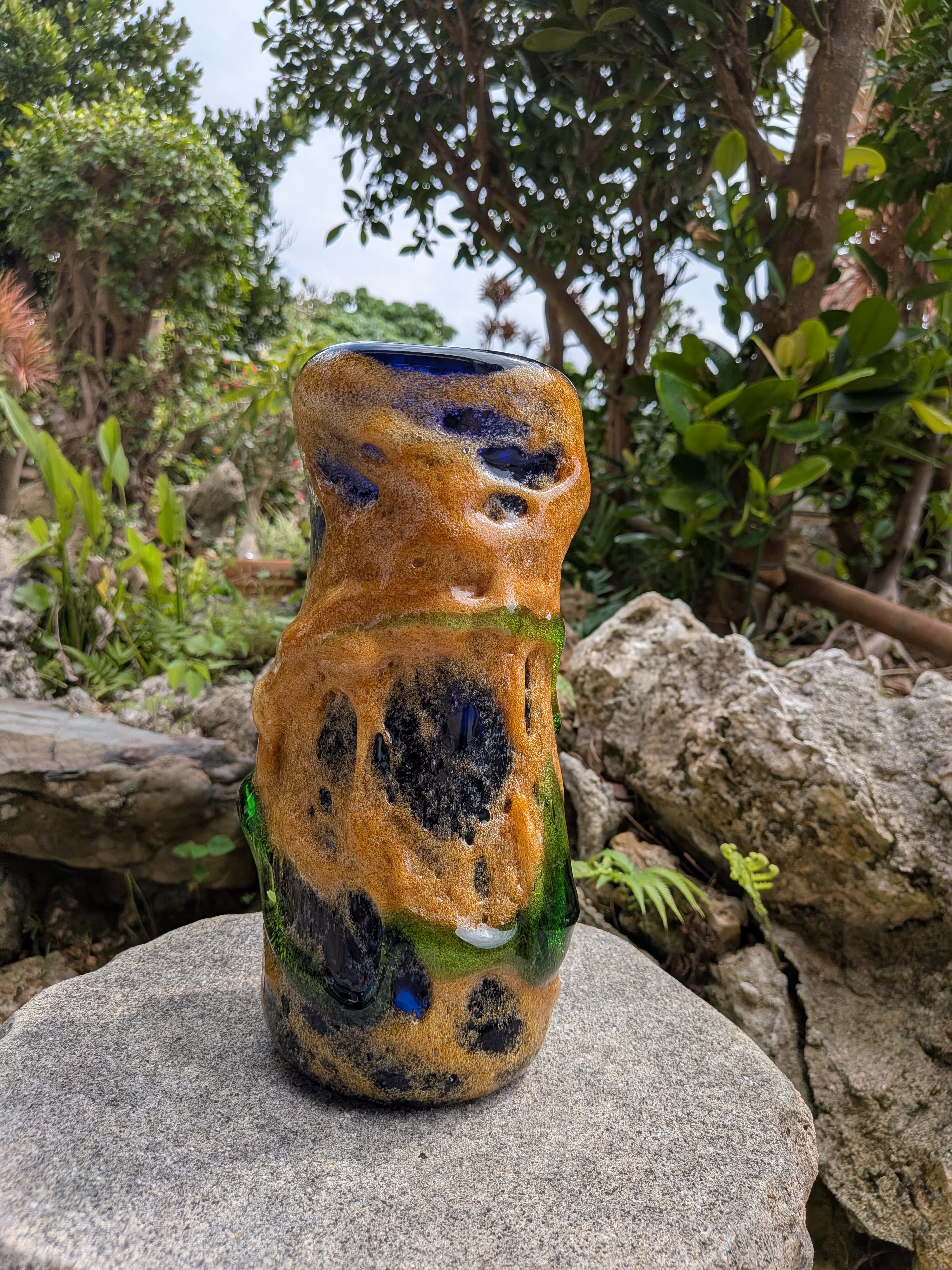
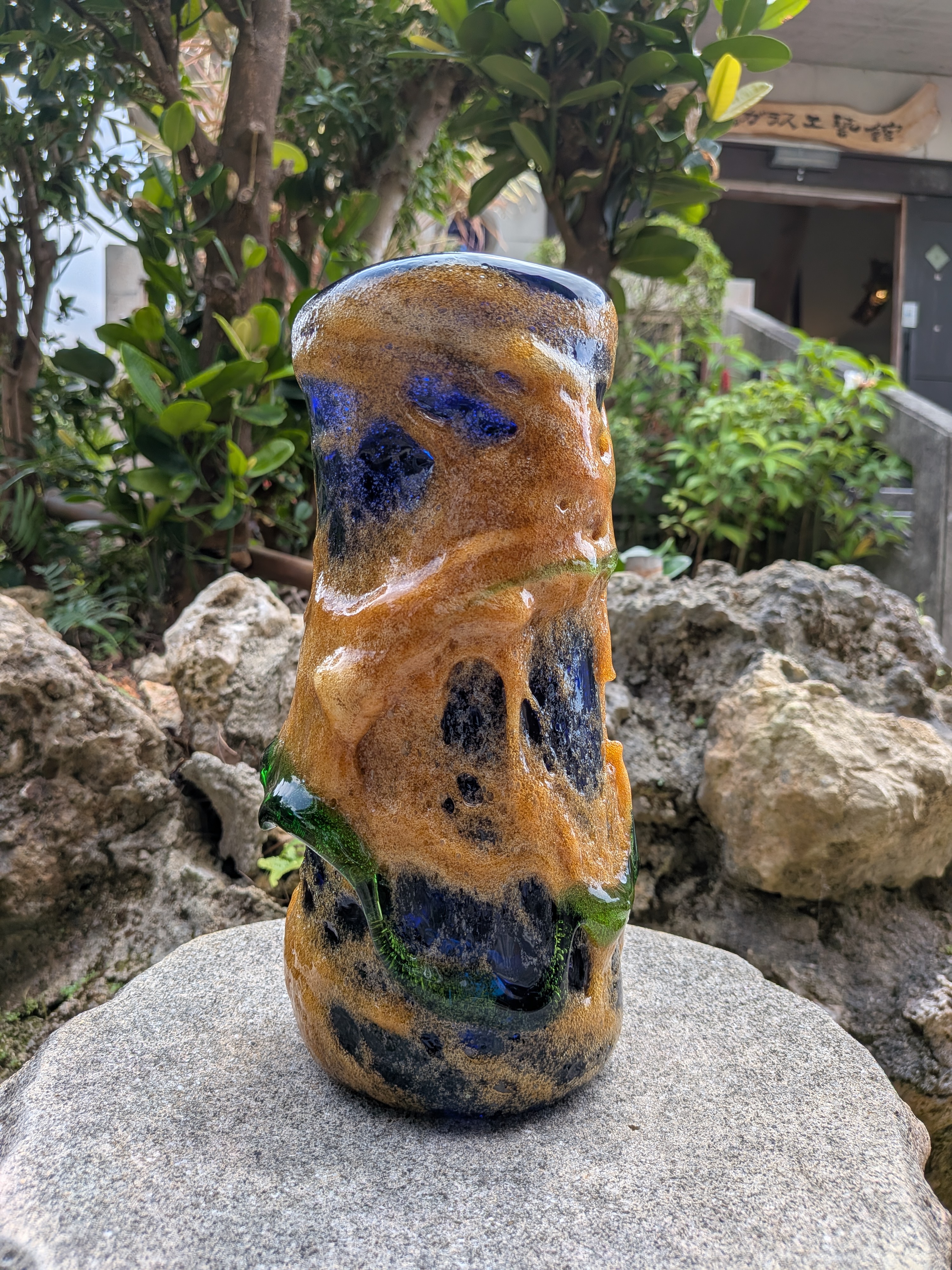
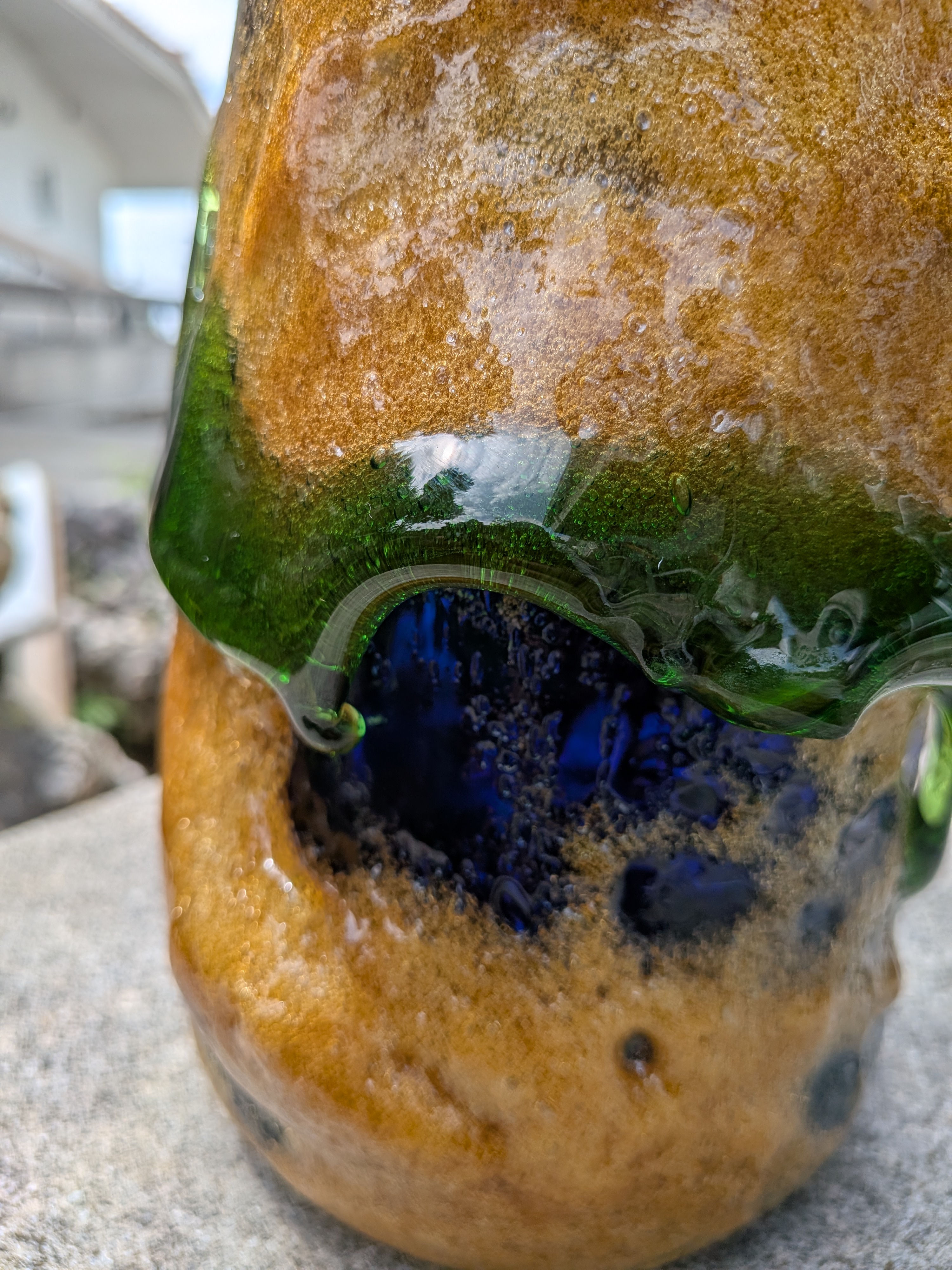
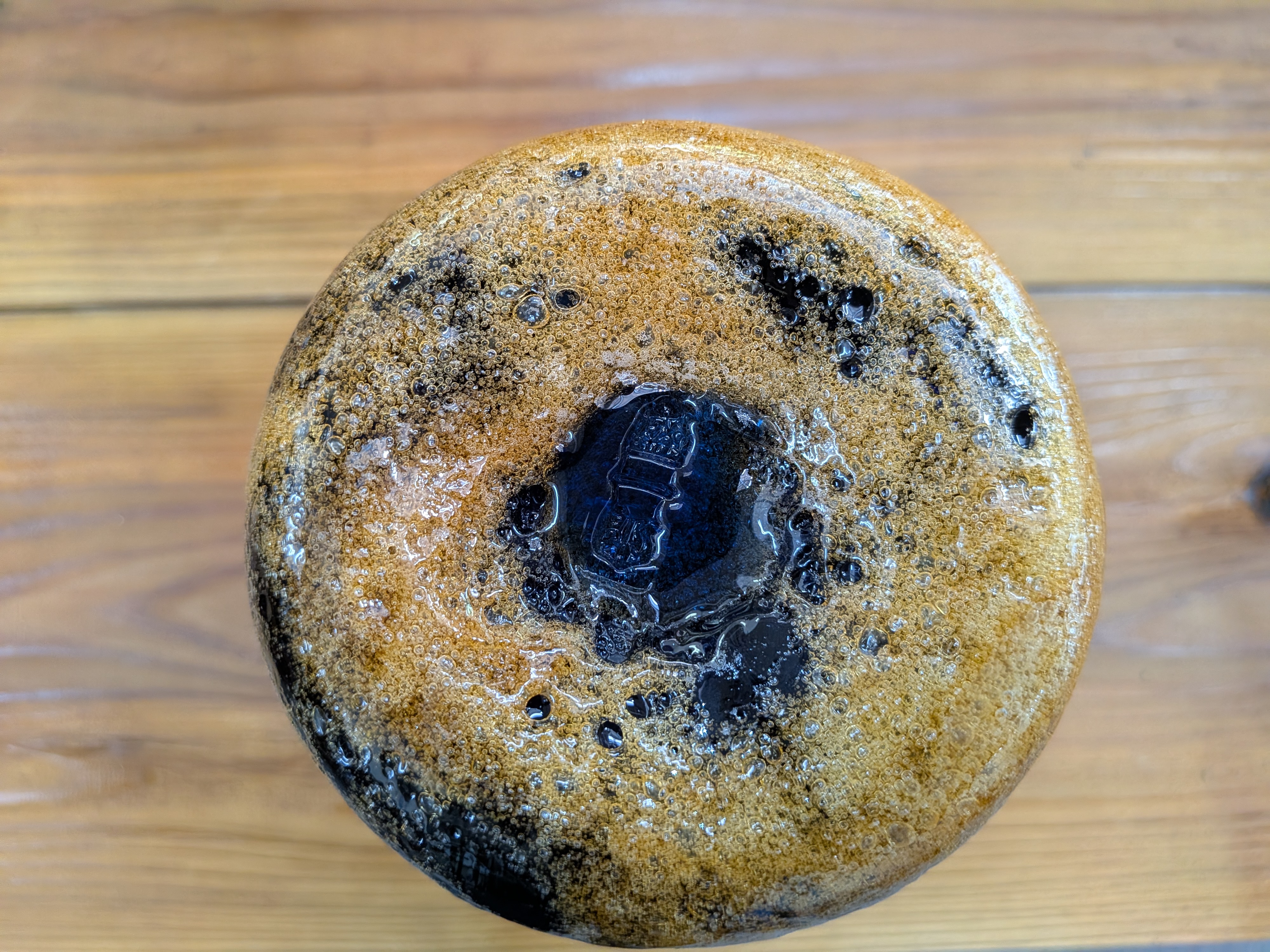
This monumental Earth Edition hand-blown glass vase by Seikichi Inamine (稲嶺 盛吉) presents a powerful interpretation of Okinawa's natural landscape through glass. The sculptural vessel combines rich ochre-amber texturing, deep cobalt-blue glass and flowing emerald-green accents within an asymmetrical organic silhouette. Its contrasting surfaces evoke the meeting of Okinawa's volcanic, mineral and marine environments. The exterior carries a dramatic, crater-like texture, while the interior and upper body reveal areas of luminous blue translucency. Across the central body, green glass appears to move organically through the darker composition, creating the visual impression of a wave or coastal current passing through a geological formation. The contrast between the rough, earth-like exterior and luminous interior gives the vessel its defining character. The base features an impressed identifying studio/artist mark within the polished central pontil area, providing an important physical provenance element associated with the work.
Seikichi Inamine - A Pioneering Figure in Okinawan Glass
Seikichi Inamine (稲嶺 盛吉) is an important figure in the development of modern Okinawan glass. His work is closely associated with the evolution of Okinawan hand-blown glass from its post-war roots into an increasingly expressive studio-art tradition. His approach emphasized the relationship between glass and Okinawa's natural environment, including experimentation with earth-derived materials, mineral textures, color and organic surface effects.
Inamine was recognized as a Contemporary Master Craftsman (現代の名工), reflecting the significance of his craftsmanship within Japan's traditional and contemporary craft landscape.
His artistic vocabulary is particularly recognizable for its willingness to move beyond conventional transparent glass surfaces, exploring textured and materially expressive forms that connect the finished object with the landscape of Okinawa.
Studio Niji - The Chūfuki Tradition
The work is presented within the tradition of Chūfuki Glass Studio “Niji” (宙吹ガラス工房「虹」) in Yomitan Village. Chūfuki (宙吹き) refers to free-form mouth-blown glassmaking, in which the artisan gathers molten glass and shapes it through blowing, rotation, reheating and direct manipulation. Rather than producing identical objects through industrial molds, the process allows the glassblower to respond continuously to the material while it is molten.
This is particularly important to Inamine's artistic language, where irregular texture, color movement, bubbles and surface variation become integral parts of the finished composition.
Earth, Fire & Ocean
The visual structure of this vase can be understood through three contrasting elements.
Volcanic Earth: The ochre-amber exterior carries a rugged, highly textured appearance reminiscent of weathered volcanic rock, mineral deposits and cooled earth.
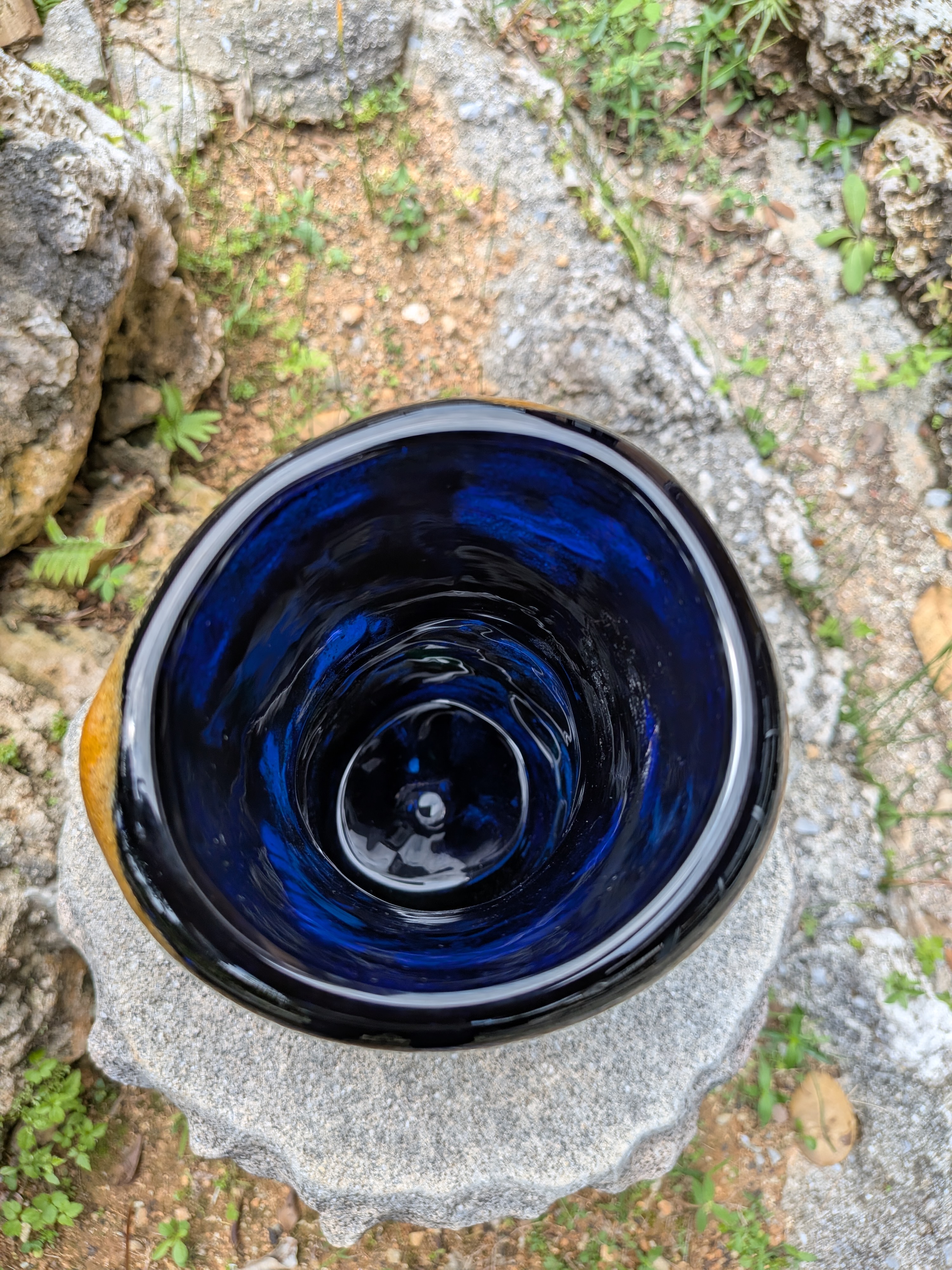
Deep Ocean: The cobalt-blue interior and neck introduce luminous transparency beneath the textured exterior, creating a striking contrast between opaque earth-like surfaces and clear, light-catching glass.
Coastal Green: Flowing emerald-green glass crosses the central body, introducing an organic movement reminiscent of vegetation, coastal waters or a wave moving through the landscape.
Together, these elements create a composition that feels simultaneously geological, marine and organic.
Earth Edition Technique & Material Expression
The distinctive character of the vessel comes from the interaction of molten glass, color and textured surface formation.
Mineral-Inspired Surface: The heavily textured exterior creates a cratered, porous appearance that recalls volcanic stone and naturally weathered geological surfaces.
Layered Cobalt Core: Deep blue glass forms a luminous interior foundation, visible through the upper opening and selected areas of the textured composition.
Emerald-Green Movement: Green glass travels across the central body in an organic band, providing a strong chromatic counterpoint to the ochre and blue.
Individual Hand Formation: Because the vessel is individually shaped through hand-blown glassmaking, the exact distribution of texture, color, bubbles and contours is unique to the finished piece.
No industrial reproduction can duplicate the precise combination of these characteristics.
A Sculptural Statement in Okinawan Glass
Although formally a vase, this work is best appreciated as a sculptural studio-glass object.
Its substantial scale and strongly contrasting surfaces allow it to function as a focal piece in:
- Private art collections
- Japanese and Okinawan craft collections
- Contemporary interiors
- Architectural environments
- Gallery-style displays
- Curated hospitality spaces
Its strongest visual impact comes from allowing sufficient space around the vessel so that its irregular silhouette and contrasting textures remain fully visible.
Premium Highlights
- Artist: Seikichi Inamine (稲嶺 盛吉)
- Recognition: Contemporary Master Craftsman (現代の名工)
- Studio Tradition: Chūfuki Glass Studio “Niji”
- Origin: Yomitan Village, Okinawa
- Technique: Free-form mouth-blown glass (Chūfuki)
- Form: Sculptural statement vase
- Surface: Highly textured earth/mineral-inspired exterior
- Palette: Ochre amber, cobalt blue and emerald green
- Visual Character: Geological texture contrasted with luminous translucent glass
- Marking: Identifying impressed studio/artist mark on base
- Edition: Earth Edition
- Character: Individually hand-crafted contemporary Okinawan studio glass
Curator's Note
This Earth Edition vase demonstrates Seikichi Inamine's distinctive ability to treat glass as both material and landscape. Its rough, earth-like exterior contrasts dramatically with the luminous cobalt interior, while the flowing green element introduces a sense of movement across the composition. The result is a vessel that evokes Okinawa not through literal imagery, but through texture, color, light and material. For collectors of Okinawan glass, the piece offers a substantial sculptural expression of the relationship between traditional hand-blown craftsmanship and the natural environment of the Ryukyu Islands.
Dimensions & Physical Specifications
Estimated Studio Proportions
| Attribute | Estimated Details |
| Height | ~26.0–29.0 cm |
| Maximum Diameter | ~13.0–15.0 cm |
| Opening Diameter | ~10.0–11.5 cm |
| Base Diameter | ~10.5–12.0 cm |
| Net Weight | ~2,800–3,500 g |
| Form | Sculptural Statement Vase |
| Technique | Chūfuki / free-form mouth-blown glass |
| Marking | Identifying impressed studio/artist mark |
| Condition | New/unused studio condition, if confirmed |
Important: Because these measurements are currently estimated, I recommend physically measuring the individual vase before publication. For a high-value collector listing, exact dimensions and weight should replace estimated ranges.
Care Instructions
- Clean gently by hand using lukewarm water and a soft microfiber cloth.
- For textured areas, use a very soft brush to remove dust without applying excessive pressure.
- Avoid abrasive cleaners, scouring pads and harsh chemicals.
- Do not place in a dishwasher.
- Avoid sudden temperature changes and direct heat.
- Do not expose the vase to prolonged extreme temperatures.
- When moving the piece, support the body from underneath rather than lifting it by the rim or neck.
Shipping & International Delivery
Japan: The vase should be professionally protected using impact-resistant materials and shipped through an insured service appropriate for substantial, fragile studio glass.
International: International delivery can be arranged where available. Protective packaging and insured transportation should be selected according to the vase's dimensions and weight.
International customers are responsible for applicable customs duties, import taxes, VAT/GST, brokerage fees and other destination-country charges.
Provenance & Collector Documentation
For the Xandre Store archive and collector presentation, retain photographs of:
- The complete vase
- Front, rear and side views
- Close-ups of the volcanic/mineral-like surface
- Details of the cobalt-blue interior
- The emerald-green glass element
- The polished base and identifying mark
- The original acquisition location
- Any studio documentation, packaging or artist information accompanying the work
The impressed mark should be described as an identifying studio/artist mark unless accompanying documentation specifically establishes it as a formal authentication or certification mark.
Specifications
| Attribute | Details |
| Artist | Seikichi Inamine (稲嶺 盛吉) |
| Recognition | Contemporary Master Craftsman (現代の名工) |
| Studio Tradition | Chūfuki Glass Studio “Niji” (宙吹ガラス工房「虹」) |
| Origin | Yomitan Village, Okinawa Prefecture, Japan |
| Category | Hand-Blown Ryukyu Studio Glass / Fine Art Collector Statement Vase |
| Series | Earth Edition |
| Technique | Free-form mouth-blown glass (Chūfuki) |
| Surface Character | Textured mineral/earth-inspired exterior |
| Primary Colors | Ochre amber, cobalt blue, emerald green |
| Marking | Identifying impressed studio/artist mark on base |
| Condition | New/unused studio condition, if confirmed |
| Provenance | Studio/acquisition documentation as supplied |
Xandre Store
Connecting global collectors with the heritage, craftsmanship, and stories behind exceptional Japanese and Okinawan studio art.
Description
Xandre Store Exclusive - A Monumental Contemporary Work by Pioneering Okinawan Glass Artist Seikichi Inamine
- Artist: Seikichi Inamine (稲嶺 盛吉)
- Studio Tradition: Chūfuki Glass Studio “Niji” (宙吹ガラス工房「虹」)
- Origin: Yomitan Village, Okinawa Prefecture, Japan
- Category: Okinawan Hand-Blown Glass | Sculptural Fine Art Vase | Collector Studio Glass
- Craft Tradition: 宙吹ガラス (Chūfuki — free-form mouth-blown glass)
This monumental Earth Edition hand-blown glass vase by Seikichi Inamine (稲嶺 盛吉) presents a powerful interpretation of Okinawa's natural landscape through glass. The sculptural vessel combines rich ochre-amber texturing, deep cobalt-blue glass and flowing emerald-green accents within an asymmetrical organic silhouette. Its contrasting surfaces evoke the meeting of Okinawa's volcanic, mineral and marine environments. The exterior carries a dramatic, crater-like texture, while the interior and upper body reveal areas of luminous blue translucency. Across the central body, green glass appears to move organically through the darker composition, creating the visual impression of a wave or coastal current passing through a geological formation. The contrast between the rough, earth-like exterior and luminous interior gives the vessel its defining character. The base features an impressed identifying studio/artist mark within the polished central pontil area, providing an important physical provenance element associated with the work.
Seikichi Inamine - A Pioneering Figure in Okinawan Glass
Seikichi Inamine (稲嶺 盛吉) is an important figure in the development of modern Okinawan glass. His work is closely associated with the evolution of Okinawan hand-blown glass from its post-war roots into an increasingly expressive studio-art tradition. His approach emphasized the relationship between glass and Okinawa's natural environment, including experimentation with earth-derived materials, mineral textures, color and organic surface effects.
Inamine was recognized as a Contemporary Master Craftsman (現代の名工), reflecting the significance of his craftsmanship within Japan's traditional and contemporary craft landscape.
His artistic vocabulary is particularly recognizable for its willingness to move beyond conventional transparent glass surfaces, exploring textured and materially expressive forms that connect the finished object with the landscape of Okinawa.
Studio Niji - The Chūfuki Tradition
The work is presented within the tradition of Chūfuki Glass Studio “Niji” (宙吹ガラス工房「虹」) in Yomitan Village. Chūfuki (宙吹き) refers to free-form mouth-blown glassmaking, in which the artisan gathers molten glass and shapes it through blowing, rotation, reheating and direct manipulation. Rather than producing identical objects through industrial molds, the process allows the glassblower to respond continuously to the material while it is molten.
This is particularly important to Inamine's artistic language, where irregular texture, color movement, bubbles and surface variation become integral parts of the finished composition.
Earth, Fire & Ocean
The visual structure of this vase can be understood through three contrasting elements.
Volcanic Earth: The ochre-amber exterior carries a rugged, highly textured appearance reminiscent of weathered volcanic rock, mineral deposits and cooled earth.
Deep Ocean: The cobalt-blue interior and neck introduce luminous transparency beneath the textured exterior, creating a striking contrast between opaque earth-like surfaces and clear, light-catching glass.
Coastal Green: Flowing emerald-green glass crosses the central body, introducing an organic movement reminiscent of vegetation, coastal waters or a wave moving through the landscape.
Together, these elements create a composition that feels simultaneously geological, marine and organic.
Earth Edition Technique & Material Expression
The distinctive character of the vessel comes from the interaction of molten glass, color and textured surface formation.
Mineral-Inspired Surface: The heavily textured exterior creates a cratered, porous appearance that recalls volcanic stone and naturally weathered geological surfaces.
Layered Cobalt Core: Deep blue glass forms a luminous interior foundation, visible through the upper opening and selected areas of the textured composition.
Emerald-Green Movement: Green glass travels across the central body in an organic band, providing a strong chromatic counterpoint to the ochre and blue.
Individual Hand Formation: Because the vessel is individually shaped through hand-blown glassmaking, the exact distribution of texture, color, bubbles and contours is unique to the finished piece.
No industrial reproduction can duplicate the precise combination of these characteristics.
A Sculptural Statement in Okinawan Glass
Although formally a vase, this work is best appreciated as a sculptural studio-glass object.
Its substantial scale and strongly contrasting surfaces allow it to function as a focal piece in:
- Private art collections
- Japanese and Okinawan craft collections
- Contemporary interiors
- Architectural environments
- Gallery-style displays
- Curated hospitality spaces
Its strongest visual impact comes from allowing sufficient space around the vessel so that its irregular silhouette and contrasting textures remain fully visible.
Premium Highlights
- Artist: Seikichi Inamine (稲嶺 盛吉)
- Recognition: Contemporary Master Craftsman (現代の名工)
- Studio Tradition: Chūfuki Glass Studio “Niji”
- Origin: Yomitan Village, Okinawa
- Technique: Free-form mouth-blown glass (Chūfuki)
- Form: Sculptural statement vase
- Surface: Highly textured earth/mineral-inspired exterior
- Palette: Ochre amber, cobalt blue and emerald green
- Visual Character: Geological texture contrasted with luminous translucent glass
- Marking: Identifying impressed studio/artist mark on base
- Edition: Earth Edition
- Character: Individually hand-crafted contemporary Okinawan studio glass
Curator's Note
This Earth Edition vase demonstrates Seikichi Inamine's distinctive ability to treat glass as both material and landscape. Its rough, earth-like exterior contrasts dramatically with the luminous cobalt interior, while the flowing green element introduces a sense of movement across the composition. The result is a vessel that evokes Okinawa not through literal imagery, but through texture, color, light and material. For collectors of Okinawan glass, the piece offers a substantial sculptural expression of the relationship between traditional hand-blown craftsmanship and the natural environment of the Ryukyu Islands.
Dimensions & Physical Specifications
Estimated Studio Proportions
| Attribute | Estimated Details |
| Height | ~26.0–29.0 cm |
| Maximum Diameter | ~13.0–15.0 cm |
| Opening Diameter | ~10.0–11.5 cm |
| Base Diameter | ~10.5–12.0 cm |
| Net Weight | ~2,800–3,500 g |
| Form | Sculptural Statement Vase |
| Technique | Chūfuki / free-form mouth-blown glass |
| Marking | Identifying impressed studio/artist mark |
| Condition | New/unused studio condition, if confirmed |
Important: Because these measurements are currently estimated, I recommend physically measuring the individual vase before publication. For a high-value collector listing, exact dimensions and weight should replace estimated ranges.
Care Instructions
- Clean gently by hand using lukewarm water and a soft microfiber cloth.
- For textured areas, use a very soft brush to remove dust without applying excessive pressure.
- Avoid abrasive cleaners, scouring pads and harsh chemicals.
- Do not place in a dishwasher.
- Avoid sudden temperature changes and direct heat.
- Do not expose the vase to prolonged extreme temperatures.
- When moving the piece, support the body from underneath rather than lifting it by the rim or neck.
Shipping & International Delivery
Japan: The vase should be professionally protected using impact-resistant materials and shipped through an insured service appropriate for substantial, fragile studio glass.
International: International delivery can be arranged where available. Protective packaging and insured transportation should be selected according to the vase's dimensions and weight.
International customers are responsible for applicable customs duties, import taxes, VAT/GST, brokerage fees and other destination-country charges.
Provenance & Collector Documentation
For the Xandre Store archive and collector presentation, retain photographs of:
- The complete vase
- Front, rear and side views
- Close-ups of the volcanic/mineral-like surface
- Details of the cobalt-blue interior
- The emerald-green glass element
- The polished base and identifying mark
- The original acquisition location
- Any studio documentation, packaging or artist information accompanying the work
The impressed mark should be described as an identifying studio/artist mark unless accompanying documentation specifically establishes it as a formal authentication or certification mark.
Specifications
| Attribute | Details |
| Artist | Seikichi Inamine (稲嶺 盛吉) |
| Recognition | Contemporary Master Craftsman (現代の名工) |
| Studio Tradition | Chūfuki Glass Studio “Niji” (宙吹ガラス工房「虹」) |
| Origin | Yomitan Village, Okinawa Prefecture, Japan |
| Category | Hand-Blown Ryukyu Studio Glass / Fine Art Collector Statement Vase |
| Series | Earth Edition |
| Technique | Free-form mouth-blown glass (Chūfuki) |
| Surface Character | Textured mineral/earth-inspired exterior |
| Primary Colors | Ochre amber, cobalt blue, emerald green |
| Marking | Identifying impressed studio/artist mark on base |
| Condition | New/unused studio condition, if confirmed |
| Provenance | Studio/acquisition documentation as supplied |
Xandre Store
Connecting global collectors with the heritage, craftsmanship, and stories behind exceptional Japanese and Okinawan studio art.
Previously viewed products
No recently viewed products.