

Behind the Infrastructure: AI Safety and Multimodal Discovery for Japan’s Digital Commerce
Publisher: Xandre LLC
Publish Date: October 20, 20226
Location: Okinawa, Japan
Categories: Artificial Intelligence, AI Safety, Cloud Infrastructure, Digital Commerce, Regional Discovery, Cultural Heritage
Generative AI is moving beyond answering questions into digital experiences involving products, events, accommodation, local services, and commercial transactions. This creates an important engineering challenge: How can probabilistic AI outputs interact responsibly with commercial operations that require accurate information and controlled execution? An inaccurate answer may be inconvenient in a general conversation. In commerce, incorrect prices, outdated availability, misleading product descriptions, or inaccurate event details can create real consequences for consumers and businesses.
These challenges matter in Japan, where businesses must navigate applicable consumer protection laws and sector-specific requirements. They also matter to international customers who expect clear information and dependable purchasing experiences. Xandre LLC and Denga AI describe an approach that combines AI-assisted discovery with structured legal and factual verification. The company identifies a patent-pending compliance interlock as part of this approach, intended to help prevent specified commercial operations from proceeding when required checks are not satisfied.
The objective is to connect AI-assisted discovery with digital commerce while placing appropriate safeguards around consequential actions. Technical claims about implemented controls and patent-pending mechanisms should be verified against current product documentation before publication.
1. Why Semantic Similarity Is Not Enough
Retrieval-Augmented Generation (RAG) and vector search help AI systems find information related to a question or passage. However, semantic similarity alone cannot establish whether a statement satisfies a legal or operational requirement.
Consider three illustrative statements:
- Prohibition: “The merchant must not display unencrypted payment data.”
- Potential violation: “The merchant displays unencrypted payment data.”
- Compliance statement: “The merchant does not display unencrypted payment data.”
These sentences share much of the same vocabulary, but their meanings and implications differ substantially. A similarity-based search may identify them as related without reliably determining whether a proposed action is permitted, prohibited, or compliant. The principle is simple: semantic relevance can help retrieve information, but it is not proof of legal compliance. For commercial AI systems, this distinction makes structured verification and clearly defined execution controls particularly important.
2. A Dual-Engine Approach to Verification
Xandre describes a verification approach that separates two concerns: whether an operation satisfies applicable rules and whether the supporting information is sufficiently reliable.
Engine A: Legal and Rules Verification A structured verification process can evaluate relevant attributes against defined rules rather than relying solely on the similarity between generated text and reference documents.
Depending on the activity, applicable Japanese requirements may include:
- E-commerce: The Act on Specified Commercial Transactions and relevant product-specific requirements.
- Accommodation: The Hotel Business Act and Act on Private Lodging Business, where applicable.
- Transportation: Relevant requirements under the Road Transport Act.
- Advertising: The Act against Unjustifiable Premiums and Misleading Representations.
The applicable rules depend on the business model, product, and transaction. Technical verification can support compliance workflows, but it does not replace appropriate legal review. The intended fail-closed principle is that a protected operation should not proceed when a mandatory verification step fails or a relevant condition remains unsatisfied.
Engine B: Factuality Verification
Commercial decisions also depend on current and accurate information. Where suitable sources are available, a factuality-verification process can compare AI-generated information against relevant reference data, including:
- Product prices and listed availability.
- Inventory information.
- Event dates, schedules, and venues.
- Relevant listing details and commercial terms.
For example, an AI-generated answer about a Japanese craft should not be treated as confirmation of its current price or availability unless the relevant information has been checked. Similarly, event recommendations should be confirmed with organizers or authoritative sources before travel. When reliable reference information is unavailable, a robust system should distinguish verified facts from uncertainty rather than presenting unsupported details as confirmed.
Risk-Based Controls Before Execution
Different requests carry different levels of risk. Asking about the history of Ryukyu glass is not the same as initiating a payment. A risk-based architecture can apply stricter verification to consequential commercial operations. Xandre's described approach identifies three potential control points:
- User-interface output: Restricting information that fails a required verification step.
- Database operations: Preventing specified changes when mandatory conditions are not met.
- Payment instructions: Blocking protected payment actions until required checks have passed.
The objective is to establish a clear boundary between generating information and authorizing an action. The precise implementation and coverage of these safeguards should be confirmed against the deployed system.
Japanese Craftsmanship and Provenance
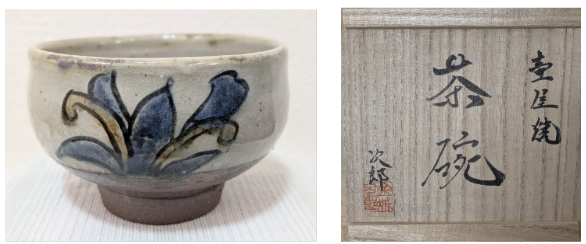
Photo 1: Traditional Japanese ceramic craftsmanship presented with a paulownia storage box and an artist’s identifying mark. A ceramic work accompanied by its presentation box and identifying marks. For collectors and cultural enthusiasts, the maker’s identity, origin, and documented provenance can be as important as the object’s design. Any artist attribution or cultural designation should be independently verified.
3. Connecting Regional Commerce With Global Audiences
Japan’s regional products, independent businesses, and cultural experiences are distributed across many communities and digital channels. Xandre brings together experiences related to AI-assisted discovery, e-commerce, events, and business participation within a broader platform ecosystem.
Regional E-commerce and Authentic Craftsmanship
Japanese ceramics, lacquerware, Ryukyu glass, textiles, and other regional crafts appeal to domestic consumers, international collectors, and design enthusiasts. For these audiences, discovery involves more than appearance. Information about the maker, materials, production methods, region of origin, and documented history can help people understand the significance of an individual work.
Xandre Store provides a digital environment for exploring Japanese products and craftsmanship. Reliable product information can help connect regional makers with customers beyond their immediate communities. Terms such as Living National Treasure should be used only when the designation is verified for the individual concerned. A signature, seal, or presentation box should not be treated as conclusive proof of authenticity without supporting evidence.
Regional Events and Cultural Discovery
Festivals, craft workshops, exhibitions, seasonal celebrations, and community gatherings offer ways to experience Japan beyond its best-known destinations. Xandre Events supports the discovery of events and activities listed through the platform. Users should confirm schedules, admission requirements, and other practical details with the relevant organizer before making plans.
Supporting Local Businesses
Independent merchants, artisans, and event organizers can benefit from opportunities to reach audiences beyond their existing networks. Xandre's broader ecosystem includes business-participation and promotional opportunities intended to help local offerings become more discoverable to domestic and international customers.
Actual reach and commercial results depend on participation, available listings, audience demand, and platform functionality; specific outcomes are not guaranteed.
Denga AI and Multimodal Discovery
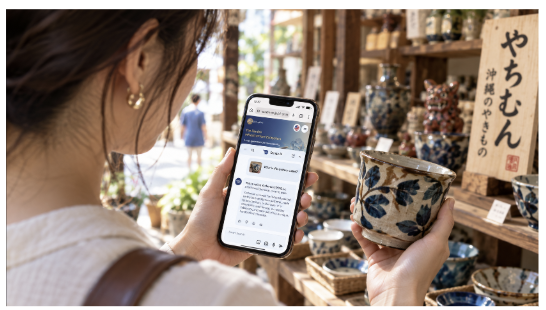
Photo 2: Denga AI mobile interface illustrating an AI-assisted discovery experience for exploring Japanese crafts and related information. An illustrative Denga AI interface showing how natural-language questions can support contextual discovery. Available inputs and results depend on the current product features and source information. The image does not independently establish product authenticity or transaction verification.
Preserving Craftsmanship Through Digital Discovery
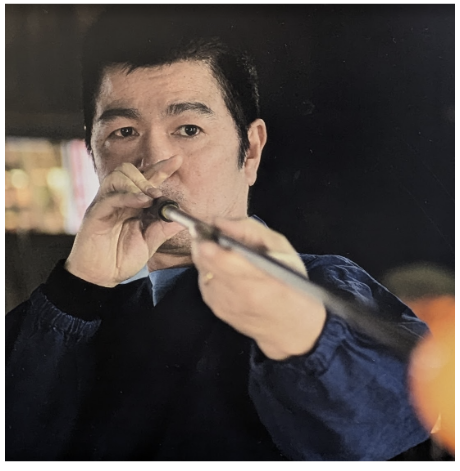
Photo 3: A Japanese craftsperson shaping a glass vessel in a regional workshop. A craftsperson at work in a regional studio. Digital discovery can introduce new audiences to traditional techniques and local makers while preserving the importance of accurate attribution and cultural context. Identify the specific artisan only when verified.
4. Designed for Japanese and International Audiences
Effective international discovery requires more than translating words. Customers differ in their interests, languages, expectations, and familiarity with Japanese culture.
Japan: Trust, Culture, and Local Value Japanese residents and businesses may want clearer access to regional products, local events, independent merchants, and cultural experiences. Reliable listings, transparent participation terms, and accurate descriptions are valuable to both consumers and business operators.
Suggested Japanese-facing message:
地域の魅力を、もっと見つけやすく。確かな情報を大切に、地域の文化・ものづくり・イベントとの新しい出会いを広げます。
English meaning: Make the appeal of local communities easier to discover. With reliable information at the center, create more opportunities to encounter regional culture, craftsmanship, and events.
Neighboring Asian Markets: Regional Discovery and Distinctive Experiences
Audiences in South Korea, Taiwan, Hong Kong, Singapore, and other Asian markets have diverse interests and preferences. Some may seek Japanese design, collectible crafts, regional food culture, seasonal events, or distinctive products from Okinawa and other prefectures. For these audiences, clear product information, cultural context, natural localization, and transparent purchasing conditions can make discovery more useful.
Suggested message:
Discover Japan beyond the familiar destinations-from regional craftsmanship and local culture to experiences worth exploring. Premium positioning should emphasize the documented story and distinctive qualities of each work rather than unsupported claims of rarity or investment value.
Western Markets: Context, Provenance, and Confidence
Audiences in the United States, Canada, Europe, Australia, and elsewhere may be interested in Japanese craftsmanship, regional traditions, and experiences beyond conventional sightseeing. Clear explanations of materials, techniques, cultural context, maker attribution, and purchasing conditions help both first-time explorers and experienced collectors make informed decisions. For technology and business readers, the emphasis is on how multimodal discovery, structured information, and controlled commercial workflows can complement one another.
Suggested message:
Discover more than a destination. Explore the makers, traditions, local businesses, and regional experiences that give Japan its character. These are audience-positioning examples, not assumptions about every individual traveler or customer. Effective localization should reflect each market's language and cultural context.
5. From AI Discovery to Commercial Opportunities
A useful digital experience helps people take a meaningful next step: learn about a craft, explore an event, investigate a regional product, or discover a local business. Denga AI and Xandre aim to connect AI-assisted exploration with broader digital experiences involving regional products, events, and commerce.
This approach brings together three related activities:
- Discover: Explore subjects through AI-assisted questions and available contextual information.
- Explore: Investigate relevant products, events, merchants, and regional offerings.
- Act: Continue toward a commercial action when the necessary details and safeguards are in place.
The distinction between discovery and execution remains essential. An AI-generated response is not, by itself, proof of authenticity, current availability, legal eligibility, or successful payment. For users and businesses operating across borders, transparency about these distinctions is an important part of a dependable digital experience.
6. Infrastructure and Responsible Execution
As AI becomes more integrated into commerce, reliability depends on more than the quality of a generated answer. It also depends on the sources used, the treatment of uncertainty, the rules applied, and the controls governing consequential actions. Xandre identifies modular cloud architecture, verification mechanisms, and intellectual property as elements of its technology strategy.
Descriptions of patent-pending technology should accurately reflect the relevant filing status and scope. A pending patent is not a granted patent, nor does patent status alone demonstrate safety, performance, or legal compliance. The broader engineering objective is to treat AI discovery and commercial execution as connected but distinct responsibilities: AI helps people explore possibilities, while appropriate controls govern what happens when an interaction leads toward a consequential action.
Discover Japanese Craftsmanship and Regional Culture
Japan’s regional identity lives in its makers, materials, traditions, businesses, and community events. Xandre LLC and Denga AI aim to make these offerings easier to discover through a digital ecosystem connecting AI-assisted exploration, regional commerce, and events. Whether you are a Japanese resident, an international visitor, a collector, or a local business
Discover Japanese Craftsmanship and Regional Culture
Japan’s regional identity lives in its makers, materials, traditions, businesses, and community events. Xandre LLC and Denga AI aim to make these offerings easier to discover through a digital ecosystem connecting AI-assisted exploration, regional commerce, and events. Whether you are a Japanese resident, an international visitor, a collector, or a local business owner, meaningful discovery starts with useful information and clear next steps. Discover the stories behind the products. Explore the culture behind the destinations. Find new ways to connect with Japan’s regional communities.
Explore Xandre
Xandre Store - Japanese Products and Regional Craftsmanship
https://www.xandre.co.jp/ecommerce
Denga AI - AI-Assisted Discovery
https://www.xandre.co.jp/denga-ai
Xandre Events - Regional Events and Experiences
https://www.xandre.co.jp/events
Partner with Xandre
https://www.xandre.co.jp/partnerWithXandre
Local merchants, artisans, and event organizers can explore opportunities to participate in the Xandre ecosystem.
About Xandre LLC
Xandre LLC is a Japan-based technology company headquartered in Okinawa. Through Denga AI and the wider Xandre platform ecosystem, the company connects AI-assisted discovery with digital commerce, events, and regional business opportunities.
Xandre LLC | Okinawa, Japan